Neem oil works indoors because it is gentle on the plant once it is diluted properly, and unforgiving once it is not. The label-led way to use neem oil on indoor plants is short: mix 1 to 1.5 teaspoons of pure neem oil with a few drops of mild dish soap per quart of warm water, test a single leaf and wait 24 hours, then coat the tops and undersides of the foliage in the evening and repeat every 7 to 14 days until the pests stop showing up. Total hands-on time is about 15 minutes a plant.
Most plant damage I hear about comes from skipping the test, not from the oil itself. Neem is a potent herbicide in concentrated form, so an over-strength batch will do exactly what it does in a garden bed to anything it touches. That is the whole reason this guide is built around the label and the leaf test rather than a generic ratio.
Table of Contents
- What You Need
- Step-by-Step
- 1. Confirm That Neem Oil Is the Right Treatment
- 2. Read the Label and Prepare the Product
- 3. Test One Undamaged Leaf First
- 4. How to Use Neem Oil on Indoor Plants Evenly
- 5. Let the Product Dry in a Safe Location
- 6. Check Results Before Repeating
- 7. Clean Up and Monitor the Plant
- Common Mistakes
- Safety Tips for Homes With Pets or Children
- Frequently Asked Questions
- Is neem oil safe for flowering indoor plants?
- Will neem oil get rid of fungus gnats in houseplants?
- Why does neem oil smell so strong after application?
- Can I use neem oil on indoor plants that grow food?
- Can neem oil be mixed with liquid fertilizer or another pesticide?
- What if my indoor plant has discolored leaves but I cannot find pests?
- Conclusion
What You Need
Start by confirming there is a pest to treat. Look at the undersides of leaves, the leaf axils where stems meet petioles, and the soil surface. If you cannot find insects, webbing, sticky residue, or a clear fungal pattern, neem is the wrong tool and step one below explains the alternatives.
Next, identify what you actually have in the bottle. Clarified hydrophobic neem extract is the standard material in garden products and is the type most labels are written for. Cold-pressed neem oil is the pure, unrefined version many indoor growers prefer to mix themselves.
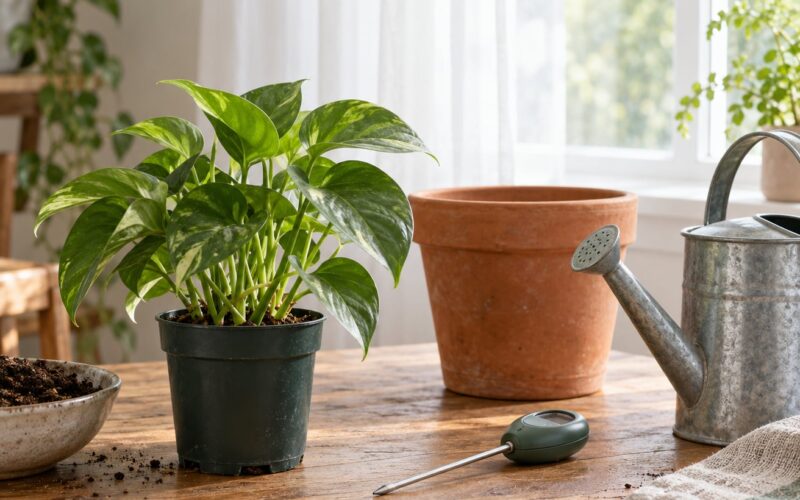
Then gather the small kit: a clean spray bottle with a fine mist nozzle, warm water, mild dish soap as an emulsifier, a drop cloth or old towel, and disposable gloves. Oil and water will not hold together on their own, and the soap is what keeps the spray from separating in the bottle.
The product label is the authority here. Generic dilution advice online contradicts itself constantly, so use the ratio printed on your bottle and treat any number in this guide as a starting point rather than a rule that overrides it.
Step-by-Step
1. Confirm That Neem Oil Is the Right Treatment
Neem oil handles soft-bodied and moderate pests well: aphids, whiteflies, spider mites, thrips, mealybugs, and most scale on young growth. It also has enough antifungal activity to slow powdery mildew and black spot, and used as a soil drench it reduces fungus gnat larvae in the potting mix.
It is weak against a few specific situations. Hard-bodied scale on woody stems often needs spot removal with alcohol on a cotton swab, and root rot is a drainage and watering problem that no spray fixes. When a plant has been recently repotted, stressed, or is flowering, wait until it is settled before treating.
If you are not confident in the diagnosis, take a photo of the leaf and post it to a plant ID community or your local extension office before mixing anything. Guessing wrong costs you two weeks and a stressed plant.
2. Read the Label and Prepare the Product
Read the full label before you measure anything, and look for three things: whether it is a pre-mixed spray or a concentrate, the stated dilution, and the maximum number of applications per season or per month.
If you are mixing your own batch, use the same temperature logic every time. Warm water disperses neem better than cold water, and about body-temperature water works fine.
Measure the oil first, then add the soap, then the water, then shake for 20 to 30 seconds. Adding oil to a full bottle of water leaves you with an oily film on the surface instead of a stable emulsion.
- Light maintenance: about 1 teaspoon per quart of water, a few drops of soap, used as a preventive spray on a healthy plant.
- Active soft-bodied infestation: 1.5 to 2 teaspoons per quart, applied every 5 to 7 days until you see no new pests for two weeks.
- Soil drench: the gentler end of that range, about 1 teaspoon per quart poured slowly into the soil, used for fungus gnats.
Shake the bottle again every few minutes during application. If the mixture goes cloudy and separates into a slick on top, it is not emulsified well enough, and that slick is exactly what burns leaves.
Keep the room ventilated while you spray and for the drying period afterward. Gloves are worth wearing, and wash them with soap and water when you finish.
3. Test One Undamaged Leaf First
Pick a healthy, mature leaf on the middle of the plant, not a new growth tip and not a damaged one. Put a small amount of the mixed spray on a cotton swab and dab one side of that leaf until it is damp, not dripping.
Leave the plant out of direct light, then check the leaf at 6 hours, 12 hours, and again at 24. You are looking for spotting, yellowing, curling at the edges, a translucent or greasy patch, or a sour smell near the leaf surface.
If you see any of those, rinse the leaf with plain water, dilute your batch roughly half, and test again. If the second test is clean, the batch is fine for that plant. If it is still not clean, skip neem on this species and use insecticidal soap instead.
4. How to Use Neem Oil on Indoor Plants Evenly
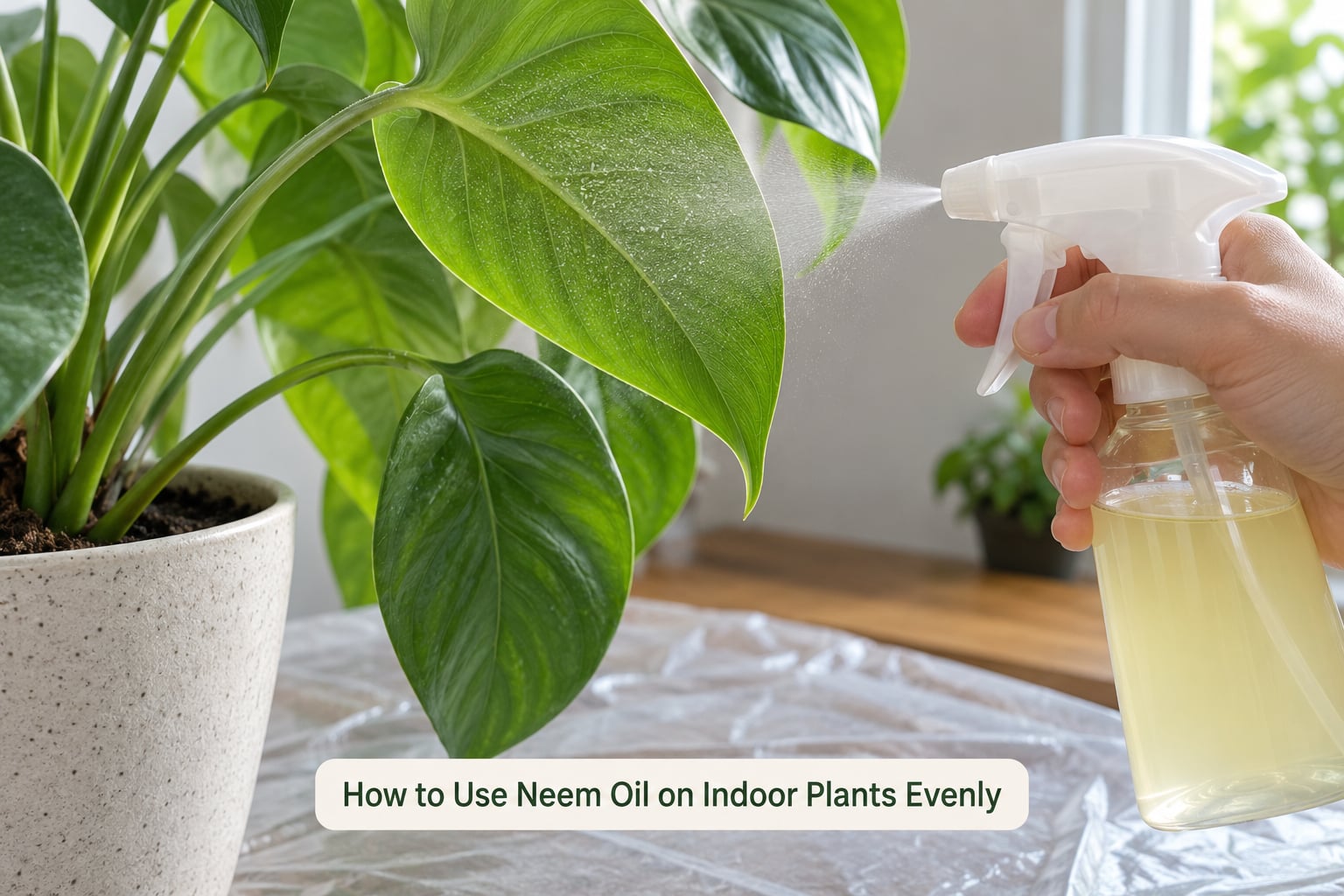
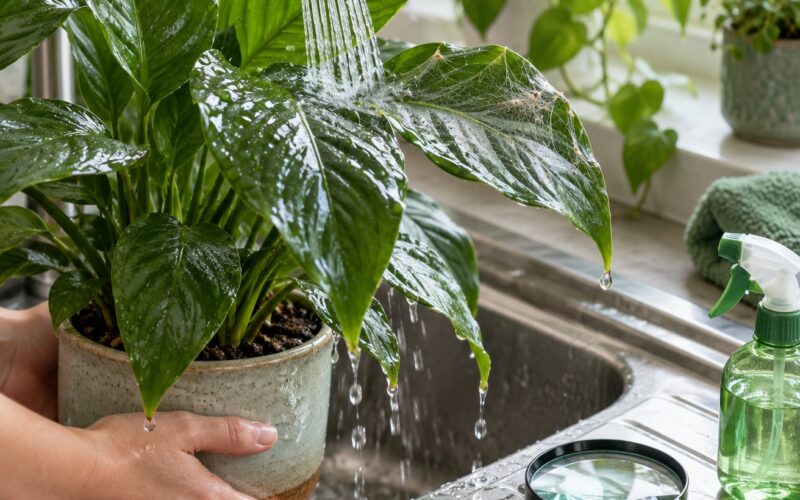
Move the plant to a protected surface first. A tray, a folded towel on the floor, or a cleared bathroom sink all work. Move it away from healthy plants, since drips from an over-strength batch will scorch anything they land on.
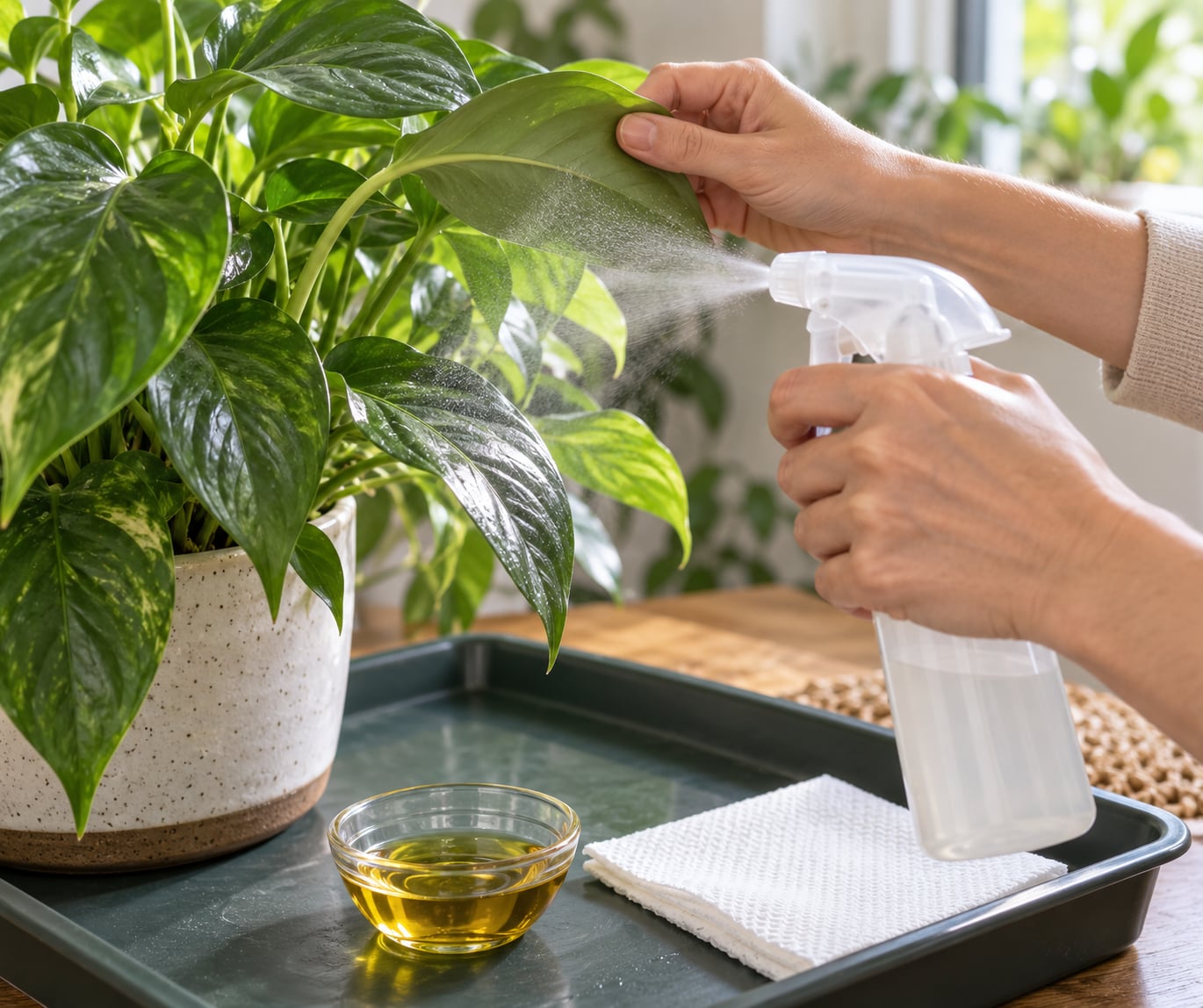
Spray the tops of the leaves first, then work underneath. Most of the pests you are targeting, including spider mites and whitefly pupae, sit on the underside or in the leaf axils, and a mist that only covers the top surface does almost nothing.
Use a gentle trigger. A hard spray can knock tender growth loose and bruise young leaves. Aim for a fine, even sheen, and stop at damp. Standing droplets that run down the stem or pool in the leaf axils are the second most common cause of leaf burn after over-concentration.
Wipe the underside of large, thick leaves with a soft cloth after spraying. It removes the film, speeds drying, and pushes the oil into the pest area rather than letting it bead and roll off.
5. Let the Product Dry in a Safe Location
Follow the label on drying time, and treat that time as a minimum rather than a suggestion. Most products want several hours out of direct light before the spray is considered to have set.
Keep the plant away from south-facing window glass and any heat source. Sunlight through glass still burns treated leaves, and a neem-coated leaf in warm direct light will show spotting within a day.
Protect everything below the plant. Oily drips stain floors, wood, and window sills, and the smell lingers longer indoors than outdoors, so open a window or run a fan for an hour or two if you can.
If you have food crops growing indoors, move the treated plant away from them and cover any nearby fruit, herbs, or salad greens until the plant is fully dry.
6. Check Results Before Repeating
Neem is slow. The active compounds work on the insect life cycle rather than on contact, so you should not expect a dramatic drop in population the day you spray. Evaluate on a schedule, not on the hour.
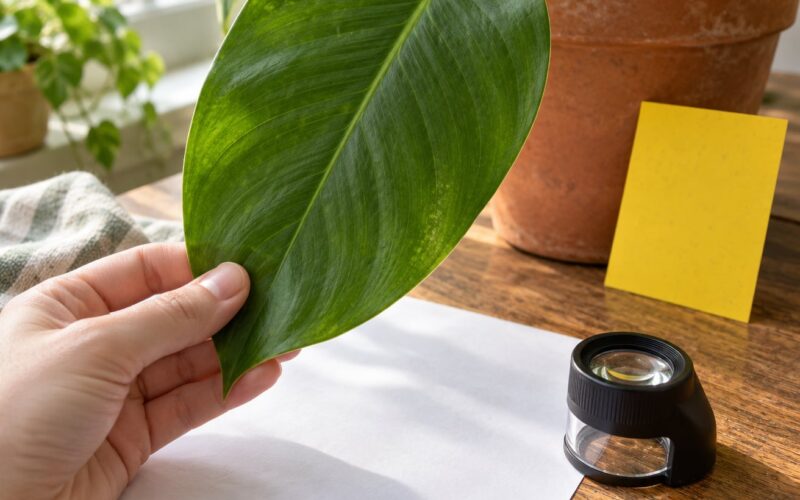
Look for slower pest movement at 48 hours, fewer adults at 3 to 5 days, and clean new growth at two weeks. Tap a leaf over white paper and count what falls. Note which leaves looked worst on day one and compare them at day seven, because a new spot on an untreated leaf means something else is going on.
A second application at 7 days is normal for an active infestation. Two consecutive checks with no new pests and healthy new growth is the signal to stop. If a plant keeps declining after three correct applications, the diagnosis is probably wrong and it is time to get a plant-specific opinion.
7. Clean Up and Monitor the Plant
Wash your hands and any exposed skin with soap and water, and take off gloves before you touch anything you eat. Store the concentrate in a labeled container away from children, pets, sunlight, and heat.
Wash the spray bottle with hot soapy water before you put anything else in it. Oil residue left in a bottle will gum up the nozzle and can contaminate a later fertilizer mix.
Use a mixed batch within 24 hours and shake it well before each use. Pure neem starts losing potency after mixing, and a batch that has separated is worth discarding rather than recombining.
Keep monitoring for two weeks after the last application. Pests that were tucked into leaf axils often reappear at that point if you stopped the moment the leaves looked clean.
Common Mistakes
Using undiluted oil. Concentrated neem is a herbicide. Never apply it straight, and if you see oily beads on a leaf surface, wipe them off and rinse.
Guessing the dosage. People dosing by eye or by spray bottle size is the most common cause of burned plants. Measure with a teaspoon and follow the label ratio.
Spraying the whole collection in one session. Test one plant, wait a day, then move on. A single bad batch should never reach 30 pots at once.
Soaking the foliage. Wet is the target, wet and dripping is not. Heavy coverage blocks light and holds moisture against the leaf.
Applying in hot sun. Sprayed leaves in direct sun burn, and the damage is permanent. Move the plant out of the light first, or work in the evening.
Mixing neem with fertilizer or another pesticide in the same bottle. Combine only when both labels allow it, and use separate bottles if you are unsure.
Missing the leaf undersides. A top-only spray leaves the population intact. Turn each leaf.
Repeating on schedule without checking. Blind repetition wastes product and risks phytotoxicity. Inspect at 48 hours and at 7 days before you spray again.
Safety Tips for Homes With Pets or Children
Treat the spray as a pesticide, because that is what it is, and follow the label precautions on your specific product. Neem breaks down after it dries and is generally considered low risk once dry, but concentrated neem and cats are not a combination worth testing.
Keep the plant in a room or area where no pet can brush against it until the foliage is fully dry, and keep the drying location out of reach of curious hands and jumping cats. Wipe the pot rim if you applied a drench, because damp soil at the rim is a reliable way for a cat to ingest it while grooming.
Wash hands and forearms after handling the mixture, before you make coffee or pick up food. Keep mixing tools separate from anything in the kitchen, and never spray over a countertop, cutting board, or sink where food is prepared.
For edible plants grown indoors, spray only a product whose label permits it, respect any stated waiting period before harvest, and wash harvested leaves under running water. When in doubt about the harvest window, use a different product on food crops.
Frequently Asked Questions
Is neem oil safe for flowering indoor plants?
Yes, once diluted, and it is commonly used on flowering houseplants. The two cautions are timing and testing. Spray buds and open flowers lightly, since trapped oil on petals can spot them, and keep the plant out of direct sun while the spray dries. Test one leaf first as you would on a foliage plant. Treat before bloom opens if possible, since open flowers attract pollinators and any pesticide at that stage brings them indoors.
Will neem oil get rid of fungus gnats in houseplants?
Neem oil reduces fungus gnat numbers but rarely clears them on its own, because most of the life cycle happens in the soil, not on the leaves. Apply it as a soil drench at the gentler dilution, about 1 teaspoon per quart of water, poured slowly until it drains, and repeat every 7 to 14 days. Pair it with yellow sticky traps near the soil surface and a top layer of dry sand. Bottom watering keeps the surface drier and helps more than extra spray does.
Why does neem oil smell so strong after application?
The smell comes from the neem itself, and it is strongest for the first day or two after spraying. It is noticeable, not dangerous, once the product dries. To reduce it indoors, apply in the evening when you are not in the room, open a window or run a fan, and move the plant to a spare room or bathroom while it dries. A drop of essential oil will not cover the smell and can burn leaves, so skip that.
Can I use neem oil on indoor plants that grow food?
Only if the label on your product specifically permits edible crops, and then follow the stated harvest interval and rinse thoroughly before eating. Note that many neem products are labeled for ornamentals only, and soil drench use on food crops is restricted on some labels. Wash your hands after mixing, keep the spray bottle away from kitchen surfaces, and cover nearby produce while the plant dries. If the harvest timing is close, skip the treatment.
Can neem oil be mixed with liquid fertilizer or another pesticide?
Do not combine them unless both labels explicitly allow it. Neem already carries a small amount of plant-available nitrogen, so tank-mixing with fertilizer can over-feed tender growth. Neem plus a contact insecticide such as insecticidal soap or horticultural oil can concentrate plant stress and burn leaves, and two products mixed blind make it impossible to tell which one caused a reaction. Use one product at a time, spaced a week apart, so any reaction has a clear cause.
What if my indoor plant has discolored leaves but I cannot find pests?
Stop and diagnose before spraying. Brown tips usually point to watering, mineral or salt buildup, or dry air, and neem will not touch any of those. Check the underside of the affected leaf, the leaf axils, and the soil with a magnifying glass, since spider mite eggs and early thrips are easy to miss. Undersides covered in a fine web and stippled fading are mites even when nothing moves. If you find nothing after two careful inspections, assume a care issue and adjust watering, light, and humidity instead.
Conclusion
Do one thing tonight: mix a small batch at about 1 teaspoon of neem and a few drops of mild soap per quart of warm water, and dab a single mature leaf with it. Check that leaf at 24 hours. If it is clean, coat both sides of the rest of the plant in the evening, out of direct sun, and look again at 48 hours and at day seven before you spray a second time.