The clearest signs of overwatering a houseplant are yellowing leaves that feel soft, soil that stays wet far longer than it should, a sour smell coming from the pot, and roots that turn brown, mushy, and odorless when you look at them. The tell that catches people out is a plant that droops even though the soil is soaking wet, because rotten roots can no longer move water up into the plant.
Overwatering kills far more houseplants than drought does, mostly because the damage takes weeks to show and months to undo. Here is how to check your plant properly, in the order that gives you the clearest answer.
Table of Contents
- What Are the Most Common Signs of Overwatering a Houseplant?
- Yellow or Soft Leaves
- Soggy, Compact, or Smelly Soil
- Soft, Mushy, or Discolored Roots
- Wilting Despite Wet Soil
- Leaf Drop, Stem Softening, or Crown Rot
- Poor Drainage and Watering Habits That Increase Risk
- How to Tell Overwatering From Other Houseplant Problems
- What to Do First When You Suspect Overwatering
- How to Prevent Overwatering in the Future
- Signs of Overwatering a Houseplant: Frequently Asked Questions
- Do yellow leaves always mean a plant is dying?
- Do plants turn yellow when underwatered?
- Will plants recover from overwatering?
- Does misting cause overwatering?
- Can overwatering cause root rot, and will it go away on its own?
- Conclusion
What Are the Most Common Signs of Overwatering a Houseplant?
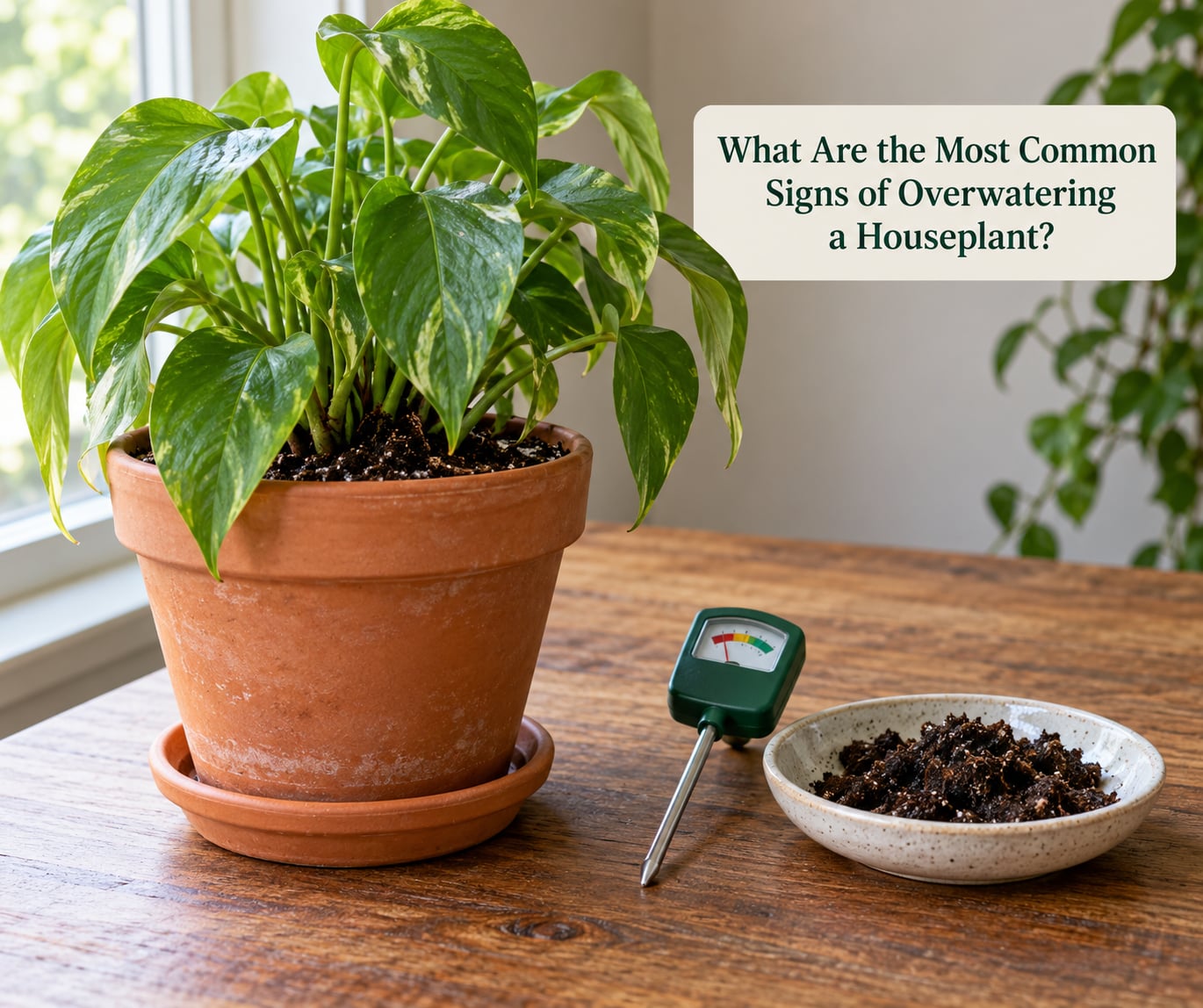
Here are the nine signs to work through, starting with the easiest checks and moving to the ones that require unpotting the plant.
- Yellowing leaves that feel soft, not crisp — the plant took on more water than it could move through, so cells are losing structure.
- Wilted leaves while the soil is still damp — damaged roots cannot pull water out of wet soil.
- Soil that stays wet long after you watered — if the pot still feels heavy days later, drainage is failing.
- A sour, swampy, or rotten smell from the pot — anaerobic soil is feeding fungal and bacterial pathogens.
- Brown, black, or mushy roots — healthy roots are firm and pale; rotted ones slip and smell bad.
- Soft or mushy stems, especially at the soil line — a later-stage sign that tissue is decaying.
- Leaves dropping while the soil is damp — the plant is shedding parts it can no longer support.
- Blister-like bumps on the underside of leaves — edema, where water intake outpaces transpiration.
- Small flying gnats around the soil surface — fungus gnats breed in consistently wet mix.
None of these prove anything on their own. The order I check them in matters more than the list itself: soil first, then drainage, then roots, then leaves, and finally your recent watering habits. Leaves are the last place to look because they are the slowest and least specific signal.
Yellow or Soft Leaves
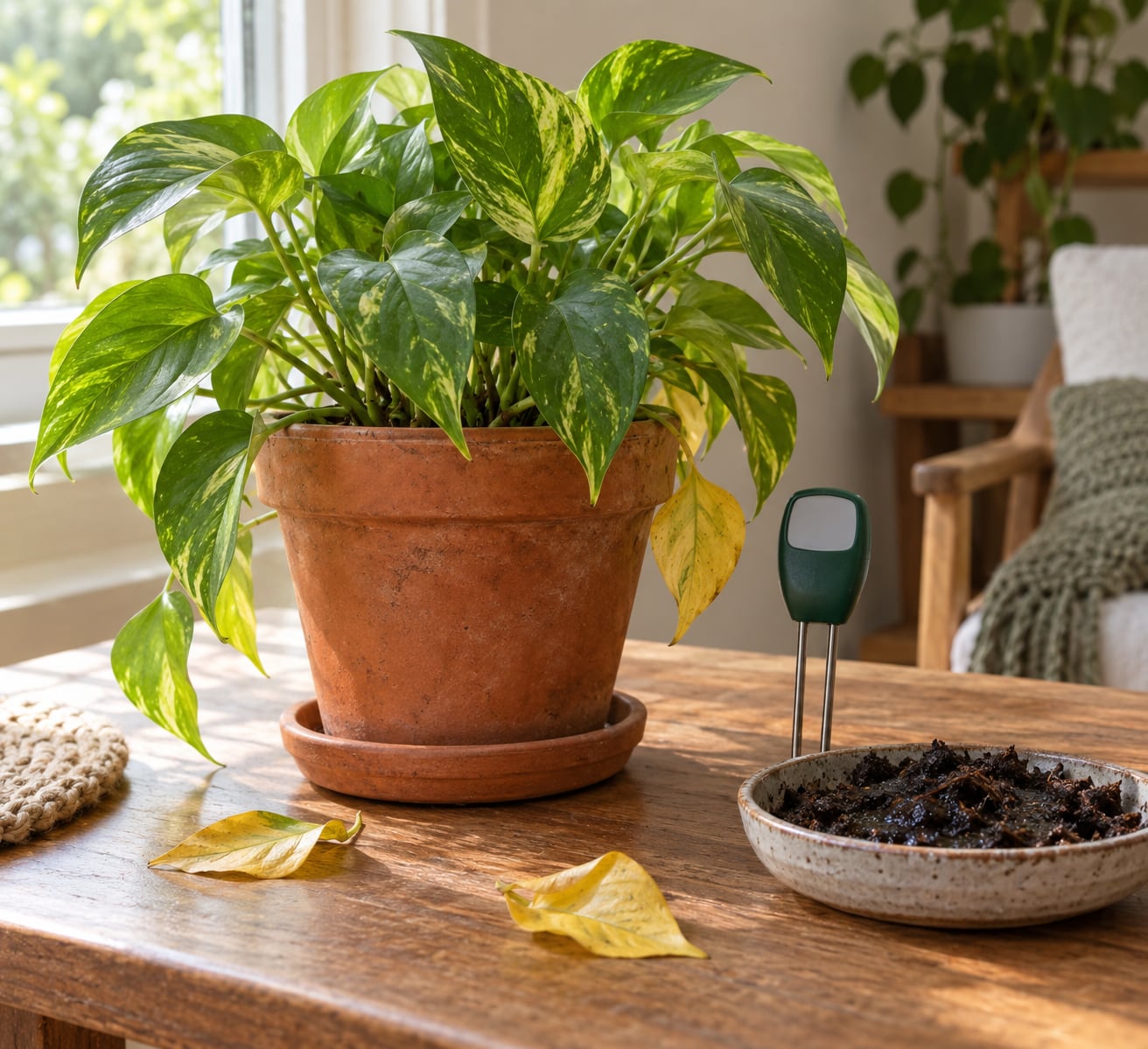
Uniform yellowing across a whole leaf, starting on the older lower leaves, is the classic sign. The texture is the giveaway — overwatered leaves go limp and soft, while an underwatered plant’s leaves curl, crisp, and go brown at the edges instead.
Not every yellow leaf means trouble. Older leaves at the base of a plant yellow and drop naturally as the plant moves its resources upward, and some species, like many dracaenas and ficuses, shed a leaf or two after a move to a new spot. One or two yellow leaves is normal. A wave of them appearing over a week while the soil stays wet is not.
Compare an affected leaf against a healthy one on the same plant rather than judging color alone. Weight matters too: hold both. The soft one bends and feels heavier in your hand.
Soggy, Compact, or Smelly Soil
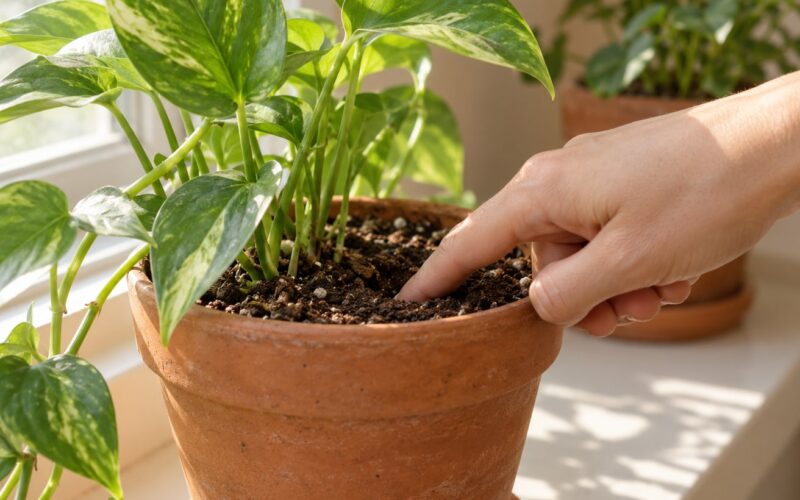
Push a finger about an inch into the mix, all the way down to the root zone rather than just the surface. Saturated soil feels heavy, closes into a dense clump when you squeeze it, and often smells sour or swampy when you get close to it. Soil that slumps into your palm and stays molded is a bad sign, not a healthy soil.
Here is the trap most plant owners fall into: a dry, crumbly top layer tells you nothing about the root ball. Mulch, a thick top dressing of perlite, or simply watering only the surface can leave the top inch bone dry while two inches down is still saturated. Test below the surface.
Soft, Mushy, or Discolored Roots
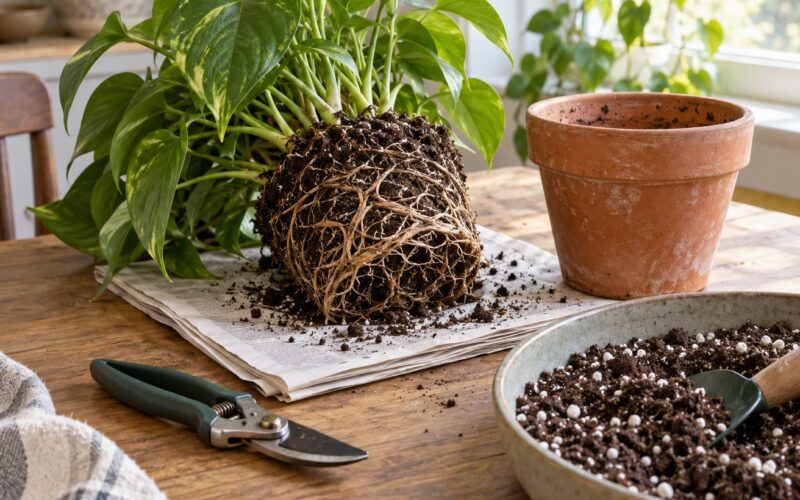
Checking roots is the only way to confirm root rot, and it is less frightening than it sounds. Water the plant the day before if you can, tip the pot sideways, and support the base as you slide the plant out. Squeeze the root ball gently — it should come free in one piece.
Healthy roots are firm, pale, and fibrous, and they resist a light pinch. Rotten roots are brown, black, or a translucent gray-green, feel slimy or spongy, and give way under pressure. Slime-coated roots with a strong rotten odor mean root rot is already established rather than starting.
Roots need oxygen to take up water. Saturated soil pushes air out of the pore spaces, and once that happens the root tips die first. Dead roots cannot absorb water or nutrients, which is why a damaged plant can look thirsty in wet soil.
Wilting Despite Wet Soil
This is the symptom that confuses people most, because it looks identical to being thirsty. The difference is what you find when you put a finger in the soil. Wet soil plus a wilting plant points to damaged roots; dry soil plus a wilting plant points to a thirstier plant.
Before you blame water, rule out three other things. Root-bound plants wilt quickly in dry wind because there is not enough medium to hold moisture. A plant just moved from dim light to a bright window can wilt while it adjusts. And heat near a radiator or a cold draft can cause temporary droop that has nothing to do with the roots.
Leaf Drop, Stem Softening, or Crown Rot
When a plant sheds leaves while the soil is still damp, it is losing parts it cannot support anymore. Stems that feel soft or hollow near the base, and darkening at the soil line, point to crown rot, which is further along than simple yellowing.
This is the stage where I isolate the plant from its neighbours, since rot can spread through shared saucers and wet soil. Remove mushy tissue with a clean blade, improve airflow around the plant, and hold off on misting. If the base is gone, the plant probably will not recover, and it is kinder to compost it than to nurse a crownless stem.
Poor Drainage and Watering Habits That Increase Risk
Most overwatering is really a drainage problem that people mistake for a watering problem. Containers with no drainage hole hold water at the bottom no matter how carefully you pour. Decorative cachepots trap whatever drains into them, and a heavy mix — dense peat without perlite or bark — holds water far longer than most mixes.
Fixed schedules are the other half of the risk. Watering every Sunday regardless of what the soil is doing means watering wet plants. Frequent misting adds humidity without hydrating roots, and it keeps the surface damp enough to invite fungus gnats.
Check the pot for holes, empty any outer pot after watering, and lift the inner pot to see whether water is sitting in the bottom. If nothing drains, fix that before you adjust anything about your schedule.
How to Tell Overwatering From Other Houseplant Problems
Most cases are not overwatering, or not only overwatering. Here is a practical way to separate the common suspects before you change anything about how you care for the plant.
| Problem | Main clue | What the soil usually looks like | Check that confirms it |
|---|---|---|---|
| Overwatering | Soft yellow leaves, wilt in damp soil | Wet, heavy, sour smell days later | Roots brown or mushy when unpotted |
| Underwatering | Crisp edges, curled leaves, dry shed | Light pot, bone dry, pulling from the pot edge | Soil dry at root depth; pot feels light when lifted |
| Nutrient deficiency | Even pale or interveinal yellowing on old leaves | Normal moisture, often slightly dry | Roots look healthy and pale, no odor |
| Pests | Sticky residue, webbing, stippling, gnats | Damp but not saturated | Check leaf undersides and stems for insects |
| Poor light | Stretched stems, small new leaves, overall fade | Variable, drying oddly fast in sun | Move brighter and watch for two weeks of new growth |
| Root-bound or compacted soil | Dries within days, water runs straight through | Hard, dense, breaking apart in chunks | Roots circle the base and hold the soil in a solid block |
Run through this list in one sitting, before you act. Repotting a plant that only needed water makes the problem worse.
What to Do First When You Suspect Overwatering
Pause watering first. Everything else is easier to judge when no new water is entering the pot.
Next, check drainage and lift the inner pot out of any outer cachepot so trapped water can drain away. Then slide the plant free and inspect the roots, following the steps above.
Trim away anything brown, black, or mushy with a clean, sharp blade. Do not be conservative about it. Rotten tissue left in contact with healthy tissue keeps the problem going, and in my experience trimming generously costs far less than leaving half of it behind.
If the roots are badly affected, repot into a pot one size smaller with drainage holes and a free-draining mix, adding perlite or bark to whatever you use. A smaller pot is deliberate: the injured root system cannot fill a large volume of wet soil, and a perched water table forms when there is a gap the roots cannot reach.
Then wait. Roots need air and time to grow back, so do not keep the plant constantly damp trying to be helpful. Recovery from severe overwatering takes weeks to months, not days. New growth is the proof; old yellow leaves do not turn green again.
How to Prevent Overwatering in the Future
Prevention is mostly about checking instead of assuming. Push a finger to root depth before every watering and only water if it is dry there. Test at least an inch or two down, since the surface dries long before the root zone does.
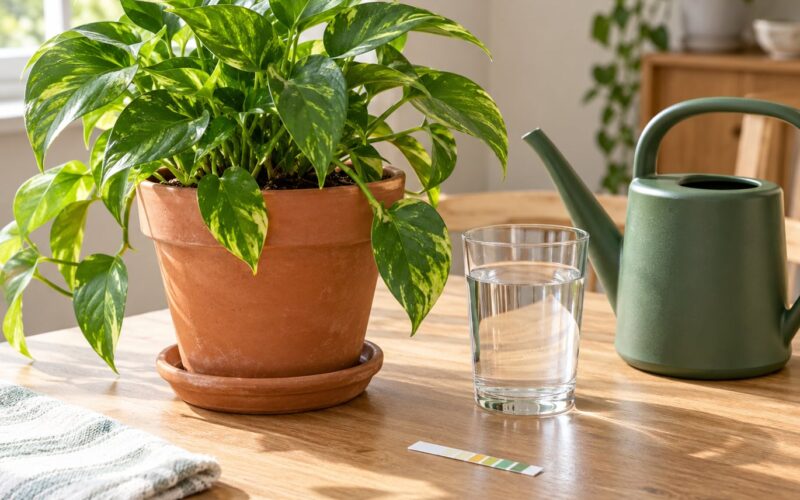
Lifting the pot is the most reliable method because weight is hard to fool yourself about. Learn what your plant’s pot feels like a few days after watering, then wait until it feels meaningfully lighter. A moisture meter is useful mostly as a backstop for beginners who worry about getting it wrong; the finger and the pot weight cost nothing.
Water thoroughly when you do water, until it runs out of the drainage holes, and let the pot drain completely. Plants tolerate a missed watering far better than a soaked root ball.
Between waterings, it helps to note a few things: the date, whether the soil was dry at root depth, how long the pot took to drain, and where the plant sits. Adjust for season, light and growth — a plant in a bright summer window dries in days, while the same plant in a dim corner in winter may need a month.
Signs of Overwatering a Houseplant: Frequently Asked Questions
Do yellow leaves always mean a plant is dying?
No. A single old leaf at the base yellowing and dropping is completely normal, and some species shed a leaf or two after being moved. Yellowing becomes a warning sign when several leaves change at once, when the texture goes soft rather than crisp, and when the soil is staying wet. Judge the whole picture rather than one leaf.
Do plants turn yellow when underwatered?
They can, so color alone will not settle the question. Underwatered leaves more often curl, crisp at the edges, and go brown, and the soil is light and bone dry to the touch. Overwatered leaves feel soft and limp, and the soil stays heavy and damp for days. Check the soil at root depth before changing anything.
Will plants recover from overwatering?
Often yes, if the roots are not too far gone. Cut back brown and mushy roots with a clean blade, repot into a smaller pot with drainage holes and a free-draining mix, then give the plant time in bright indirect light. Recovery runs weeks to months, and new leaves are the real sign of progress. Crown rot at the base is usually terminal.
Does misting cause overwatering?
Misting does not overwater roots the way a watering can does, since the water lands on leaves rather than the root ball. It does raise humidity and dampen the soil surface, which can encourage fungus gnats and leaf spot in plants that prefer dry air. If gnats keep appearing, let the surface dry out fully between waterings instead of reaching for a spray bottle.
Can overwatering cause root rot, and will it go away on its own?
Overwatering is the main cause of root rot, because saturated soil pushes oxygen out of the pore spaces and lets fungal and bacterial pathogens thrive. It will not clear on its own. Once roots turn brown, black, or slimy, you need to remove the dead tissue, correct the drainage, and repot into fresh free-draining mix, or the rot continues through the rest of the root system.
Conclusion
Start at the soil, not the leaves. Push a finger to root depth, lift the pot to check its weight, and if you need certainty, slide the plant out and look at the roots.
A single yellow leaf is not proof of anything. What convinces me is several signals pointing the same way — damp soil, a heavy pot, soft leaves, foul-smelling or brown roots — combined with a watering habit that explains how the water got there. Change one thing at a time, and give the plant weeks rather than days.