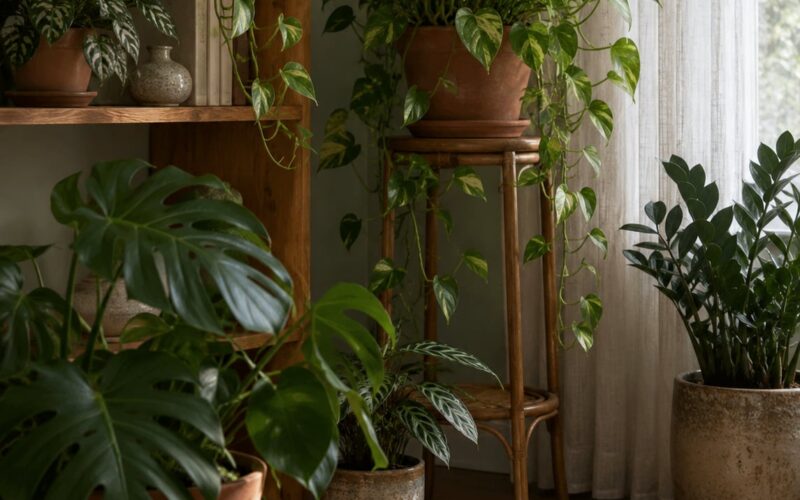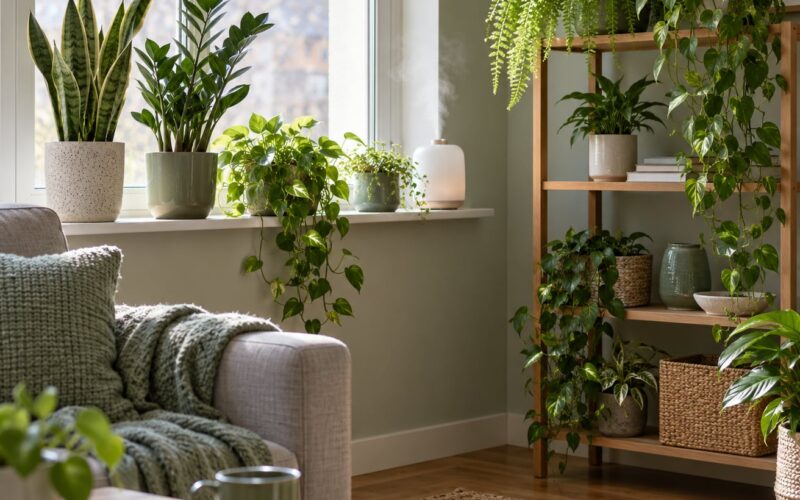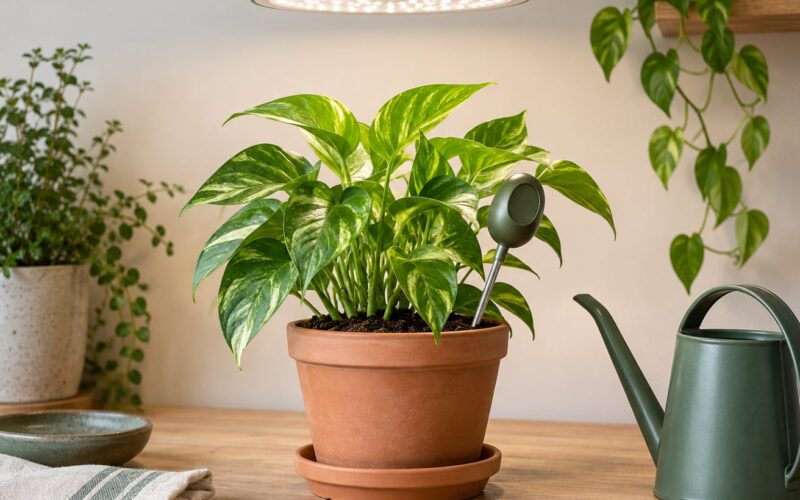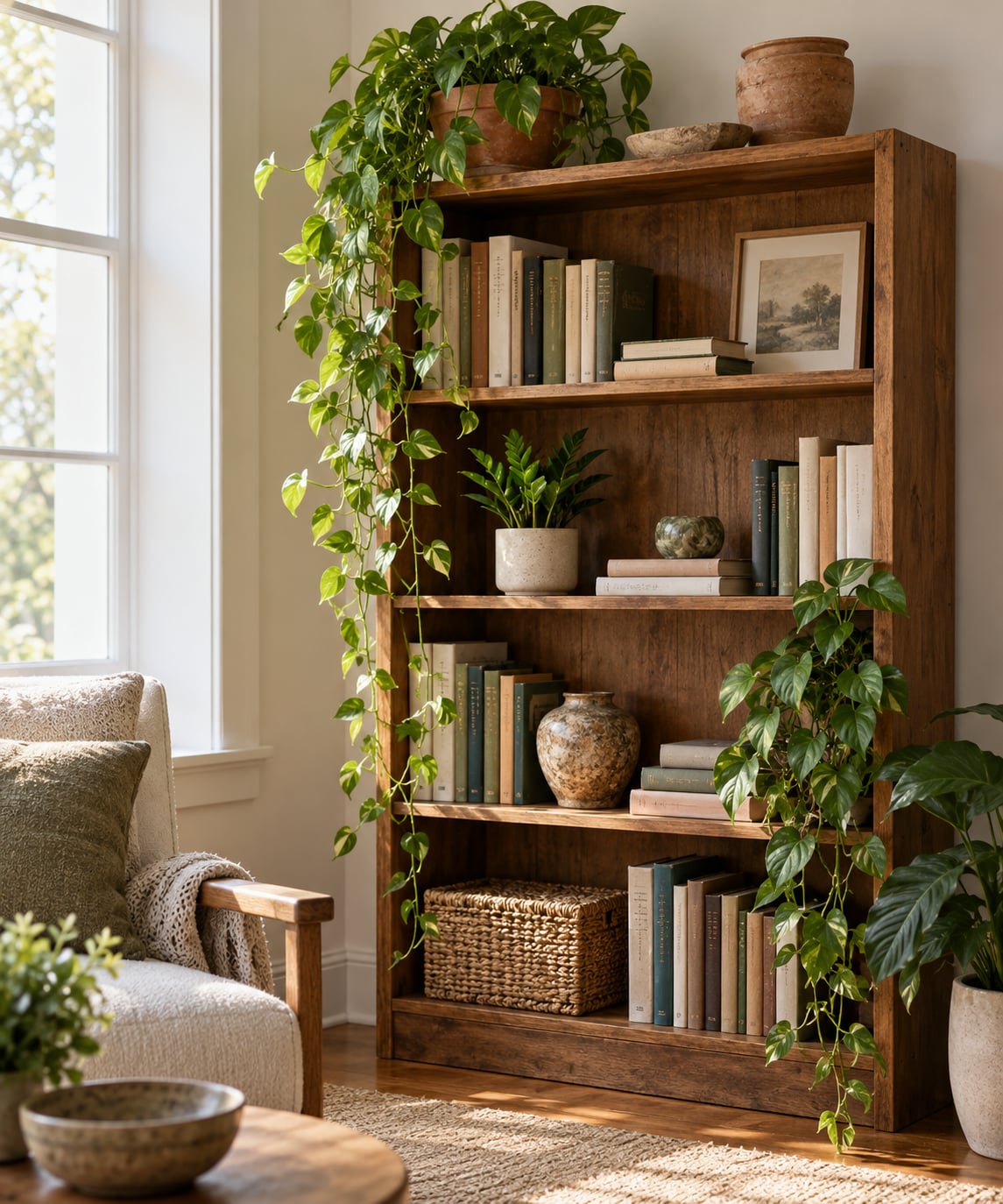
To decorate a bookshelf with plants that stay healthy, you match every pot to the light that shelf actually gets, size it to the shelf gap, and always water over a sink. Three things decide whether the display looks styled or looks crowded: light, gap size, and keeping water off the books.
A shelf of books is a good home for greenery because it uses vertical space you were never using anyway. A trailing pothos on one shelf edge and a compact upright plant three books in break up a solid row of spines and soften the corner of a room. The whole job takes about an hour once, then ten minutes a month.
The trick most guides skip is measuring before you shop. A shelf with a 9 inch gap rules out half the pretty planters, and a shelf two feet from a window gets roughly a quarter of the light the plant label at the nursery assumes. Sort the light and the gaps first, then pick plants.
Table of Contents
- What You Need
- Step-by-Step: How to Decorate a Bookshelf with Plants
- Assess the shelf and its light
- Choose plants that fit the conditions
- Select pots with drainage and stable proportions
- Arrange plants and books as a balanced display
- Water, rotate, and maintain the plants
- Common Mistakes
- Frequently Asked Questions
- What plants are good for a bookshelf with low light?
- Will plants on a bookshelf ruin the books underneath?
- What size plants fit a narrow bookshelf gap?
- Are trailing plants good for bookshelf edges?
- How often should I water plants on a shelf?
- What plants are safe for homes with pets and small children?
- What to Do First
What You Need
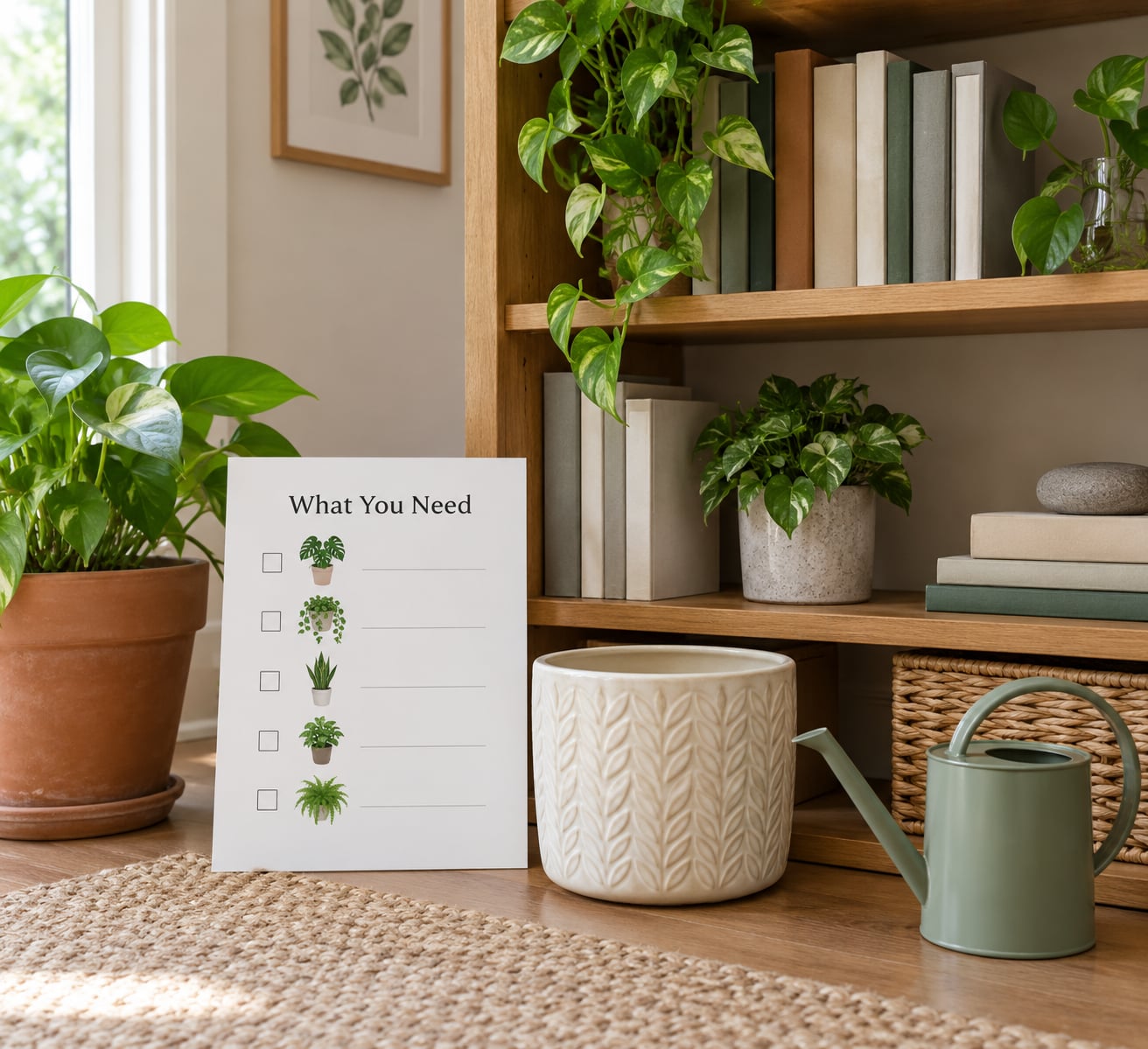
Gather these before you start. You do not need much, and none of it is specific to any one style.
- Plants matched to each shelf’s light — pick per shelf rather than as one group for the whole unit.
- Pots with drainage holes and a saucer or tray under each one. Cachepots (decorative outer pots) are fine as long as the nursery pot inside still drains.
- A small watering can with a narrow spout, plus a sink within easy reach of the shelf for watering over the sink.
- A tape measure for the shelf gaps and the shelf depth from wall to front edge.
- Two or three pot heights rather than a matched set. Same color, different heights reads as styled.
- Optional: a plant light, a felt or cork mat under pots, or liner trays if the shelf is solid wood and you care about rings.
Keep a simple list of which shelf gets which plant. Written down, it saves you re-deciding every time a shelf needs new soil.
Step-by-Step: How to Decorate a Bookshelf with Plants
Assess the shelf and its light
Grade each shelf before you buy anything. Shelves within about 3 feet of a window with no direct sun are bright indirect. Shelves further into the room are medium, and shelves in a hallway, basement, or north-facing corner are low light.
Measure while you are there. Note the vertical gap between shelves and the horizontal depth, because a plant needs its leaves to clear the shelf above and needs depth to sit back rather than teeter over the edge.
Also check what the shelf sits near. A radiator, a fireplace, a sunlit window ledge, or a heating vent will cook a plant that looks fine elsewhere. Avoid any spot where water running off a pot could reach book spines or the shelf below.
Choose plants that fit the conditions
Match the plant to the grade, and match its mature size to the gap, not its size in the pot you buy. This is how to decorate a bookshelf with plants that still look right in a year, not just on styling day.
| Plant | Light level | Mature height | Form | Care level |
|---|---|---|---|---|
| Pothos | Low to medium | Trailing, 12 to 24 inches | Trailing | Easy |
| Snake plant | Low to medium | 12 to 24 inches | Upright | Very easy |
| ZZ plant | Low | 10 to 18 inches | Upright | Very easy |
| Dracaena marginata | Low to medium | 12 to 24 inches | Upright | Easy |
| Spider plant | Medium | 8 to 12 inches | Spreading | Easy |
| Pilea peperomioides | Medium to bright indirect | 8 to 12 inches | Upright | Easy |
| String of hearts | Bright indirect | Trailing, 12 to 24 inches | Trailing | Moderate |
| Succulents and cacti | Bright | 2 to 8 inches | Low and rosette | Easy, water sparingly |
For a dim shelf, snake plant, dracaena, ZZ plant, and pothos are the reliable picks that people on plant forums name again and again. Skip dark-foliage plants on low-light shelves. Without enough light they stretch and the leaves read as a black void, which makes the whole shelf look worse than empty.
Beginners should look for forgiving plants, ones that forgive both overwatering and a missed week. If you travel often or forget, a snake plant in a cachepot is about as low-effort as shelf greenery gets.
Select pots with drainage and stable proportions
A pot without a drainage hole will kill the plant eventually, and it can wet the shelf on the way down. If you love a decorative pot with no hole, keep the plant in its nursery pot and set that inside the outer pot as a cachepot.
Match pot width to the plant rather than the gap. A pot too small for the foliage tips over, and a pot too wide for the shelf gap overhangs and blocks the book below. Wide, shallow pots hold a shallow root ball better than tall narrow ones.
Heights matter more than matching sets. Two or three pots in the same material or color, at three different heights, look coordinated. A single tall pot on a low shelf tips the whole composition toward one side.
Arrange plants and books as a balanced display
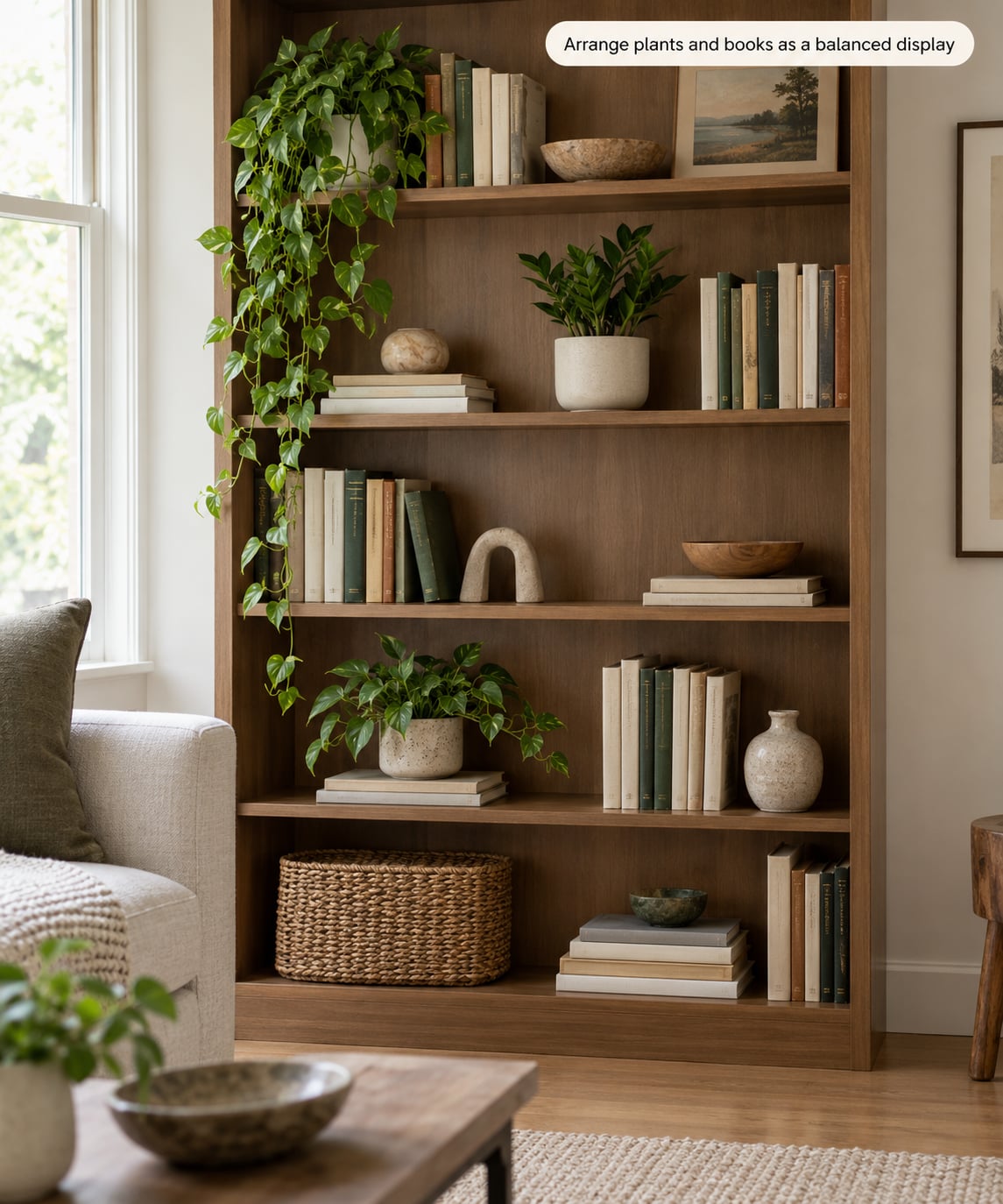
Work in odd-numbered groups. Three objects read as intentional, two read as a pair that happens to be there. On a long shelf, one plant and a small stack of books every 12 inches is usually enough.
Vary height across the shelf: a low trailing plant at one edge, a medium pot behind a short stack of books used as a pedestal, a taller upright further along. Put upright plants at the back of the shelf and trailing ones near the front edge where the vines can hang over.
Leave gaps. A shelf with plants at every gap stops being a bookshelf and turns into a plant stand. Books need breathing room to be pulled out, and a solid block of foliage hides the spines you chose to display.
Water, rotate, and maintain the plants
Water over the sink whenever you can. Carry the plant to the sink, water until it drains, wait a minute, and carry it back. If the shelf is far from a sink, use a drip tray with a liner and keep the watering volume small.
Check the soil with a finger before watering rather than watering to a schedule. Push a finger about an inch down. If it feels dry, water. If it feels damp, wait a week. Most shelf plants die from overwatering, not neglect.
Rotate each plant a quarter turn every week or two so it grows evenly instead of leaning toward the window. Wipe the leaves with a damp cloth when you dust the shelf, and pull yellow leaves off right away.
Give yourself a monthly five-minute round: soil check, dead leaf removal, rotation, wipe down. That is the whole maintenance routine.
Common Mistakes
Overcrowding the shelf. Fix: remove one plant from every shelf and see how it looks. Space is what makes a shelf look styled rather than packed.
Choosing plants for the room instead of the shelf. Fix: match the plant to that specific shelf’s light grade. A shelf two feet from a window is medium light, not bright.
Using decorative pots with no drainage. Fix: keep the nursery pot inside and treat the outer pot as a cachepot, with a tray underneath.
Watering on a fixed schedule. Fix: check the soil with a finger first. Schedule watering is why so many shelf plants end up in the bin.
Blocking the books. Fix: keep pots back from the front edge, use trailing plants to soften rather than cover, and leave a hand’s width of clear spines.
Putting a tall or heavy pot on a weak shelf. Fix: water plants on the floor and carry them, and keep anything heavy on the lowest shelf where a drop does no damage.
Frequently Asked Questions
What plants are good for a bookshelf with low light?
Snake plant, dracaena, ZZ plant, and pothos are the four that come up most often in plant forums when people ask about dim shelves. All four tolerate low to medium light and survive an irregular watering routine. Avoid dark-foliage plants on dim shelves, since they stretch and read as a black void.
Will plants on a bookshelf ruin the books underneath?
Not if you change how you water. Carry plants to the sink and water them there until they drain, or keep a lined drip tray under each pot and use a small volume. Never tip a full watering can over a pot sitting on top of books, and check the shelf below now and then for damp spots.
What size plants fit a narrow bookshelf gap?
Measure the gap and the shelf depth before shopping, and buy for the mature size rather than the pot size. A gap under about 10 inches suits plants in 4 to 6 inch pots, including pothos, spider plants, and small snake plants. If the pot overhangs the front edge, the plant will topple and the shelf below will get wet.
Are trailing plants good for bookshelf edges?
Yes, and they are the easiest way to soften a shelf without using floor space. Pothos and string of hearts both trail well from a front corner, where their vines hang down over the edge. Keep an eye on the plant below, because a long vine will shade whatever sits underneath it.
How often should I water plants on a shelf?
Check the soil first, every week, by pushing a finger about an inch down. Water only when it feels dry. Most shelf plants need water every one to three weeks, but succulents and snake plants can go much longer. A fixed schedule is the most common reason shelf plants die.
What plants are safe for homes with pets and small children?
Choose non-toxic plants such as spider plants, parlor palms, prayer plants, and most ferns. Keep in mind that lilies, philodendrons, pothos, and ZZ plants are toxic to cats and dogs if chewed. Plants on a high bookshelf are mostly out of reach, which is another reason to keep them above the lowest shelf.
What to Do First
Start with one shelf. Measure the gap, grade the light, and pick a single forgiving plant that fits both. Place it, water it over the sink once, and leave it alone for a month. Everything else on that shelf comes after you know that plant is happy there. That single shelf is where most people start, and it is where the mistakes are easiest to catch.