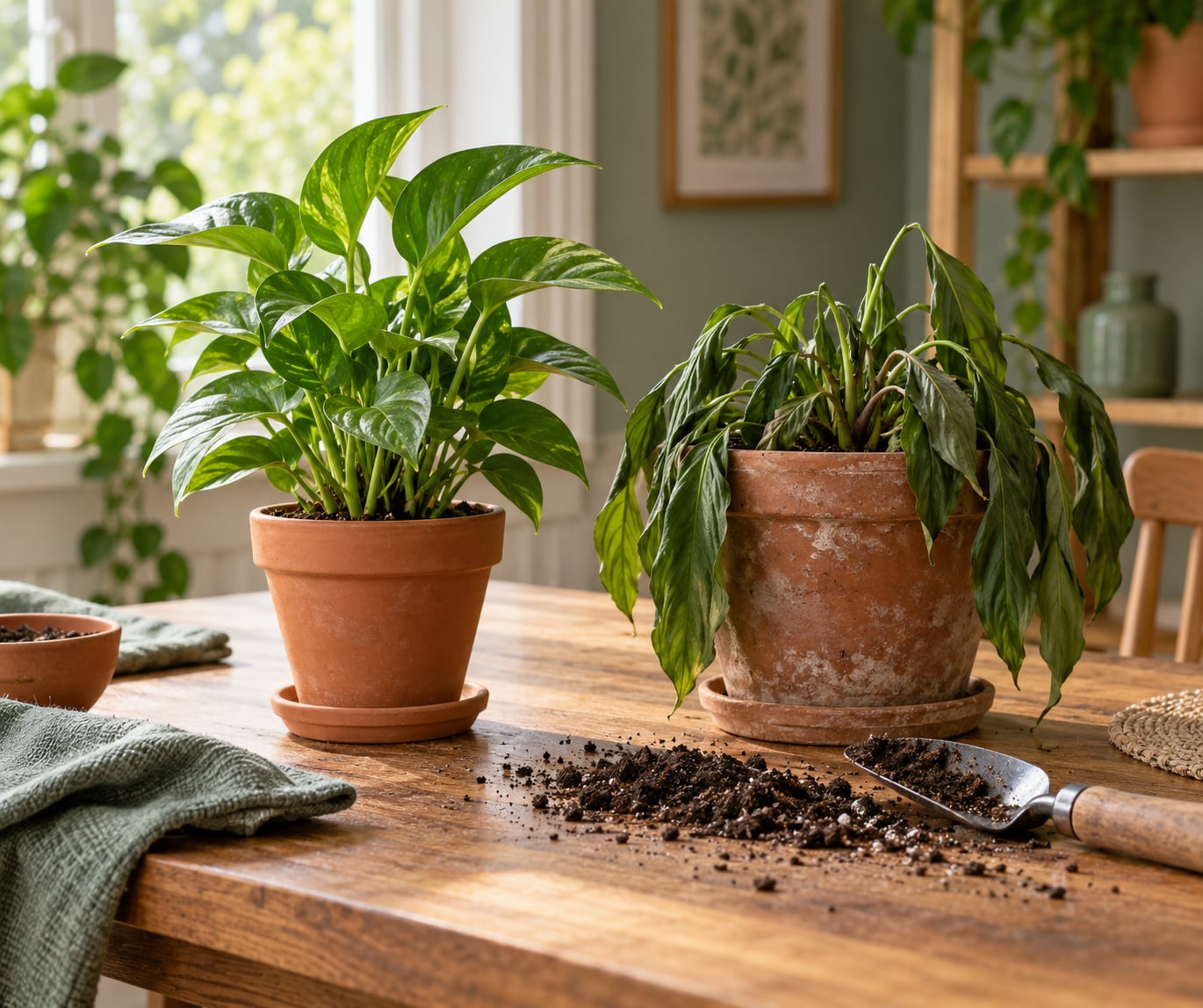
Plants wilt after repotting because the roots you disturbed can no longer take up water as fast as the leaves are losing it. Repotting breaks the fine feeder roots that do the drinking, and the plant droops while it repairs them. Most cases of plants wilting after repotting fix themselves within a couple of weeks. Persistent droop, though, usually means damaged roots, a pot that is too big, or soil that stays too wet.
The tricky part is telling the harmless version apart from the kind that kills. That difference is decided in the first 72 hours, and most of it comes down to how wet the soil is and what the roots look like.
Table of Contents
- Why Do Plants Wilt After Repotting?
- What Is Transplant Shock?
- What Causes Wilting After Repotting?
- 1. Damaged or torn roots
- 2. A pot that is too large
- 3. A change in how wet the soil stays
- 4. Overwatering straight after repotting
- 5. Compacted mix or a buried crown
- 6. Poor drainage in the new container
- 7. Moving at the wrong time of year
- 8. Fertilizing too soon
- Temporary Wilting or a Bigger Problem?
- How to Help a Wilted Plant Recover
- Check the drainage first
- Water only if the soil supports it
- Skip fertilizer for 4 to 6 weeks
- Hold the light steady and skip the harsh spots
- Move air around it
- Leave wilted leaves on unless they are gone
- Wait for new growth before doing anything else
- When Should You Undo the Repotting?
- The roots are black and soft
- The soil smells sour
- The stem base is collapsing
- The container cannot drain
- The pot is far bigger than the root mass
- Frequently Asked Questions
- How long should a plant stay wilted after repotting?
- Should I water a plant immediately after repotting if it is wilted?
- Why are the leaves turning yellow after repotting?
- Is it normal for a plant to wilt in its new pot?
- Should I fertilize a wilted plant after repotting?
- How do I know if my plant has root rot after repotting?
- Conclusion
Why Do Plants Wilt After Repotting?
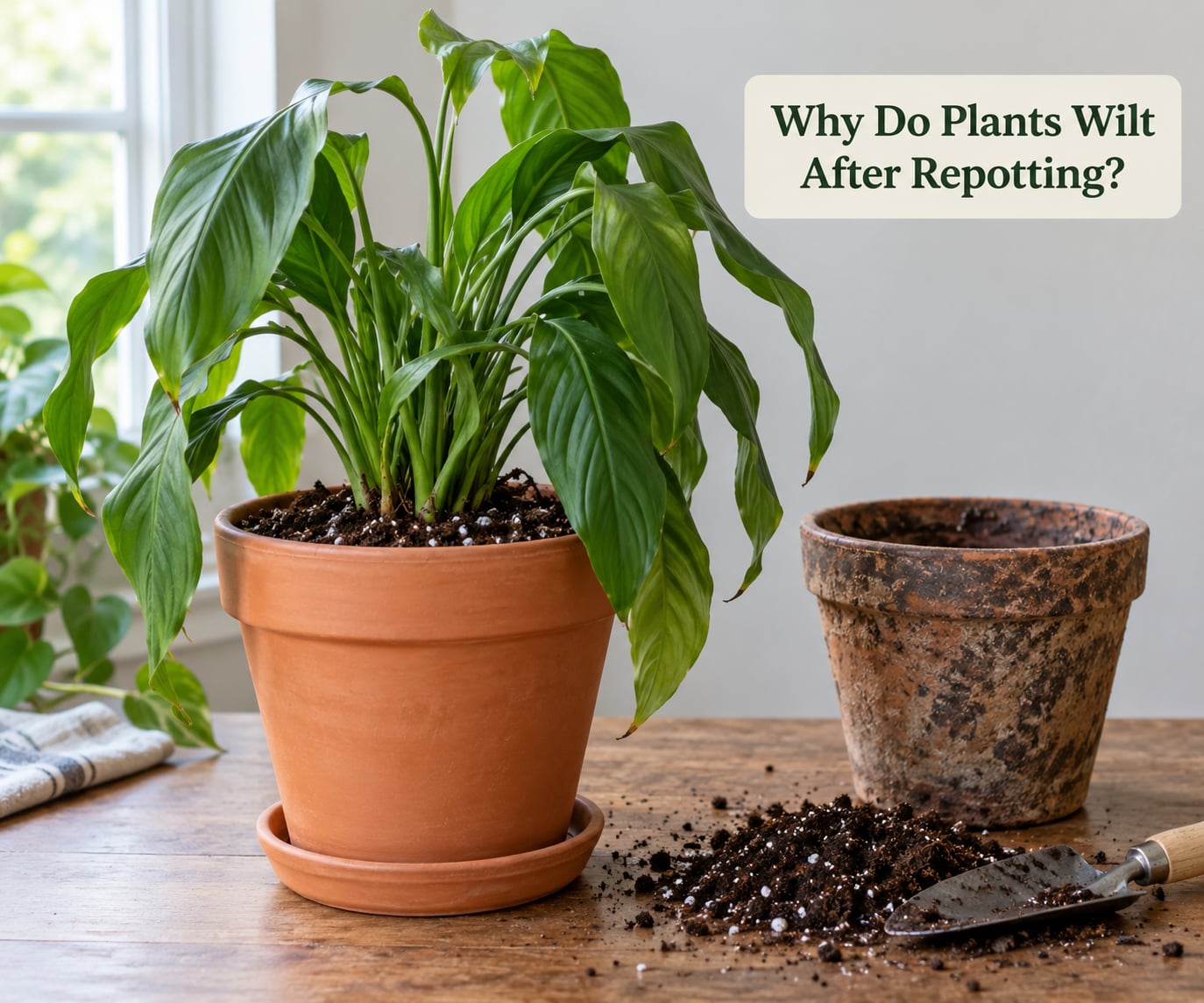
Every leaf is a small water pump. Roots pull moisture up from the soil, the leaves lose that moisture to the air through tiny pores, and the pressure inside the leaf cells keeps it firm. Repotting cuts off part of the intake side of that system.
The fine feeder roots just under the outer layer are the ones doing most of the absorbing, and they are the first to break when you untangle, tease, or trim a root ball. Leaves keep losing water at the same rate as before. Intake drops. The cells lose pressure, the leaves go limp, and the stems bend under their own weight.
At the same time, the new mix often holds more moisture than the old one did. So you can have a plant drooping in soggy soil and still be short of usable water. That combination is why “my soil is wet and my plant is dying” happens so often.
What Is Transplant Shock?
Plant scientists call it transplant shock, and houseplant growers call it repotting shock. It is not a disease. It is a temporary stress response that shows up as drooping leaves, yellowing, and sometimes leaf drop in the days after you disturb the roots.
Two things happen at once. The damaged root system absorbs less water, and the plant is also losing more water than usual because the disturbed root ball has lost contact with moist soil in places. Any leaf that can’t replace what it loses goes limp.
Fine-rooted plants notice this most. Ferns, calatheas, prayer plants, and most herbs and seedlings have a large proportion of their absorbing surface in fragile root hairs. A plant with a thick, woody, fibrous root system such as a snake plant, jade plant, or most succulents shrugs off the same treatment far more easily.
What Causes Wilting After Repotting?
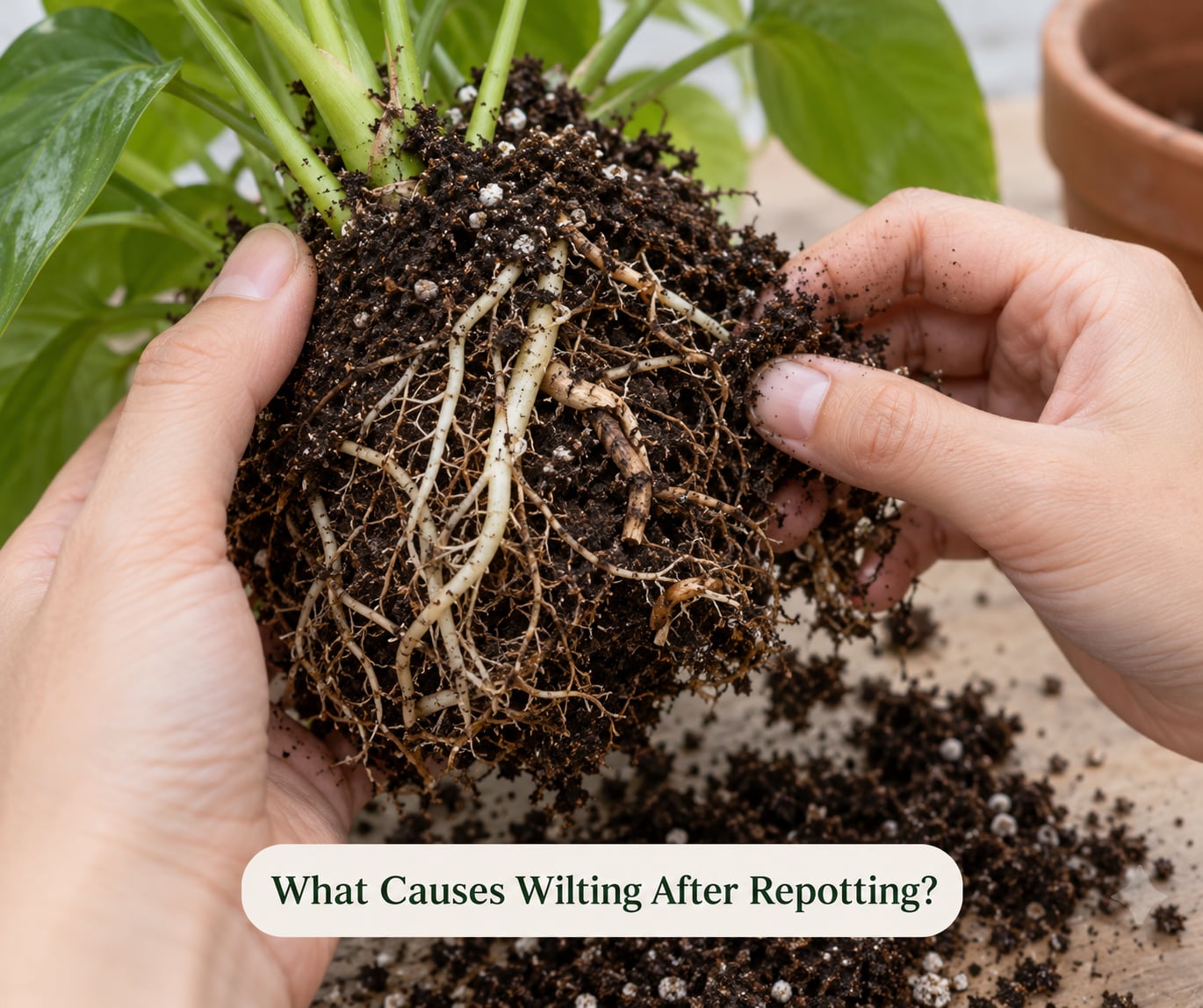
Not every wilt is shock. Here are the usual causes, roughly in order of how often they turn up.
1. Damaged or torn roots
Roots ripped while unwinding a root ball, snapped when the root ball was squeezed back into the pot, or cut too hard during division cannot absorb water even in wet soil. This is plant drooping after repotting in its purest form: green leaves, wet soil, no uptake.
2. A pot that is too large
Going up more than one or two pot sizes is the most common self-inflicted wound. A big pot holds a large volume of wet soil that a small root mass cannot drink, so the mix stays saturated and airless around the roots. People often report that a plant revived immediately when moved into a snug pot with fresh mix.
3. A change in how wet the soil stays
Fresh potting mix holds water differently from the mix the plant was living in. If you keep the old watering schedule, you may water a plant that is already moist and drown it. The schedule changes even though nothing else did.
4. Overwatering straight after repotting
Advice online splits on this, and that is why it causes so much damage. Watering a thoroughly soaked new pot adds no moisture the plant needs, and it pushes out the air that the remaining roots need to breathe.
5. Compacted mix or a buried crown
Pushing soil down too firmly squeezes out pore space, and planting the stem base below its old depth puts the crown in wet soil. Both produce the same limp result as overwatering even when you are watering carefully.
6. Poor drainage in the new container
A decorative pot or a cachepot with no holes traps every drop. Terracotta breathes, plastic does not, and a pot sitting inside a saucer full of water behaves like a sealed jar.
7. Moving at the wrong time of year
Repotting a plant that is flowering, dormant, in deep winter, or in peak heat stacks stress on a plant that already has little to spare. Repot just before active growth if you have the choice.
8. Fertilizing too soon
Fresh mix and burned roots do not mix. Fertilizer on a plant that cannot drink is more salt in soil that is already stressing.
Temporary Wilting or a Bigger Problem?
Run this check in order, before you change anything. It takes about a minute and settles most cases.
- Press a finger 3 to 5 cm into the soil. Wet and cool means the plant is not short of water. Dry and dusty means it is.
- Press a leaf and a stem between finger and thumb. Soft and bendy is stress. Firm and springy is fine, and any leaf that feels crisp or brittle has lost water in a different way.
- Check the color of new growth. New leaves stay green, even when old ones droop. New leaves that emerge yellow or small point at root trouble instead of shock.
- Slide the plant out of the pot and look. White or pale tan firm roots are healthy. Soft brown or black roots that smell sour or swampy mean rot.
- Look at the pot. Standing water in the saucer, or a pot that feels heavier than the plant should, means the mix is saturated.
Here is the same information side by side, which is faster than reading symptoms one at a time.
| Sign | Transplant shock | Overwatered | Underwatered | Root rot |
|---|---|---|---|---|
| Soil 5 cm down | Evenly damp | Wet, may smell stale | Dry, dust on surface | Wet, sour odor |
| Root color | Pale, firm | Turning tan and soft | Pale, shriveled | Brown, black, mushy |
| Leaf texture | Limp, springs back when watered | Soft, heavy, sometimes yellow | Dry, curled, crispy edges | Wilted plus dropping leaves |
| Smell from pot | Normal soil | Musty or sour | Neutral | Strongly rotten |
| What helps | Time, steady moisture, bright indirect light | Let it dry, improve drainage | Water thoroughly, then reassess | Cut away rot, repot into dry mix |
One more time signal: the timing of the wilt relative to the repot. Wilt that starts the same day and eases within about a week is almost always shock. Wilt that deepens over two or three weeks, especially with yellowing, points at water or rot rather than disturbance.
How to Help a Wilted Plant Recover
Work down this list in order. Stop when the plant firms up.
Check the drainage first
Empty any saucer. If the pot has no holes, move the plant into one that does. Waterlogging at the base of the pot will undo anything else you do.
Water only if the soil supports it
This is the rule that reconciles the contradictory advice. If the top of the mix is dry and the plant is limp, water thoroughly until it runs out of the base, using room-temperature water, then let it drain fully. If the mix is already damp, do not water. Let it dry before you water again. The old advice to water generously applies to plants that came out of a dry root ball, not to plants that are sitting in wet soil.
Skip fertilizer for 4 to 6 weeks
A stressed plant cannot use nutrients, and salts in already-compromised soil make the damage worse. Wait until you see new growth before feeding anything at all, including seaweed extract or root tonics. If you feed, use a weak balanced fertilizer in place of a full-strength one.
Hold the light steady and skip the harsh spots
Bright indirect light gives the plant what it needs to rebuild roots. Direct sun through a window while it is already drinking less can scorch leaves that were fine a week earlier. Skip the heating vent and the air conditioner, and keep the plant out of cold drafts.
Move air around it
A fan on low, or simply a spot with moving air, helps wet surfaces dry and discourages rot. It does not need to be cold air.
Leave wilted leaves on unless they are gone
A limp but green leaf is still feeding the plant. Remove only leaves that are fully brown, fully black, or shriveled dry, cutting near the base of the petiole. If more than half the canopy is yellow and falling, the plant is past the point where trimming helps.
Wait for new growth before doing anything else
New leaves are the recovery signal. They usually show up within two to six weeks for a healthy plant, longer for woody plants and anything repotted at the wrong time of year. Do not repot, root-prune, or move a plant again while you are waiting.
When Should You Undo the Repotting?
Most repotting does not need undoing, even when it looks alarming. These are the cases where moving the plant again is the correct call.
The roots are black and soft
Root rot is the one post-repot problem that spreads. If the roots are brown to black, mushy, and smell of swamp or rotting wood, cut them back with a clean blade, remove as much wet soil as you can, and repot into a fresh, open mix in a pot with drainage. This is worth doing the same day.
The soil smells sour
A sour, stagnant smell means anaerobic conditions around the roots. Scoop out as much of the old mix as you reasonably can without shredding the root ball further, or un-pot it entirely and inspect.
The stem base is collapsing
If the stem is soft, dark, or pinching in at the soil line, the crown is rotting. Cut back to firm, pale tissue above it. The plant may regrow from a healthy section, though it may not.
The container cannot drain
Moving into a pot with holes is a correction, not a failure. It is also the fastest fix when a plant wilts days after repotting into a decorative cover pot.
The pot is far bigger than the root mass
If the root ball occupies a small part of the new pot, lift the plant out, trim the outer mix away, and return it to a pot where the roots fill most of the volume. This is the oversized-pot case, and it accounts for a large share of plants that never recovered.
Beyond that, keep the plant and be patient. Ugly is usually not the same as dead.
Frequently Asked Questions
How long should a plant stay wilted after repotting?
Most plants that are wilting after repotting firm up within a few days to two weeks, and new growth appears within two to six weeks. Woody plants, shrubs, and anything repotted during dormancy or peak heat can take several weeks longer. A wilt that deepens past two or three weeks, especially with yellowing and leaf drop, is usually not simple transplant shock.
Should I water a plant immediately after repotting if it is wilted?
Only if the soil supports it. Press a finger into the top of the mix: if it is dry and the plant is limp, water thoroughly with room-temperature water and let it drain. If the mix is already damp, wait. Overwatering a freshly repotted plant is one of the fastest ways to turn recoverable stress into root rot.
Why are the leaves turning yellow after repotting?
Yellowing after repotting is usually the plant shedding stressed leaves it cannot afford to keep, especially older leaves toward the base. It is a sign of shock when it appears in the first week and the new growth stays green. New leaves emerging yellow or undersized, combined with a sour-smelling pot, points at root problems instead.
Is it normal for a plant to wilt in its new pot?
A short period of drooping right after repotting is normal for most plants, particularly those with fine, fragile roots. What is not normal is a wilt that keeps deepening, a pot that stays saturated, or new growth that comes in small and pale. A plant that perks up within a week is adjusting. One that gets worse is not.
Should I fertilize a wilted plant after repotting?
No, not for 4 to 6 weeks. A plant recovering from repotting cannot move nutrients reliably, and fertilizer adds salt to soil that is already stressed. Wait until you see fresh new growth, then start with a diluted balanced feed rather than full strength. Home tonics get a skeptical reception from experienced growers for good reason.
How do I know if my plant has root rot after repotting?
Slide the plant out of the pot and look at the roots. Healthy roots are white or pale tan and firm. Rotting roots are brown or black, soft and mushy, and usually come with a sour or swampy smell from the pot. Leaves that wilt in wet soil and drop quickly are another strong sign. Cut away the rot and repot into fresh, dry, open mix.
Conclusion
Start with the soil and the roots. Press a finger in, slide the plant out, and look at the root color before you water anything. If the mix is wet and the roots are pale and firm, clear the drainage, hold off on watering and fertilizer, and give the plant a couple of weeks in steady bright indirect light. If the roots are black and the pot smells sour, repot into dry mix today. Most plants wilting after repotting come back.