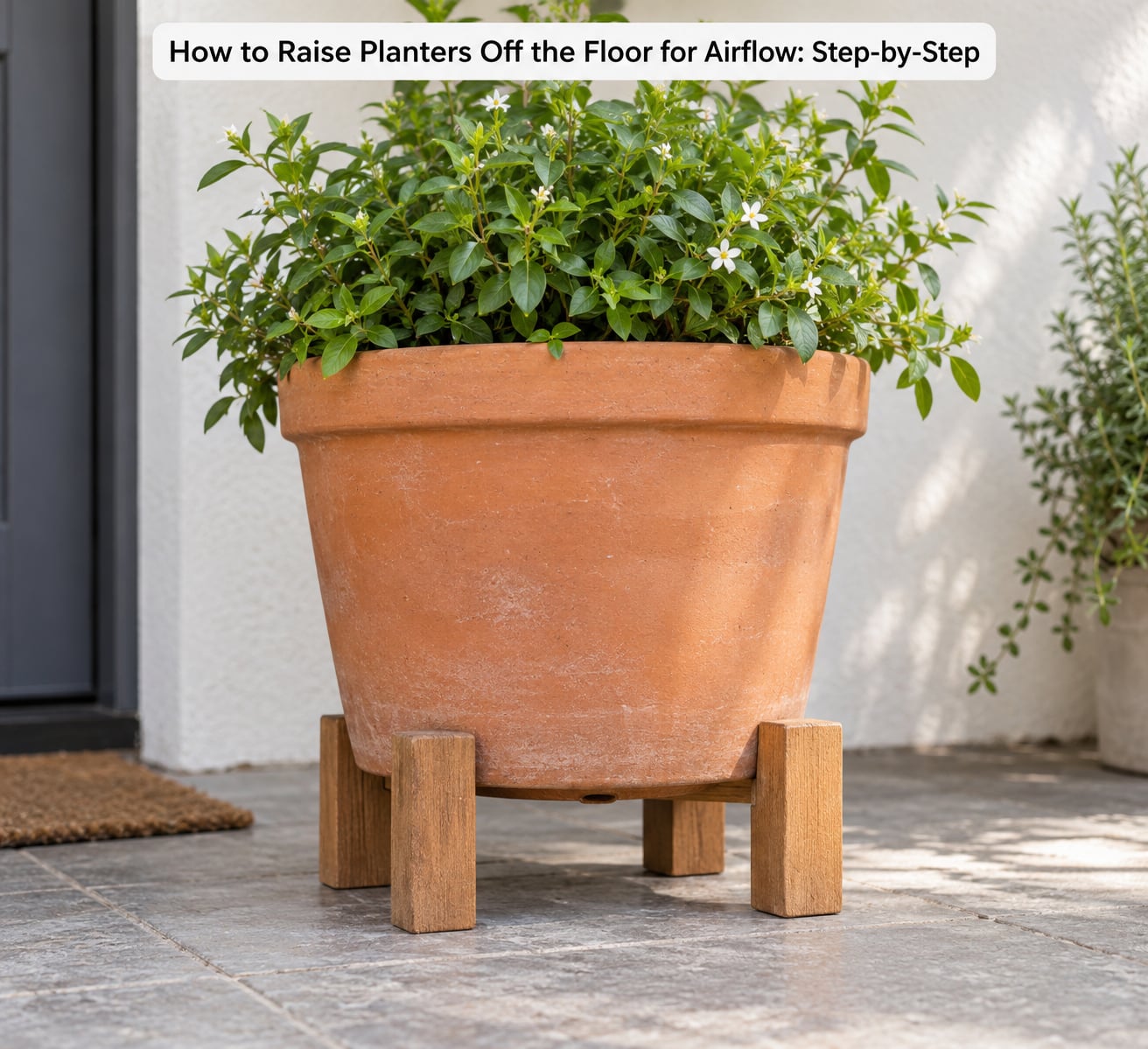
How to raise planters off the floor for airflow is simpler than it sounds: set the pot on pot feet, risers, or a plant stand so a gap of about 1/4 to 2 inches of open air sits under the base of the container. That gap lets water drain and evaporate instead of pooling under the pot, keeps the root zone oxygenated, and stops saucers from leaving rings on hardwood. Most setups take five minutes with a tape measure and a level surface.
I’ve rearranged a lot of pots in apartments and on patios, and the ones that survive longest are the ones that aren’t sitting flat on the floor. A pot sealed against tile or wood traps moisture underneath, and that moisture is what turns a healthy plant into a root-rot and mold problem. Raising the container is the cheapest fix there is, and you don’t need a plant stand to do it.
Table of Contents
- What You Need
- How to Raise Planters Off the Floor for Airflow: Step-by-Step
- Choosing the Right Riser to Raise Planters Off the Floor
- Preparing the Planter and Surface
- Raising the Planter Without Damaging It
- Checking Airflow, Stability, and Plant Health
- Common Mistakes
- Frequently Asked Questions
- How do you raise planters off the floor for airflow?
- How high should I lift a plant pot off the ground?
- Do plant risers actually help airflow and drainage?
- What can I put in the bottom of a planter without drainage holes?
- How do you raise potted plants off the ground indoors?
- How do I lift a heavy planter onto a riser safely?
What You Need
The short version: the planter, something to hold it up, a saucer if the pot has drainage holes, and a way to check that the floor is level and can take the weight.
- The planter itself. Note whether it has drainage holes. Pots without holes need a different strategy, covered further down.
- A support. Pot feet, plastic or rubber risers, a metal plant stand, a wooden riser, bricks, or a purpose-built shelf. Pick the height before you buy, not after.
- A drip saucer. One that matches the base diameter, so runoff collects under the pot instead of running across the floor.
- A tape measure and a level. For checking clearance and confirming all risers sit at the same height.
- A damp cloth and a scrap of cardboard or felt. For protecting hardwood and for a non-slip base.
- A second pair of hands for anything over roughly 40 pounds, plus furniture sliders for the move.
- Outdoor extras: a piece of rust-resistant hardware or pavers if you are using metal or wood outdoors, and a level to counter the slope of a deck or patio.
How to Raise Planters Off the Floor for Airflow: Step-by-Step
Choosing the Right Riser to Raise Planters Off the Floor
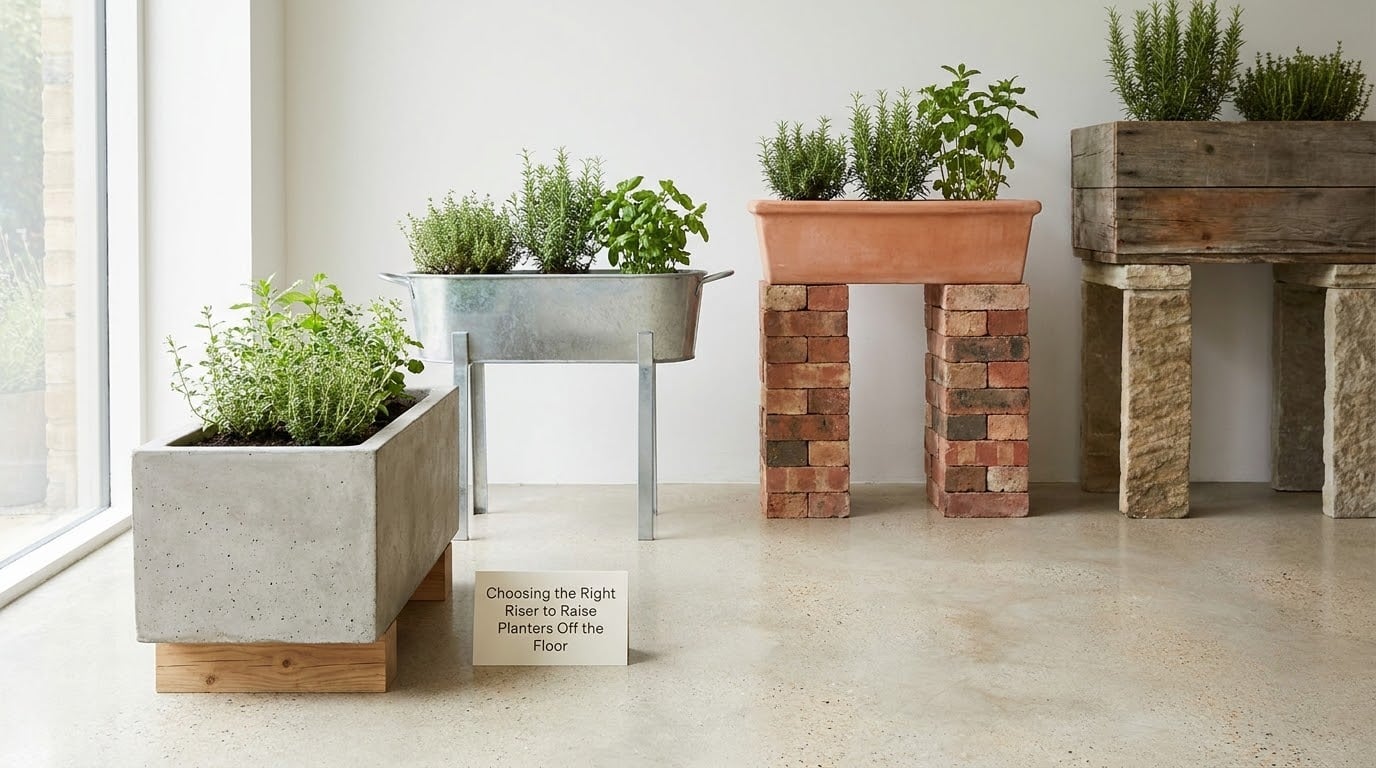
The support you pick sets the lift height, and the lift height is the whole point. Here is where each option lands.
| Riser type | Typical lift | Load capacity | Best for |
|---|---|---|---|
| Invisible pot feet | 1/4 to 1 inch | Light to medium pots | Indoor pots where you do not want visible hardware |
| Plastic risers | 1 to 3 inches | Medium to heavy | Indoor use, adjustable feet, the most common choice |
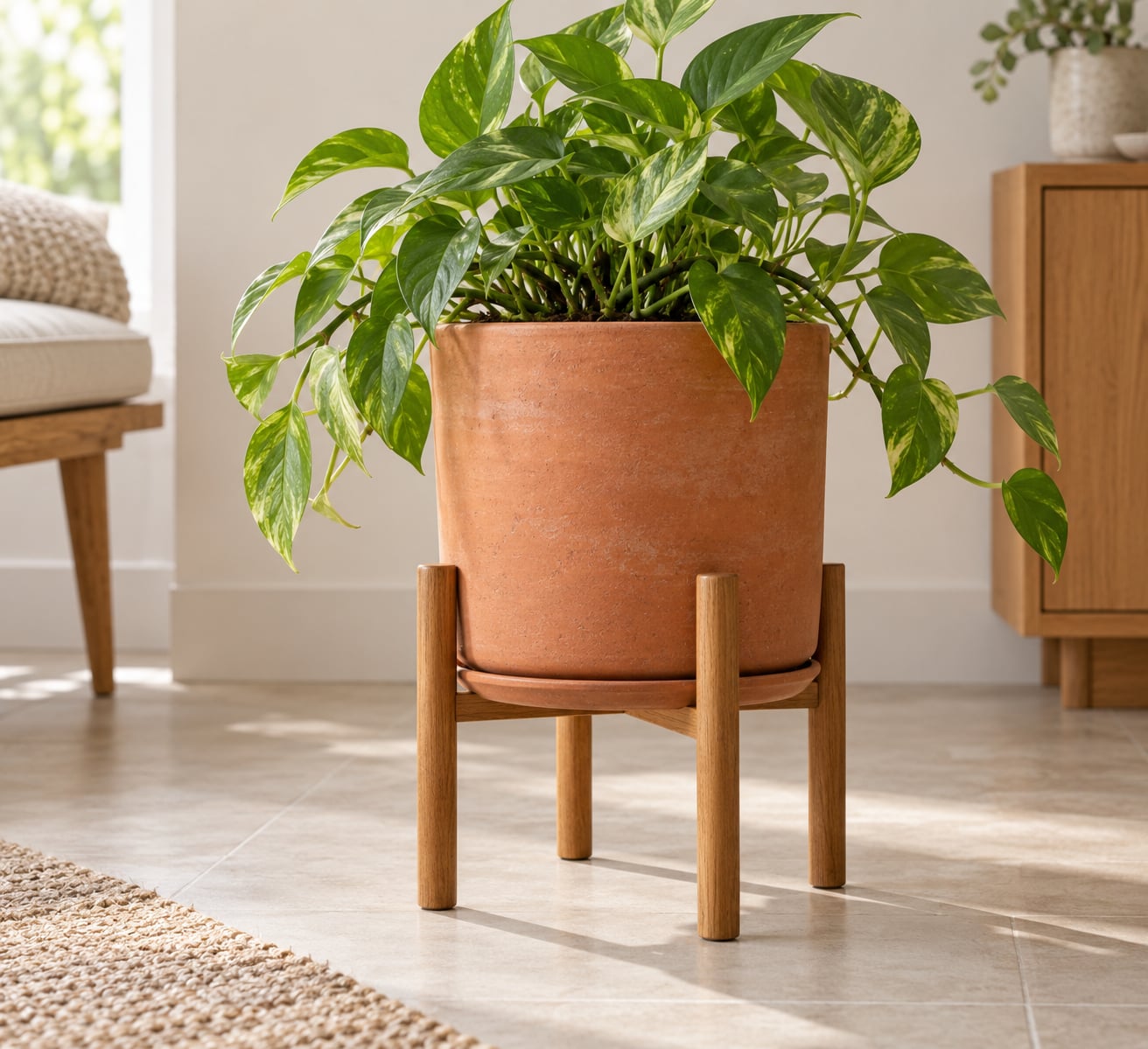
| Metal plant stands | 4 to 12 inches | High, often 100 pounds or more | Large pots, indoor and covered outdoor areas |
| Wooden risers | 1 to 4 inches | Medium | Dry indoor spots; seal any raw wood used outdoors |
| Bricks or pavers | 2 to 4 inches | Very high | Patios and decks, permanent arrangements |
| DIY risers | Any | Varies widely | Free and quick fixes using scrap material |
For most people, pot feet or plastic risers are the right first move. They are cheap, they clear an inch or two, and they do not wobble. Metal stands exist for a reason, though: if you want a big pot lifted a foot off the ground for light or styling, a stand gives you more height and more load capacity in one piece.
Watch the gap. Here is how far to lift and what it costs you.
| Purpose | Recommended gap | Tradeoff |
|---|---|---|
| Airflow under the base | 1/4 inch minimum | Nothing at this height, which is why it is the floor of the range |
| Drainage, no pooling | 1 to 2 inches | Soil dries a little faster; water your plant sooner |
| Light and styling | 8 to 24 inches | Top-heavy plants become tippy; heavy pots need two people |
| Protecting wood floors | 1 inch plus a saucer | Shadow line under the pot, visible from low angles |
DIY risers work too. People use stacks of ceramic tile, sections of PVC pipe, cork trivets, silicone trivets with the tall legs, and even a few large flat stones from the garden. Skip anything that rocks when you press one corner, and skip untreated wood outdoors.
Preparing the Planter and Surface
Look at the floor first. Carpet compresses, so a one-inch riser on carpet might end up giving you a quarter inch of real clearance by the next week, which defeats the purpose. On carpet, use taller risers or a platform with legs. On tile or concrete, check for grout lines that could tip a leg unevenly, and level the risers individually rather than assuming the floor is flat.
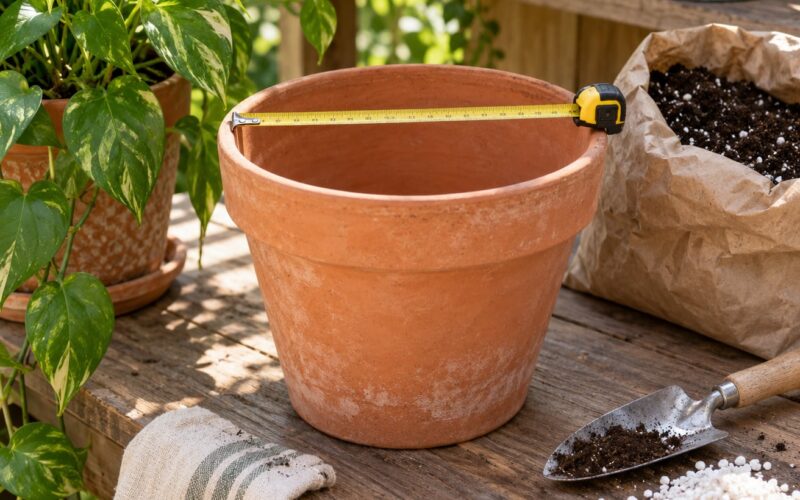
Measure the base of the planter. If it has drainage holes, the base is usually smaller than the rim, which is why it sits well on risers. If the base is as wide as the rim, you need risers that match the footprint exactly or a shelf with a lip.
Check the weight before you start. Wet soil in a large container gets heavy fast, so estimate the loaded weight, then pick a support rated above that number. Metal stands are commonly rated from 100 pounds upward; wooden stands tend to be lighter, often in the 40 to 60 pound range, so they suit small to medium pots only.
Raising the Planter Without Damaging It
Water the plant a few hours beforehand if you can. Dry soil and a dry pot are lighter, and a pot that isn’t full of water is less likely to crack when it shifts.
For a light pot, lift it with both hands, keep it close to your body, and set it down straight onto the risers. Never slide a pot sideways onto a support, because terracotta and glazed ceramic pots chip at the base edge when they scrape.
For a heavy planter, here is the safe way to do it. Put the saucer and risers in position first, then slide a piece of cardboard or a furniture slider under the pot and drag it onto the support. That way you never have to hold the full weight in the air. If it has to be lifted outright, two people should take opposite sides, grip the rim at the widest point, squat rather than bend, and lift together on a count of three. Keep the base level the whole way; a tilted load will slide off a small riser before you get it into place.
For plants over about 60 pounds, a pot lifter, a hand truck with a strap, or rolling the pot on a dolly is the honest answer. Somebody will hurt their back trying to impress a houseplant.
Once the pot is seated, check the drainage holes. They must stay clear and open, not pressed flat against a riser top. If a hole sits directly over a solid riser foot, rotate the pot a quarter turn or switch to a layout with an open gap under the hole.
Checking Airflow, Stability, and Plant Health
Airflow happens in two places, and they do different jobs. Under the pot, air movement keeps the base and the wet soil surface from staying damp, which is what causes the white film and smell people notice. Around the leaves, moving air helps wet foliage dry out, which cuts down on fungal spots.
To check the under-pot gap, slide a credit card on edge under the base. If it slides through with a scrape rather than a click, you have clearance. Then run your hand along the bottom; a damp patch in one spot means that spot is sealed.
For stability, press gently on the rim from each of the four sides. Any movement means a riser is a fraction too short or the floor is uneven. Also look at the plant’s center of gravity: a tall plant in a small pot, especially one in wet soil, will tip from a nudge. Fix it by choosing a wider pot or a heavier base layer of pumice or lava rock, not by lifting the pot higher.
Then adjust watering. Elevated pots dry out faster because air moves under the base, so check the top inch of soil a day earlier than you used to. If the plant is near a vent, an air conditioner, or a sunny window, expect to water more often than when it sat on the floor.
Common Mistakes
Most raised-planter problems come down to the same handful of things.
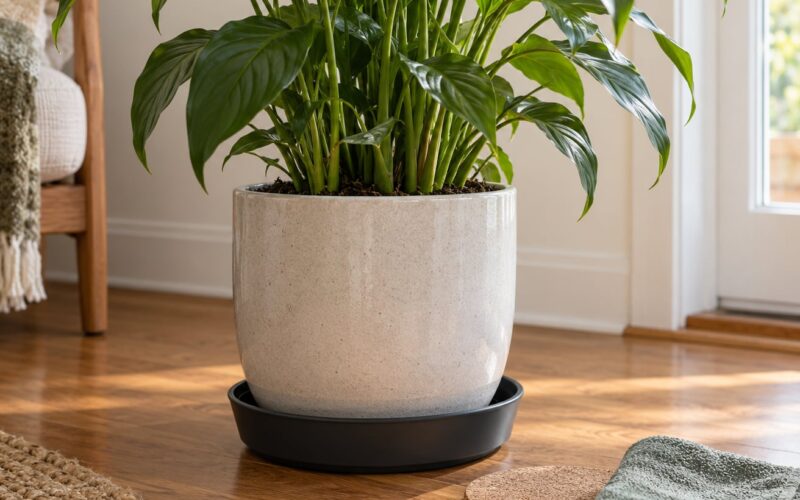
- No saucer under a draining pot. The gap helps only if runoff lands in a saucer instead of running under the risers. This is the usual cause of water rings on hardwood.
- Risers too short. Under a quarter inch of clearance is a decorative lift, not an airflow fix. Stack a second riser or use taller feet.
- Rocks at the bottom of a hole-less pot. A layer of gravel does not improve drainage. It creates a perched water table that holds water at the bottom of the container and keeps the roots sitting in it. Use a pot with a drainage hole and put a saucer under it instead.
- Over-lifting a top-heavy plant. Eight inches of lift plus a tall plant in a wet pot is a tipping setup. Keep heavy or tall plants lower and widen the base.
- Overloading a shelf. Check the shelf’s rated load, not its look. Wet soil weighs more than dry, and four medium pots on one shelf can go over a limit that seemed generous when empty.
- Raw wood risers outdoors. Untreated wood wicks runoff, swells, and grows white mold at the foot. Seal it or use pavers.
- Planting straight into a sealed cachepot. If you drop the plant into a decorative pot with no hole, drainage stops entirely. Put the plant in a nursery pot and set that inside the cachepot, leaving a gap under the inner pot.
A quick wipe-down of risers every few weeks keeps things tidy. Damp feet collect grit and, on wood, eventually develop the faint smell that makes you wonder where it came from.
Frequently Asked Questions
How do you raise planters off the floor for airflow?
Set the planter on pot feet, plastic risers, a plant stand, or bricks so an air gap of at least 1/4 inch and ideally 1 to 2 inches remains under the base. The gap lets pooled water drain away, lets condensation evaporate instead of sitting against the soil, and keeps the root zone oxygenated. Add a saucer so runoff is captured rather than spread across the floor.
How high should I lift a plant pot off the ground?
A quarter inch is the bare minimum for airflow, and 1 to 2 inches covers airflow plus drainage. Most indoor setups work best in that range. Lift 8 to 24 inches only when you want more light near a window or a taller display, and keep heavy or top-heavy plants low so they do not tip.
Do plant risers actually help airflow and drainage?
Yes, mainly by stopping the pot base from sealing against the floor. A sealed base traps water and condensation underneath, which keeps the soil surface wet and encourages mold and root rot. Raised pots also lose moisture faster, so check the top inch of soil a day earlier than before you lifted them.
What can I put in the bottom of a planter without drainage holes?
A layer of rocks or gravel will not improve drainage. It creates a perched water table that collects water at the bottom of the container and holds the roots in it, which is a common cause of root rot. A better fix is a nursery pot with drainage holes set inside the decorative container, with a saucer beneath and a small gap under the inner pot.
How do you raise potted plants off the ground indoors?
Measure the pot base, then place pot feet or plastic risers under the widest points of the base. Add a matching drip saucer, lower the pot straight down so it does not scrape the rim, and level it with a level tool or a thin pad under one riser. On carpet, use taller risers since the pile compresses and closes the gap.
How do I lift a heavy planter onto a riser safely?
Put the saucer and risers in position first, then slide cardboard or a furniture slider under the pot and drag it into place rather than holding the weight. To lift it outright, use two people gripping the rim at its widest point, squat, and lift together on a count of three with the base level. Over about 60 pounds, use a pot lifter or dolly.
Start with the tallest plant you already own. Measure its base, pick a riser that gives it 1 to 2 inches of clearance, add a saucer, and slide it into place rather than lifting. Five minutes, no new furniture, and you will be able to see daylight under the pot where there was none before.