The fastest way to dechlorinate water for plants is a crushed ascorbic acid (vitamin C) tablet or a few drops of aquarium water conditioner, both of which work within seconds. If you have nothing but a jug and some patience, leave tap water standing uncovered for 24 hours instead. That last method works on chlorine but fails on chloramine, which many city water systems now use.
Table of Contents
- What You Need
- Step-by-Step: How to Dechlorinate Water for Plants
- 1. Let Tap Water Stand for 24 Hours
- 2. Boil the Water for 10 to 15 Minutes
- 3. Use Activated Carbon
- 4. Add a Small Amount of Ascorbic Acid
- Common Mistakes
- Frequently Asked Questions
- How do I know if my tap water needs dechlorinating?
- Can I use bottled water for plants instead?
- Does boiling remove chlorine from watering water?
- How long should water sit before I use it on plants?
- Is ascorbic acid safe for indoor plants?
- What is the difference between chlorine and chloramine in tap water?
- Conclusion
What You Need
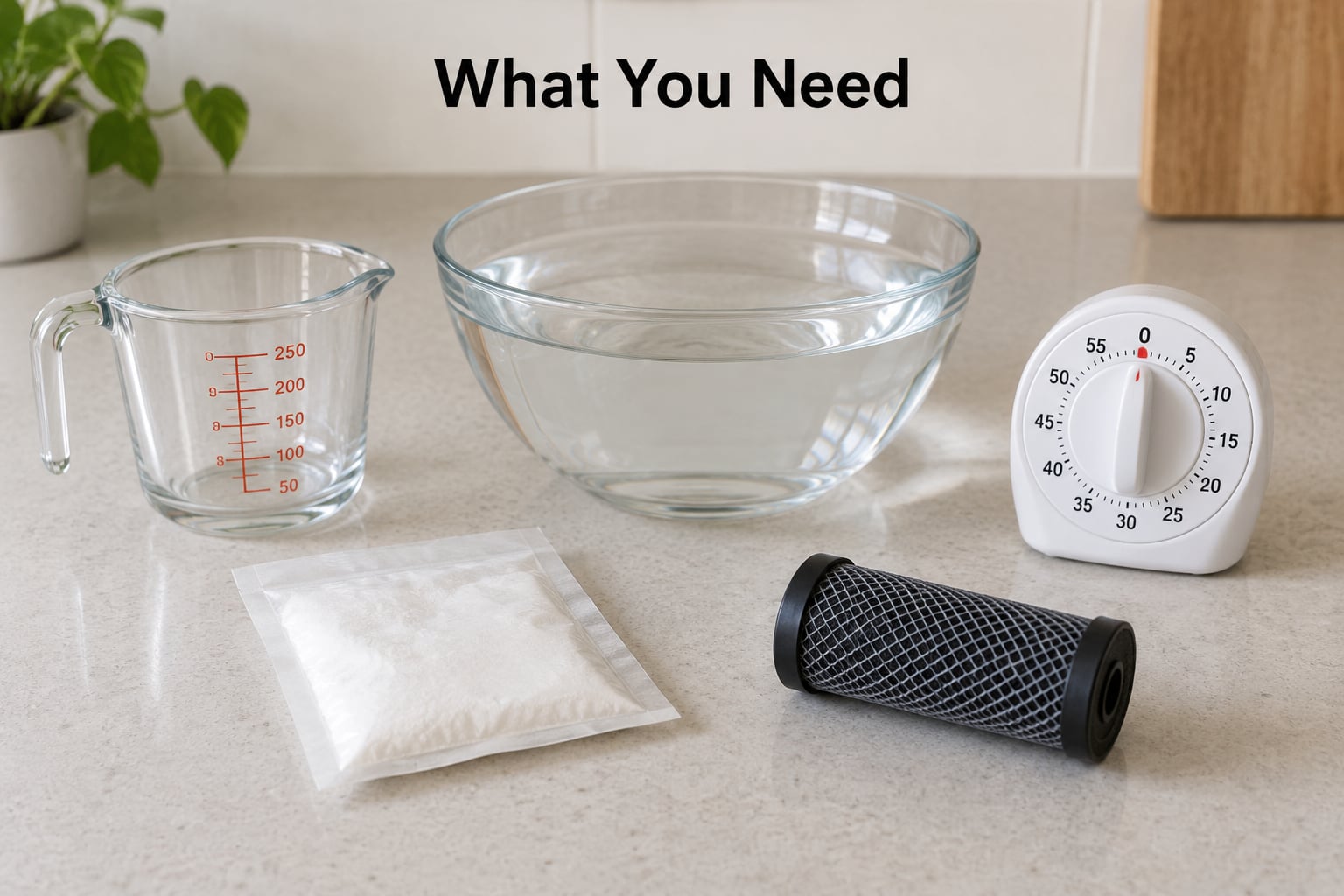
Gather your tools before you start. Everything below is optional except the container and a way to measure time.
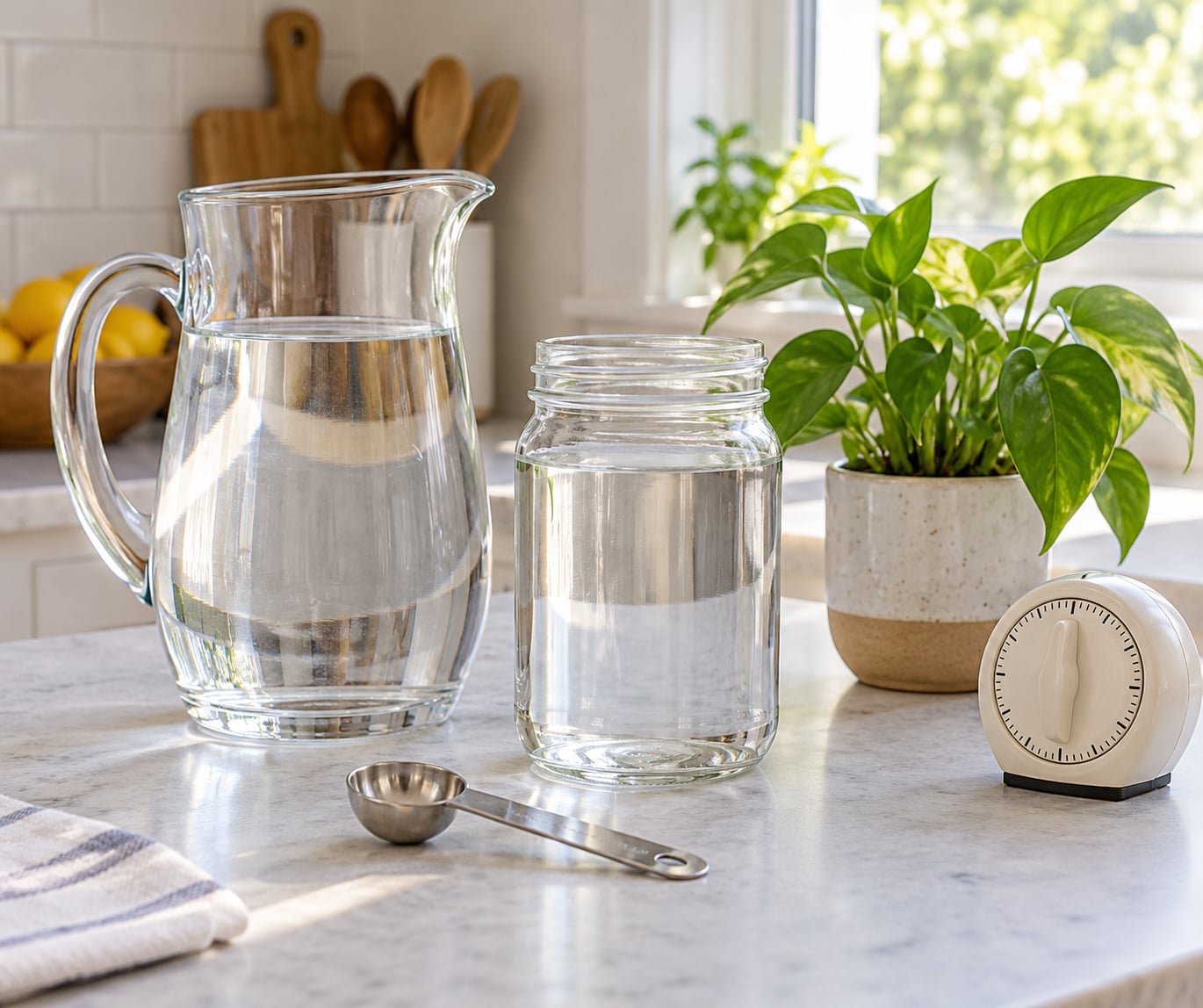
- A wide-mouth glass container with no lid, so the water surface stays large and exposed to air. A pitcher, a large jar, or a clean watering can all work.
- A measuring cup or kitchen scale if you plan to dose ascorbic acid by weight rather than by counting drops.
- A kitchen timer or your phone’s clock, because the difference between two hours and twenty-four hours is the whole point of the standing method.
- Ascorbic acid powder or tablets, an aquarium water conditioner, or an activated carbon filter, depending on which method you pick below.
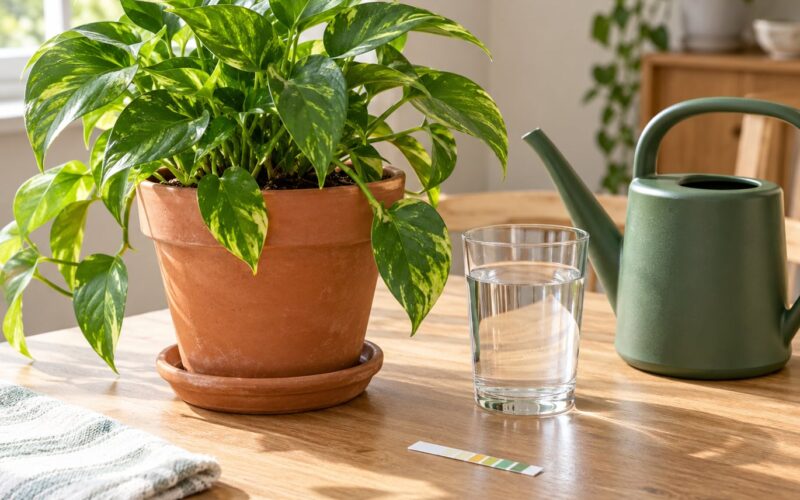
- Swimming-pool chlorine test drops, which are the cheapest honest way to confirm the chlorine is actually gone rather than assuming it. Smell works too, though it needs a reasonably sensitive nose.
Step-by-Step: How to Dechlorinate Water for Plants
1. Let Tap Water Stand for 24 Hours
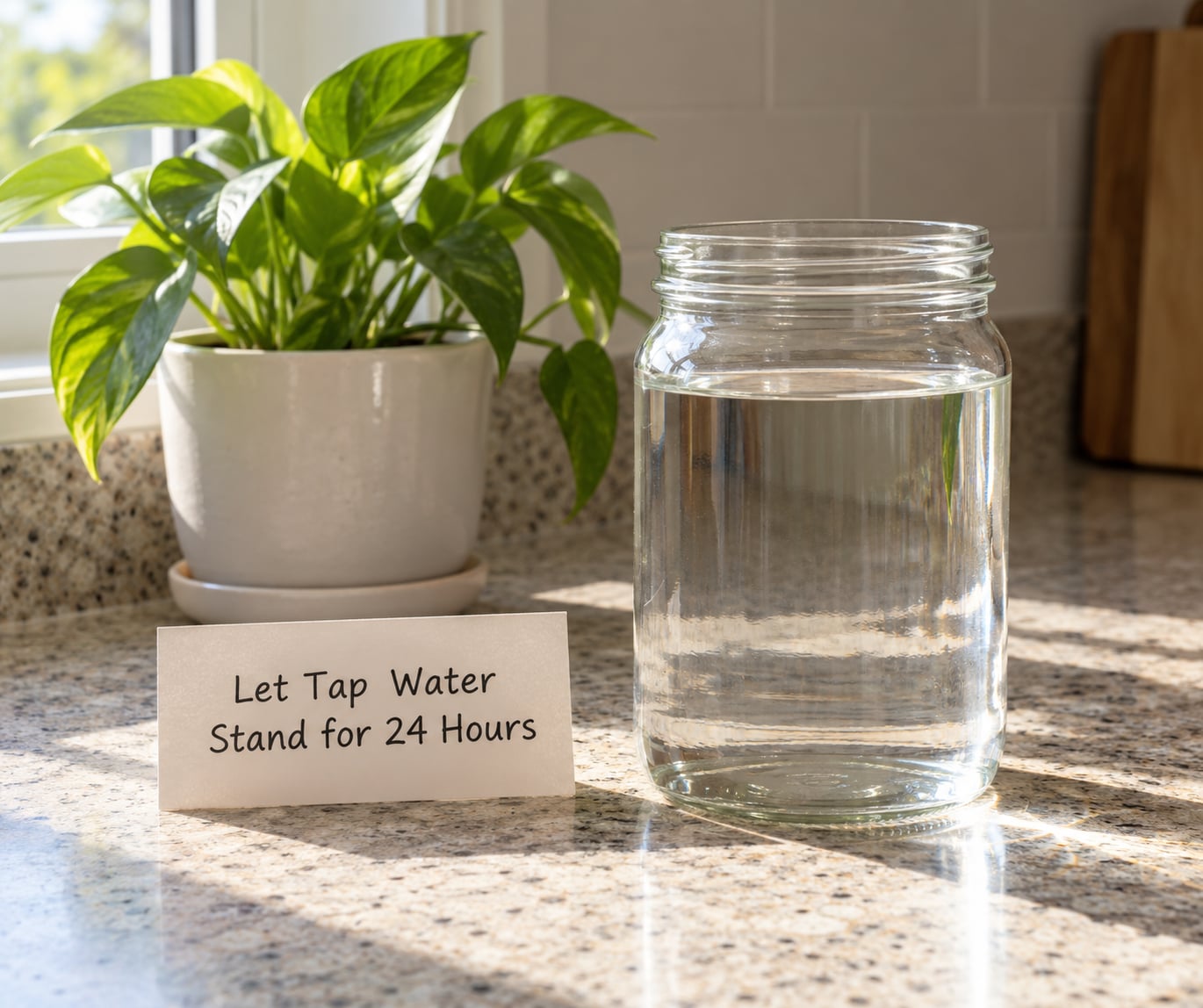
Fill a wide container with room-temperature tap water and leave it uncovered on the counter for a full day. Free chlorine is volatile, so it escapes from the surface the way carbon dioxide escapes from an open soda bottle.
Pouring the water back and forth between two pitchers speeds this up, because agitation exposes more of the water to the air at once. A warm sunny spot helps as well, so long as the container is not sealed and the water never gets hot enough to damage roots later.
You will know it worked when the faint swimming-pool smell disappears. This is the method most people start with, and it is free.
Two limits matter here. Sitting does nothing to chloramine, because the chlorine is chemically bound to ammonia and will not off-gas. And standing water is not a permanent storage method, so refill the container every day or two rather than letting one batch sit for a week.
2. Boil the Water for 10 to 15 Minutes
Boil tap water uncovered at a full rolling boil for ten to fifteen minutes, then let it cool to room temperature before it touches a plant.
That cooling step is not optional. Water straight off the stove damages roots and destroys the mycorrhizal relationships you are trying to protect, so give it an hour or use it the next morning.
Boiling is fast and it kills chlorine, but it does nothing to chloramine. It also leaves behind whatever minerals were dissolved in the water, now slightly more concentrated as some water has evaporated, and it strips dissolved oxygen, which matters for hydroponic reservoirs and for anything rooted directly in water.
Use boiling when you need water today, you have a small volume, and you know your supply uses plain chlorine.
3. Use Activated Carbon
Pour your water through an activated carbon block filter, or stir a measured amount of activated carbon into a batch and follow the contact time on the package before filtering or decanting.
Carbon works by adsorption rather than by chemistry. A single gram of activated carbon can cover several thousand square feet once you count every pore, and the chlorine molecules land on those surfaces and stay there.
This is the only passive method on the list that handles chloramine as well as chlorine, and it is the one to choose if your municipality has switched and you want a routine that does not depend on timing.
Keep two things in mind. Carbon loses capacity, so swap the cartridge on the schedule the maker gives you rather than when you remember. And a carbon block that sits untouched for months goes stale, so filter the water you actually use.
4. Add a Small Amount of Ascorbic Acid
Crush one ascorbic acid tablet into a small amount of tap water, stir until it dissolves, then pour the solution into your batch and mix. Use pool test drops a few minutes later to confirm the chlorine reading has dropped.
Ascorbic acid reacts with chlorine almost instantly, and it is the active idea behind aquarium conditioners, which rely on sodium thiosulfate or a close relative to do the same job. Because the reaction is that fast, dosing by a pinch rather than a scale is the normal way to do it at home.
For the two or three gallons most people water in a week, a small pinch from a corner of a 1000 mg tablet is plenty. Household water heaters and irrigation lines typically run well under the 4 ppm federal limit for chlorine, so less than you expect finishes the job.
More is not better here. Extra powder is mostly wasted, and in a hydroponic reservoir it can nudge pH down enough to upset a nutrient balance.
Common Mistakes
Waiting on chloramine water. This is the expensive mistake, because you lose a day and change nothing. Call your water utility or check its annual water quality report before you commit to a standing routine, and treat the water immediately if the report names chloramine.
Pouring boiling water onto a plant. The treatment is fine, the temperature is not. Cool to room temperature first.
Overdosing ascorbic acid or conditioner. People read aquarium directions for large systems and apply them to a watering can. Dosing generously avoids a repeat treatment, not a stronger one.
Storing standing water indefinitely. Open water sitting at room temperature is a hospitable place for bacteria. Use water within a few days, refill the container, and wash it rather than topping it off forever.
Using a dirty container. A reused juice jug or a can that held something else can reintroduce problems that dechlorination never had a chance to fix.
Assuming every chlorine compound behaves the same. Free chlorine off-gasses and boils away. Combined chloramine does neither, so it needs carbon or a reducing agent like ascorbic acid or sodium thiosulfate.
Treating water that never needed it. Hard water and high TDS are separate problems. Dechlorination will not fix either one, and a TDS reading in the 150 to 300 ppm range usually explains brown leaf tips better than chlorine does.
Frequently Asked Questions
How do I know if my tap water needs dechlorinating?
Your water utility publishes an annual water quality report that names the disinfectant it uses, either chlorine or chloramine. Residents also taste the water: chlorine fades within a day of standing, while chloramine keeps a faint taste and does not dissipate. If your plants show brown leaf tips, stalled seedlings or frequent spider plant pups, a treatment step is cheap insurance either way.
Can I use bottled water for plants instead?
You can, and it is chlorine-free, but the cost adds up quickly for a large collection. It also removes the trace minerals plants like to receive from tap. Filtered or spring water is fine for a handful of pots. If your real problem is hardness or high TDS, bottled water will not fix that either.
Does boiling remove chlorine from watering water?
Boiling drives off free chlorine within about ten to fifteen minutes at a full rolling boil, because the compound breaks down into volatile by-products. It does nothing to chloramine, which stays in solution through the boil. Cool the water to room temperature before using it, since hot water damages roots and the mycorrhiza around them.
How long should water sit before I use it on plants?
For plain chlorine, a full 24 hours in a wide, uncovered container is the safe answer. Some people use 48 hours, which adds margin without adding harm. Standing time does nothing for chloramine, so if your utility uses it, use ascorbic acid or a carbon filter instead of waiting longer.
Is ascorbic acid safe for indoor plants?
Yes. Ascorbic acid is a reducing agent that neutralizes chlorine by redox reaction, and the small residues that remain after neutralization are harmless to roots and soil microbes. The one caution is dosage, since a heavy hand in a hydroponic reservoir can shift pH. A small pinch from a 1000 mg tablet treats a few gallons comfortably.
What is the difference between chlorine and chloramine in tap water?
Chlorine is added directly as a disinfectant and is volatile, so it leaves water by standing, boiling or aeration. Chloramine is chlorine bonded to ammonia, chosen because it stays stable longer in the distribution system. That stability is also why it will not evaporate, will not boil away, and tastes different after 24 hours of sitting. Carbon filtration and ascorbic acid handle it.
Conclusion
Start by finding out whether your water uses chlorine or chloramine, because that one fact decides which methods will work at all. If it is plain chlorine, fill a wide open container after each watering session and let it stand for a day.
If you would rather deal with it now than tomorrow, dissolve a small pinch of ascorbic acid into the batch and move on with your evening. Keep a clean dedicated container for the job, use water within a few days rather than letting it sit indefinitely, and test the result once with pool drops so you know which method your supply actually respects.