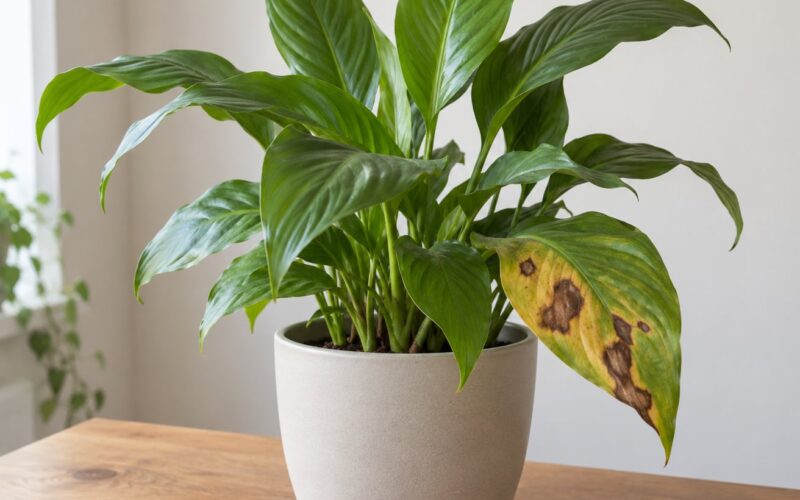
Usually no. Misting briefly dampens leaves and raises the humidity right at the foliage for a few minutes, then that moisture is gone, and it leaves wet surfaces behind that can invite leaf spot, powdery mildew and bacterial infections. The plants that genuinely benefit from spraying are a short list: air plants, fresh cuttings, seedlings and anything growing inside a terrarium.
The rest of your collection needs good watering, bright indirect light, drainage and air movement far more than a spray bottle. This guide takes about ten minutes to read and saves you from the misting ritual most beginners pick up by accident.
Table of Contents
- What You Need
- Should You Mist Houseplants?
- The short list where misting earns its place
- Step-by-Step
- 1. Check the plant’s natural habitat
- 2. Measure the room before misting
- 3. Choose water and application method
- 4. Mist only when it makes sense
- 5. Improve humidity without relying on misting
- Common Mistakes
- Frequently Asked Questions
- Should I mist all my houseplants?
- Is misting a substitute for watering?
- Why are my houseplant leaves turning brown after misting?
- Can I mist plants at night?
- Does misting really increase humidity in a room?
- How can I increase humidity without spraying leaves?
- Conclusion
What You Need
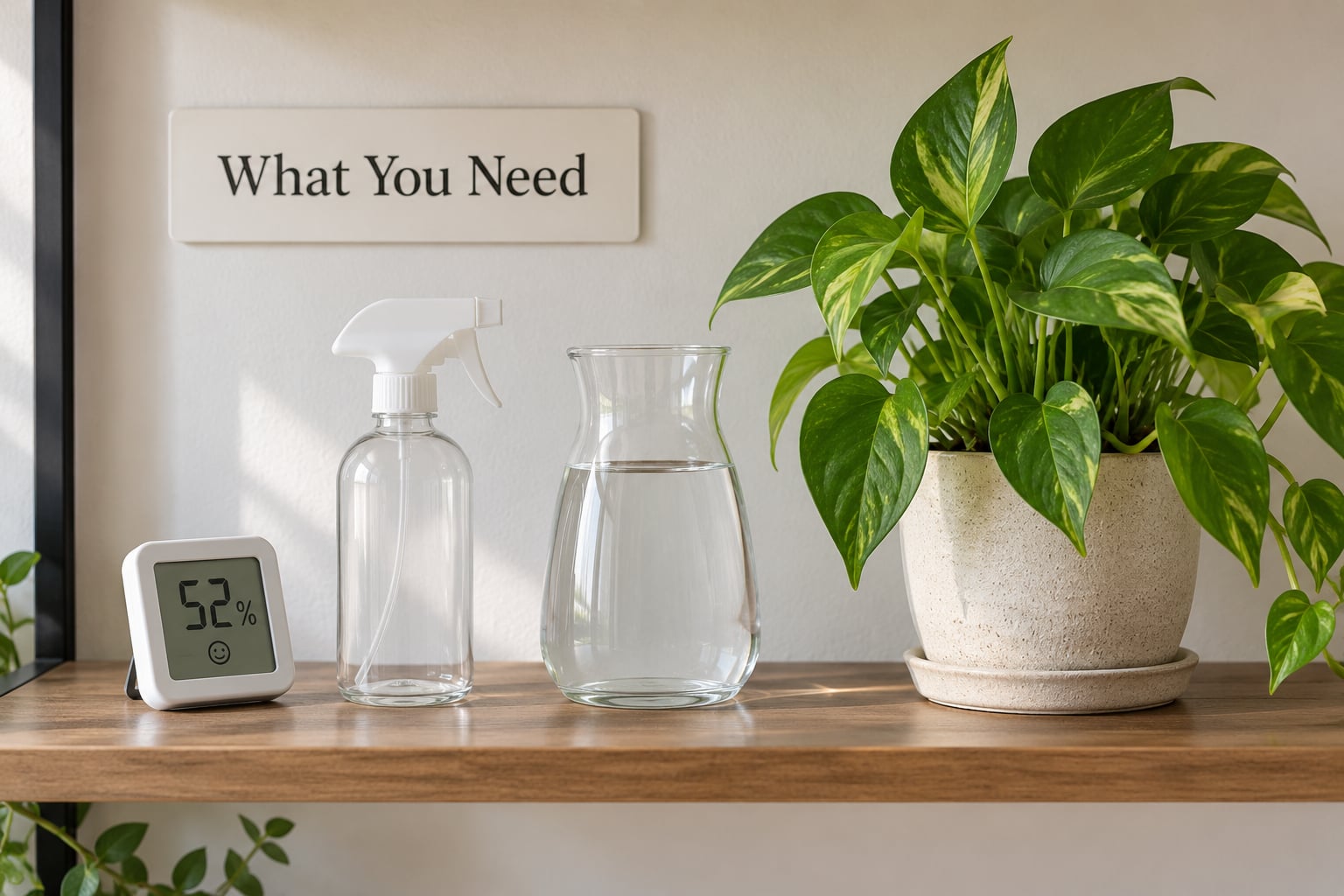
You do not need much, and none of it is specialised.
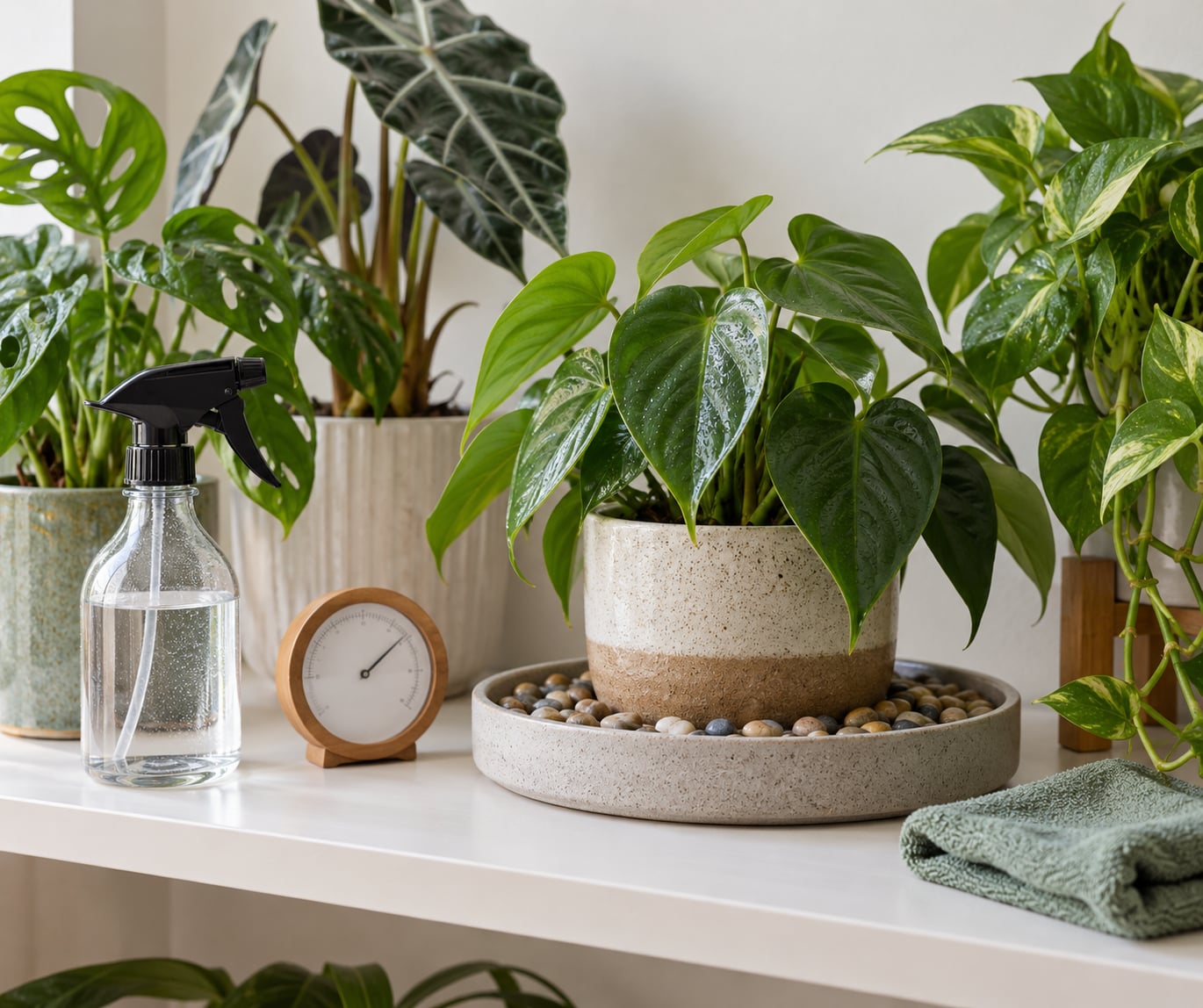
- A hygrometer. A cheap dial or digital model that reads relative humidity. This is the single tool that turns guessing into a decision.
- A fine-mist spray bottle. One you can adjust to a soft spray rather than a jet. A mister that produces large droplets soaks leaves instead of fogging them.
- Filtered or distilled water. Worth keeping for plants with sensitive foliage like Calathea, ferns and Fittonia, especially if your tap water is hard.
- A damp microfiber cloth. This is the better tool for cleaning dust off leaves, and I use it far more often than the spray bottle.
- A label, marker or care guide. Write the plant name on the pot when it comes home. Knowing whether you own a Calathea or a cactus changes the answer completely.
Should You Mist Houseplants?
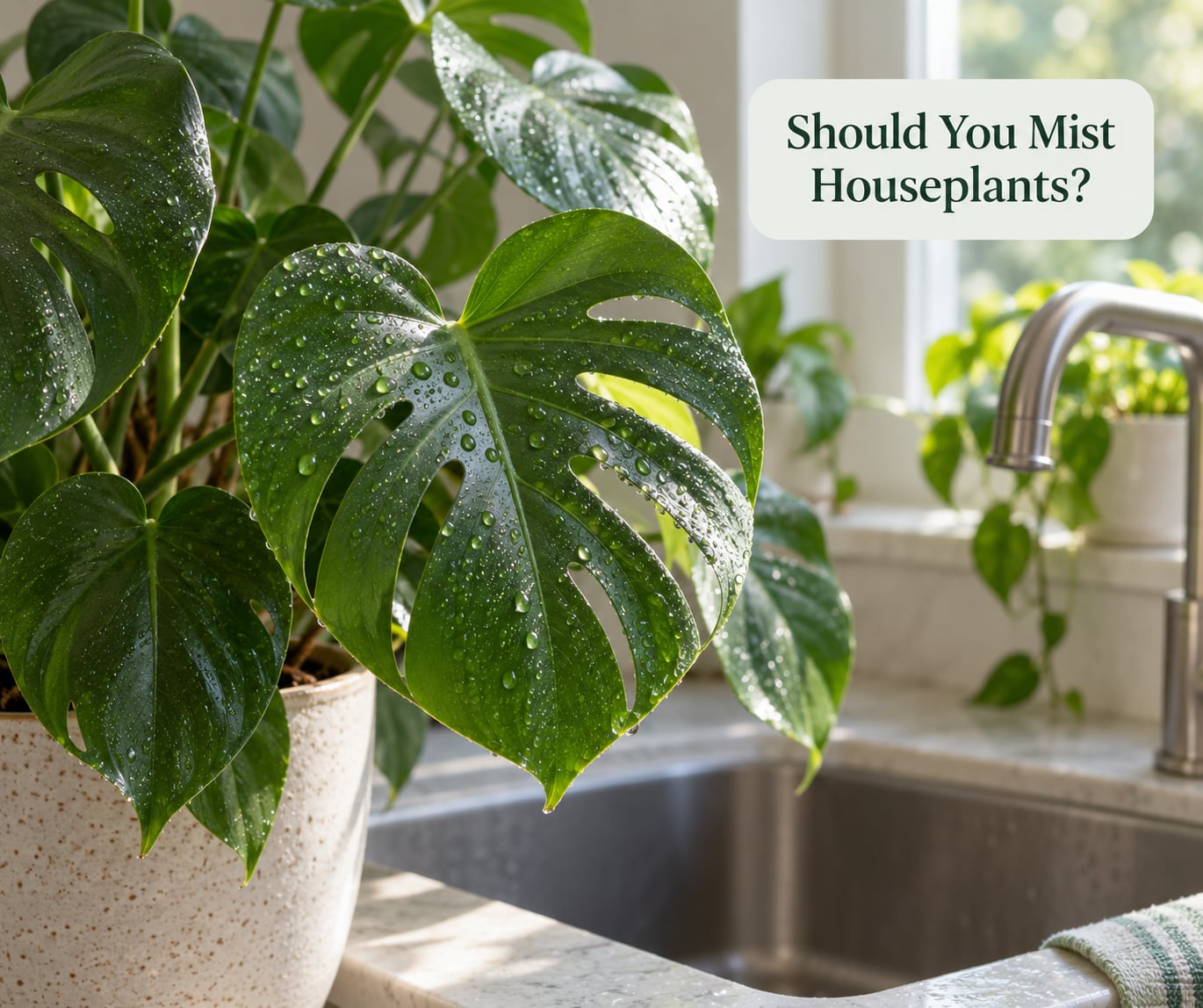
No, not as a routine. The honest answer is that should you mist houseplants be answered plant by plant, not yes or no across the board.
Here is what misting actually does. Water lands on the leaf and forms a thin film, which evaporates within minutes. That creates a small pocket of extra humidity in the boundary layer around the plant. In an open room, that pocket disappears in well under a minute, and people posting on plant forums describe seeing their hygrometer reading barely move at all, or shift for ten or fifteen seconds before dropping back.
Three more things worth clearing up. Misting does not water the plant, because roots take up nearly all the water a houseplant uses. Leaves sitting wet for an hour give fungi and bacteria the free moisture they need. And a foliar fertiliser sprayed from a household bottle can burn foliage, so it is not a substitute for feeding the soil.
The short list where misting earns its place
- Air plants (Tillandsia) and plants with aerial roots that absorb moisture directly from the air.
- Fresh cuttings and seedlings still rooting, where the humidity around the leaves helps them hold water.
- Plants inside terrariums, glass cabinets or propagators, which are enclosed enough to keep the moisture in.
- Transitional moments, such as a plant that just arrived from a nursery in dry weather.
Step-by-Step
1. Check the plant’s natural habitat
Humidity needs follow geography. Calathea, Maranta prayer plants, Fittonia and Boston fern come from warm, wet forests where air stays humid and still, so they struggle in a dry heated room. Monstera, most philodendrons and hoyas tolerate normal indoor air comfortably. Succulents, cacti, snake plant and ZZ plant come from dry or arid regions and can be harmed by damp foliage, since wet against soil is exactly the combination that invites rot.
2. Measure the room before misting
Put the hygrometer near the plant, not near a window or a heating vent, and read it in the morning and again in the evening. Most houseplants are happy between 40 and 60 percent relative humidity. Winter is when indoor air gets troublesome, because a heating system pulls moisture out of everything and closed windows stop fresh air from moving through.
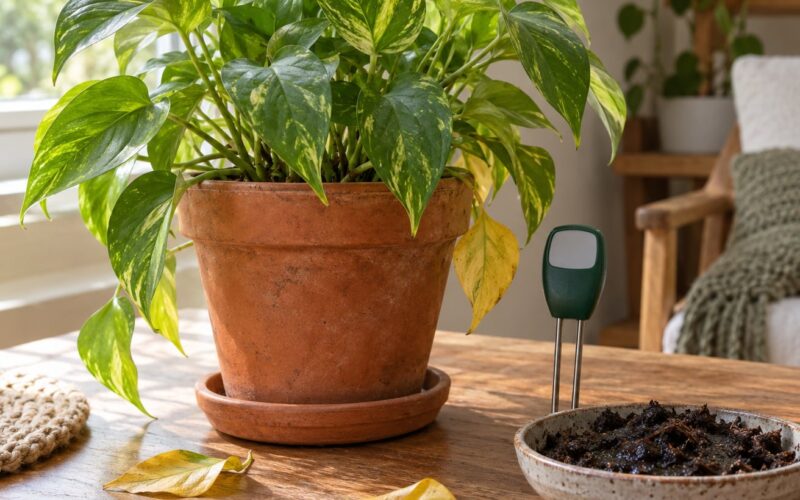
Keep room humidity separate from soil moisture. A wet top inch of soil is a watering signal; a number on a dial is an air signal. Confusing the two is how people end up overwatering a plant that only needed its leaves wiped down.
3. Choose water and application method
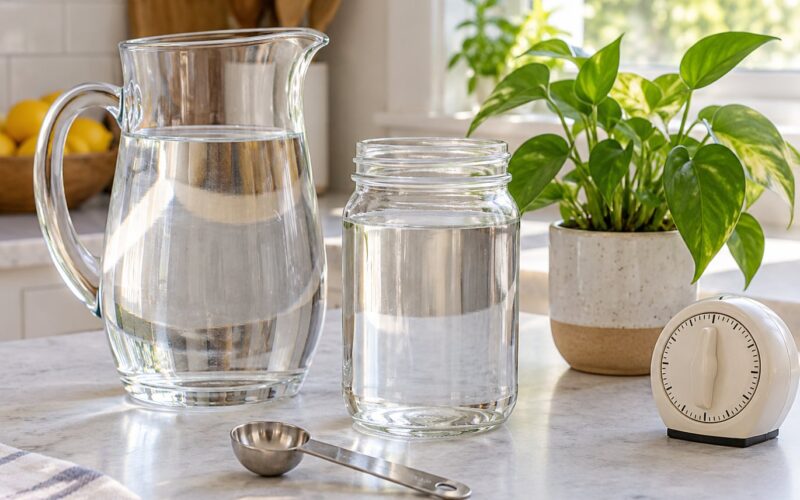
Use clean water at room temperature, never straight from a hot tap. If your water leaves white mineral dots on leaves, switch to filtered, distilled or collected rainwater for anything you spray.
Spray lightly around the plant rather than soaking foliage or pointing the nozzle into the soil. Hold the bottle far enough away that you get fog rather than a blast, and let the plant drain freely afterwards. If droplets bead and sit on a leaf for more than an hour, you have used too much.
4. Mist only when it makes sense
There is no schedule. Mist during dry indoor conditions, and only for plants that came from humid forests. Morning works best, because leaves get light and airflow through the day and can dry. Skip evening and night, when wet foliage stays wet for hours with no light to dry it and no cool air moving.
Stop if you see brown speckling, a dusty white coating, tiny webbing that suggests spider mites, or any leaf that has started to spot. Never spray a plant with an existing fungal or bacterial infection, and leave a new arrival in quarantine alone until you know it is clean. Wet foliage on a sick plant spreads the problem faster.
5. Improve humidity without relying on misting
Grouping plants together creates a shared microclimate, since each plant transpires into the air around its neighbours. That does more than any spray, and it costs nothing.
A humidifier with a humidistat gives you the one thing misting cannot: steady humidity. Place plants away from heating vents, radiators and draughty doors. A humidity tray with pebbles and water underneath adds a small amount locally, though a tray that holds water directly under the pot creates constantly damp soil and a home for fungus gnats, so keep the pot raised above the water line.
For dust, wipe each leaf with a damp microfiber cloth and dry it immediately. It is faster than spraying, it does not spread moisture around, and you can see the pests while you are there.
Common Mistakes
Misting every plant on the same schedule. A cactus and a fern do not want the same treatment. Match the plant to its habitat instead of the plant to your routine.
Misting at night. Leaves stay wet for hours in the dark. Move any spraying to the morning and the plant dries off before bedtime.
Treating a mist as a watering. This is the most common route to root rot. If the soil is dry, water it properly and wait for it to drain.
Using hard tap water. The minerals leave white spotting on soft leaves, which does not harm the plant but never looks better. Filter the water if you keep misting.
Spraying straight into the soil. You are adding moisture to a root zone that may already be damp, and inviting fungus gnats into the surface.
Crowding plants together for humidity. Grouping helps if air can still move. Without airflow, dense foliage holds stagnant moisture that causes leaf spot.
Using misting to cure brown tips. Crispy edges usually trace back to dry air, inconsistent watering or salts in the soil. A spray bottle does not solve any of those, so look at your watering routine before you reach for the mister.
Frequently Asked Questions
Should I mist all my houseplants?
No. Mist only plants that come from humid forests, such as Calathea, Maranta, Fittonia and ferns, plus air plants, fresh cuttings and anything in a closed terrarium. Succulents, cacti, snake plant and ZZ plant do best with dry foliage. Check the plant’s origin before you spray, and skip any plant that already shows spots or mildew.
Is misting a substitute for watering?
Not at all. Roots absorb nearly all the water a houseplant uses, and a fine mist does nothing for the root ball. If your soil is dry, water the pot until it drains and empty the saucer. Misting is a short-lived surface treatment for humidity, never a replacement for getting the root zone right.
Why are my houseplant leaves turning brown after misting?
Two usual causes. Hard tap water leaves mineral deposits that turn brown as they dry, and constantly wet foliage blocks light and encourages fungal or bacterial leaf spot. Switch to filtered or distilled water, mist only in the morning so leaves dry within the hour, and hold off entirely if you already see spotting on any leaf.
Can I mist plants at night?
I would not. Overnight there is no light and still air to dry the leaves, so droplets sit for hours and raise the chance of leaf spot. Morning is the better window because the plant dries before the room goes dark. If you only remember your routine at night, skip the spray and check the soil instead.
Does misting really increase humidity in a room?
Barely, and only for a moment. The water evaporates from the leaf surface within minutes, and in an open room the extra humidity disappears almost immediately. It only holds in a close enclosed space such as a terrarium or propagator. To change room humidity for any length of time, use a humidifier, group plants together or place them away from vents.
How can I increase humidity without spraying leaves?
Group plants together so they share a microclimate, run a humidifier with a humidistat near the group, or set pots on a humidity tray raised above the water line. Keep plants clear of heating vents and draughty doors, and add a gentle fan for airflow. Wipe leaves with a damp cloth to remove dust instead of spraying them wet.
Conclusion
Start with three things. Know what each plant is, put a hygrometer near it and read the room, then spray only the humidity lovers and only when the air is genuinely dry.
Everything else that keeps a houseplant healthy matters more than misting: watering the soil properly, giving it the light it needs, drainage that does not hold water, and air moving through the room. Leave the spray bottle for air plants, cuttings and terrariums, and use a damp cloth for dust on everything else.