If you are wondering why houseplant leaves curl, the honest answer is that the plant is under stress, and the shape of the curl tells you which kind. Leaves that fold inward or roll upward usually point to thirst, heat, dry air or sap-sucking pests, while leaves that droop and fold downward usually point to overwatering, cold drafts or root trouble. Curing it means reading that pattern before you touch the watering can, because the two most common causes produce opposite-looking plants and opposite fixes.
I have killed more houseplants by overcorrecting than by ignoring them, so the order of operations below matters more than any single trick. Ten minutes of inspection saves a plant that a panicked repot would not.
Table of Contents
- Why Houseplant Leaves Curl: 9 Common Triggers
- How to Tell What Is Causing the Curl
- Watering Problems and Root Stress
- Low Humidity, Heat, and Airflow
- Light Problems and Leaf Burn
- Pests, Disease, and Chemical Exposure
- How to Fix Curling Leaves Without Making It Worse
- When Curling Is Normal and When It Is Serious
- Frequently Asked Questions
- Is it normal for houseplant leaves to curl?
- Should I cut off houseplant leaves that are curling?
- How do I know if curled leaves mean my plant is underwatered?
- Can low humidity make houseplant leaves curl?
- Why are my plant’s newest leaves curling?
- How long does it take for curled houseplant leaves to recover?
- What to Do First
Why Houseplant Leaves Curl: 9 Common Triggers
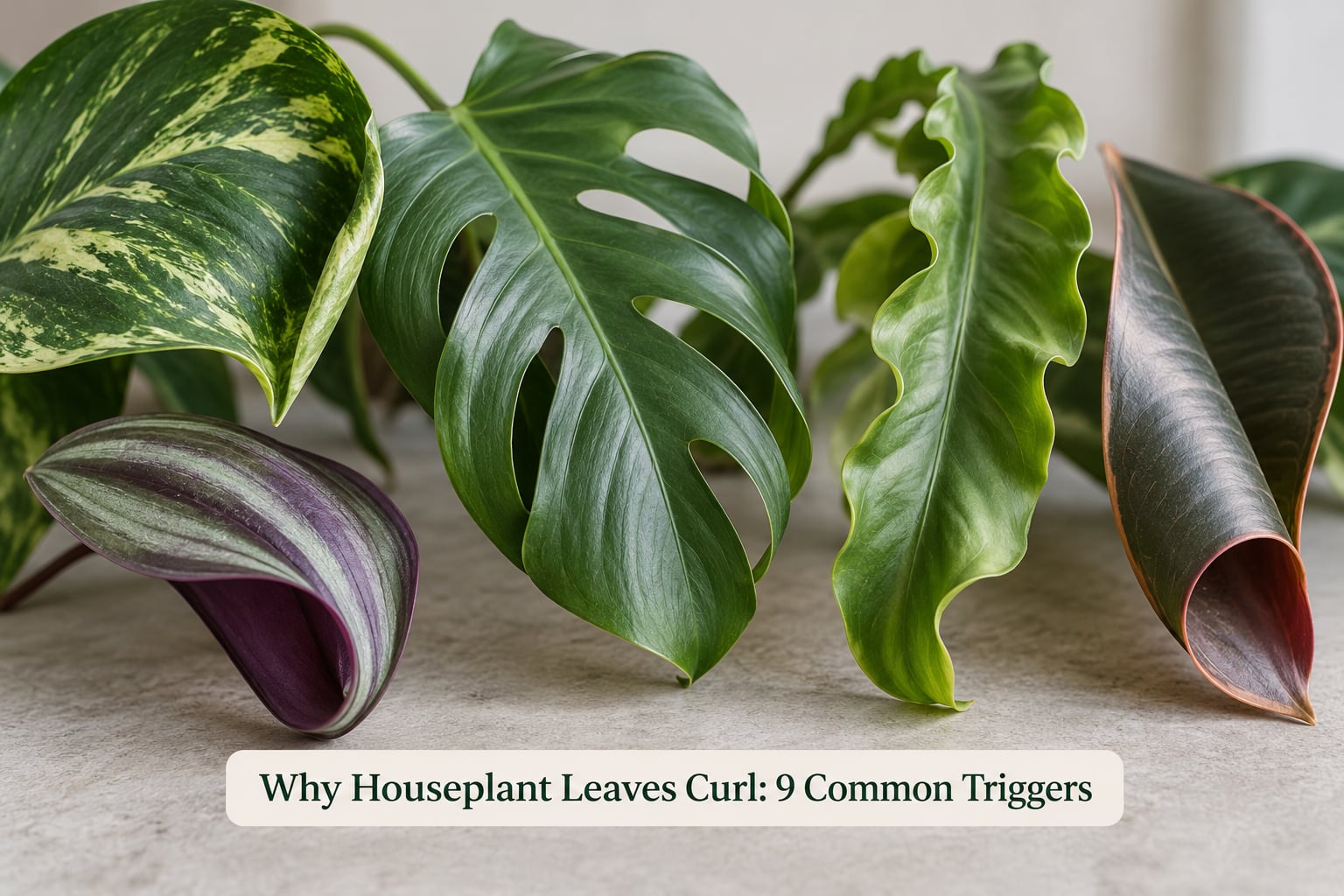
First, the vocabulary matters, because four different things get called curling. Cupping is the leaf blade bending into a bowl along its length, usually from uniform water loss. Rolling is the leaf margin folding inward like a taco or a cigar, often the plant reducing the surface area it loses water through. Twisting is new growth that comes out deformed, spiralled or stuck. Crisping is the leaf edge going dry, brown and brittle after the plant has already lost the ability to rehydrate that tissue.
Underneath all four is the same mechanism. Leaves lose water through tiny pores called stomata, and the leaf is held rigid by water pressure inside the cells, which is what gardeners mean by turgor. When the water coming up from the roots does not match what the leaves are losing, turgor drops and the leaf physically deforms. Curl is also deliberate on the plant’s side: curling the margin reduces the exposed surface and slows transpiration, so the plant is trying to protect itself while the roots catch up.
| Cause | What the curl looks like | Most affected plants | Urgency | First action |
|---|---|---|---|---|
| Underwatering | Inward folding, crisp edges, dull leaves, dry soil | Ferns, calathea, peace lily, basil, fiddle leaf fig | Urgent within days | Check soil moisture 2 to 3 cm down, then water thoroughly |
| Low humidity | Upward cupping, brown tips, tight new growth | Calathea, prayer plant, tropical ferns, rubber plant | Moderate | Group plants, use a humidifier or a pebble tray |
| Heat and direct sun | Upward curl, bleached or brown patches | Succulents, cacti, fiddle leaf fig, most leafy plants | Urgent in a heatwave | Move out of the hot window, check for scorched patches |
| Sap-sucking pests | Distorted puckered new growth, sticky honeydew, fine webbing | Almost everything, worst on new growth | Urgent, spreads fast | Tap-test over white paper, then wash and treat |
| Overwatering | Downward droop, soft limp leaves, yellowing lower leaves | Snake plant, pothos, fiddle leaf fig, ZZ plant | Urgent over weeks | Check drainage holes and soil smell before adding water |
| Root rot | Downward curl plus sour smell, dark mushy roots, collapse | Any plant in a pot without drainage | Emergency | Slide the plant out and inspect the root ball |
| Root-bound plant | Curl after watering, water runs straight through, slow growth | Fast growers: fig, money tree, dracaena, ferns | Slow build | Check whether roots circle the pot; repot one size up |
| Fertilizer burn and salt buildup | Crisped brown rims, curling newest leaves right after feeding | Ferns, calathea, any potted plant over-fed | Moderate | Flush the pot with 3 to 5 times the pot volume of water |
| Cold draft and chemical exposure | Overnight curl, sudden drop, no other symptoms | Anything near a window, radiator, fresh paint or cleaning products | Moderate | Move away from the source and check for a draught |
How to Tell What Is Causing the Curl
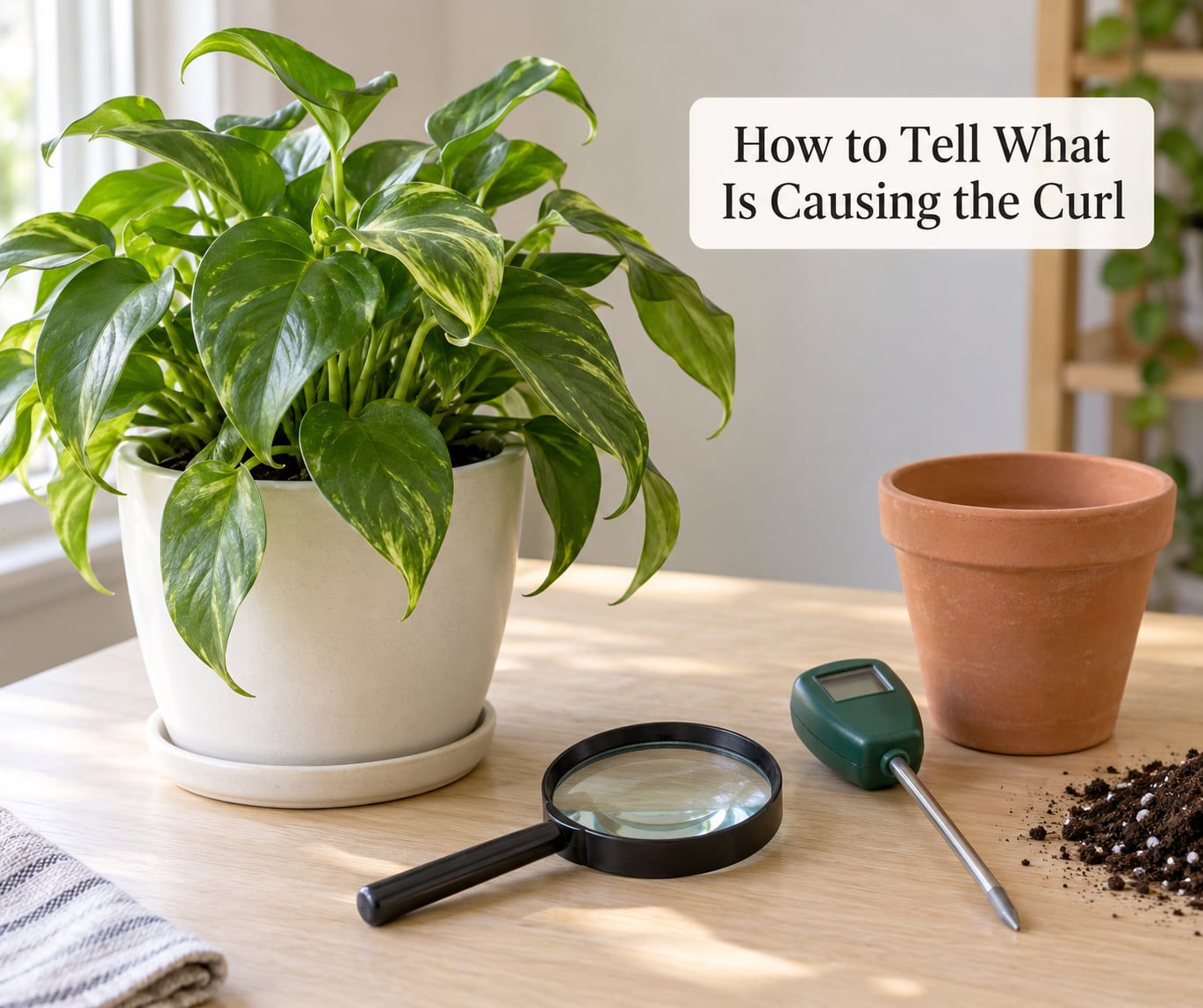
Diagnose in a fixed order so you stop at the first real answer: soil, then roots, then light position, then air, then pests. Start with your hand or a wooden chopstick pushed 2 to 3 cm into the mix. Wet and cool means hold off on water. Dry and warm at the surface means keep checking lower down, because a crust of dry soil can hide a wet root ball.
Next, look at texture. Crisp, papery, and brittle tissue cannot recover and points at dry air, heat scorch or salt damage. Soft, limp, and pale tissue that stays that way after a drink points at root damage. Firm leaves with a normal look but a tight curl point at pests or a change in the environment rather than the roots.
Then check the details that separate lookalikes. Turn the leaf over and look for stippling, fine webbing, silvery streaks, sticky residue or tiny green insects. Look at the leaf age: new growth that curls while old leaves look fine usually means mites, thrips, a calcium or fertiliser problem, or too little light. Old leaves that curl first usually means watering.
Finally, check the pot and the spot. Lift the plant a little and see whether water runs straight out of the bottom or stands on the surface. Feel the soil temperature against your hand, and note whether cold air falls from the window or a radiator runs within a foot of the leaves.
One habit I like: put a twist tie around one curled leaf and note it. New growth tells you whether the fix worked, not the leaf you are staring at today.
Watering Problems and Root Stress
Both extremes cause curl, which is why guessing from the leaves alone fails. Underwatered leaves fold inward, feel thin, and crisp at the edges; a plant that has been dry too long will often drop leaves at the lower stem first. Overwatered leaves droop downward and feel soft, and the soil stays wet far longer than it should.
The roots tell you which one you have. Slide the plant out of its pot: firm white or tan roots mean healthy, while dark, slimy, smelly roots mean root rot. Sour or swampy soil is the giveaway nobody expects. Healthy roots on a plant that wilts anyway often mean the plant is root-bound and the mix has broken down to nothing but fine particles.
Drainage problems masquerade as watering problems. A pot sitting inside a decorative cover with no way out, a saucer full of water, or a pot with a blocked hole all keep the mix saturated. Compacted or old potting mix also holds water unevenly: the inside of the root ball stays bone dry while the outside stays wet, and the plant experiences drought and drowning at the same time.
Fixes are straightforward. For dry soil, water the whole pot slowly until it runs out of the bottom, then empty the saucer, and check again in a few days. Bottom watering helps with hydrophobic soil that repels water. For wet soil, let it dry down, confirm there is a free drainage hole, and delay the next drink. If roots are mushy, cut them back with a clean blade, repot into fresh mix, and hold off on fertiliser for a few weeks.
Low Humidity, Heat, and Airflow
Dry air pulls water out of leaves faster than many tropical plants can replace it, and the margin curls to reduce the loss. This is why calatheas and prayer plants curl near a working radiator while a pothos a metre away stays flat. Brown tips on otherwise healthy leaves usually arrive before visible curl, so treat them as an early warning.
Heat stress looks different from chronic low humidity, and it is often temporary. A leaf that curls at midday and relaxes by evening is usually responding to heat and light, not damage. Dry brown or bleached patches that stay are scorch, and those patches will not repair. Cold does the reverse: leaves droop and curl overnight and look normal by morning if you catch them before the tissue is damaged.
Air-conditioning and open windows in dry months both lower humidity and swing temperature fast. Move plants away from radiators, vents, exterior doors and single-glazed windows, and keep them out of the line of a draught. Grouping plants together raises the humidity of the air immediately around them, which is why a crowded shelf often does better than a lone plant on a wide windowsill.
Light Problems and Leaf Burn
Too little light makes new leaves small and curled, because the plant stretches for energy and builds thin, poorly supported tissue. Too much light burns: the leaf bleaches or turns brown on the sun-facing side, and the damaged margin curls as it dries. A plant moved suddenly from a dim corner into full sun burns within days, which is why moving a plant and repotting it in the same week is asking for trouble.
Age is the tell. Older leaves scorch first because they have been in the light longest and are the plant’s oldest tissue. New growth curling while older leaves have crisp rims usually means light or salt, not water.
Adjust placement in stages over a week or two rather than in one move. Rotate the pot a quarter turn each week so all sides get light. An east-facing window usually suits leafy houseplants better than a south one that gets unfiltered afternoon sun, and sheer netting during the hottest hours takes the worst edge off.
Pests, Disease, and Chemical Exposure
Pest damage looks like damage, not thirst. Spider mites feed on new growth, which becomes puckered, twisted and stunted, with fine stippling and, in bad cases, webbing between leaf and stem. Thrips leave silvery streaks and black specks of waste on the leaf surface, often followed by deformed new leaves. Aphids and scale cluster at stems and leaf undersides and produce sticky honeydew, which then grows black sooty mould. Fungus gnats are a separate case: the adults are harmless, but their larvae damage seedlings and their presence almost always means a mix that stays too wet.
Confirm with a tap test. Hold white paper under the leaves, tap the stems, and see what falls out. Tiny moving dots or a fine dust that smears green confirm mites or thrips, and that takes about ten seconds compared with guessing.
Beyond pests, roots are only half the story. Leaf shine sprays, oily polishes and even some scented candles and diffusers leave a film that blocks stomata, and herbicide drift from a neighbouring garden or a new lawn treatment can distort new growth in a way that looks exactly like a virus. Fertiliser applied to dry soil or at full strength scorches roots within days, and hard tap water builds a salt crust in the pot that shows first as crisp brown rims.
How to Fix Curling Leaves Without Making It Worse
Work in this order, and change one thing at a time so you know what helped.
- Isolate the plant if pests are suspected, and check the others nearby.
- Test the soil with a finger or chopstick before watering anything.
- Check drainage holes, saucer and pot type, and remove any standing water.
- Correct the most likely single cause rather than adjusting four things at once.
- Wipe or rinse the leaves so the surface can breathe again.
- Remove only fully brown, crispy or rotting tissue with clean scissors.
- Wait and judge the result by the next new leaf, not the curled one you are worried about.
Avoid the two common overreactions. Do not keep watering a plant you have not retested, and do not move a sun-stressed plant straight back into full sun while you are also repotting it. One change at a time is boring and effective.
Recovery expectations are honest but short for most causes. Water and draught issues usually show a difference within 2 to 4 days on new growth; humidity and light changes take 3 to 6 weeks to show; pest infestations need a full treatment cycle of about 3 weeks with repeat applications. Curl that is already crisp will never flatten out. Judge success by how the next leaf opens.
When Curling Is Normal and When It Is Serious
Some plants move their leaves on purpose. Prayer plants, including most calatheas and marantas, fold their leaves upward at dusk and open them again at dawn; that nightly motion is normal and is called nyctinasty. A single lower leaf curling on a monstera is usually the oldest leaf retiring. Fern fronds that curl on a dry afternoon and uncurl overnight are self-regulating, and a healthy fiddle leaf fig may fold a new leaf slightly while it expands.
Normal movement returns within a day. Curling that stays for days while other leaves join it is a symptom, not a habit.
Warning signs worth taking seriously: curl spreading to most of the plant within a week, soft or mushy stems, a sour smell from the soil, visible pests on more than one leaf, a plant collapsing between waterings, or no new growth after several weeks of corrected care. If you see the first three, slide the plant out of its pot before anything else.
Start with the simplest test the next time a leaf curls. Put your finger in the soil before you reach for anything else, and most of the time the answer is one of nine things you can change today.
Frequently Asked Questions
Is it normal for houseplant leaves to curl?
Some movement is normal. Prayer plants and most calatheas fold their leaves upward at night and open them by morning, which is called nyctinasty, and older lower leaves on monsteras and figs often curl as they age. Curl that lasts for days, spreads to new leaves, or comes with browning, sticky residue or a soft stem is a stress signal rather than natural movement.
Should I cut off houseplant leaves that are curling?
Only if the leaf is fully brown, crispy or mushy. Green curled leaves are still working tissue, and cutting them off removes the plant’s ability to photosynthesize while it recovers. Trim dead leaves at the base of the petiole with clean scissors. If most of a plant is curled, correct the cause and let the next flush of growth show you whether it worked.
How do I know if curled leaves mean my plant is underwatered?
Check the soil before you check the leaves. Push a finger 2 to 3 cm into the mix: if it is dry and warm to the touch, the plant is thirsty. Dry-soil leaves curl inward, feel thin, crisp at the edges and often drop from the lower stem first. Water slowly until it runs out of the drainage hole, empty the saucer, and recheck in a few days.
Can low humidity make houseplant leaves curl?
Yes, and it is one of the most common causes with calatheas, prayer plants and tropical ferns. Dry air pulls moisture from the leaves faster than the roots replace it, so the margins curl inward to reduce the surface losing water, and tips often turn brown first. Group plants together, keep them clear of radiators and vents, or run a humidifier and watch the newest growth over three to six weeks.
Why are my plant’s newest leaves curling?
New growth curling while older leaves stay flat points away from watering and toward pests, light or salts. Check leaf undersides for mites, thrips or aphids, and for sticky honeydew. Otherwise consider too little light, which produces thin curled leaves, or fertiliser applied at full strength, which scorches the tender new growth. Hard tap water builds salts that show first on new leaves.
How long does it take for curled houseplant leaves to recover?
Existing curled leaves rarely flatten out, especially if they have gone crisp and brown, so judge recovery by the next new leaf. Water, draught and heat fixes usually show within 2 to 4 days of a change, humidity and light changes take 3 to 6 weeks, and pest treatments need roughly 3 weeks of repeat applications. If nothing new appears after 6 to 8 weeks of corrected care, look again at the roots.
What to Do First
Most curled leaves are a watering mismatch, so start with your finger in the soil before you buy anything or move the plant. Fix that one thing, leave it alone, and give the next leaf a few weeks to tell you whether the diagnosis was right.