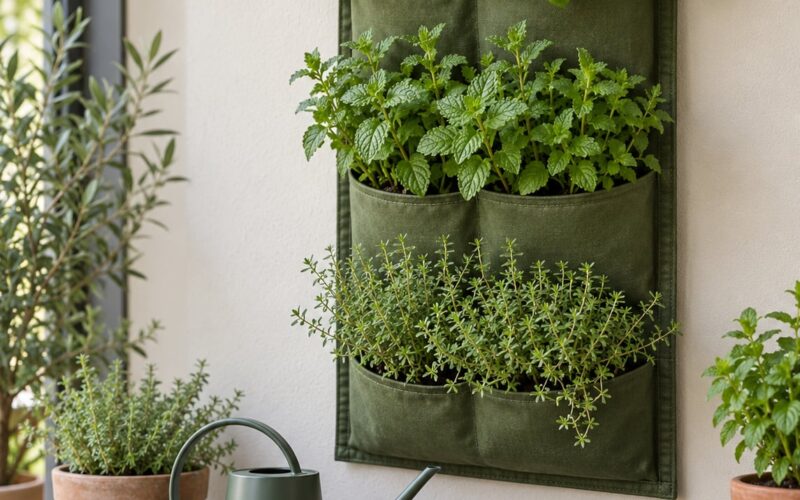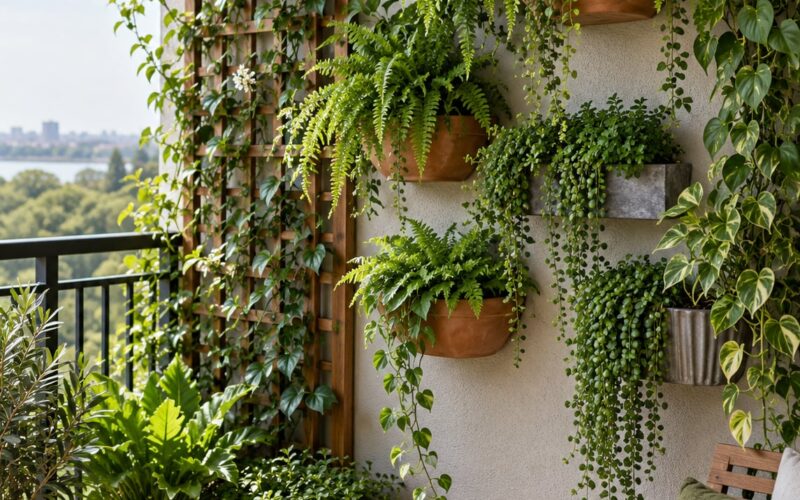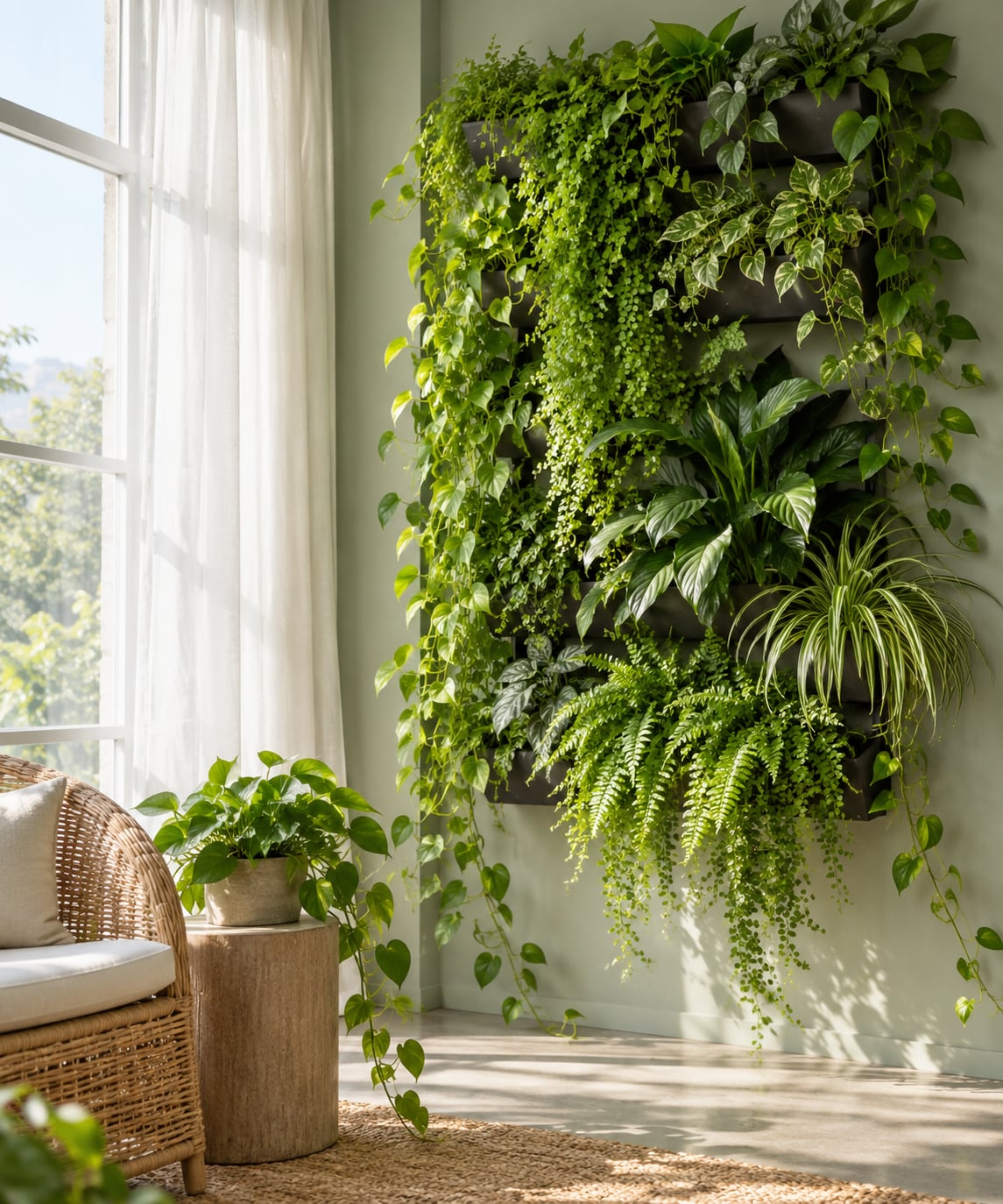
The best light conditions for a vertical garden indoors are bright, indirect light or better: roughly 10,000 to 20,000 lux (1,000 to 2,000 foot candles) reaching the foliage for 12 to 16 hours a day. On an interior or north-facing wall, a full spectrum LED grow light is the only reliable way to hold that level.
The words bright and low light describe almost nothing until you attach a number to them. Two rooms can both be called bright and differ by a factor of ten, and the difference decides whether your herbs crop or stretch. This guide turns the vague labels into measurements you can take in an afternoon.
Most of the trouble people have with plant walls comes down to one overlooked fact: light falls off with distance from the window and with depth into the wall. The top pocket of a six-foot unit can be in full sun while the bottom pocket sits in deep shade, and the bottom rows are the first to thin out and die.
Table of Contents
- Best Light Conditions for a Vertical Garden Indoors at a Glance
- How Much Light Does an Indoor Vertical Garden Need?
- Brightness, measured at the leaves
- Direct sun versus bright indirect light
- Duration, which matters more than people expect
- Which Direction Should the Window Face?
- South-facing windows
- West-facing windows
- East-facing windows
- North-facing windows
- How to Judge Light Without Guessing
- Where Should You Place a Vertical Garden Indoors?
- Why the bottom of a tall wall fails
- Locations that almost never work
- What Plants Suit Each Light Condition?
- For low light, under 1,000 foot candles
- For medium light, roughly 1,000 to 2,000 foot candles
- For bright indirect light, 2,000 foot candles and up
- For direct sun pockets
- How to Adjust Lighting for a Vertical Garden
- Fixture types that suit vertical walls
- How many hours of light
- How far to mount the light
- The downsides nobody mentions
- Seasonal changes
- Frequently Asked Questions
- What is the minimum light intensity recommended for indoor vertical gardens?
- Do indoor vertical gardens need grow lights?
- How long should I use grow lights for indoor plants?
- What color light is best for indoor plants?
- How to tell if your grow light is too close?
- Why is my vertical garden getting leggy and dying at the bottom?
- Conclusion
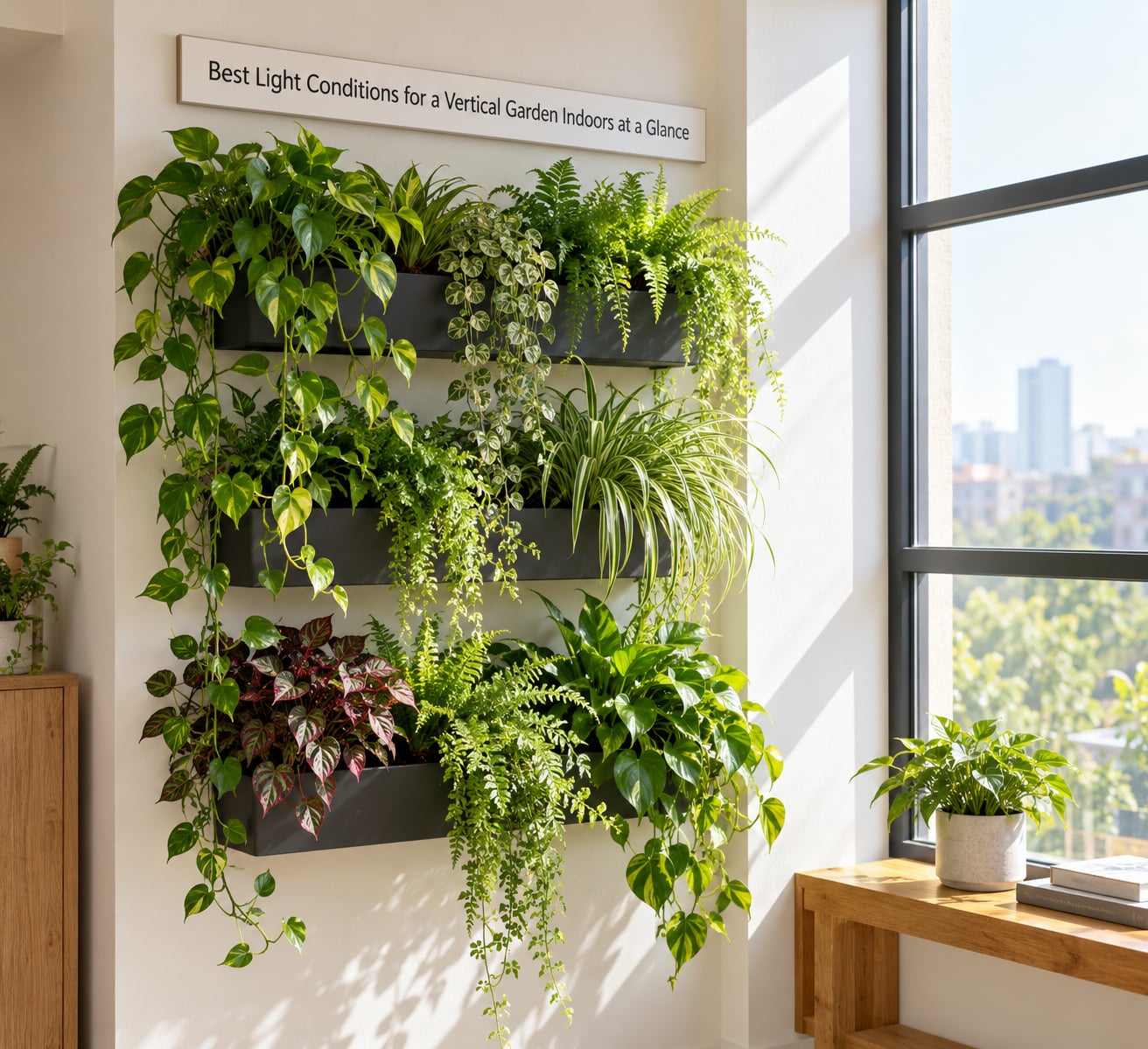
Best Light Conditions for a Vertical Garden Indoors at a Glance
| Light level | Typical location | Hours of light | Plants that hold up |
|---|---|---|---|
| Low light | Interior hallway, bathroom, north-facing room, several feet from any window | 8 to 10 hours, supplemented | Pothos, philodendron, fern, calathea, peperomia, most trailing vines |
| Medium light | 3 to 5 feet from an east or west window, or a north window with a bright wall opposite | 10 to 12 hours | Monstera, rubber plant, dracaena, ZZ plant, most leafy greens, parsley and mint |
| Bright indirect light | Within 3 feet of a south window behind a sheer curtain, or a bright glass door | 12 to 16 hours | Herbs, leafy greens, most flowering and fruiting crops, compact succulents |
| Direct sun | Unfiltered sun within 2 feet of a south or west window | 4 to 6 hours, then shade | Succulents and cacti only, in the hottest pocket of the wall |
A note on the last row. Direct sun on a vertical wall rarely damages the plants at the top and scorches them lower down, because the bottom of the wall is shaded by the upper pockets. If you want direct sun, keep it to a short, top-of-wall burst.
How Much Light Does an Indoor Vertical Garden Need?
Three separate variables decide whether a vertical garden thrives: how bright the light is, how direct it is, and how long it lasts each day. People usually measure the first one badly and ignore the third.
Brightness, measured at the leaves
Read the light where the foliage actually sits, not near the window. A lux meter or a light meter app on your phone gives you a number in seconds. For most leafy plants and kitchen herbs, aim for 10,000 to 20,000 lux. Flowering and fruiting crops want the upper end of that band, and so do compact succulents.
Direct sun versus bright indirect light
Direct sun means sunbeams land on the leaf without passing through glass or a curtain. It is intense enough to scorch and to dry a vertical pocket within a day. Bright indirect light is daylight that has been filtered by a sheer curtain, bounced off a pale wall, or come through a north-facing window, and it is the condition most indoor vertical gardens actually want.
Duration, which matters more than people expect
Two hours of strong sun will not sustain a herb wall. Low light for twelve hours outperforms bright light for two, which is why a dim room with a lamp on a timer usually beats a sunny room with no schedule at all.
| Measurement | Reading | What it means for the wall |
|---|---|---|
| Foot candles | 1,000 to 2,000+ at the leaves | Target range for most foliage, herbs and greens |
| Lux | 10,000 to 20,000+ at the leaves | Same range in metric; 1 foot candle is about 10.8 lux |
| Lumens | A fixture rating, not a plant rating | Only meaningful as light reaching the leaves, not as a bulb label |
| Kelvin | 3,500 to 4,500K for foliage plants | Close to daylight; 5,000K and above skew blue |
Which Direction Should the Window Face?
Window direction sets the ceiling on your natural light before you add any fixture. South and west windows deliver the most; east is steady and gentle; north is dim but consistent and rarely overheats your plants.
South-facing windows
A south window gives you the longest and strongest light of any wall in a home, and it comes with heat. Bright indirect light is what you get behind a sheer curtain, and that is the condition herbs and leafy greens want. Watch for leaf edge burn on the pocket nearest the glass in midsummer, and pull the wall back a foot or two if you see it.
West-facing windows
West light is strong but late and hot. It suits heat-tolerant plants well, and it means the wall gets a concentrated dose right at the end of the day when temperatures peak. Medium to bright indirect, with attention to afternoon heat near the glass, is the practical read.
East-facing windows
East light is gentle, cool and brief, and it hits the wall straight on with very little heat. It suits tropical foliage and most trailing plants well. Because the duration is short, an east wall almost always benefits from a few extra hours on a grow light timer.
North-facing windows
A north window never gets direct sun, so nothing you plant there will scorch, and a plant wall will never overheat. The trade is intensity: low to medium light, which limits you to shade-tolerant foliage unless you add lighting. The widely used fallback for a north wall is a full spectrum light delivering about 150 foot candles at 4300K for around 10 hours a day, on a timer.
How to Judge Light Without Guessing
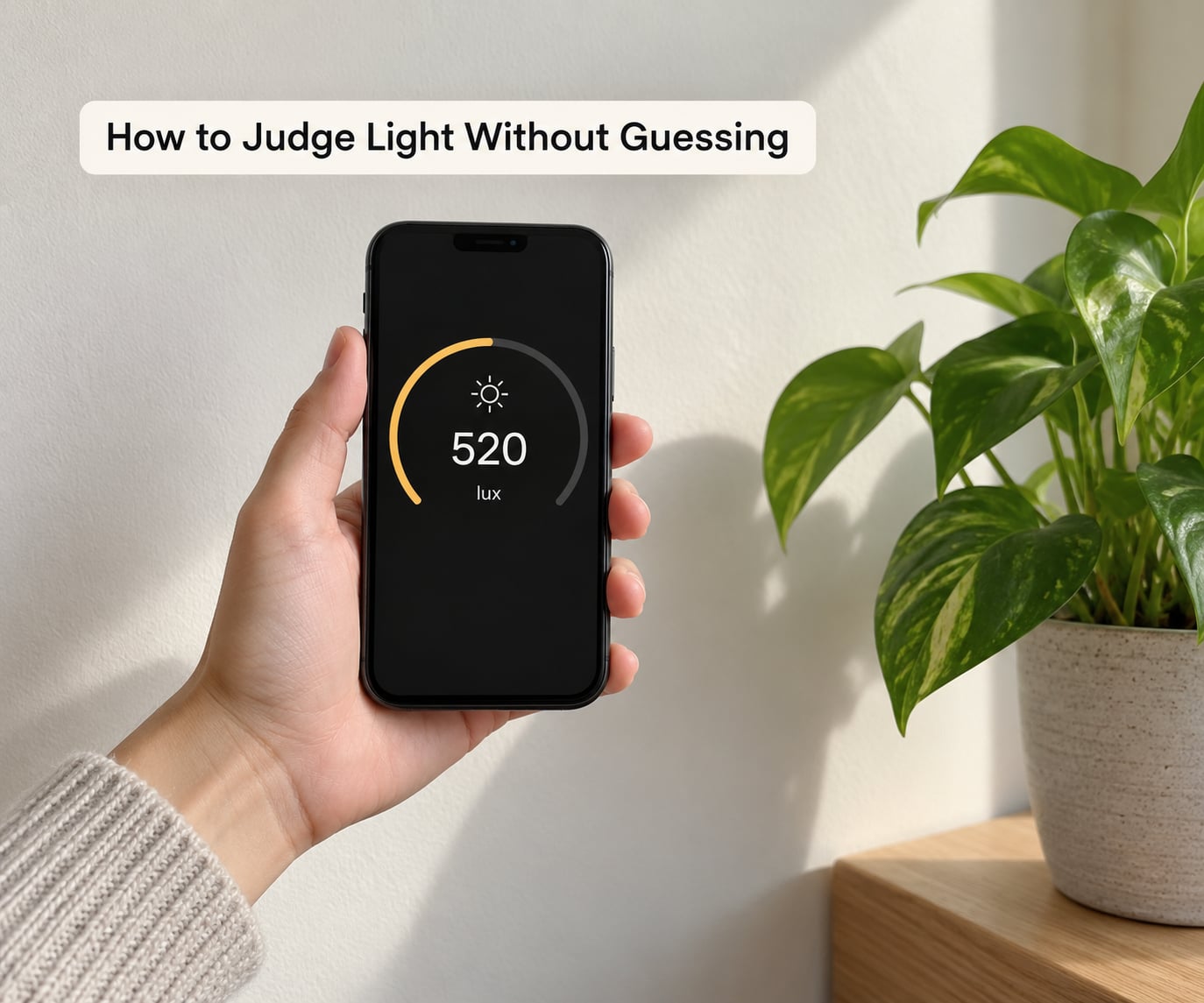
You can assess a wall in ten minutes with a phone and a clear sky. Do it at the worst time of year for your window, not the best, so you are not surprised later.
First, stand at the window and hold your hand flat at arm’s length. A hard-edged shadow with a sharp outline means direct sun. A soft, blurred shadow means filtered light. A shadow you can barely see means low light.
Second, measure the distance from your wall to the nearest window. Within 3 feet you are in bright territory. Three to 8 feet is medium. Beyond that, treat the wall as low light until a meter tells you otherwise.
Third, open a light meter app and take a reading at plant height in every pocket of the unit, top to bottom. Record the top, middle and bottom separately. The gap between them is your falloff problem, and you will not see it any other way.
Fourth, repeat the readings in midwinter. Windows that give 15,000 lux in June can drop to a third of that in December, and that is when most plant walls fail. If you grow herbs and greens, plan the grow light schedule around the winter number, not the summer one.
Where Should You Place a Vertical Garden Indoors?
Place a vertical garden within 3 to 8 feet of a window, against a wall that is pale rather than painted a deep color, and out of the way of heating vents and air conditioning units. The best indoor spots are window-adjacent walls, the wall beside a glass door, and any interior wall you are prepared to light properly.
Why the bottom of a tall wall fails
Light intensity drops as you move away from the source, and every pocket on a vertical wall also shades the pocket below it. A six-foot unit with dense trailing plants at the top can leave the bottom rows at a fraction of the light the top receives. The classic symptom is strong, long growth up top and thin, sparse, dying stems at the bottom.
Three fixes work. Keep the wall under about 5 feet tall so the falloff stays manageable. Thin out or trim plants that overhang the row below them. And light each row separately rather than aiming a single fixture at the top of the unit.
Locations that almost never work
A wall in the middle of a room with no window and no fixture has nothing to draw on. So do deep corners where two walls meet away from glass, and any spot behind a partition or a tall cabinet. Bathrooms work only with a rated fixture and a fan, and they tend to be bright enough for ferns and calathea once you add a light.
What Plants Suit Each Light Condition?
Match the plant to the number you measured, not to the room you wish you had. Grouping plants by light level also means you can water one zone consistently instead of chasing different needs across a whole wall.
For low light, under 1,000 foot candles
Pothos, heartleaf philodendron, ZZ plant, snake plant, calathea, maidenhair fern, peperomia and most trailing vines. Expect slower growth and larger, thinner leaves than the same plant gets outdoors, and expect the wall to look its best in the first few months rather than years.
For medium light, roughly 1,000 to 2,000 foot candles
Monstera, rubber plant, dracaena, prayer plant, spider plant, and in the kitchen, lettuce, spinach, kale, arugula, parsley, mint and chives. Leafy greens and herbs are the group most often attempted on a dim wall, and they are the group that disappoints fastest without extra hours from a lamp.
For bright indirect light, 2,000 foot candles and up
Basil, thyme, oregano, rosemary, cilantro, most flowering houseplants, and fruiting crops that will actually ripen indoors. The ceiling on this zone is heat: a bright south wall in summer can cook the top pocket.
For direct sun pockets
Haworthia, jade, echeveria, aloe and other compact succulents. Put them at the top of the wall where the sun lands, use a gritty mix, and expect the rest of the wall to be too shaded for them.
How to Adjust Lighting for a Vertical Garden
Adding light means matching a fixture, a distance and a schedule to the top, middle and bottom readings you took earlier. The most common mistake is one bar of light aimed at a tall wall from above.
Fixture types that suit vertical walls
A wall-washing strip mounted above the unit spreads light down the face evenly. A grow light bar per shelf row gives the most even coverage on a pocket system, at the cost of visible hardware. Under-cabinet style fixtures work well when the unit sits below a shelf or in a kitchen. Clamp lights are cheap and adjustable, but they move, get knocked and look temporary.
How many hours of light
Set a timer or smart plug rather than leaving lamps on by hand. Community practice on plant walls leans heavily on timing, and it is the easiest habit to keep.
| Plant group | Light hours per day | Dark period |
|---|---|---|
| Seedlings and cuttings | 14 to 16 hours | 8 to 10 hours |
| Herbs and leafy greens | 14 to 16 hours | 8 to 10 hours |
| Foliage houseplants | 12 to 14 hours | 10 to 12 hours |
| Vegetative growth, rule of thumb | 18 hours | 6 hours |
| Flowering and fruiting | 12 hours | 12 hours |
How far to mount the light
Start close and pull back as plants grow. Seedlings want about 6 inches of clearance. Vegetative plants sit comfortably at 16 to 30 inches. Re-check height every few weeks, because trailing growth on a vertical wall rises fast and will reach the fixture sooner than you expect.
The downsides nobody mentions
Grow lights cost money to run, throw heat onto the foliage and upper pockets that then dry out faster, and they are the most common complaint people have about a plant wall in a living space. Design-integrated fixtures, paint-matched housings or a strip hidden behind a shelf lip solve most of the aesthetic objection. Overwatering is the real risk when a lamp sits too close: extra heat and extra light both push at moisture.
Seasonal changes
Measure again each season and expect to move or supplement. A wall that ran 14 hours of lamp in January may need only 6 in June, and running it at 14 anyway pushes plants into light stress. Where you can, rotate the unit a quarter turn or shift it closer to the window for the darker months.
Frequently Asked Questions
What is the minimum light intensity recommended for indoor vertical gardens?
For most leafy plants, herbs and greens, aim for 10,000 to 20,000 lux at the foliage, which is roughly 1,000 to 2,000 foot candles. Flowering and fruiting crops need the upper end of that band, while shade-tolerant foliage such as pothos and philodendron grow acceptably from about 500 foot candles upward. Measure at plant height, not at the window, and check the bottom of the wall separately because light falls off down the face.
Do indoor vertical gardens need grow lights?
Only if natural light falls short of about 1,000 foot candles at the foliage. A vertical garden within 3 feet of a south-facing window behind a sheer curtain can often run on daylight alone. An interior wall, a north-facing room, or a unit more than 8 feet from glass will need supplemental lighting to hold dense growth, especially in winter when daylight hours and intensity both fall.
How long should I use grow lights for indoor plants?
Run foliage houseplants 12 to 14 hours a day, herbs and leafy greens 14 to 16 hours, and seedlings 14 to 16 hours. Vegetative growers often use 18 hours on and 6 off, while flowering and fruiting crops do best on a 12 on, 12 off split. Use a timer or smart plug so the dark period stays consistent, and shorten the schedule in summer when daylight adds to the total.
What color light is best for indoor plants?
Full spectrum white in the 3,500 to 4,500 Kelvin range matches daylight most closely and keeps plants compact. Blue-leaning light around 5,000K and above supports vegetative and seedling growth, while red-heavy light favors flowering and fruiting. A widely used fallback for a north wall is about 150 foot candles at 4300K for 10 hours daily. Green and yellow light is the least useful part of the spectrum, which is why bulbs skew away from it.
How to tell if your grow light is too close?
Look for bleached or white patches on the leaves facing the fixture, brown and crisp leaf edges, and new growth that looks smaller and paler rather than larger. Heat around the fixture is the second signal: touch the leaf above the soil and compare it to a leaf further away. Move the light up until the patches stop appearing, and re-check after a week, since damage on existing leaves will not fade.
Why is my vertical garden getting leggy and dying at the bottom?
That pattern almost always means light falloff, not overwatering. Plants at the top of a tall wall shade the rows beneath them, so the bottom pocket receives a fraction of the light and stretches, then drops its lower leaves. Keep the unit under about 5 feet, trim overhang that blocks the row below, and light each row separately rather than aiming a single bar at the top.
Conclusion
Start by measuring, not by guessing. Put a light meter app at plant height in the top, middle and bottom pockets of your intended wall in midwinter. Anything at or above 1,000 foot candles can carry a foliage wall on daylight; anything below that needs a full spectrum fixture on a timer, aimed at each row rather than the whole wall at once.