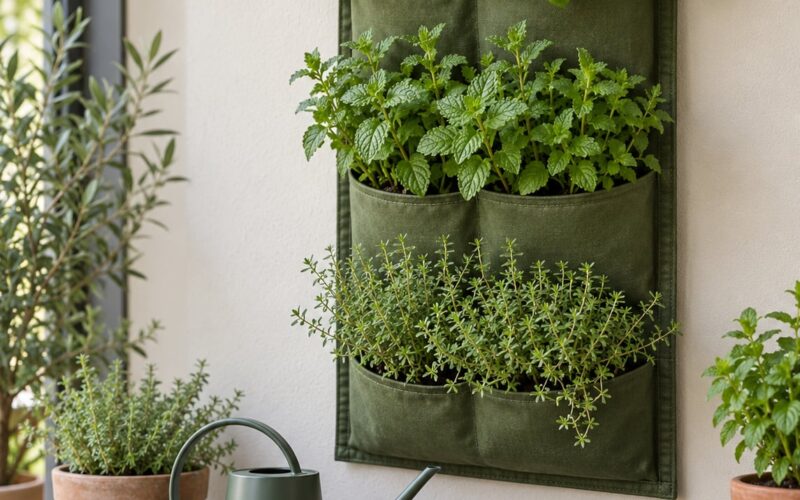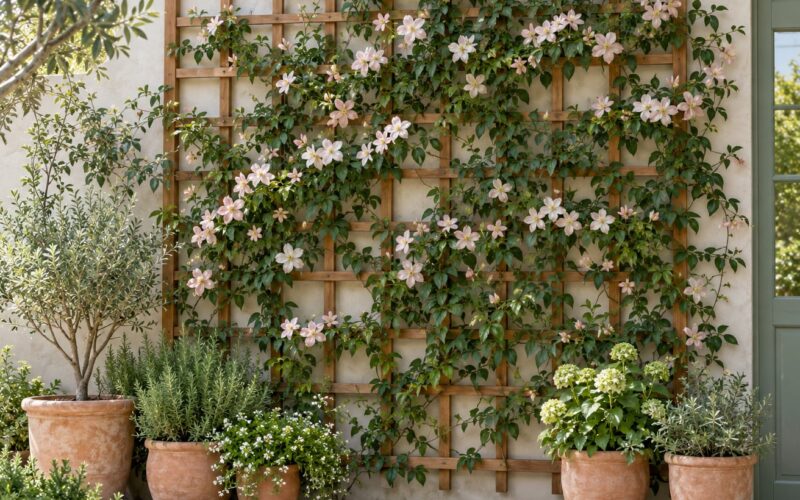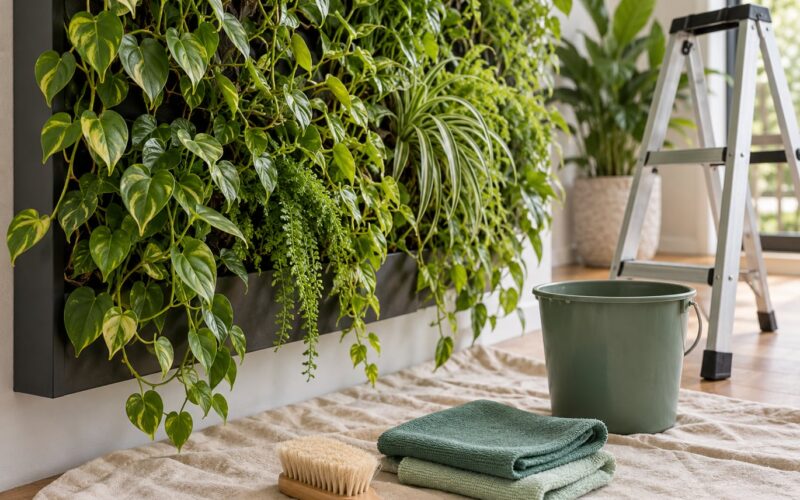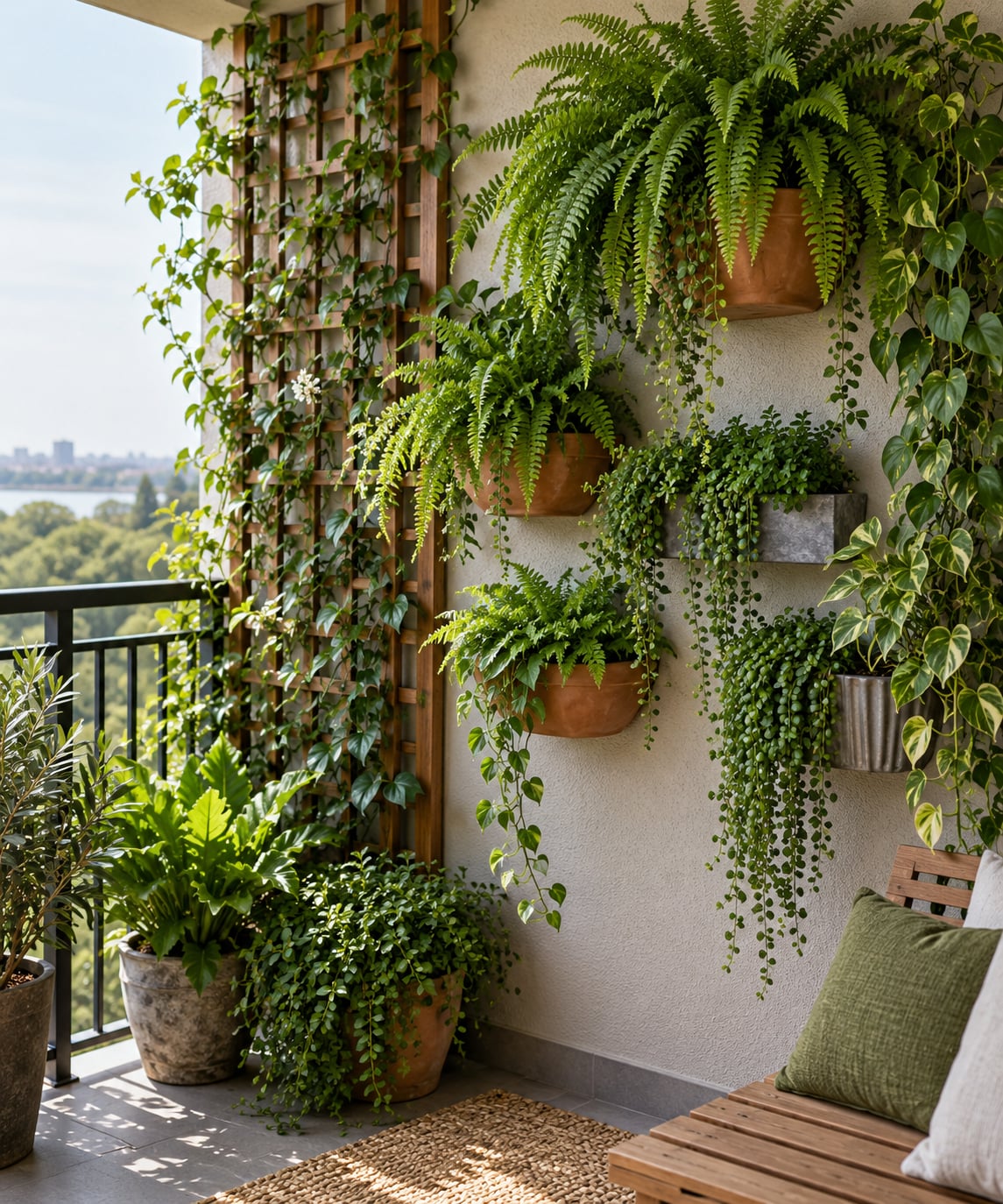
To choose plants for a shady vertical garden, do two things in this order: work out exactly how much light your wall gets, then pick plants that grow in that light. Skip the first step and you will end up with stretched, pale growth and scorched leaves within a season.
That is the whole method, but the details are where most people go wrong. A label reading “low light” means something different to every nursery, and a wall that is fine in June can be almost dark in December once a tree leafs out.
So I break it into six steps: measure the light, match plants to the shade level, match them to the container, sort them by watering needs, compose the display, then test the whole thing before you fix it to the wall. The guide below walks through each one.
Table of Contents
- What You Need
- How to Choose Plants for a Shady Vertical Garden: Step by Step
- How to Measure the Light in Your Garden
- Choose Plants for the Light Level You Measured
- Match Plants to Planter Size and Root Space in a Shady Vertical Garden
- Check Watering and Drainage Requirements
- Plan for Color, Texture, and Seasonal Interest
- Test the Planting Before Installing It
- Common Mistakes
- Frequently Asked Questions
- What will grow in 100% shade?
- Which climbing vines thrive in full shade?
- What plants work well in a vertical garden in low light?
- How do I work out how much light my wall actually gets?
- Should the trellis be fixed directly against the wall?
- What are the common mistakes in vertical gardening?
- Conclusion
What You Need
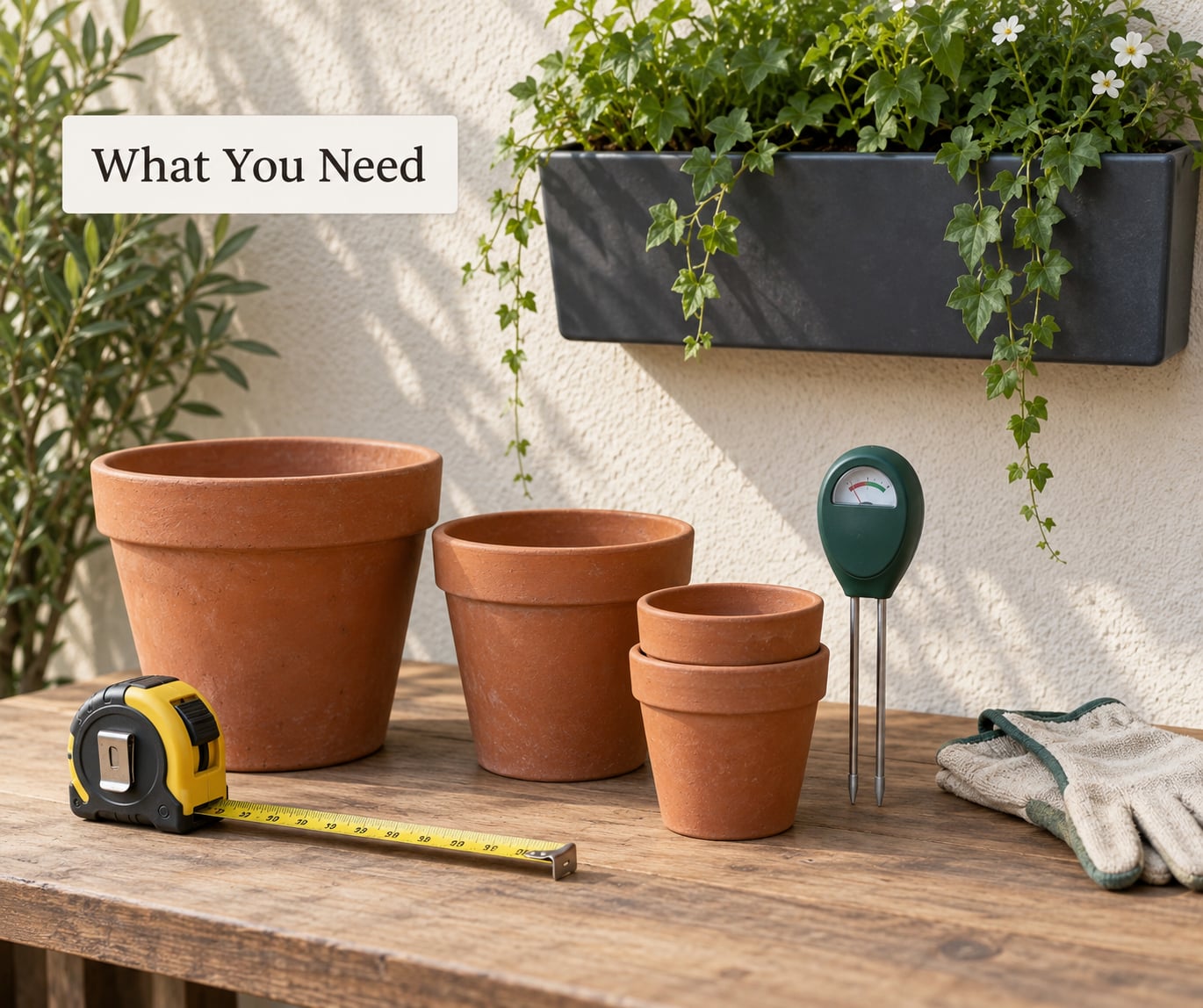
Before you buy a single plant, you need to answer four practical questions about the space itself.
How much light arrives, and when? Sit or stand where the wall will be and watch it. Note the sunniest stretch of the day, roughly when it starts, and when it disappears. Repeat in the dullest month of your year, not just the brightest.
How much usable growing area do you have? Measure the width, the height you can actually reach without a ladder, and the depth of each pocket or shelf. A vertical system that is 2 metres tall but only manageable to 1.8 metres is a smaller garden than it looks.
What is the planter depth and how does it hold water? Shallow pockets under 10 cm hold a root ball, not a plant. Note whether each container has a drainage hole, whether a reservoir exists, and whether the bottom row sits in a shadow where water will sit rather than dry out.
Indoor or outdoor? This decision changes the entire list. A wall planter on a balcony lives outdoors and takes frost, wind and rain. One in a hallway has no rain at all, no frost, and much less light than a windowless spot outdoors. Do not buy a single set of plants for both.
A cheap light meter on a phone, a tape measure and a soil moisture meter cover all of it. Write the answers down, because you will reference them every time you are standing in a garden centre with a plant you have never seen before.
How to Choose Plants for a Shady Vertical Garden: Step by Step
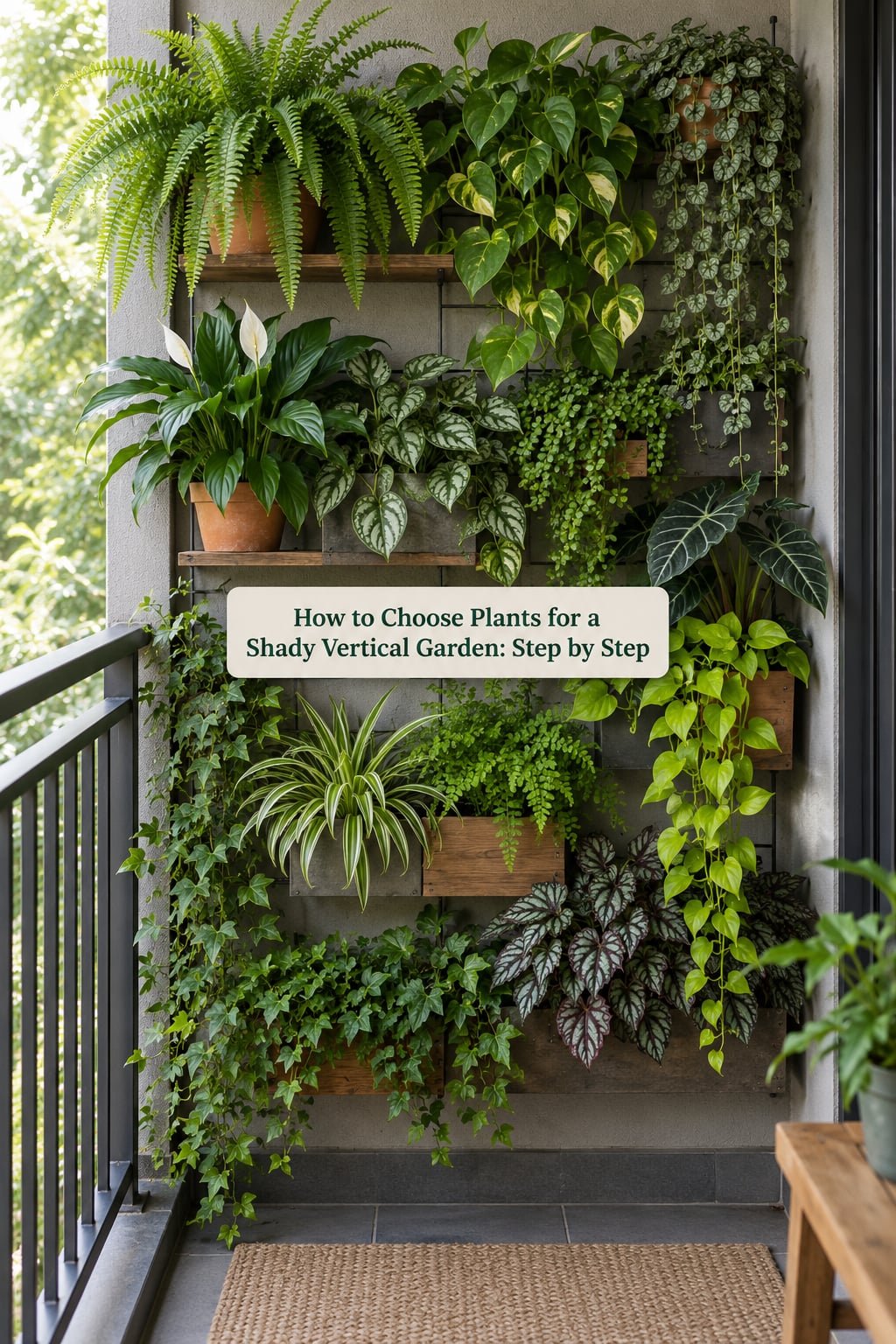
Six steps, in order. Do not jump to step two, because every later decision depends on the answer from step one.
How to Measure the Light in Your Garden
Shade is not one condition. What matters is how much light reaches the leaves, how long it stays there, and whether it is a moving target across the year.
Watch the wall at three points in the day: mid-morning, midday and mid-afternoon. A wall in direct sun before eleven and shaded afterwards is bright shade. A wall that only ever catches a moving patch of light under a canopy is dappled. A wall that is uniformly dim, with no brighter patch anywhere on it, is deep shade.
If you use a light meter app, treat the numbers as a rough guide rather than a verdict. Readings in the low tens of lux describe a genuinely dark corner. A few hundred lux is a bright spot that will take flowering climbers.
Then check the seasonal swing. A wall shaded by a deciduous tree is bright shade in winter and deep shade in summer, so choose plants that tolerate the darker of the two conditions, or plan to move the pots in and out.
| Shade level | What it looks like | Light needed | Suits a vertical garden |
|---|---|---|---|
| Deep shade | No direct sun all day, uniformly dim | Very low light | Ferns, ivy, evergreen shrubs, most indoor-style foliage plants |
| Dappled shade | Moving patches of light, a tree canopy in front | Low light with shifting sun | Hardy ferns, epimedium, vinca, periwinkle, pulmonaria |
| Bright shade | Lit for a few hours early or late, shaded at midday | Part shade, 2 to 4 hours of soft sun | Climbing hydrangea, jasmine, honeysuckle, hosta, heuchera |
| Bright indirect | Indoors, near a window but out of the glass | Filtered light | Pothos, hoya, peperomia, pilea, most ferns and calathea |
Choose Plants for the Light Level You Measured
Now filter. Every candidate plant has a stated light requirement, and your job is to match that requirement to the exposure you actually measured, not to the word “shade”.
Gardeners on r/GardeningUK reach for climbers first when a shady space needs height, and they usually land on climbing hydrangea or jasmine. That instinct is right: a climber covers a large wall area from one root ball, so it gets more out of low light than a shrub would.
In deep shade, set your expectations honestly. Flowering is mostly off the table because most flowering plants need more light than a dim wall can supply. What you can have instead is structure and texture: ferns unfurling, ivy running along a trellis line, a clipped evergreen giving the panel a shape all year.
Check three things for every plant before it goes on the list, which is the same three-point test people use on gardening forums: does it tolerate this shade category, does it suit the soil moisture you will give it, and is it hardy in your zone. A plant that fails the second check is the one that dies in month three.
Match Plants to Planter Size and Root Space in a Shady Vertical Garden
A vertical garden is a stack of tiny pots held off the ground, so root space and saturated weight decide what is possible. A pocket 8 cm deep and 12 cm wide will hold a small fern, a trailing peperomia or a compact ivy, and nothing that wants to get large.
Read the mature size before you commit, not the pot size at the nursery. Climbers sold in a 2 litre pot can cover 3 metres of trellis in two seasons, which is the single most common complaint on forums: plants that looked modest at purchase overwhelm the wall before the owner is ready for them.
Then decide how the plant attaches, because this is where beginners underestimate the work. Self-clinging plants grip masonry and rough timber on their own. Trained climbers such as clematis, jasmine and honeysuckle need tying in every few weeks through the growing season. If you want zero maintenance after planting, restrict the list to self-clingers and trailers.
For the structure itself, a flat panel or wire trellis fixed a few centimetres off the wall suits a shaded wall best. An obelisk works in the middle of a bed. An arched trellis placed over the centre of a bed will shade out whatever is growing underneath, which is a decent trick for a sunny site and a mistake on a shaded one.
If you cannot drill, a trellis built from tall posts and thin battens, strapped or hooked to a balcony rail, gives climbers something to grip without touching the wall. Keep the fixings rated for the weight of wet soil.
Check Watering and Drainage Requirements
Wall planters dry out faster than ground soil, and readers are routinely surprised by it. Water falling a short distance onto a shallow pot warms it and evaporates fast, and the exposed front face of a panel bakes in afternoon sun.
Group plants by moisture need before you arrange them. Boggy-shade species such as astilbe and zantedeschia will rot in a pocket that dries out, and dry-shade species such as epimedium and most compact vinca sulk in a pocket that stays wet. Grouping by need is what lets you water the whole panel on one schedule.
Every container needs a drainage hole and a free-draining mix. Add a thin layer of coarse material at the base and use a peat-free, bark-based growing media rather than a dense compost that holds water against the root ball.
Watch the vertical gradient too. The bottom row of a panel stays cooler and damper, and the top row dries first. Placing the thirstier plants low and the more drought-tolerant trailers high cuts your watering by a noticeable amount, and it also keeps the wettest part of the panel off the wall.
Plan for Color, Texture, and Seasonal Interest
Once the functional choices are made, the display is easy to compose. Work on contrast of leaf size and growth habit rather than a colour scheme, because in shade the greens are close in tone and shape is doing all the work.
| Format | How it attaches | Typical scale | Shade-tolerant examples |
|---|---|---|---|
| Self-clinging climber | On its own, no ties | Large, over several years | Climbing hydrangea, Boston ivy, Virginia creeper |
| Trained climber | Tied in regularly | Medium to large | Clematis, jasmine, honeysuckle, coral honeysuckle |
| Trailing or cascading | Spills from a pocket | Small to medium | Pothos, hoya, string of hearts, ivy, trailing ferns |
| Upright clump | Sits in a pocket | Compact | Hosta, heuchera, epimedium, pulmonaria, astilbe |
| Indoor-style foliage | Sits or trails in a planter | Small | Peperomia, pilea, calathea, most ferns |
A workable layout uses one dominant plant for a focal point, one climber for the vertical line, and a small odd number of supporting plants, which is the arrangement garden designers on Permies keep recommending for blank walls. It also means you learn three plants properly instead of buying eleven.
Add evergreen structure so the panel still has a shape in winter, and use variegated foliage only in brighter shade. A variegated plant needs more light than a plain green one, and in deep shade the white sections scorch first.
If you are indoors, the same wall planter takes a different palette. In a r/gardening thread on wall planters, people reach almost instinctively for neon pothos, hoya, watermelon peperomia or pilea, and the reason is consistent: they tolerate low light and they forgive missed waterings. On r/plants, the trailing habit gets as much praise as the tolerance, since a plant suspended in a planter looks better the longer the stems run.
Test the Planting Before Installing It
Do not skip this. A vertical garden is much harder to rearrange once it is on a wall.
Pot your chosen plants in their intended containers and stand the containers on the floor in front of the wall, arranged as you want them. Look at the arrangement from where you will usually stand, and from sitting height, which is the view most people actually have.
Give the plants two to four weeks in those pots before installation. That acclimation period shows you which ones stretch toward the light and which ones hold their compact shape, and it is far cheaper to learn it on the floor than on the wall.
Check three things before you fix anything: that the wet weight of the panel is within what your fixings and wall can carry, that nothing overhangs a balcony railing or a path, and that the trellis stands far enough off the wall for air to move behind the foliage. Dry the panel in a breeze for a day or two, and you can usually see where air is not moving at all.
Finally, install the bottom row first and work upwards, and tie new growth in as you go rather than all at the end.
Common Mistakes
Treating “low light” as a label rather than a measurement. The word covers everything from a bright hallway to a wall that never sees the sun. Measure, then read the requirement on the label against your measurement.
Choosing plants for indoor shade when the wall is outdoors. Indoor tropicals sold as low-light picks are usually sold to people with no sun at all. Outdoors they get frozen, scorched by wind and dried out, and the label was never meant to cover those conditions.
Buying mature size, not current size. This is the mistake people complain about most. Check the eventual spread and weight of a climber before it goes on a wall you will have to prune for the next decade.
Mixing watering needs in one panel. Astilbe next to epimedium in the same pocket means one of them is always wrong. Group by moisture need and place the wetter-loving plants in the lower rows.
Mounting the trellis hard against the wall. Still, damp air with no movement invites mould and leaf problems on both the plants and the masonry. Offset the structure and keep it clear of the surface.
Not checking the load or the wind. Saturated soil is heavy, and a tall panel catches wind like a sail. Use fixings rated for wet weight, anchor the base properly, and never leave a tall unit on a balcony railing without checking the wind exposure.
Overcrowding. Plants set too close together compete for the same limited light, and airflow drops. Leave a little space between pockets and let the climbers do the covering.
Ignoring what will not work. Most sun-loving vegetables fail on a shaded wall, and tubers and root crops such as potato, carrot, onion and garlic do badly in the restricted root space of a panel. Most flowering annuals will not flower at all in deep shade, so buying them for a blank wall is a waste of both money and effort.
On the positive side, a few structural habits fix most of these at once: a self-clinging climber for coverage, a handful of compact evergreen perennials in the pockets, one or two trailers at the top, and everything grouped by how much water it wants.
Frequently Asked Questions
What will grow in 100% shade?
Very few plants flower in 100% shade, but plenty will live and give good structure. Hardy ferns, ivy, epimedium, vinca minor and most evergreen shrubs tolerate deep shade. Indoors, pothos, hoya, peperomia and pilea handle a dim room without direct sun. Expect foliage, not flowers, and expect to accept slower growth than the same plant would get in brighter conditions.
Which climbing vines thrive in full shade?
Climbing hydrangea is the standout for deep shade, working in dappled light and even on a north wall. Virginia creeper and Boston ivy are self-clinging and will cover a shaded wall without ties, though both are vigorous. For trained climbers that tolerate low light, honeysuckle and coral honeysuckle hold up better than clematis, which usually wants a few hours of sun to flower well.
What plants work well in a vertical garden in low light?
Trailing and compact plants suit low-light vertical planters best, because they fit small pockets and spill over the front. Pothos, hoya, string of hearts, ivy, small ferns, peperomia and pilea all tolerate low light indoors or on a shaded balcony wall. For outdoor deep shade, use hardy ferns, epimedium and vinca instead of tropical foliage, which will not survive frost.
How do I work out how much light my wall actually gets?
Watch the wall at mid-morning, midday and mid-afternoon on a clear day and note when direct sun hits it and when it does not. Repeat in the dullest month, not just the brightest, because a deciduous tree changes everything between seasons. If you want a number, a light meter app gives a rough lux reading that is enough to separate deep shade from bright shade.
Should the trellis be fixed directly against the wall?
No, leave a gap of several centimetres between the trellis and the masonry. Still, damp air with no movement encourages mould on both the plants and the wall, and a gap lets you see and reach the fixings. It also stops the panel from wicking moisture out of the masonry behind it. Secure the base well, because the weight of wet soil and wind both act on it.
What are the common mistakes in vertical gardening?
The most frequent mistakes are matching plants to the word shade rather than to a measured light level, buying for current size instead of mature size, mixing plants with different watering needs in one panel, and fixing the trellis hard against the wall. Under-planting is also common on shaded walls, where growers space plants too widely for how little light reaches them.
Conclusion
Start by measuring the light, nothing else. Watch your wall through a full day in the dullest season, decide whether you are dealing with deep shade, dappled shade or bright shade, and write it down.
Then match plants to that exact exposure and to the container they will actually live in: a climber for the vertical line, compact perennials or trailers for the pockets, everything grouped by how much water it wants. Pot it all on the floor first, give it a few weeks, and install only what has already proved itself in that spot. You will choose plants for a shady vertical garden far more accurately that way than from a colour label.