Snake plant, ZZ plant, pothos, Chinese evergreen and spider plant are the plants for a home office desk that tolerate air conditioning best. Air conditioning cools the room and pulls moisture out of it at the same time, so the pot on your desk dries out faster than the room feels dry. Choose a species built for neglect, keep it at least 3 to 4 feet from the vent, and water when the top inch of soil feels dry.
The failure mode is almost always species choice, not a lack of green thumb. A croton or a fern will look fine for two weeks in an air-conditioned office and then drop most of its leaves, and nobody told you those two plants need 60% humidity to hold on to a single frond.
Table of Contents
- Which Plants Tolerate Air Conditioning on a Desk?
- How to Match Plants for a Home Office Desk to Your Conditions
- Desk beside a bright window
- Windowless corner or interior wall
- Desk sitting in the vent airflow
- Desk with a monitor and a laptop
- Best Low-Maintenance Desk Plants for Air-Conditioned Rooms
- How to Care for Plants Near an Air-Conditioning Vent
- Test the soil instead of the calendar
- Deal with brown tips from tap water
- Plan for weekends and travel
- Know what does not work
- Symptom to cause
- How to Place Plants for a Home Office Desk That Tolerate Air Conditioning
- Frequently Asked Questions
- What indoor plants can survive air conditioning?
- Do snake plants like dry air?
- Why are my snake plant’s tips brown and dry?
- What is the best plant for an office with no sunlight?
- What is the best plant for a home office desk?
- Are indoor plants good air purifiers for an office?
- Conclusion
Which Plants Tolerate Air Conditioning on a Desk?
Air conditioning does two things to a plant: it drops the air temperature, and it strips water out of the air as it cools it. Lower air temperature alone would slow a plant down. The moisture removal is what hurts, because dry air pulls water out of leaves and out of the soil faster, and the pot sitting next to your monitor loses moisture from its sides as well as its top.
Four traits decide whether a plant shrugs that off. Look for thick or waxy leaves that lose little water, underground storage such as rhizomes or bulbs, a tolerance of dry air in its native range, and slow growth so the plant does not need constant feeding and repotting.
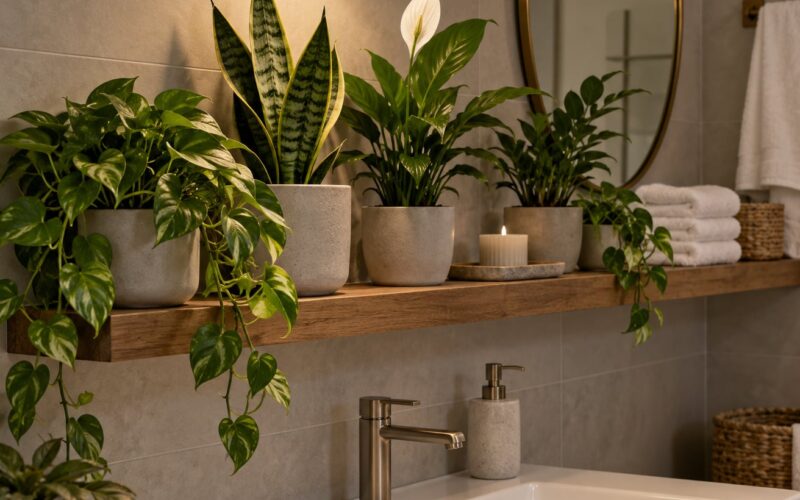
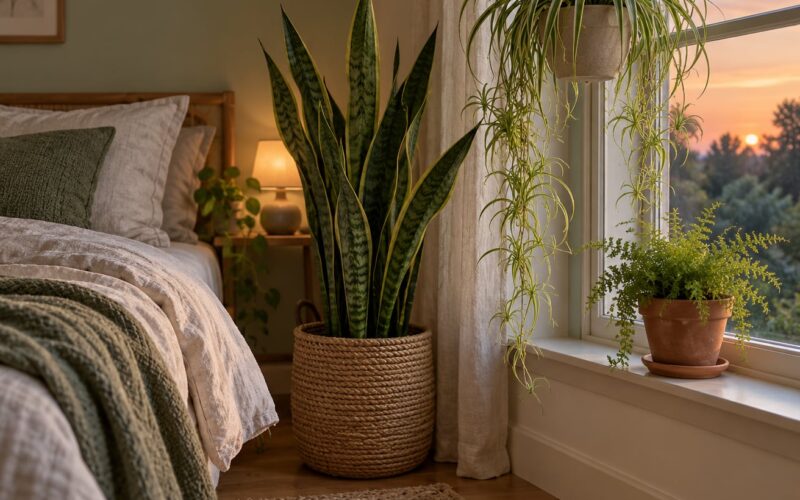
The plants that tick most of those boxes: snake plant (Sansevieria trifasciata), ZZ plant (Zamioculcas zamiifolia), pothos (Epipremnum aureum), Chinese evergreen (Aglaonema), spider plant (Chlorophytum comosum), cast iron plant (Aspidistra elatior), rubber plant (Ficus elastica) and parlor palm (Chamaedorea elegans).
One thing worth correcting, because it shows up in most office-plant guides: snake plants are not cold-sensitive. They take temperatures well below what a heated office ever reaches, and the leaves that people blame on the AC are almost always reacting to dry air or to the pot drying out completely between waterings, not to the chill.
How to Match Plants for a Home Office Desk to Your Conditions
Match the plant to the spot, not the other way around. Most desk problems are a light mismatch dressed up as a plant problem.
Desk beside a bright window
You have hours of indirect light, which is the best case. Pothos, rubber plant and peace lily all thrive here. Peace lily (Spathiphyllum) flowers indoors in this light, and it tells you clearly when it is thirsty by drooping dramatically and recovering within an hour of water. Keep it out of the coldest glass, since single-pane windows chill leaves that touch them.
Windowless corner or interior wall
Your only light is a ceiling fixture or a floor lamp. Go with snake plant, ZZ plant, pothos in a darker green cultivar, or cast iron plant. All four will grow slowly but steadily under fluorescent or LED office lighting. If growth stops entirely, a full-spectrum grow light clamped to the shelf fixes it faster than any watering change.
Desk sitting in the vent airflow
If you can feel cool air on your forearm at desk height, that spot will cost you a plant no matter how hardy the species. Move the pot at least 3 to 4 feet along the wall or onto a shelf above the draft path. A mini-split blows straight down from the ceiling; a window unit dumps cold air sideways across the whole desk; central vents push air along the floor. The 3-to-4-foot rule works for all three.
Desk with a monitor and a laptop
Electronics add heat and airflow of their own, and warm dry exhaust aimed at a pot dries the soil from below as well as above. Set the plant at the far end of the desk, out of the laptop’s exhaust side, rather than tucked right behind the monitor.
Best Low-Maintenance Desk Plants for Air-Conditioned Rooms
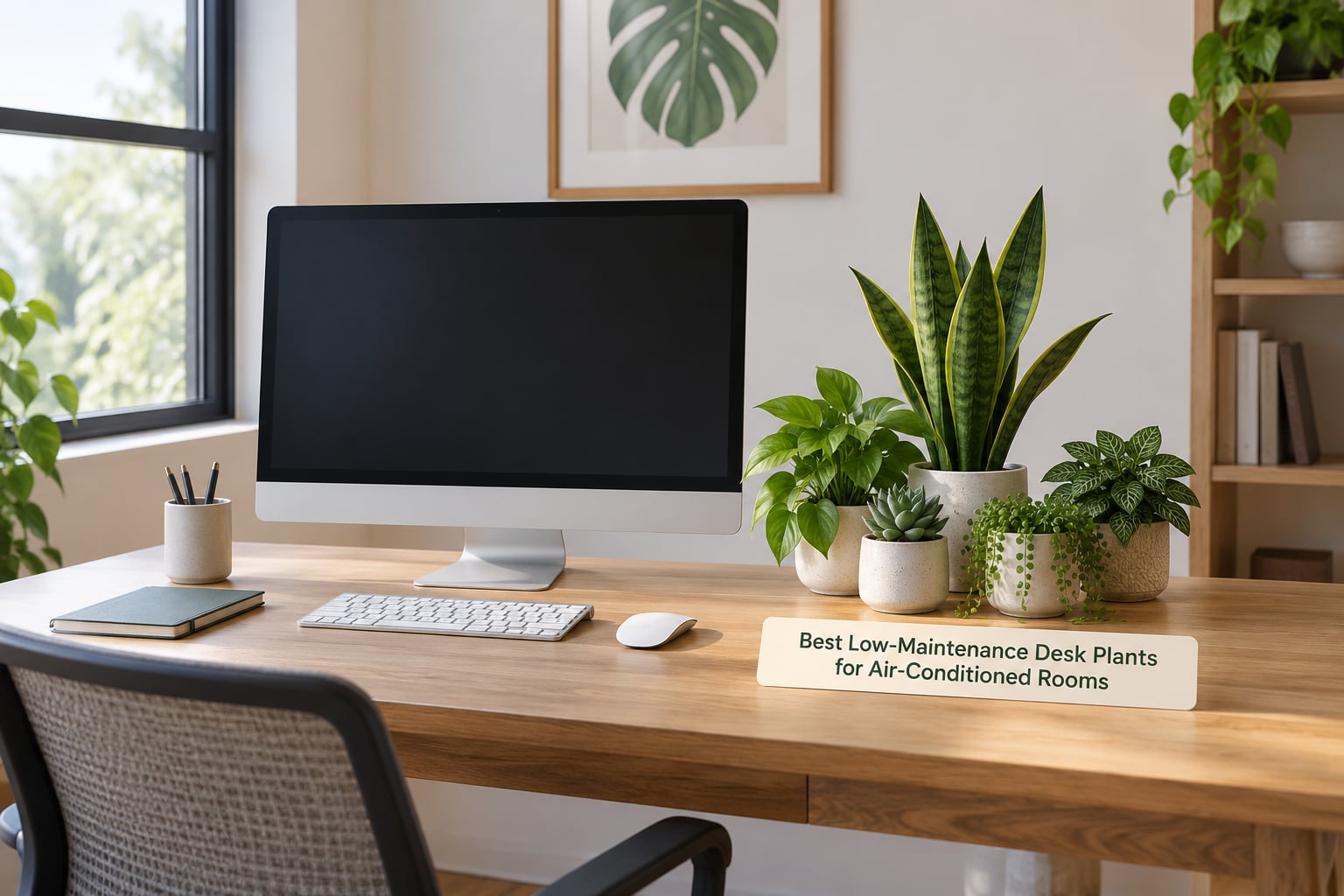
The table below ranks the common desk species on the factors that actually matter in an air-conditioned room. The dry-air column runs 1 to 5, where 5 means the plant keeps its leaves in dry air without drooping or browning much.
| Plant | Light need | Watering rule | Dry-air tolerance | Max desk height | Pet-safe |
|---|---|---|---|---|---|
| Snake plant (Sansevieria trifasciata) | Low to bright indirect | Every 2 to 4 weeks, let soil dry fully | 5 | 24 in | Yes |
| ZZ plant (Zamioculcas zamiifolia) | Low to bright indirect | Every 3 to 4 weeks | 5 | 20 in | Yes |
| Cast iron plant (Aspidistra elatior) | Low to medium | Weekly in summer, every 2 weeks in winter | 5 | 24 in | Yes |
| Chinese evergreen (Aglaonema) | Medium to bright indirect | Weekly, top inch dry | 4 | 20 in | No |
| Spider plant (Chlorophytum comosum) | Medium indirect | Weekly, top inch dry | 4 | 12 in | Yes |
| Pothos (Epipremnum aureum) | Medium to bright indirect | Weekly, top inch dry | 4 | Trailing | No |
| Rubber plant (Ficus elastica) | Bright indirect | Weekly, top 1 to 2 in dry | 3 | 24 in | No |
| Peace lily (Spathiphyllum) | Low to medium indirect | Twice a week, never let it wilt long | 2 | 24 in | No |
| Parlor palm (Chamaedorea elegans) | Medium indirect | Weekly, keep evenly moist | 2 | 30 in | Yes |
| Boston fern (Nephrolepis exaltata) | Medium indirect, humid | Twice a week, moist at all times | 1 | 18 in | Yes |
Keep the desk under 12 inches tall and you narrow the field to spider plants, haworthia and small ZZ plants. Anything with a 6-inch pot or smaller dries too fast in conditioned air to support a full-size fern.
How to Care for Plants Near an Air-Conditioning Vent
Watering is the whole game in an air-conditioned room, and the mistake most people make is adding water on a schedule. In dry air the pot dries at an unpredictable rate, so schedule watering kills plants either by drowning the roots or by letting them bake.
Test the soil instead of the calendar
Push a finger a full inch into the potting mix. Water when it feels dry at that depth and the pot feels light in your hand. Use a well-draining mix with perlite or bark, always in a pot that has a drainage hole, and empty the saucer ten minutes after you water so the roots never sit in water.
Deal with brown tips from tap water
Crispy brown tips are the most reported complaint in any office and they are usually cosmetic, not a death sentence. In an AC room, three things cause them: dry air, salts building up from hard tap water, and letting the pot dry out completely between waterings. Let tap water stand overnight and use it, or switch to filtered water for plants that get fussy, and flush the pot with a slow soak every couple of months.
Snake plant tips brown for a specific reason: the leaf is thinner at the point than the rest, so the tip dries first. Cut the brown end off at an angle and the plant is fine.
Plan for weekends and travel
Group two or three plants together and place the group in the sink or the bathtub before you leave. Soil that is thoroughly moist, but not waterlogged, will carry a plant two weeks. Ask a colleague to water once mid-week if the trip is longer, and skip the watering can entirely if you are gone three days or less.
Know what does not work
Misting the leaves raises humidity for about ten minutes and does nothing for the whole room. Pebble trays barely shift the number. A humidifier does help, but only within a few feet of the plants, so put it close and keep the output low to avoid condensation on the desk.
Symptom to cause
Use this to work out what is actually wrong before you change anything.
| Symptom | Most likely cause | Related to AC? | Fix |
|---|---|---|---|
| Crispy brown leaf tips | Dry air, hard water salts, or a pot dried out fully | Yes | Water by soil test, use filtered or rested water |
| Yellow lower leaves | Overwatering, poor drainage | Yes, indirectly | Let the top 2 in dry, check the drainage hole |
| Mushy stem or soil smell | Root rot from standing water | No | Repot into dry, free-draining mix |
| Sudden leaf drop after AC season starts | Cold draft straight onto the leaves | Yes | Move the plant 3 to 4 feet from the vent |
| Wilting that recovers after watering | Thirst, then overcompensation | Yes | Water thoroughly, then return to soil testing |
| No new growth in a low-light desk | Insufficient light, not AC | No | Add a full-spectrum grow light 12 in above the plant |
| Fine webbing under leaves | Spider mites, worse in dry air | Yes | Wash leaves, raise local humidity, treat with insecticidal soap |
How to Place Plants for a Home Office Desk That Tolerate Air Conditioning
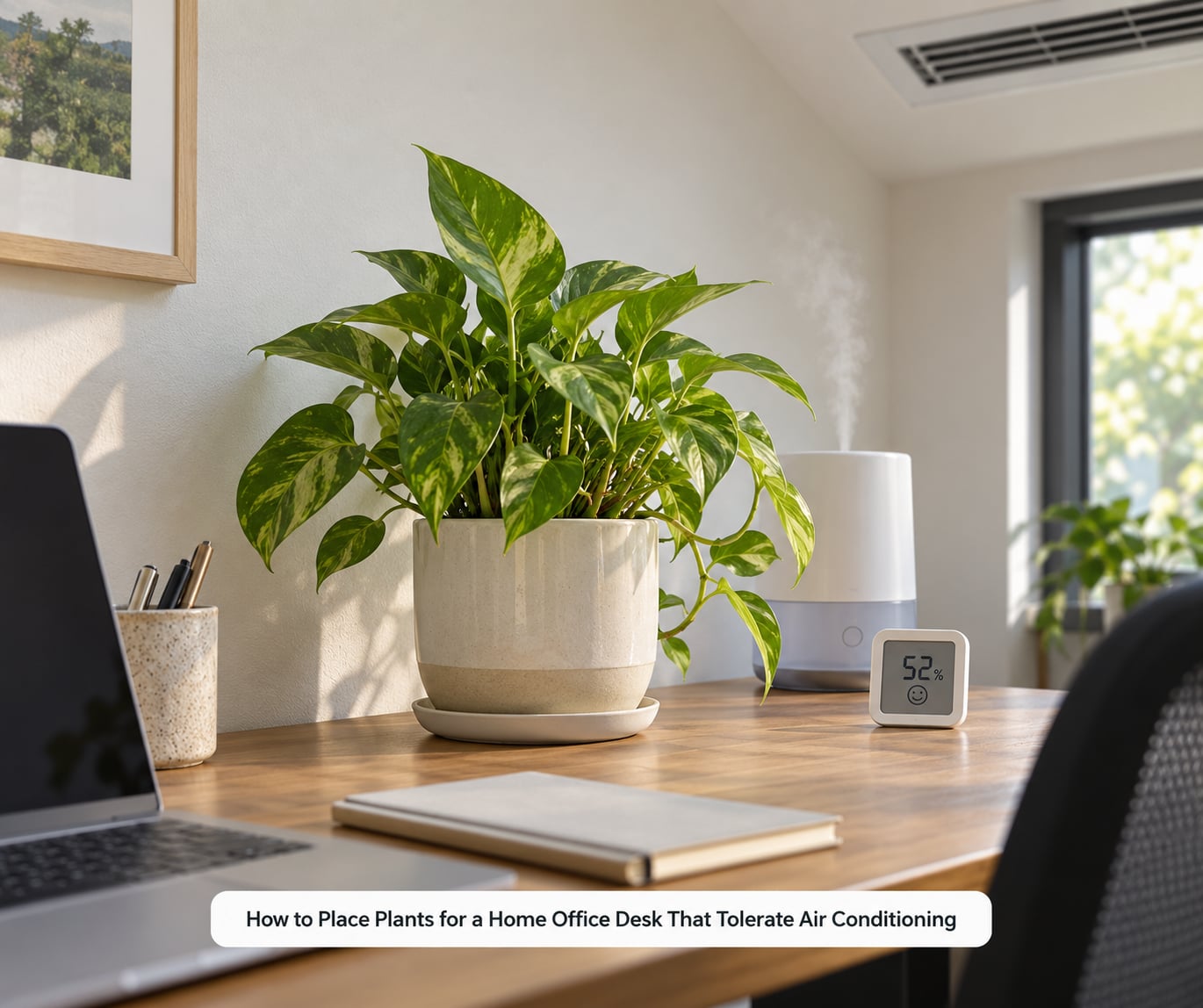
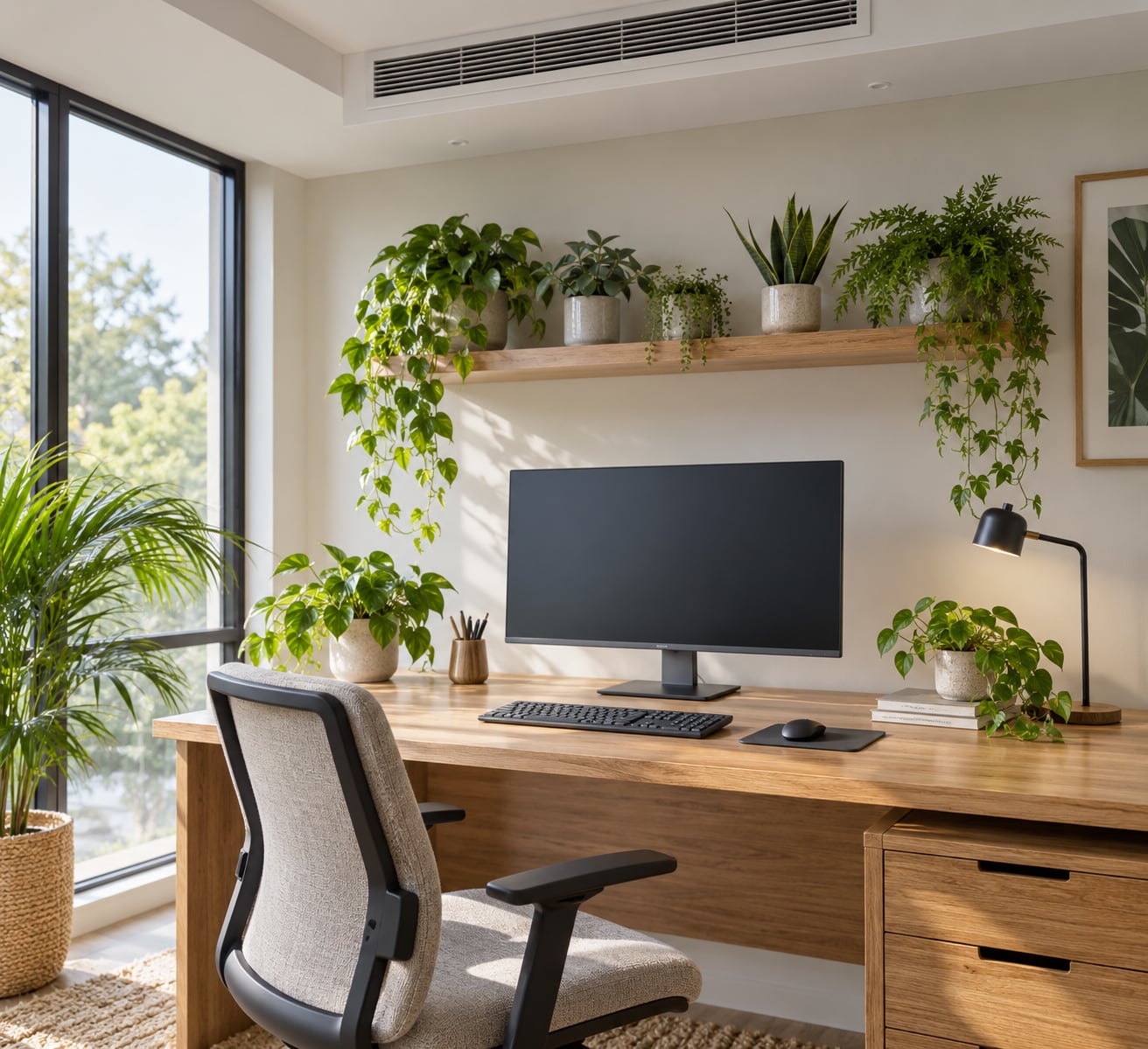
Placement does more for a desk plant than any product you buy for it. Set the pot back from the vent path, off the return-air grille, and out of the monitor’s heat, and you have solved most of the problem before you touch the soil.
Keep a foot of clearance between the foliage and any vent. Where the wall meets the ceiling is usually the calmest air in the room, and a shelf there gets better light than the floor corner anyway.
Use a waterproof saucer or a cachepot with a liner if you use an inner nursery pot, so a daily watering cannot reach your keyboard or the wall paint. Match the pot to the plant rather than the other way round: a too-large pot holds wet soil that never dries, which is how a drought-tolerant ZZ plant ends up with root rot in an air-conditioned room.
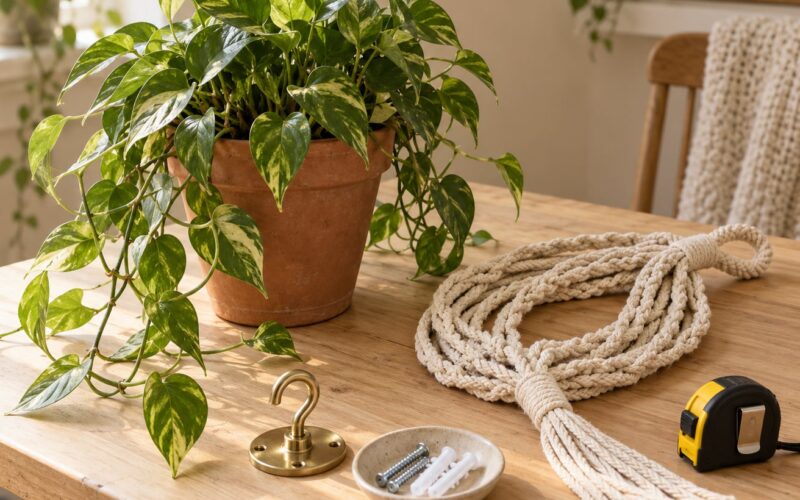
Group plants to make a microclimate. Three or four pots clustered within a foot of each other lose less moisture than the same pots scattered around, and the small gap of still air between them holds a few percent more moisture. Grow upward when floor space is gone: a shelf above the desk or a hanging planter keeps foliage clear of the airflow rising off the floor.
Put a hygrometer on the desk. If it reads below 40% all afternoon, dry air is the main stressor and a small humidifier a few feet from the plants will do more than any amount of misting.
Frequently Asked Questions
What indoor plants can survive air conditioning?
Snake plant, ZZ plant, cast iron plant, Chinese evergreen, spider plant and pothos are the usual answers. They all store water in thick leaves or underground rhizomes, which means a missed watering in dry conditioned air does very little damage. Keep them at least 3 to 4 feet from any vent so no leaf sits in the cold draft.
Do snake plants like dry air?
Yes. Snake plant is one of the most reliable plants for a dry, air-conditioned office, partly because its thick leaves lose very little moisture. It is often called cold-sensitive, but it tolerates temperatures well below any heated indoor setting. Brown tips usually mean dry air or tap-water salts, not cold.
Why are my snake plant’s tips brown and dry?
Snake plant leaves taper to a thin point, so the tip dries out first in low-humidity air. The same symptom comes from mineral buildup in hard tap water. Cut the brown end off at an angle and switch to filtered or water that has stood overnight. New growth will come in clean.
What is the best plant for an office with no sunlight?
Snake plant and ZZ plant handle no natural light at all, and cast iron plant tolerates a dim corner. Pothos in a darker green cultivar stretches fine under office lighting. If growth stalls completely, add a full-spectrum grow light about 12 inches above the plant and keep it on 12 hours a day.
What is the best plant for a home office desk?
For most desks, a ZZ plant or snake plant wins because both survive two-week gaps between waterings and both stay under two feet tall. Pick pothos or spider plant if you want visible growth and something that trails over the edge of the desk. Choose by light level and airflow, not by looks alone.
Are indoor plants good air purifiers for an office?
Not in the way the marketing claims suggest. The famous clean-air studies used sealed chambers with dozens of plants per cubic foot of space. A single desk pot in a sealed, air-conditioned room has no measurable effect on air quality. A filtered ventilation system handles air quality; the plant handles the part of your day you look at most.
Conclusion
Start with your desk’s two conditions, light and airflow, then pick a species that suits both and set it at least 3 to 4 feet back from the vent. After that, ignore the calendar and water when the top inch of soil is dry, because dry air makes any fixed schedule wrong within a week.