Most houseplants need water when the top 1 to 2 inches of potting mix feel dry, and not a moment before. That interval might be every four days for a fern in a warm room or every six weeks for a snake plant in winter, so there is no single schedule that works for a whole windowsill. Checking the soil is the dependable method; the calendar is only a reminder.
Updated for 2026. If you have ever killed a plant by being too attentive, you are not alone. The most common indoor plant death is not thirst, it is a wet root ball that never got a chance to dry out.
Table of Contents
- How Often Should You Water Houseplants?
- Quick Watering Guide by Plant Type
- What Changes How Often Houseplants Need Water
- How to Tell When Your Houseplant Is Thirsty
- How Often Should You Water Houseplants When Soil Feels Dry?
- How to Water Houseplants Correctly
- Should You Water on a Schedule or by Soil Moisture?
- How Often Should You Water Houseplants in Each Season?
- Drainage, Pots, and Soil That Prevent Watering Problems
- Common Watering Problems and What to Do
- A Simple Watering Routine for Healthy Houseplants
- Frequently Asked Questions
- How often should I water a houseplant in winter?
- Should I water a houseplant when its leaves droop?
- How do I know if my houseplant is overwatered?
- Is misting a houseplant the same as watering it?
- Why does my potted houseplant dry out so quickly?
- Conclusion
How Often Should You Water Houseplants?
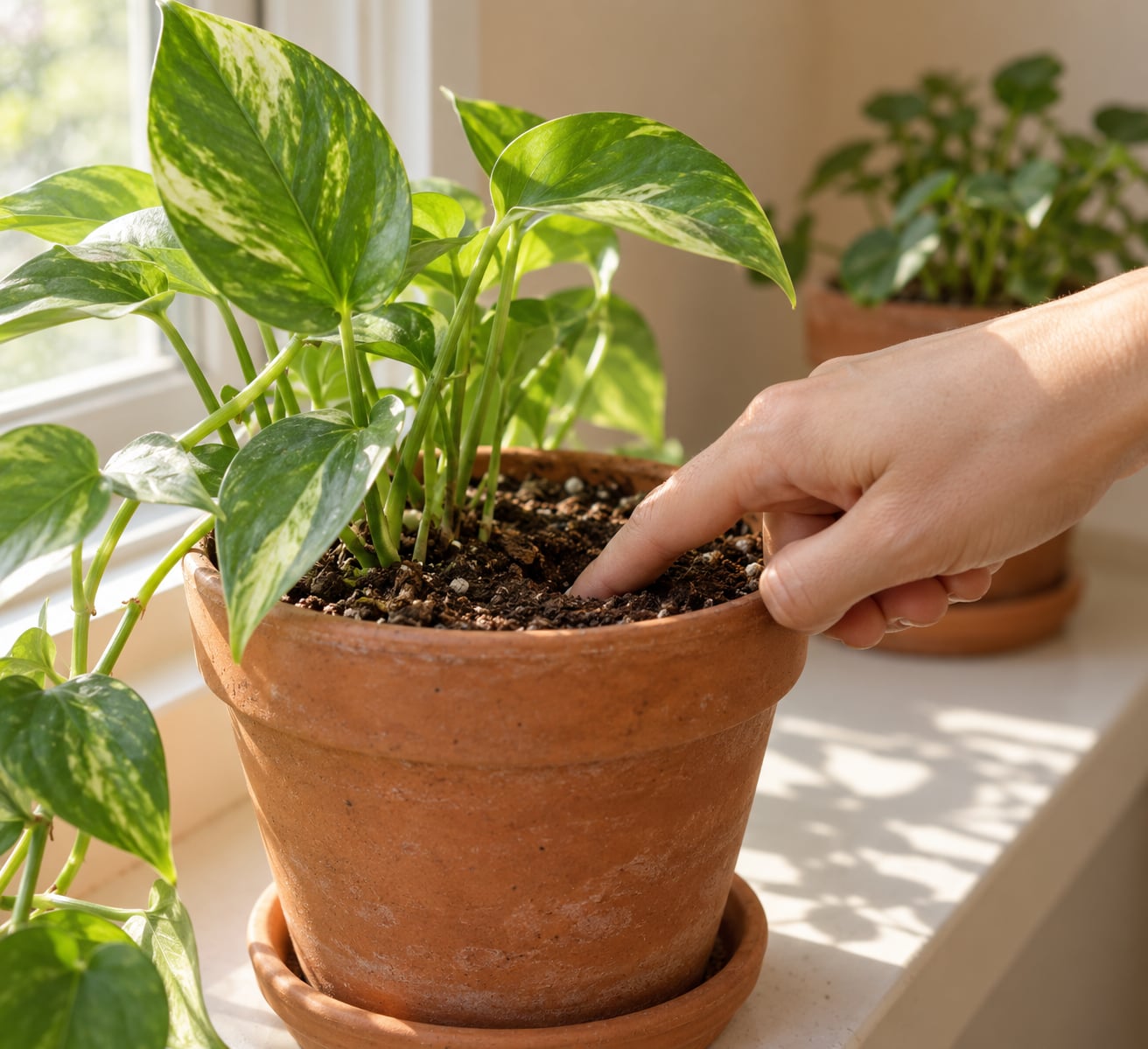
Water when the top 1 to 2 inches of soil feel dry to a finger, not on a fixed day of the week. Depending on plant, pot and season, that gap runs from a few days to several weeks. Three quick tests tell you when: the finger test, the pot weight test, and the chopstick method.
- Finger test. Push a finger 1 to 2 inches into the mix. Dry and dusty means water. Cool and slightly damp means wait a few more days.
- Pot weight test. Lift the pot. It should feel noticeably lighter than it does right after a soak.
- Chopstick method. Push a wooden chopstick into the soil, leave it for a minute, then pull it out. Damp and dark means moisture is still down there.
- Moisture meter. A cheap probe reads the root zone directly, which helps when a dense mix hides moisture below the surface.
Any of those four work. The finger test is the fastest and the one I come back to nine times out of ten.
Quick Watering Guide by Plant Type
The table below gives starting points, not rules. Look at the soil column first, then treat the frequency as a rough expectation for when the pot has dried to the depth shown.
| Plant type | Spring and summer | Winter | What the soil should feel like when you water |
|---|---|---|---|
| Succulents and cacti | Every 2 to 3 weeks | Every 4 to 6 weeks or less | Bone dry all the way down |
| Snake plant | Every 3 to 4 weeks | Every 6 to 8 weeks | Dry top 2 inches, slightly damp below |
| ZZ plant | Every 3 to 4 weeks | Every 6 to 8 weeks | Top half dry |
| Pothos | Every 7 to 10 days | Every 2 to 3 weeks | Top 2 inches dry |
| Monstera | Every 7 to 10 days | Every 2 to 4 weeks | Top 2 inches dry |
| Fiddle leaf fig | Every 7 to 12 days | Every 3 to 4 weeks | Top 2 to 3 inches dry |
| Peace lily | Every 5 to 7 days | Every 10 to 14 days | Top inch dry, droopy when genuinely dry |
| Spider plant | Every 5 to 7 days | Every 10 to 14 days | Top inch dry |
| Ferns | Every 3 to 5 days | Every 7 to 10 days | Surface just starting to dry |
| Calathea and prayer plants | Every 5 to 7 days | Every 10 to 14 days | Top inch dry, never bone dry |
| Most tropical foliage plants | Every 7 to 10 days | Every 2 to 3 weeks | Top 2 inches dry |
| Flowering plants such as African violets | Every 5 to 7 days | Every 10 to 14 days | Top inch dry, water at soil level |
| Palm | Every 7 to 10 days | Every 2 to 3 weeks | Top 2 inches dry |
| Kitchen herbs | Every 2 to 4 days | Every 5 to 7 days | Top half inch dry |
A full month between waterings is normal for a cactus in a cool room. Two months is normal for a snake plant that has just come home from a nursery, which is where a lot of unnecessary panic starts.
What Changes How Often Houseplants Need Water
Two plants in the same window can sit in identical light and still want water on completely different days. The variables are worth learning because they explain most of the surprises.
- Species. A fern evolved in damp forest undergrowth. A cactus stores water in its tissues. Same pot, same soil, wildly different intervals.
- Pot size and material. A small terracotta pot dries faster than a large plastic one because clay is porous and plastic is not. A six-inch terracotta pot on a sunny sill can need water in four days; a ten-inch glazed ceramic pot on the same sill might go ten.
- Root volume. A plant that has filled its pot has a higher ratio of leaf surface to root mass, so it uses water faster. Root-bound plants dry out sooner than you expect.
- Soil mix. Peat-heavy indoor mixes hold water a long time. A gritty cactus mix with added perlite or pumice drains fast and needs more frequent top-ups.
- Light. More light means more growth and more transpiration. A plant three feet back from a south window uses noticeably less water than the same species pressed against the glass.
- Temperature and humidity. Warm, dry air pulls moisture out of the mix quickly. A room held at 70 percent humidity slows drying noticeably.
- Growth stage. A plant pushing out new leaves in spring drinks more. A plant resting in winter drinks far less even if the light through the window has not changed much.
- Season. This one deserves its own section, below.
How to Tell When Your Houseplant Is Thirsty
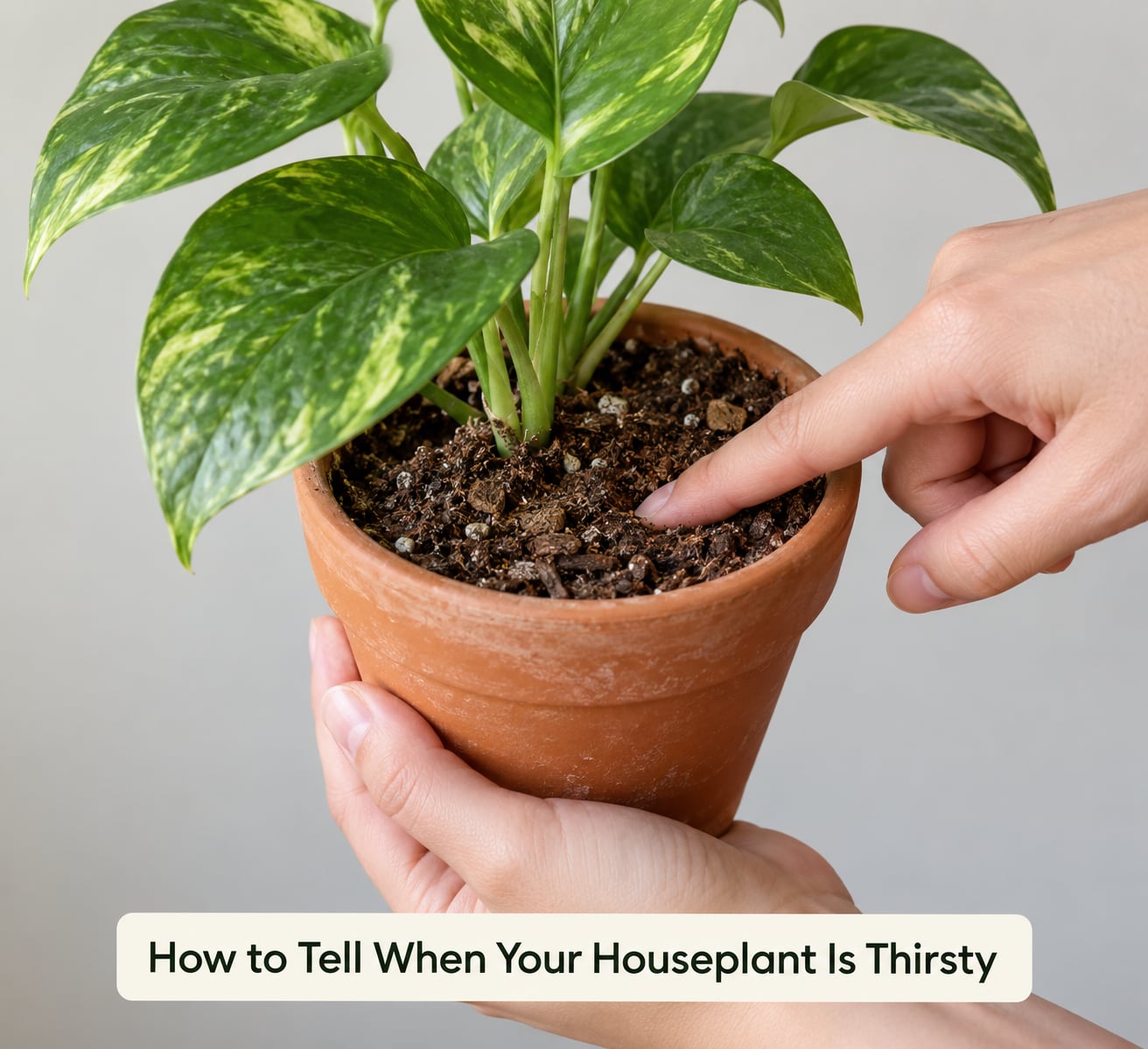
Learn three signals and you can retire the guessing. Together they are nearly foolproof, and each one takes about five seconds.
Soil moisture and colour. Wet potting mix is dark and cool. Dry mix is pale, dusty and a few degrees warmer to the touch. Colour alone is unreliable on dark mixes, so pair it with a finger.
Pot weight. This is the best signal there is. A thoroughly soaked pot is noticeably heavier than the same pot a week later. Many owners find they stop needing any other check once they test this.
Leaf posture. Foliage that has gone soft, limp and drooping at the stem usually means thirsty. Growth that has hardened off and gone crisp or curled usually means the plant stayed dry too long.
Signs that mislead people: yellow leaves, which point to overwatering far more often than underwatering, and brown tips, which are usually a humidity or water quality issue rather than thirst. Don’t treat either as a watering trigger on its own.
How Often Should You Water Houseplants When Soil Feels Dry?
A dry crust on the surface tells you very little. Dense indoor mixes dry from the top down, so the first half inch can be powder while the root zone is still wet. Push your finger to the depth appropriate for that plant before you decide anything.
The exception runs the other way too. Mixes with a high bark or perlite fraction can look damp on top while the centre stays dry, because the surface stays damp from the coarse particles. When in doubt, water thoroughly rather than adding a small splash. A shallow top-up wets only the upper roots and leaves the rest of the root ball dry, which encourages shallow roots and can start root rot.
How to Water Houseplants Correctly
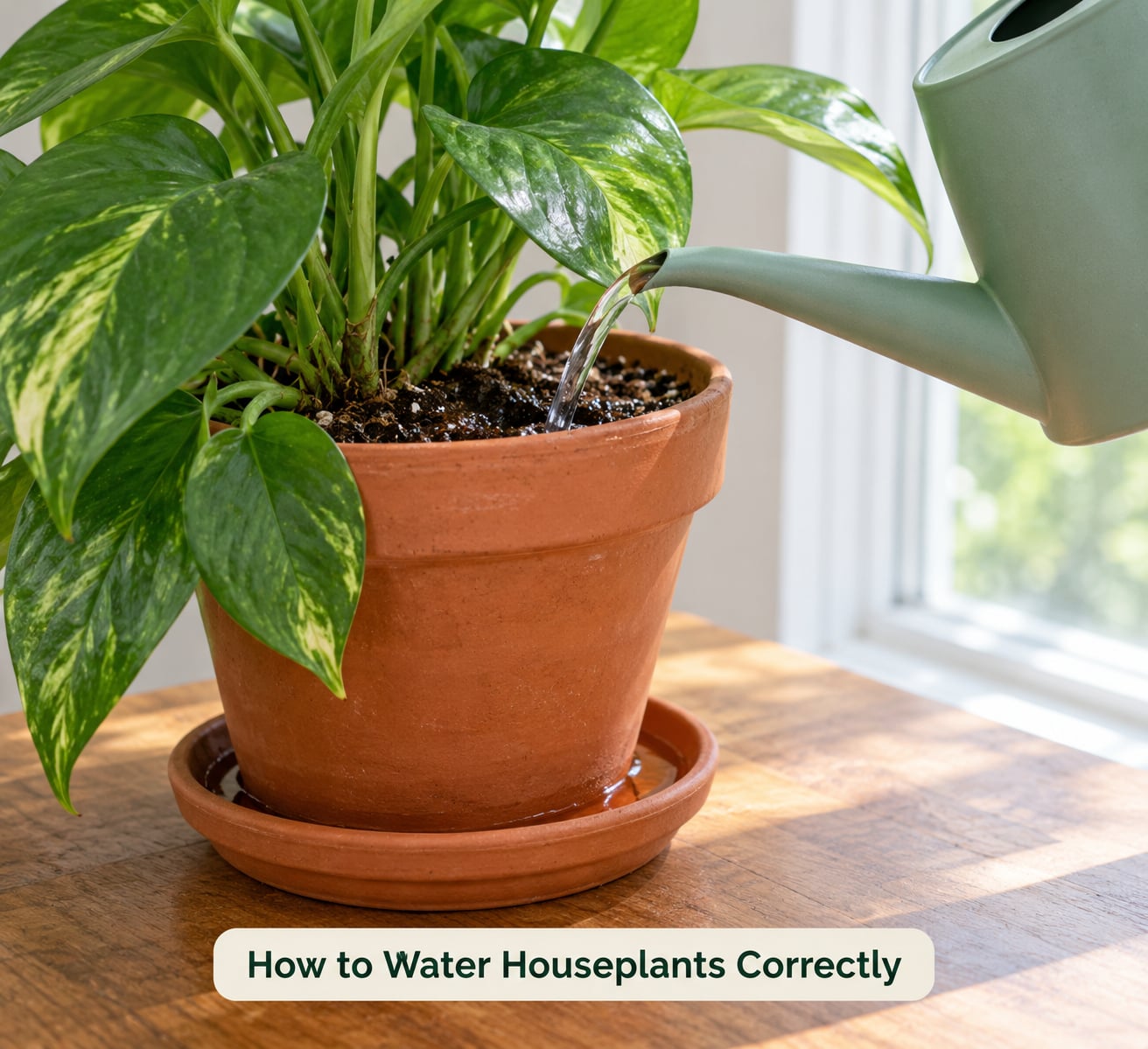
Check the soil first, then water slowly and evenly until you see water coming out of the drainage holes. Stop there, let it drain, and empty the saucer or outer pot. That last step matters more than most people think.
Aim your can at the soil, not the leaves, and pour in a steady trickle so the mix absorbs it instead of channeling straight down the pot wall. Room temperature water is kinder than cold tap water straight from the mains, though the difference matters far less than people claim.
Top watering is the default for most plants and the only practical choice for anything without a drainage hole. Bottom watering, where you stand the pot in a shallow tray of water for 20 to 30 minutes and then drain it, suits plants that dislike wet foliage, like African violets, and it flushes salts out of the root zone more completely. It does not suit cacti and other succulents, which rot if they sit in water.
Once a month, run a plant under the tap for a few minutes to leach out soluble salts. A white crust on the soil surface or on the pot rim is the classic signal that minerals have built up enough to start interfering with water uptake.
Should You Water on a Schedule or by Soil Moisture?
Water by soil moisture. A schedule can only ever be a rough average, and the average is wrong for every individual plant on your shelf.
A calendar watering plan fails in both directions. In spring a fern on a weekly rotation gets drought stress while a pot-bound calathea next to it is sitting in wet soil. Worse, calendar watering trains shallow roots, because small frequent splashes keep the top layer moist and never push the root ball to use its own reserves.
If you like a routine, keep it as a reminder and not as a trigger. Watering Wednesday means checking the plants on Wednesday, not pouring into all of them. Owners with 20 or more plants often run two rounds a week and simply walk the room both times, judging each pot as they pass. That keeps the habit without keeping the mistake.
After a holiday or a heatwave, do not assume your old rhythm still applies. Resume with a full check of every pot instead.
How Often Should You Water Houseplants in Each Season?
Spring. Growth picks up, so intervals shorten. Most plants move closer to their summer range and it is worth repotting anything that has been sitting in the same soil for years.
Summer. Long days and warm rooms dry mix faster. Watering every four to five days becomes normal for many tropicals, and a full-sun plant in a terracotta pot in 90 degree indoor heat can need water every one to two days. Check daily in high heat rather than assuming.
Autumn. Growth slows and intervals stretch by roughly a third. This is the easiest time to overwater because the plant is drinking less while your habits have not changed yet.
Winter. Expect the biggest stretch of the year. Most houseplants go semi-dormant and many need half their usual water, so a plant watered every week in July might need a drink every three or four weeks in January. Heated interiors make this worse: radiators and forced-air vents dry the air and the soil at the same time. Plants near a radiator or in a draught from a window lose moisture faster than the thermometer suggests.
Bright winter windows carry their own trap. A plant sitting in a cold pane may be fine while the soil around it dries quickly, so check those pots more often rather than less.
Drainage, Pots, and Soil That Prevent Watering Problems
Most watering problems are container problems. Fix the pot and half the diagnosis gets easier.
Drainage holes matter. Every pot needs at least one. A decorative pot with no hole should be used as a cachepot only, with the nursery pot inside it, and you must empty the outer pot after every watering. Standing water in the base of a decorative pot is the single most common cause of root rot I see in failed houseplants.
Pot material changes the pace. Terracotta is porous and dries fastest, which suits herbs and succulents and is unforgiving of forgetfulness. Glazed ceramic holds moisture longer. Plastic retains water and makes it easy to overwater. Match the material to how attentive you actually are.
Soil mix sets the ceiling. Dense, compacted garden soil or a potting mix gone heavy with fines holds water far longer than you expect and pushes oxygen out of the root zone. A gritty indoor mix with perlite, pumice or bark lets the root zone breathe between waterings. If your plants stay wet for more than a week in a small pot, the mix is usually the problem.
Mulch and top dressing hide the truth. A layer of pebbles or decorative stones on top keeps the surface looking damp long after the mix below has dried. Push your finger past it or lift it off when checking.
Common Watering Problems and What to Do
Overwatering. Symptoms are yellowing lower leaves, soft or collapsing stems, a sour smell from the soil, and soil that stays wet for days after a soak. Take the plant out, cut away dark mushy roots with clean scissors, repot into fresh mix, and then water very sparingly until new growth appears. If most of the root ball is brown and mushy, recovery is unlikely. Your soil may have been wet for months, so expect weeks, not days.
Underwatering. Signs are dry, crispy leaf edges, leaves that have gone limp but spring back after a soak, and soil that pulls away from the pot wall. Soak the whole pot in a sink until the top is fully wet and bubbles stop rising, then drain. A plant that has been bone dry for a long time may drop some leaves before it recovers.
Yellow leaves that are confusing. Both problems cause yellowing, so go to the soil, not the leaf. Wet and sour means overwatering. Dry and light means underwatering. Old yellow leaves at the base of an otherwise healthy plant are often just normal shedding.
Brown tips. Usually tap water minerals or dry air rather than thirst. Filtered, rainwater, or left-out tap water helps, and so does grouping plants or setting a tray of pebbles and water nearby.
Soft stems. This is advanced overwatering or root rot, and it needs immediate action. Cut back to firm, pale tissue above the rot.
Fungus gnats. Small flies around damp soil mean the mix is staying wet for gnats to breed in it. Let the surface dry further between waterings, top-dress with grit, and sticky traps cut the adult population.
Soil that dries unevenly. If one side stays wet, the mix may have shrunk away from the pot wall or formed a dense channel. Push the mix down along the edges during the next watering and check whether the pot needs a hole cleared.
A Simple Watering Routine for Healthy Houseplants
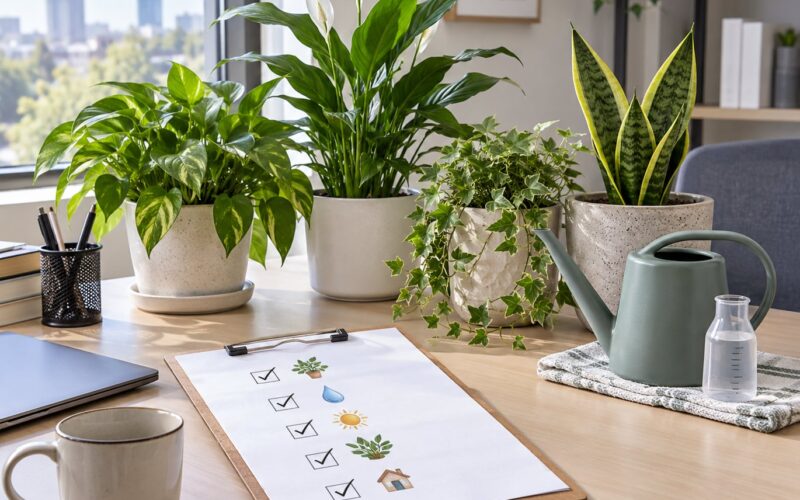
Most collections settle into one of two routines. A weekly check works if you own mostly tolerant plants, and a twice-weekly check works if ferns or calatheas are in the mix. Neither routine includes watering on the day.
Group plants by similar needs so one round of checking is efficient: succulents and cacti on the bright sill in one cluster, tropical foliage in the middle, ferns together away from the dry air near a radiator.
While you walk around, do the small jobs. Wipe dust off large leaves, rotate pots a quarter turn so growth stays even, pull off dead leaves, and check for pests on leaf undersides. That is what watering time is actually for.
Keep a simple note of the interval that worked for each plant. Most owners find their own pattern within a season, and a short list is far more useful than any chart because it reflects your windowsill, not an average one.
For new plants, give them a settling period. Water thoroughly once after potting or repotting, then let the top inch or two dry before the next drink. Roots that were disturbed in a nursery pot are more fragile than they look, and the compost they came in is often already wet.
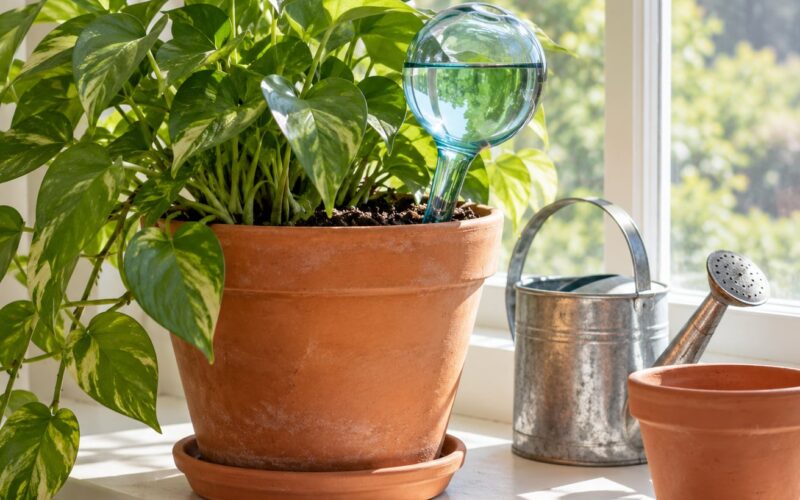
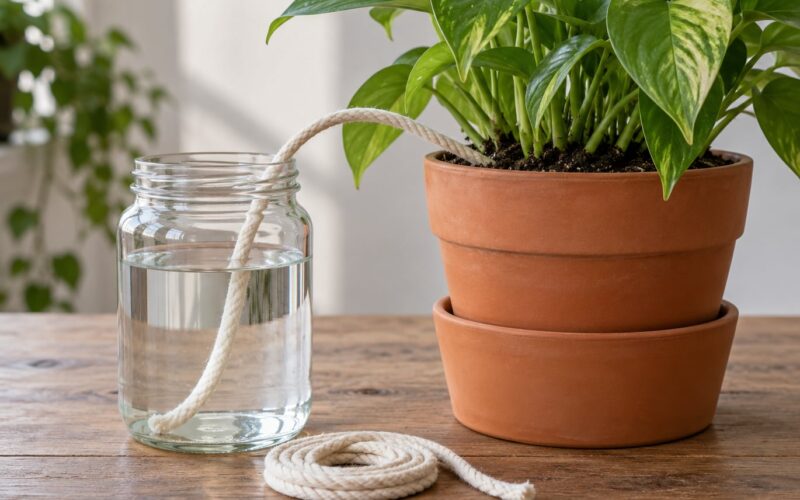
If you travel, group plants in the bathroom or a shaded corner, move them off the sill out of direct sun, and water thoroughly the morning you leave. Most indoor plants hold up for two weeks with that one soak. For three weeks or more, a watering spike or a bottle-and-wick setup beats asking a neighbour who will probably water the fern anyway.
Frequently Asked Questions
How often should I water a houseplant in winter?
In winter most houseplants are semi-dormant and use noticeably less water, so most need a drink every two to four weeks instead of every seven to ten days. Check the soil rather than trusting a number, and pay extra attention to plants near radiators or draughty windows, where the air and the mix dry out fast. Succulents and snake plants often stretch to six weeks or more. Water thoroughly, then let the pot drain fully.
Should I water a houseplant when its leaves droop?
Drooping leaves are a useful signal but not a command. Push a finger 1 to 2 inches into the soil first. If the mix is dry, water thoroughly until it drains from the bottom. If the soil is already wet, drooping is more likely overwatering or a root problem, and adding water will make it worse. Peace lilies and some ferns droop dramatically when genuinely dry and perk up within an hour of a soak.
How do I know if my houseplant is overwatered?
Check the soil rather than the leaves. Overwatered soil stays wet for days, can smell sour, and turns yellowing leaves soft rather than crisp. Yellow leaves on their own are ambiguous, since underwatering causes them too, so the soil is the deciding test. If roots are dark and mushy, remove the plant, cut away the rot with clean scissors, repot into fresh mix, and hold off on watering until new growth appears.
Is misting a houseplant the same as watering it?
No. Misting wets the leaves briefly and does almost nothing for the root zone, where a plant actually takes up water. It can raise humidity around a plant briefly, which some tropicals appreciate, but it does not replace a thorough soak and it can encourage fungal problems on soft leaves. Group plants together or use a pebble tray for lasting humidity, and water the soil when the top 1 to 2 inches are dry.
Why does my potted houseplant dry out so quickly?
The usual causes are a small pot full of roots, porous terracotta, a gritty soil mix, and a bright or warm position. All four speed evaporation, and together they can pull a seven-day interval down to three. Move the plant slightly back from the glass, check whether it has become root bound, and swap terracotta for glazed ceramic or plastic. If it dries in under three days in winter, something other than season is driving it.
Conclusion
Start with the soil, not the calendar. Push a finger 1 to 2 inches into the pot, and water only when that layer feels dry and the pot weighs noticeably less than it did after the last soak. Then adjust the interval for the plant, the pot and the season.
Slightly different routines from plant to plant are normal, not a sign you have done something wrong. A cactus on a six-week gap and a fern on a four-day gap can sit on the same shelf and both be perfectly healthy.