To acclimate a new houseplant at home, give it one to two weeks of bright indirect light, hold off on fertilizer and repotting, check it for pests the day it arrives, and change only one condition at a time. Most of what looks like a dying plant in that window is a plant adjusting to your light, your humidity and your watering habits.
The reason it needs any care at all is that a nursery plant has spent its life under glass. University of Illinois Extension puts greenhouse conditions at roughly 1,000 to 5,000 foot-candles, while a home windowsill delivers a fraction of that. Drop a plant from that into a dim living room and the leaves it grew in the nursery can no longer pull in what they were built to capture.
Give it two calm weeks and it usually rebuilds its growth to match. Rush the transition, repot on day one and feed it anyway, and you stack three stressors on a plant that is already struggling.
Table of Contents
- What You Need
- Step-by-Step: How to Acclimate a New Houseplant at Home
- 1. Check the Plant Before You Bring It Home
- 2. Choose a Bright but Gentle Location
- 3. Decide Whether to Repot Immediately
- 4. Water Based on the Pot and Soil
- 5. Keep Temperature and Humidity Stable
- 6. Avoid Fertilizing While It Recovers
- 7. Monitor Recovery and Make Small Adjustments
- Common Mistakes
- Frequently Asked Questions
- How long does it take for a new houseplant to acclimate?
- Should I repot a houseplant as soon as I bring it home?
- How do I know if my new houseplant needs more or less light?
- Is yellowing normal after a new houseplant is brought home?
- Should I fertilize a new houseplant while it is adjusting?
- What temperature and humidity are best for a new houseplant?
- Conclusion
What You Need
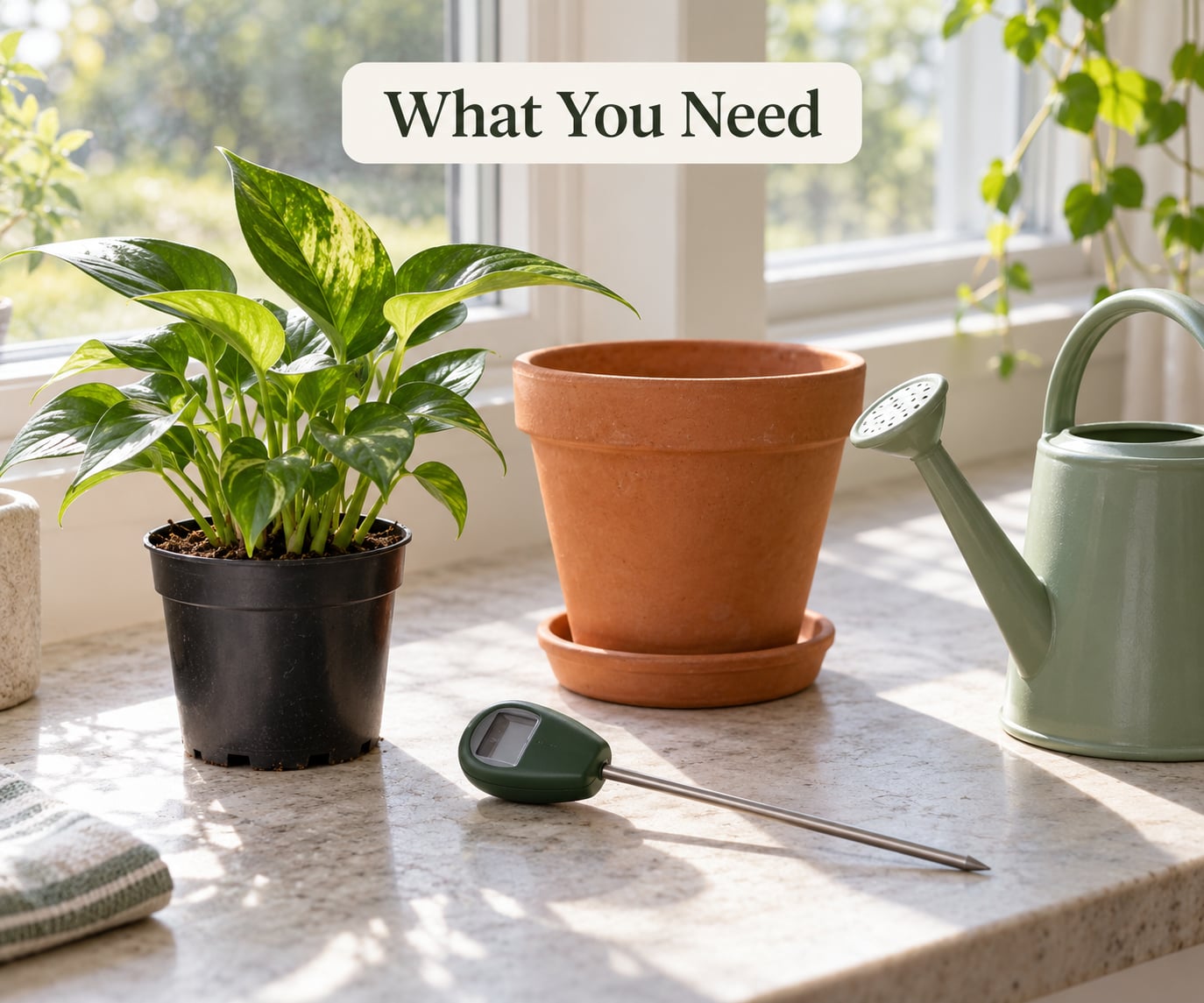
You need less than most people expect. A staging spot, a pot that drains, water the plant can survive, and a way to judge how wet the soil is.
- A staging spot. Bright, indirect light, out of draughts. Not the final decorative spot yet.
- A pot with drainage holes. Only if you are repotting. A pot sitting in a full saucer of water is a root-rot trap.
- Fresh potting mix and a new pot one to two inches wider than the root ball, for later.
- Water your plants tolerate. Rainwater, filtered water or tap water left out overnight all work better than water straight from a hot tap.
- A soil moisture check. A finger pushed two inches into the soil works. A wooden chopstick or a moisture meter works better.
- A magnifier or your phone camera. Undersides of leaves are where most hitchhikers sit, and you will not see them otherwise.
- A clear bin or large clear bag. For quarantine. Any spare room with a door does the same job.
Step-by-Step: How to Acclimate a New Houseplant at Home
1. Check the Plant Before You Bring It Home
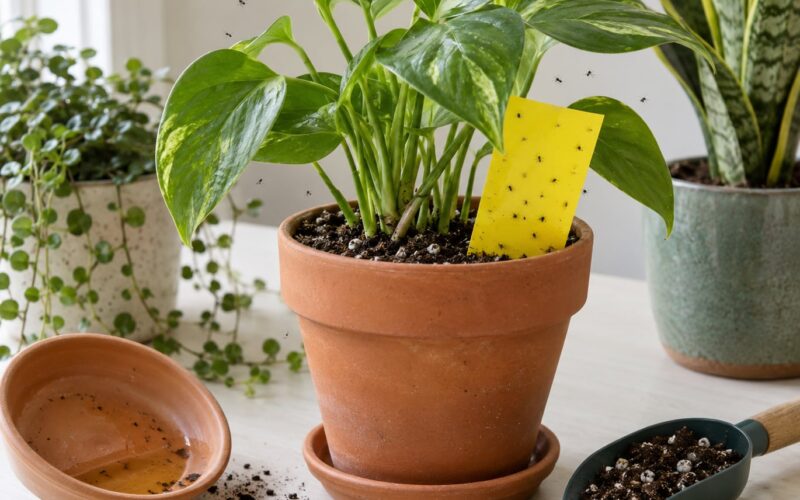
Inspect it at the shop or on the doorstep, before it enters a room with your other plants. Look at leaf undersides, where leaf veins meet the stem, and the surface of the soil. Webbing means spider mites, white cottony blobs mean mealybugs, silvery streaks with black specks mean thrips, tiny yellow-green clusters mean aphids, and sticky residue on the pot rim usually confirms one of those.
Check the stems for softness and the soil for sour smell. A plant that is already in decline from the shop is a different problem from a plant that is merely adjusting, and you need to know which one you bought.
Also check the roots if the pot is transparent or the plant is a bare-root arrival. White or cream roots are healthy. Brown, mushy, sour roots mean the plant was already sitting wet.
2. Choose a Bright but Gentle Location
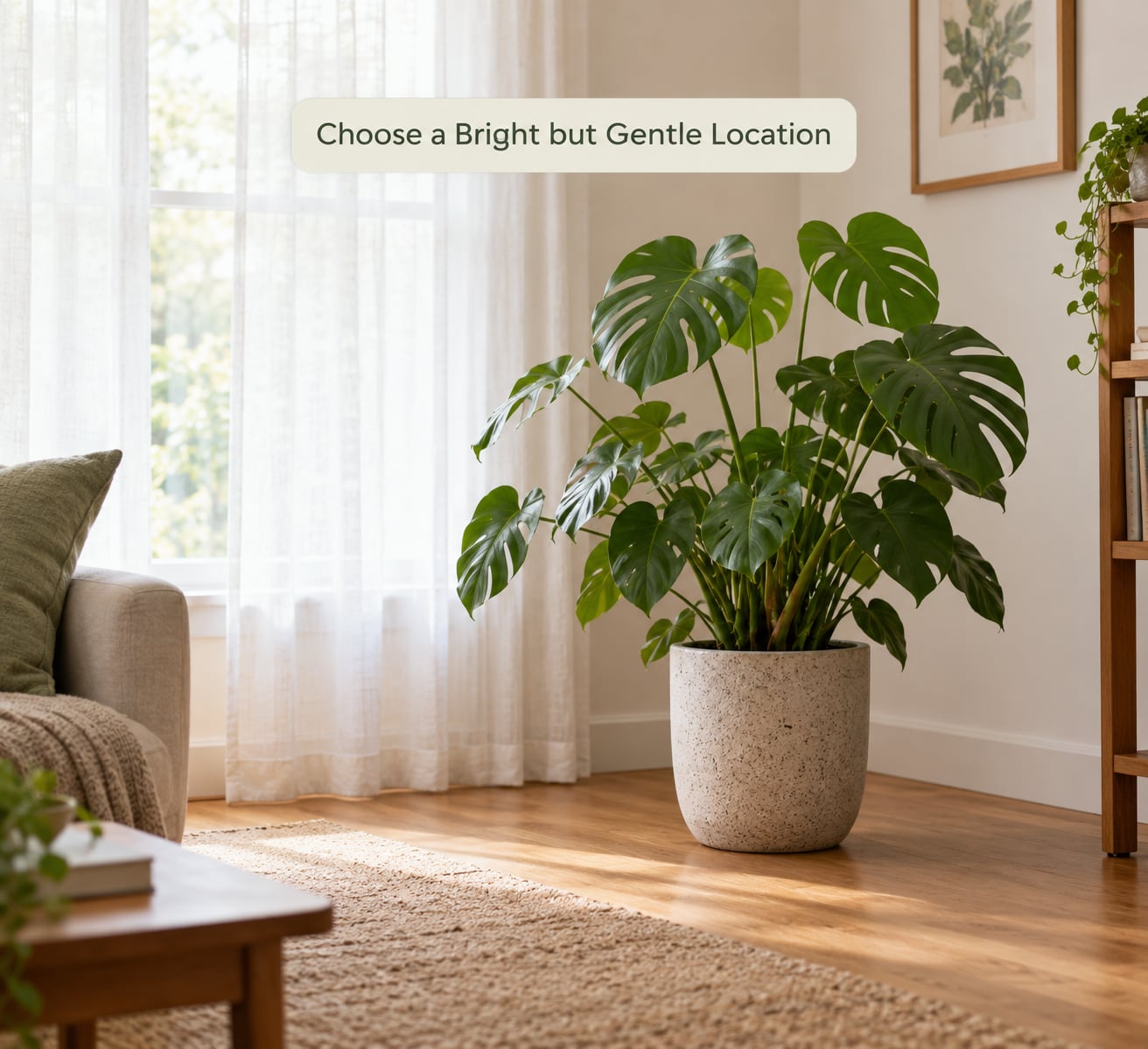
Set the plant in bright indirect light for its first one to two weeks, then move it to its permanent home. Bright indirect light means strong light without direct sun on the leaves — a few feet back from a south- or west-facing window, right beside an east-facing one, or near a north-facing window that stays bright all day.
A sudden jump into full sun is just as damaging as a sudden drop into shade. It scorches leaves that never developed protective tissue, and you will know in a day or two by the bleached patches. A sheer curtain over the window softens the light without cutting it much.
If the room has no bright window, a grow light on a timer can carry a plant through the dark months. Keep it 6 to 12 inches above the canopy and run it 12 to 14 hours a day. Starting under artificial light is gentler on a new arrival than starting under nothing and doubling up later.
3. Decide Whether to Repot Immediately
Leave it in the nursery pot if the pot is not falling apart, the roots are not circling heavily, and the plant has leaf growth or flowers. Most plants sold in a 4-inch nursery pot are fine there for months.
Repot right away only when the plant is root-bound with roots circling the outside of the ball, when the soil has broken down into something dense and sour, when the pot is cracked, or when the plant has sat in standing water long enough that the mix smells of rot.
If you do repot, do it once. Tease apart circling roots, trim dead ones with clean snips, use a pot only one to two inches wider than the root ball, and water thoroughly afterward so the new mix settles around the roots. Then hold that pot for another two to three weeks before doing anything else to it.
4. Water Based on the Pot and Soil
Do not water on arrival unless the soil is bone dry. If a plant arrives already wet, adding water is the fastest way to kill it in week one. Push a finger two inches in; if it comes up cool and damp, wait.
When you do water, water thoroughly until it runs out of the drainage holes, then let the pot drain completely. Never leave it standing in a full saucer. For pots that drain slowly or lack holes, bottom watering into a tray of a few centimeters of water for 30 minutes works better than pouring from the top.
A fixed schedule is the wrong tool here. Small terracotta pots dry in days, large plastic ones hold moisture for a week or more, and a plant sitting in a bright staging spot drinks faster than one in a dim corner. Check the soil, not the calendar.
If a plant wilts the day after arrival and the soil is dry, water it. If the soil is wet and the leaves are drooping, the roots are compromised and watering again will make it worse.
5. Keep Temperature and Humidity Stable
New plants do best in a steady 60 to 75 degrees F range with no swings. Keep them out of draughts, off windowsills that get cold glass at night, and away from radiators, heating vents and air conditioning outlets, which dry the air around a plant faster than the soil dries out.
Home humidity in winter often sits near 30 percent, and many tropical houseplants do better between 40 and 60 percent. Grouping plants together raises local humidity a little. A clear bin or cloche over a plant with the sides partly open creates a humid microclimate for recovering, tender plants without trapping all the air.
If the plant needs more light, move it closer to the glass in small steps rather than all at once. If the air is dry, a humid tray with pebbles and water helps, though the effect is modest and the tray needs rinsing to keep algae down.
6. Avoid Fertilizing While It Recovers
Do not fertilize for two to three weeks after arrival, or for two to three weeks after repotting. Roots that are shocked or repairing themselves cannot use nutrients efficiently, and fertilizer on weak roots can burn the root tips and push salt into the mix.
A plant that is growing, producing new leaves and sitting in fresh potting mix usually has enough nutrition for another couple of months anyway. Begin with half-strength fertilizer once new growth is visible and the plant has been in its pot for at least a month, and only during the growing season.
7. Monitor Recovery and Make Small Adjustments
Watch the plant on a schedule rather than every day. Day 1 is inspection, quarantine and placement. Days 2 and 3 are soil checks only. Week 1 is holding steady and watching for pests, since eggs hatch in that window. Week 2 is the first sign of new growth, and the moment you spot it you can relax.
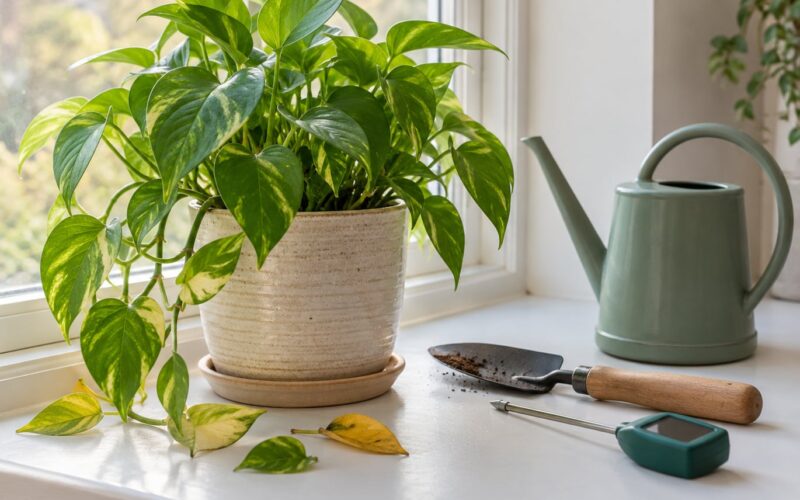
One or two yellow lower leaves in the first two weeks is normal as the plant sheds leaves it cannot support. A handful of leaves dropped all at once after a move is also common. Soft, blackening stems, a sour smell, or a collapse that starts at the crown within days is not adjustment.
Change one variable at a time. If leaves are pale and reaching, move the plant a little closer to the window. If the edges are crisp, check the air first, then the water. Adjusting three things at once means you will never know which one worked.
If a plant loses most of its leaves, keep the pot, keep the light and cut watering way back. A plant with a stem and roots can regrow from a node. The only real emergency is a rotted stem or a mushy crown.
Common Mistakes
Moving the plant repeatedly. Every relocation resets the light adjustment. Pick a staging spot and stay there for two weeks.
Overwatering to fix yellowing. Yellow leaves usually mean stress, not thirst, and yellowing plus wet soil means too much water. Check the soil before you fill a watering can.
Putting it straight in direct sun. A south-facing sill in full sun will scorch leaves that came from filtered nursery light. Back it off or sheer it.
Repotting twice. One repot is a stress event. A second pot change during the same month undoes the first one.
Fertilizing early. Feed only after new growth shows and the plant has been in its pot at least a month, at half strength.
Misting as humidity. Misting wets leaves briefly and changes nothing by the next hour. Grouping plants or a humid microclimate works better.
Simple habits that prevent most problems: quarantine anything new for at least two weeks, inspect leaves and soil weekly with a magnifier, water when the soil says so, and keep fertilizer in the cupboard until the plant is visibly growing.
Frequently Asked Questions
How long does it take for a new houseplant to acclimate?
Give most indoor plants one to two weeks to adjust to your home’s light, and two to three weeks before you fertilize. Plants bought by mail or rescued from a discount rack usually need longer, around a month. Look for new growth at the tip as your signal that it has settled. Mild yellowing of one or two lower leaves in that window is normal.
Should I repot a houseplant as soon as I bring it home?
Usually no. Leave it in the nursery pot unless the roots are circling the root ball, the soil smells sour or has broken down, or the pot is cracked. If you do need to repot, do it once, use a pot only one to two inches wider, and then leave it alone for another two to three weeks.
How do I know if my new houseplant needs more or less light?
Pale, thin growth stretched toward the window means it wants more light, so move it a little closer or add a grow light on a timer. Bleached or crisp brown patches facing the glass mean too much direct sun, so back it off or hang a sheer curtain. Deep green, sturdy leaves mean the light is right.
Is yellowing normal after a new houseplant is brought home?
One or two yellow lower leaves in the first two weeks is normal, because the plant sheds leaves it cannot support at the new light level. Yellowing across many leaves, yellowing plus wet soil, or yellowing that starts at the top instead of the bottom points to overwatering or a root problem, not adjustment.
Should I fertilize a new houseplant while it is adjusting?
Wait two to three weeks, and until you see new growth. Roots that are recovering from transit or repotting cannot use nutrients efficiently, and fertilizer can burn those tender root tips. When you start, use half strength and only during the growing season, no more than once a month to begin.
What temperature and humidity are best for a new houseplant?
Most indoor plants settle best between 60 and 75 degrees F with humidity around 40 to 60 percent. Keep the plant away from draughts, radiators and air conditioning vents, since moving air dries it out faster than the soil dries. Grouping plants together raises local humidity slightly without any equipment.
Conclusion
Start with the plant itself: inspect every leaf and the soil before the plant enters your rooms, then put it in bright indirect light and leave it there. Quarantine it for two weeks, water only when the soil tells you to, and keep fertilizer and fresh pots in the cupboard until you see new growth.
To acclimate a new houseplant at home is mostly the discipline of changing one thing at a time and waiting. Two weeks of patience saves a plant that a single eager repot would have finished off.