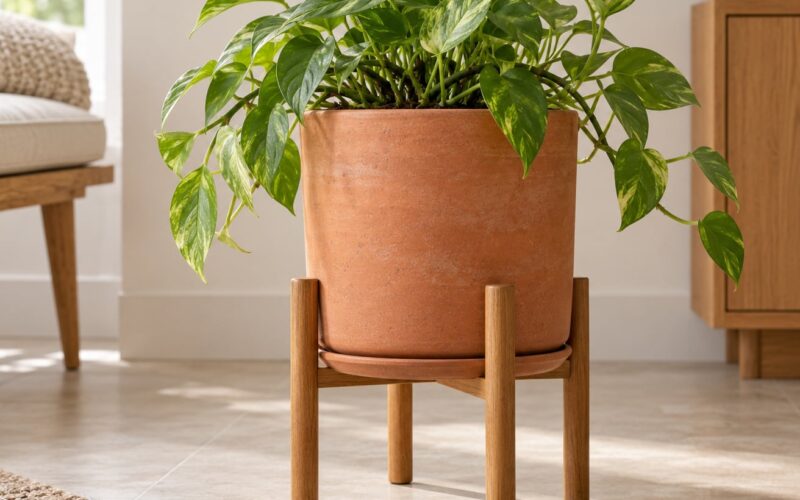
Yes. Unglazed terracotta is porous clay, so water wicks out of the potting mix, travels up the pot wall and evaporates from the outside. The same plant in a plastic pot of the same size usually needs water about half as often.
So, do plants dry out faster in terracotta pots? They do, and the change is not subtle. A terracotta pot has a drying surface most pots do not have, and everything about your watering schedule changes when you use one.
I have grown in terracotta for years, and the mistake I see most often is treating a clay pot like a plastic one and then panicking when a plant wilts on day four. Nothing is wrong with the pot. The pot is doing exactly what clay does. In 2026 I am still checking the same three things every single time: the soil below the surface crust, the weight of the pot, and how the plant itself looks.
Table of Contents
- Do Plants Dry Out Faster in Terracotta Pots?
- Why Does Terracotta Lose Moisture Quickly?
- How Fast Does Terracotta Dry Compared With Other Potting Materials?
- What Factors Change the Drying Rate?
- Pot properties
- Soil
- Plant
- Environment
- How Can You Tell When a Plant in Terracotta Needs Water?
- How Do You Water Plants in Terracotta Pots?
- Can you bottom water terracotta?
- How Do You Reduce Drying in Terracotta Pots?
- Should you seal or line the inside?
- Do Plants Dry Out Faster in Terracotta in Summer or Indoors?
- Do plants dry out faster in terracotta pots in summer?
- Frequently Asked Questions
- How often should I water a plant in a terracotta pot?
- Does terracotta need a drainage hole?
- Is glazed terracotta better for plants that dry out quickly?
- Which plants grow well in terracotta pots?
- Can terracotta pots dry out so quickly that they burn plant roots?
- Conclusion
Do Plants Dry Out Faster in Terracotta Pots?
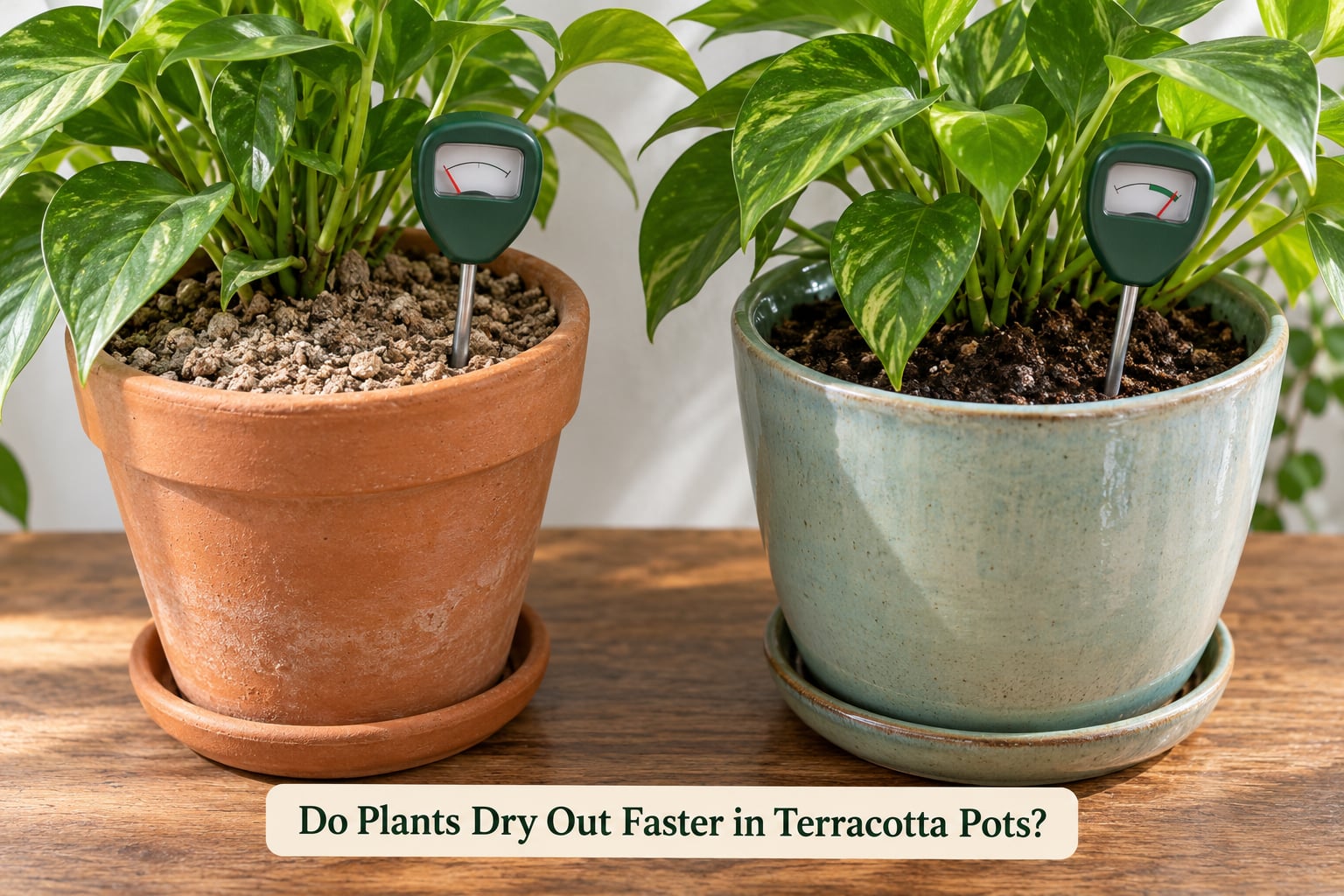
The short answer, again, is yes, with one qualifier: the rate depends on the pot, the plant and the room, not on the material alone. Two terracotta pots on the same windowsill can need water on completely different days.
What is fairly consistent is the comparison. Horticulture sources put unglazed terracotta at roughly twice the drying rate of a plastic nursery pot of the same size, and the figure people report on houseplant forums sits in the same neighborhood, usually somewhere between two and three times faster. Treat the forum numbers as impressions rather than measurements, and treat twice as fast as a useful planning number.
The practical translation is simple. You give the plant the same volume of water you always give it. You just give it about twice as often. People who learn that early tend to get on with terracotta fine; people who hear only “dry out fast” tend to under-water and then blame the pot.
One more thing worth saying up front. Faster drying is not always a fault. The same porosity that wicks water out also moves excess water and air past the roots, which is why some growers deliberately use clay for plants that tend to sit wet and rot. The wall shortens the saturated zone at the bottom of the pot.
Why Does Terracotta Lose Moisture Quickly?
Unglazed terracotta is fired clay with an interconnected network of open pores running through the entire wall. It is not a sealed container with a few pinholes. Water moves freely through it, in both directions.
That gives every potted plant three routes for losing water, and clay adds a third that other materials mostly lack:
- The soil surface. Water evaporates straight up into the air, faster when there is sun, heat or wind.
- Transpiration. The plant itself pulls water up through the roots and releases it as vapour through the leaves.
- The pot wall. Moisture moves out of the mix into the clay, climbs the wall by capillary action and dries off the outer surface.
The third route is the one that changes everything. The surface area of a pot wall is often larger than the surface area of the soil you can see, so you have added a drying surface rather than merely removing a barrier.
It is worth separating two things people mix up. Water leaving through the wall is evaporation, and it costs the plant moisture. Water soaked into the wall by a dry pot is different: a brand-new dry pot will drink a surprising amount on first watering, and that water never reaches the roots. That is why an unsoaked pot can leave a fresh transplant struggling for weeks.
How Fast Does Terracotta Dry Compared With Other Potting Materials?
Here is the practical comparison. The rates are relative, not fixed, because soil, pot size, weather and watering habit change the picture completely.
| Material | Drying speed | Water leaves through the walls? | Best for |
|---|---|---|---|
| Unglazed terracotta | Fastest of the common materials | Yes, and it also drinks from dry mix | Succulents, cacti, herbs, olives, anything that wants air around the roots |
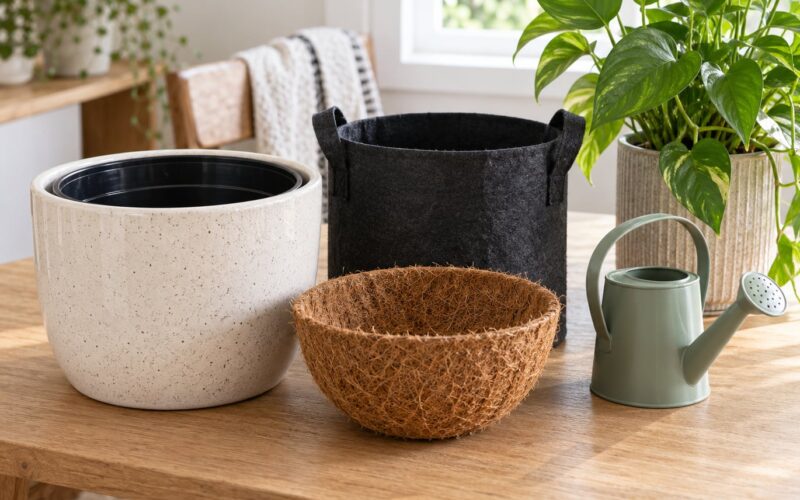
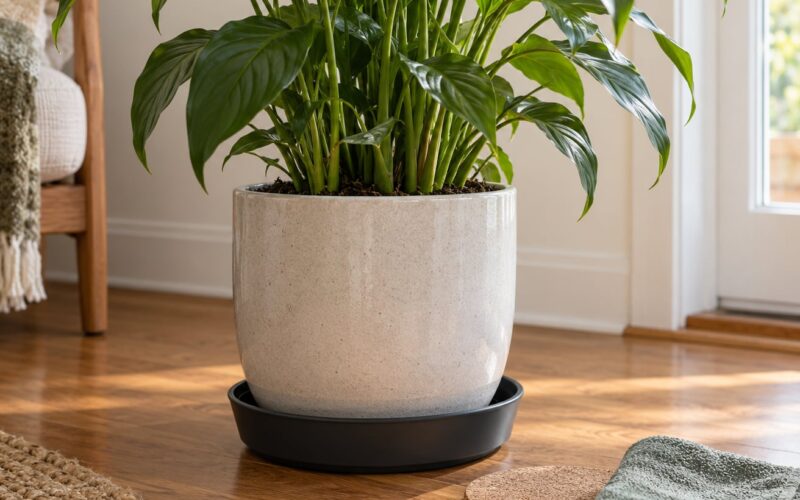
| Glazed ceramic | Slow | No, the glaze seals the wall | Moisture-lovers, large statement planters, plants that get forgotten for a week |
| Plastic nursery pot | Slow to medium | No | Most houseplants, and cheap propagation |
| Fiberglass or resin | Medium | No, but light and thin-walled | Large outdoor planters that are hard to move when full |
| Concrete or cement | Medium, slower if glazed or sealed | Varies with sealing | Patio trees and shrubs, frost-tolerant plants |
| Self-watering container | Slowest, by design | No, it has a reservoir | Vacations, busy households, anyone who wants to water less often |
Two notes on the table. Fabric and metal planters sit in the same slow-to-medium band as plastic and fiberglass, with fabric drying a little faster at the edges because of its exposed weave. And no material dries at a fixed rate, so treat the table as a ranking of tendencies rather than a promise about your specific pot on your specific windowsill.
What Factors Change the Drying Rate?
Once you accept that material sets the baseline, the variables below decide how far the needle moves. This is where the useful adjustments live.
Pot properties
Wall thickness matters more than most people expect. A thin, cheap pot loses more through the wall than a thick, heavy one, and a wide shallow pot has far more wall relative to soil volume than a tall narrow one of the same volume. Pot size matters enormously too, because a small pot simply holds less water and hits dry sooner. Small terracotta pots of 5 to 7 cm typically need water about once a week for succulents and daily for mixed plantings in hot weather, which is roughly what the physics predicts.
Soil
Drying rate is really a soil problem wearing a pot problem’s clothes. A gritty mix with a high proportion of perlite or pumice holds less water and stays airier than a coir- or peat-based potting mix. So does an old mix that has lost its structure. A moisture-retentive mix slows the whole system down, whatever the pot is made of.
Plant
A large, leafy, fast-growing plant drinks more than a small succulent in the same pot, and a plant with a dense root ball holds moisture longer than one that has just been repotted into an oversized container of fresh dry mix. Root size and root health change the demand week to week, which is one reason a fixed schedule keeps disappointing people.
Environment
Sunlight, temperature, relative humidity, wind and indoor heating all raise demand. So does airflow from a radiator, a fireplace or a draughty window. A terracotta pot on a sunlit patio in July is in a different climate from one on a shaded shelf in a cool room, and they should not share a watering schedule.
How Can You Tell When a Plant in Terracotta Needs Water?
Check, do not schedule. A rigid weekly routine will over-water half the year and under-water the other half, and terracotta punishes both errors faster than plastic does.
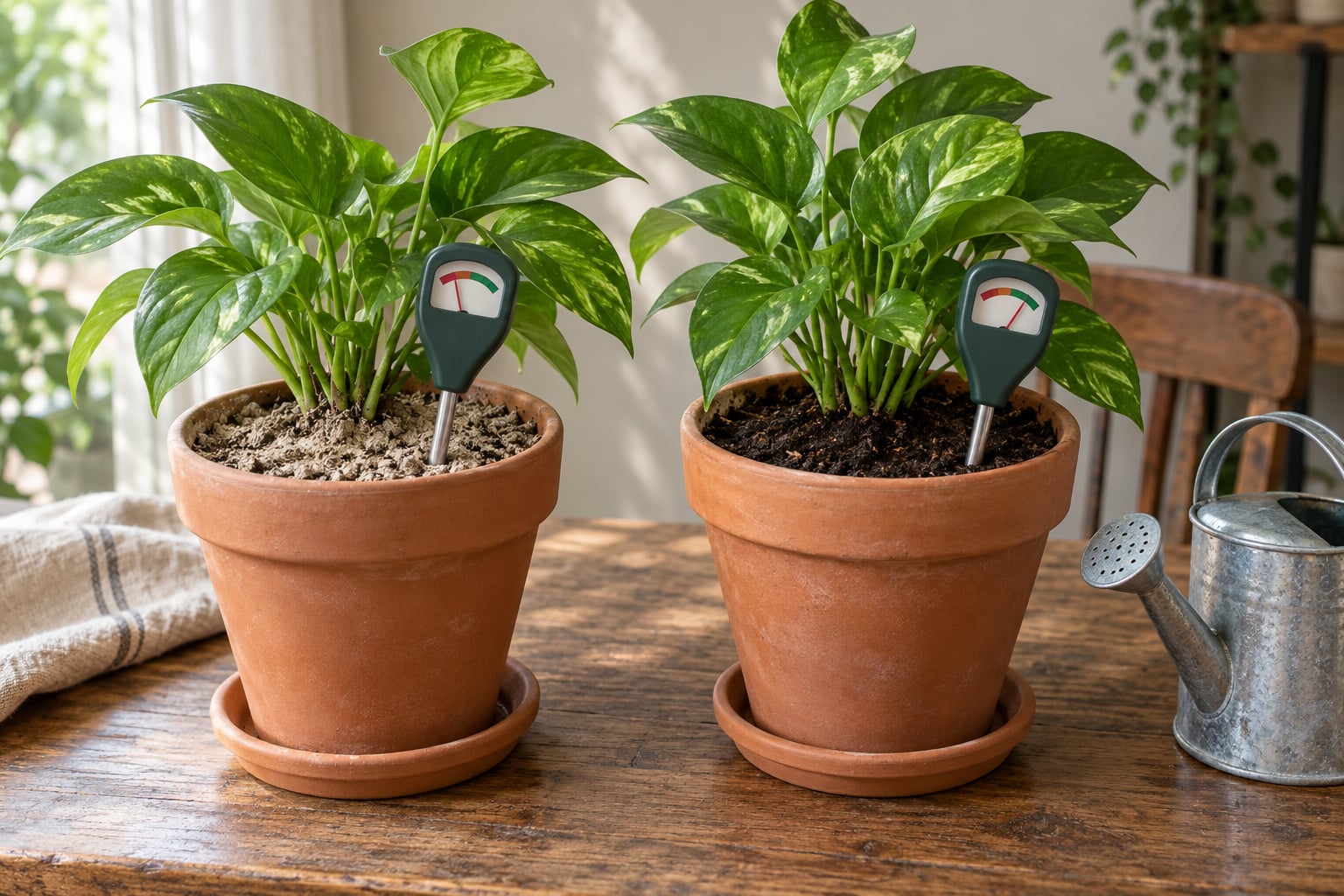
Start with the finger test, but know its limits in clay. Push a finger two to three centimetres into the mix, past the dry top layer, and into the damp zone below. In terracotta the surface can read bone dry while the bottom half is still fine, which is the failure people run into. Judge what is under that crust, not what is on top.
Then lift the pot. Water weighs a lot, and a pot that feels noticeably lighter than it did yesterday is a reliable signal. Most people get calibrated on this within a week or two, and it becomes the check they reach for first.
Look at the plant too. Limp or drooping leaves, curled edges, a crisping stem and leaves that feel papery rather than springy all point the same direction. Yellowing lower leaves that come away easily, a sour smell, or soil that stays wet days after watering point the other way, and that second set of symptoms is the one terracotta is often wrongly blamed for. A moisture meter is a useful supporting tool, not the main event. Probe at root level, not at the edge where the clay is drying fastest.
How Do You Water Plants in Terracotta Pots?
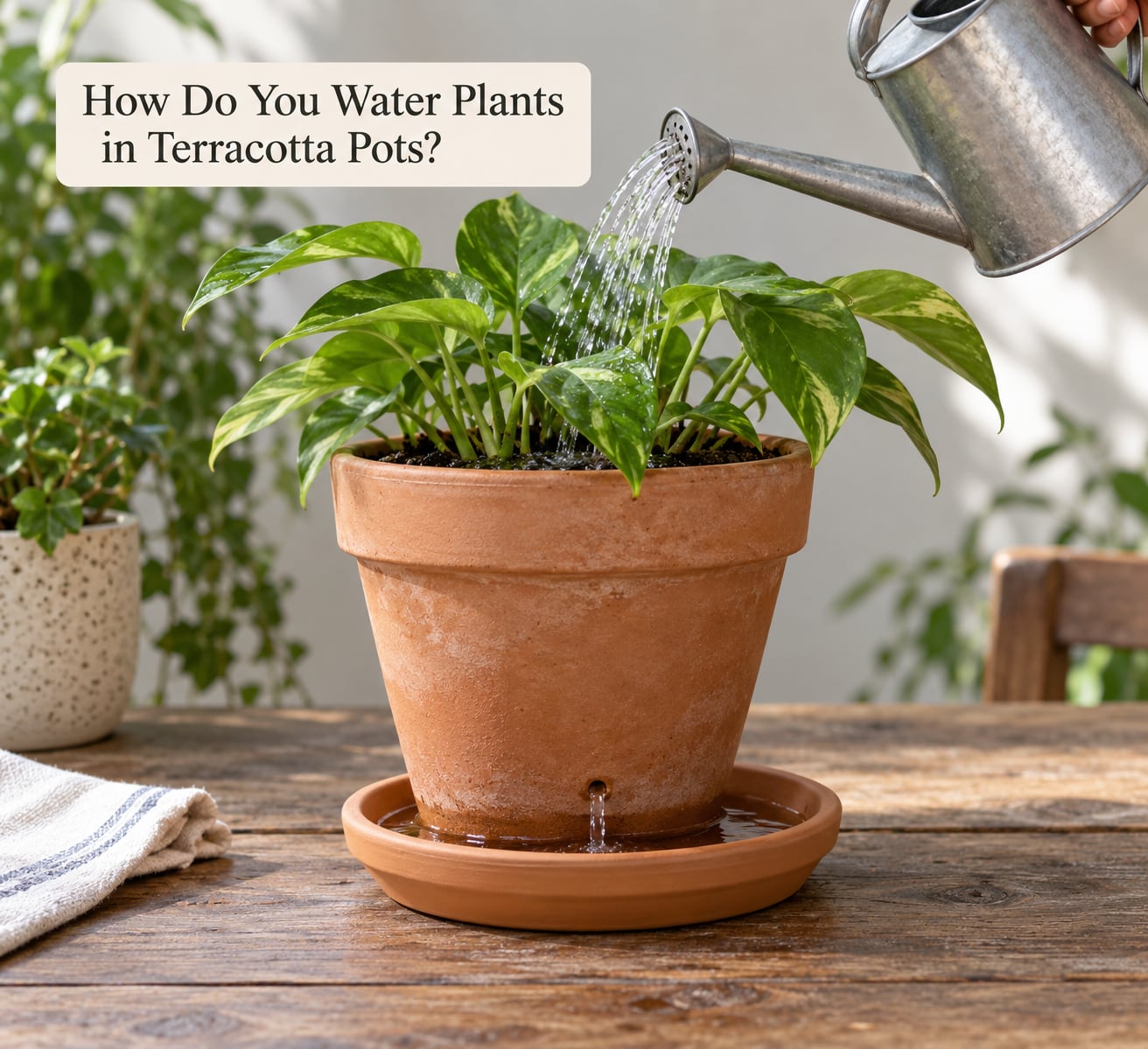
Water from the top until water actually leaves the drainage hole, then empty the saucer after a few minutes. Watering to the point of runoff is what re-wets the whole column of soil; stopping when the surface looks damp leaves a dry core and dry roots, which is how a plant in a big pot can look fine at the top and be dying below.
Emptying the saucer matters because of something called the perched water table. A few centimetres of standing water in the saucer creates a saturated zone at the bottom of the pot that roots cannot breathe in. A gravel layer does not fix this and can make it worse, because the gravel simply holds that saturated layer higher up where more of the root mass meets it.
Can you bottom water terracotta?
Yes, and it is the single most effective habit for people who want to water less often. It works because a saturated pot stops competing with the plant for water. Set the pot in a tray of water to about a quarter of the pot height, leave it for 20 to 30 minutes, then lift it out and let it drain fully before returning it to its saucer.
One caveat. If you only ever bottom water, salts build up in the mix, because you are moving water in but never flushing it out. A thorough top watering every four to six weeks leaches those salts and keeps the mix from getting salty enough to hurt roots.
How Do You Reduce Drying in Terracotta Pots?
Ranked by how much difference each one makes for the effort involved. Most people need one or two of these, not all seven.
- Put the clay pot inside a cachepot. A glazed or plastic outer pot catches the wall wicking and cuts the biggest single loss. Leave a small air gap between the two so moisture does not sit against the clay.
- Soak a new pot before planting. Twenty minutes in a bucket of water, until bubbles stop. This is the step people skip and then wonder about for weeks.
- Switch to a moisture-retentive mix. Coir, compost and a little vermiculite hold noticeably more water than a gritty cactus-style blend.
- Add a surface mulch. A few centimetres of pebbles, bark or grit cuts evaporation from the soil surface without touching the pot wall at all.
- Move up one pot size. More soil means more water held between waterings. A plant that is dry every day is often root-bound rather than unlucky.
- Group pots together. Plants in a cluster create their own slightly more humid microclimate, and the group dries more slowly than any member alone.
- Shift the pot out of the worst of it. Afternoon sun, a heater, a fireplace or a constant draught will undo every other change you make.
Should you seal or line the inside?
You can, and plenty of people do. Sealing the interior of a terracotta pot with a terracotta-safe sealer, or lining the inside with a thin plastic or pond liner with drainage holes cut in the bottom, drops the wicking loss substantially. It also stops the wall from absorbing water back out of the mix.
Know the trade-off before you do it. A sealed pot no longer breathes, so you have taken on more responsibility for drainage and for not letting the plant sit in water. A liner buried in a pot that holds water at the base is how you turn a dry plant into a drowned one. Seal the wall, keep the drainage hole clear, and never use a liner in a pot without one. If you would rather not manage that, a plastic nursery pot dropped inside a decorative clay pot gets you most of the benefit with none of the risk.
Do Plants Dry Out Faster in Terracotta in Summer or Indoors?
Do plants dry out faster in terracotta pots in summer?
Outdoors, sun, heat and wind stack up, and a terracotta pot on a July patio can need water daily. Indoors the problem looks different: heated rooms in winter have low humidity and steady warm air around the pot, and heat rises, so shelves and hanging baskets near the ceiling dry out sooner than the ones at floor level.
The trap is assuming every terracotta pot needs the same schedule. Two plants in the same room, one in a thick pot near a radiator and one in a small glazed pot by a shaded window, can be three days apart. Check the soil and the pot weight instead of the season, and adjust when the light changes rather than on a fixed date.
Frost is the outdoor caveat worth knowing. Terracotta is porous and can crack when water inside it freezes, so in cold climates either move pots close to a wall or lift them off the ground before the first freeze.
Frequently Asked Questions
How often should I water a plant in a terracotta pot?
There is no fixed schedule, because the pot, soil, plant and room all change the answer. As a starting point, use about half the interval you would use for the same plant in a plastic pot. Small terracotta pots of 5 to 7 cm often need water weekly for succulents and daily in hot weather. Check the mix two to three centimetres down and lift the pot for weight before you water.
Does terracotta need a drainage hole?
Yes, always. Without one, water collects at the bottom and creates a saturated zone that roots cannot breathe in, which leads to rot faster than any drying problem. Keep the hole clear of gravel and never leave the pot standing in a full saucer. A hole in a sealed or lined pot is just as important as one in a plain clay pot.
Is glazed terracotta better for plants that dry out quickly?
Much better. The glaze seals the pores, so water stops wicking through the wall and the pot behaves closer to plastic or glazed ceramic. That is why many people use a glazed decorative pot as a cachepot around a terracotta pot. The trade-off is that a glazed wall no longer breathes, so drainage and watering discipline matter more.
Which plants grow well in terracotta pots?
Plants that like air around their roots do best: succulents, cacti, most herbs, olives and other Mediterranean plants. Ferns, calatheas, peace lilies and tropical foliage plants are the ones that struggle, because the wall pulls moisture away from them. Interestingly, some growers use terracotta deliberately for calatheas, since the porous wall shortens the saturated zone at the base and can reduce root rot.
Can terracotta pots dry out so quickly that they burn plant roots?
Rarely, but it happens with a brand-new unsoaked pot. A dry clay wall drinks a large amount of water on first watering and the moisture never reaches the roots, so a fresh transplant can wilt in dry mix. Soak any new pot for twenty minutes before planting, check the moisture below the surface crust rather than at the top, and use the pot weight as a back-up signal.
Conclusion
Terracotta does dry out faster, usually at about twice the rate of plastic of the same size, and that is a property of the material rather than a fault in your care. Your first move is simple: put a finger a few centimetres into the mix, lift the pot and feel the weight, and only then water.
If the plant is dry every single day, work down the list above. A cachepot and a proper soak for new pots solve most of it.