Plant saucers that do not stain floors are made from water-absorbing cork, felt, or diatomaceous earth, or from sealed hard plastic, vinyl, and glazed ceramic. Unglazed terracotta is the one to avoid, because it leaches rust-orange residue and leaves mineral rings on wood. Size the tray one inch wider than your pot base, and empty any collected water after a few minutes.
I have moved enough plants across hardwood, laminate, and a painted cabinet to know where the damage starts. It is almost never a dramatic spill. It is a saucer that is a fraction too small, a pot that gets lifted and tipped over the sink-less side of the room, and a ring of dried water that nobody notices for six weeks. By then the finish on the board is already gone.
Here is the setup I use for every pot that drains, plus what to change for wood, tile, carpet, and outdoor decking.
Table of Contents
- What You Need
- Step-by-Step: Prevent Floor Stains From Plant Pots
- 1. Match the Saucer to the Pot
- 2. Add a Removable Waterproof Liner
- 3. Place the Saucer on a Protective Barrier
- 4. Water Without Leaving Standing Water
- 5. Clean and Maintain the Tray
- Common Mistakes
- Frequently Asked Questions
- What are plant saucers that do not stain floors made of?
- What to put underneath indoor plants to protect the floor?
- What is the best waterproof mat for indoor plants?
- Can you use a plant saucer on carpet or a rug?
- What to put under potted plants on a deck?
- How do I remove a water ring from a wood or stone floor?
- Conclusion
What You Need
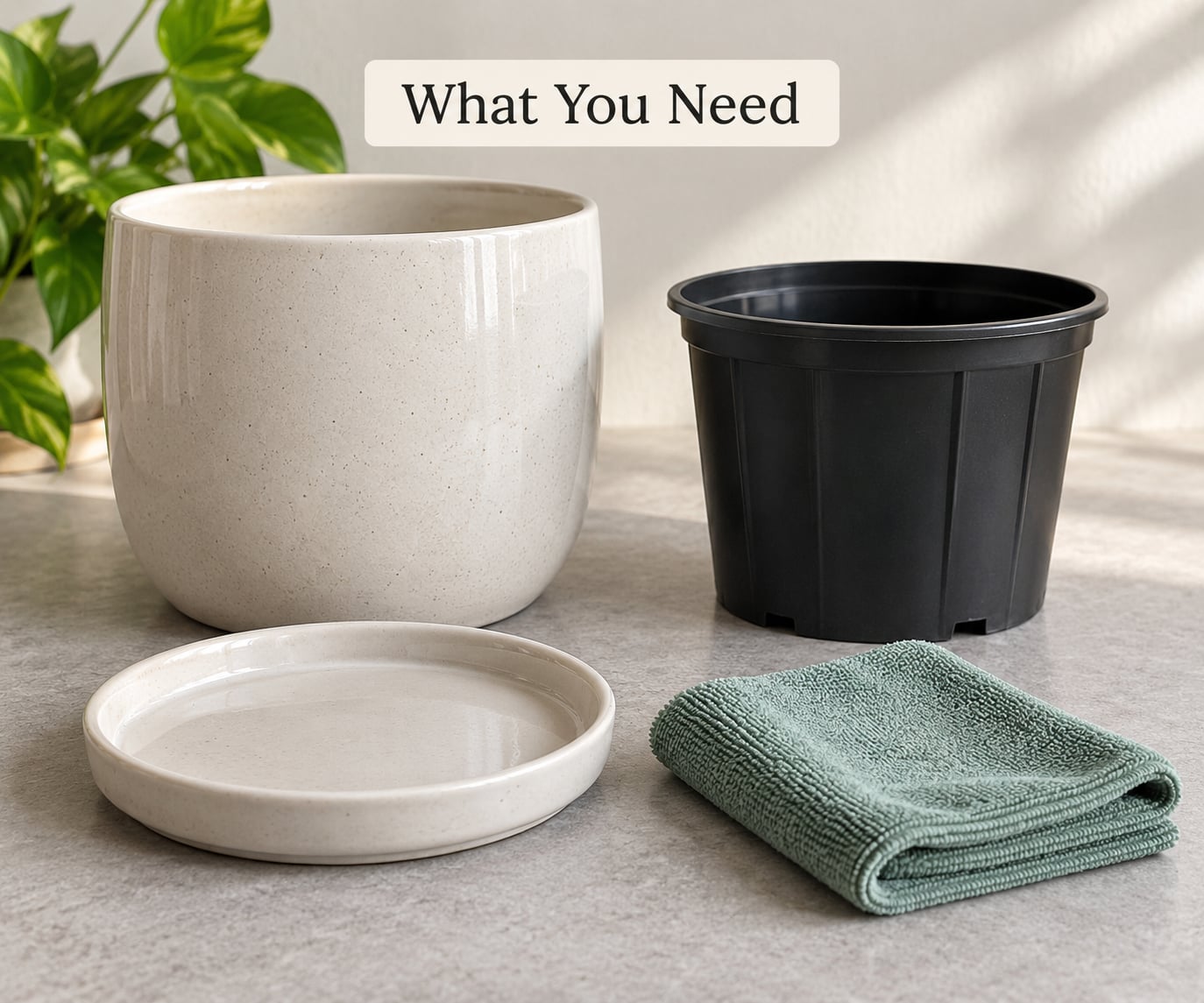
You need a tray that fits your pot and a barrier that fits your floor. That is the whole list, and the two are not interchangeable.
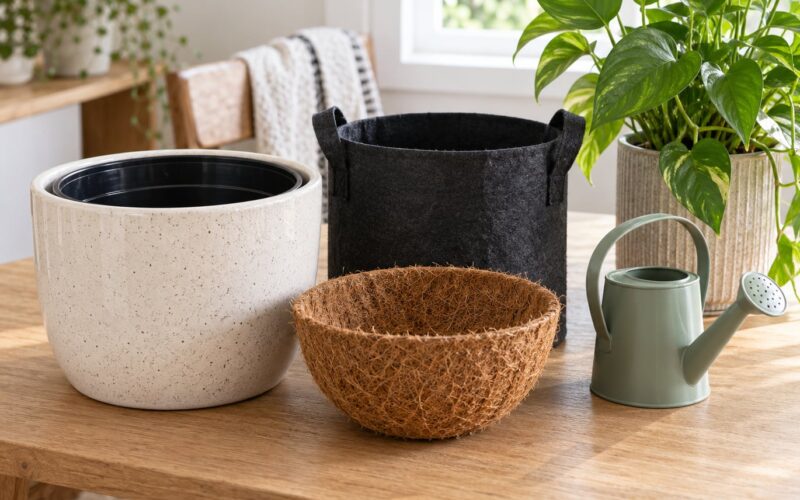
- A non-porous or absorbent saucer. Sealed hard plastic, clear vinyl, glazed ceramic, a cork mat, a felt mat, or a diatomaceous earth stone tray. Match the material to the floor rather than to the pot.
- The pot itself. Note whether it has drainage holes. A pot without holes needs a cachepot or a liner, not a saucer, because nothing will ever drain into the tray.
- A removable waterproof liner. A shallow plastic or silicone dish, a silicone baking mat, or a plastic nursery pot lid that nests inside the decorative saucer.
- A protective barrier for porous floors. A washable mat, a waterproof plant stand, a sealed floor tray, or a piece of cork cut to size.
- Cleaning supplies. A soft brush, a microfiber cloth, and mild dish soap. Skip anything abrasive on a glazed or plastic tray.
Step-by-Step: Prevent Floor Stains From Plant Pots
Work through these five steps in order and the staining problem usually disappears. Each step has a visible check so you know it worked before you move on.
1. Match the Saucer to the Pot
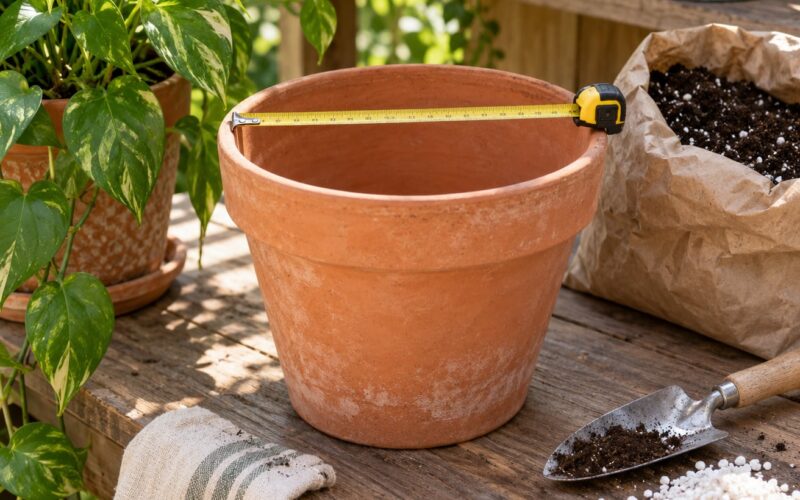
Measure the base of the pot, not the top rim. A 10 inch pot with an 8 inch base sitting in a 10 inch saucer looks tidy and catches nothing, because the water runs across the base and off the outer edge before it can drip. Getting this right is most of what separates plant saucers that do not stain floors from trays that just hold them.
Add one inch to the base measurement on every side. For a pot with an 8 inch base, you want a 10 inch saucer. Anything under a half inch of overhang and you will be mopping, not protecting.
Then check lip depth. A shallow lip works for a 6 inch pot that you can lift with two fingers. A fiddle leaf fig in a 14 inch pot needs a saucer with a deeper lip, because the weight of the pot and soil is what presses the base into the tray and pushes water out through the drainage holes.
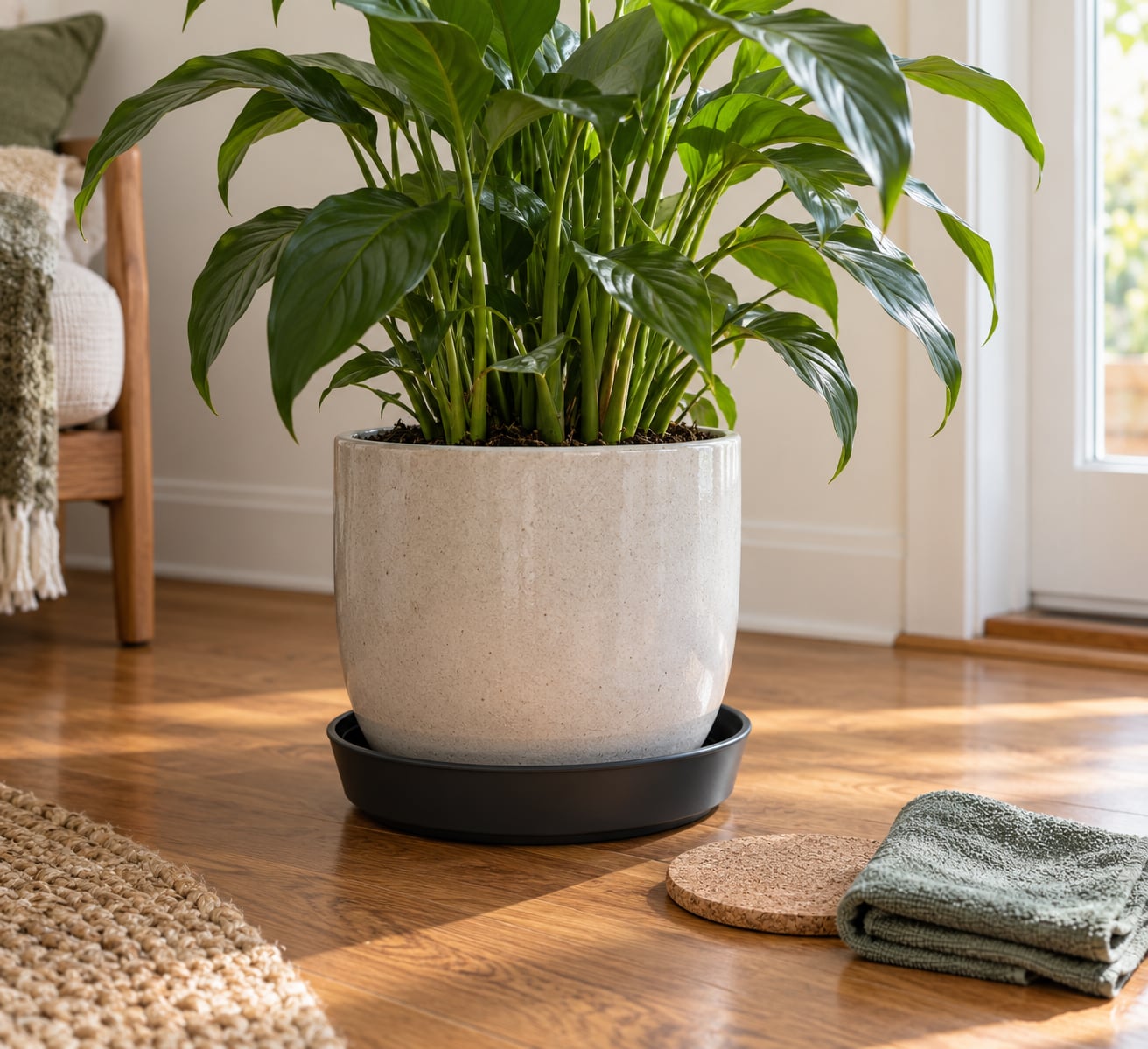
Success check: the pot sits flat with roughly an inch of tray visible all around, and the lip rises to about the height of the pot base rather than splaying outward.
2. Add a Removable Waterproof Liner
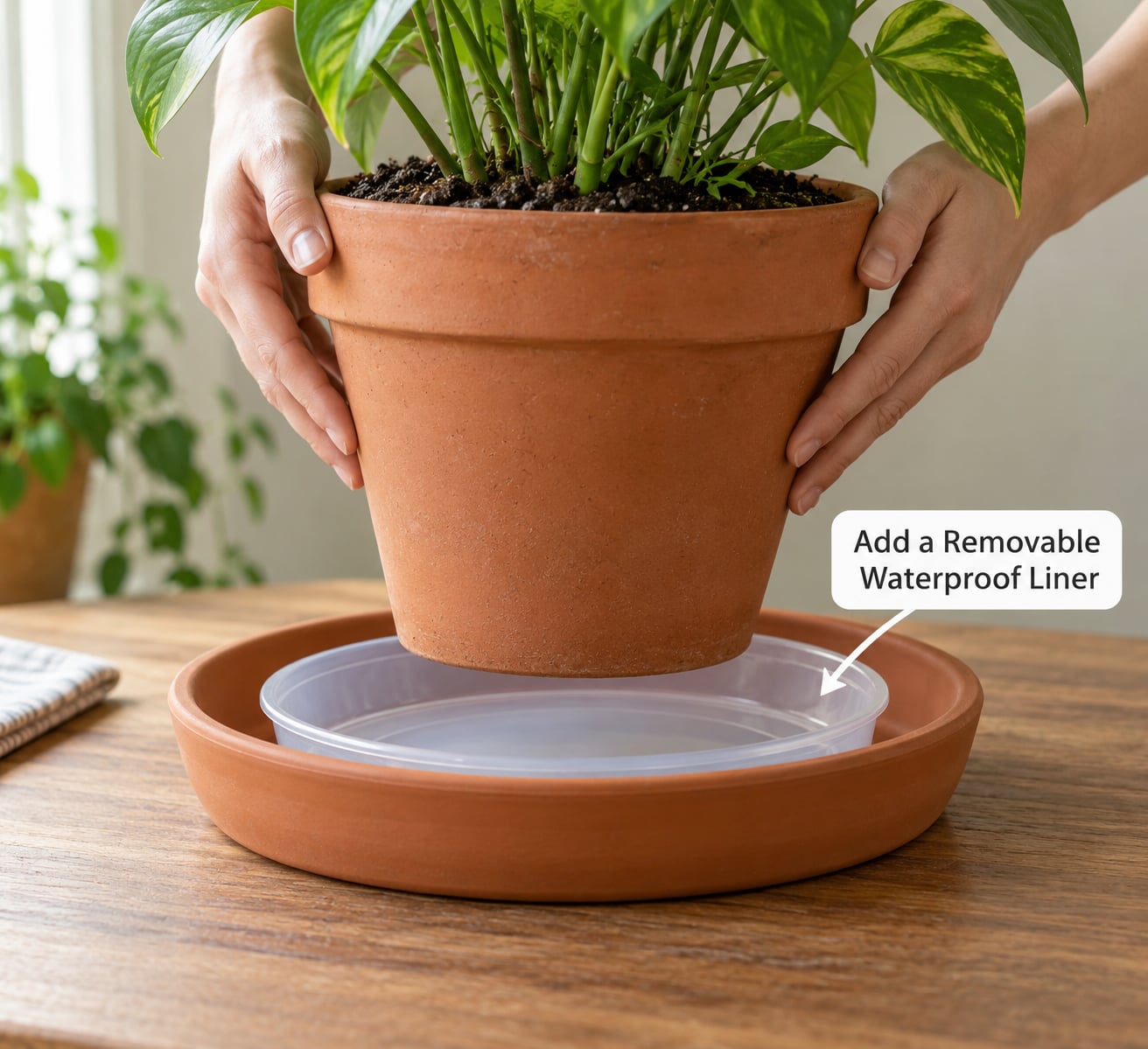
Pot tap water carries dissolved minerals, and so does most fertilizer runoff. When that water dries, the minerals stay behind as a pale ring, which is why hard-water areas get repeat rings even with a good tray. A liner gives you a second barrier so the mineral water never touches the decorative saucer or the floor in the first place.
Set a shallow silicone or plastic dish inside the saucer, then drop the pot into it. Water that leaks through the drainage holes stays in the liner, which you lift out and rinse in the sink.
On wood, stone, and painted MDF, this step matters most. It is also the fix for the terracotta saucer you already own and do not want to replace: seal the clay with a penetrating stone sealer, or skip the sealer and put a liner between the terracotta and the pot so the rust-orange residue has nowhere to go but the liner.
Success check: you can lift a wet liner out of the saucer without any water touching the saucer surface or your floor.
3. Place the Saucer on a Protective Barrier
Hardwood and engineered wood are the surfaces to worry about most. Water that sits in a circle can soften the finish, and one user on r/HardWoodFloors reported the finish stripped away entirely where a pot had been sitting wet for weeks. That kind of repair runs into the hundreds, and a mat costs almost nothing.
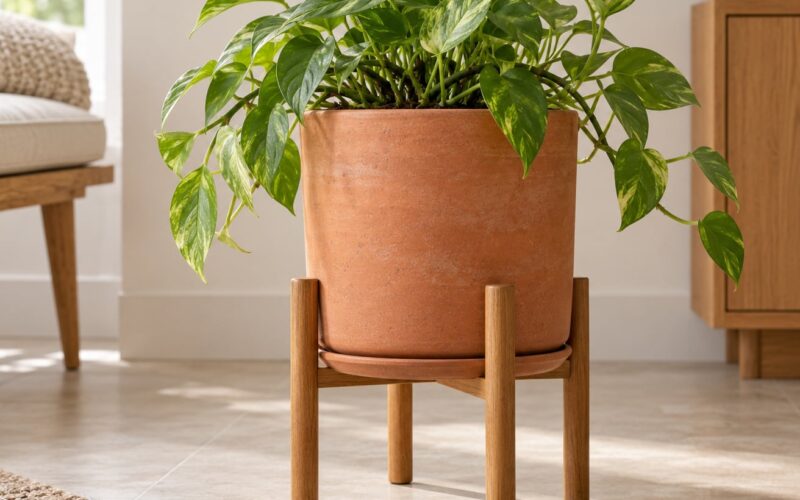
Choose the barrier by surface. On hardwood, laminate, or painted MDF, use a washable waterproof mat or a plant stand that lifts the pot so air moves under it. On tile or stone, a saucer alone usually works, because grout lines take the water and mopping solves it. On carpet or an area rug, use a waterproof mat, since fabric holds moisture long enough to grow mildew at the seam. Outdoors on a deck, use sealed hard plastic or vinyl; cork and felt soak through in a single watering and stay damp for days.
On a wooden table, the same mat idea applies but with a felt or cork mat between the pot base and the wood, which also stops the pot from sliding when you wipe it down.
Success check: lift the plant and the mat, tray, or saucer comes up clean, dry, and unstained underneath.
4. Water Without Leaving Standing Water
Water the soil, not the tray. Pour slowly until water runs from the drainage holes, then stop. Most of the water a plant actually needs has already passed through the root ball by then.
Wait a few minutes and empty whatever collects. This is the habit people skip, and it is the reason for both the floor rings and the root-rot problem. Standing water against the base of a pot keeps the soil saturated at the bottom, where the plant cannot dry out between waterings, and it turns a decorative tray into a reservoir for fungus gnats.
For thirsty plants, water more often and empty each time. For succulents and cacti, water rarely and let the tray bone dry before the next soak. If emptying feels like too much work, take the saucer out entirely and water over a sink or a bucket instead.
Success check: ten minutes after watering, the tray is empty or nearly so, and the soil surface feels close to dry.
5. Clean and Maintain the Tray
Empty the tray every few days even if you water less often. Standing water in a dark plastic tray smells, and the smell gets into the pot base and onto the floor when you move the plant.
Wash with warm water and a drop of dish soap, scrub loose soil with a soft brush, and dry fully before the pot goes back on. Fertilizer crust and dried soil harden fast and scratch a glazed surface, so wipe them off as soon as you notice them.
Check the liner while you are in there. A thin plastic liner eventually cracks and starts weeping at the edges, and a silicone liner will discolor where hard water has soaked in. Replace either one rather than trying to wash it back to new.
Wipe the floor under the plant every couple of weeks, even when nothing has spilled. Dust and a faint mineral film become a permanent mark far more easily than a single clean drip would.
Success check: the tray is dry, clean, and free of any ring when you run a finger along the inside lip.
Common Mistakes
A saucer that is too small. The single most common cause of ring marks. If the pot base reaches the edge of the tray, water runs over instead of pooling, and it lands on the floor anyway. Fix it by going up one size, or by cutting a larger piece of waterproof mat beneath the existing tray.
Unglazed terracotta under a light floor. Unglazed clay is porous by design. It wicks water through its body, leaches rust-orange residue onto the surface, and the clay dust itself marks light wood and painted shelves. Fix it with a penetrating sealer on the saucer, or set it on a washable mat so any transfer happens on the mat.
Leaving the liner out. Mineral water soaking straight into a decorative tray leaves a ring you cannot scrub out, because the deposit is in the material rather than on it. Fix it by adding a removable plastic or silicone liner that you can rinse.
Saucers on wood with nothing beneath them. A tray protects against drips, not against prolonged contact. A heavy pot can also scratch a finished floor when you drag it. Fix it by adding a cork or felt mat and a plant stand with a wide base.
Water sitting for days. Nobody empties the tray on schedule, so it becomes a reservoir. The residue smells, it feeds fungus gnats, and the constant moisture at the pot base risks root rot. Fix it by watering in a sink or bucket, or by setting a reminder the day after each watering.
Assuming a saucer solves everything. A tray catches water. It does not stop pigment leaching from a colored or glazed pot, fertilizer discoloration, rug dye transfer, or scratches from a heavy pot being moved. On white painted shelves and light stone, seal the pot base or put a mat between the pot and the surface.
Frequently Asked Questions
What are plant saucers that do not stain floors made of?
Three material families work. Absorbent surfaces such as cork, felt, and diatomaceous earth soak up drainage water and release it through evaporation before it can pool. Non-porous surfaces such as sealed hard plastic, clear vinyl, and glazed ceramic physically block water from reaching the floor. Unglazed terracotta is the one to avoid, because it wicks water and leaches rust-orange residue that marks light surfaces.
What to put underneath indoor plants to protect the floor?
Put a tray one inch wider than the pot base on top of a washable waterproof mat or cork mat. Use sealed plastic or vinyl on wood, laminate, and painted surfaces. A saucer alone on hardwood protects against drips but not against prolonged contact, so the mat matters most under large floor plants. On tile, a tray on its own is usually enough.
What is the best waterproof mat for indoor plants?
A low-profile silicone or PVC mat with a raised edge works best indoors, because it takes a spill without soaking into the floor. Add a textured or felt surface underneath if the pot slides. Rattan and wood mats look good but wick water directly into the floor, which defeats the purpose. Replace any mat that has a stiff, stained ring in the middle.
Can you use a plant saucer on carpet or a rug?
You can, but put a waterproof mat between the tray and the carpet. Carpet and rugs wick water and hold moisture long enough to grow mildew at the seam, and a leaking tray turns that into a persistent odor. Felt or cork mats are a poor choice indoors on carpet because they absorb rather than shed. Choose sealed plastic or vinyl and empty it regularly.
What to put under potted plants on a deck?
Use sealed hard plastic or vinyl saucers outdoors. Cork, felt, and absorbent stone trays soak through in one watering and stay damp for days on a deck, which encourages algae and pests. Pick a tray with a deep lip so wind-driven rain stays inside, and make sure it sits flat, since a tilted tray on deck boards sends water straight off the edge.
How do I remove a water ring from a wood or stone floor?
Start with a cloth dampened with warm water and a drop of dish soap, then dry immediately. If the ring persists, try a solution of one part white vinegar to three parts water on stone, and a wood-safe cleaner on wood. Never saturate the board. If the finish feels soft or fuzzy, stop and call a flooring professional, because moisture has already reached the wood under the finish.
Conclusion
Start with the tray. Pick a correctly sized non-porous saucer in sealed plastic, vinyl, or glazed ceramic, or an absorbent cork or felt mat, and measure the pot base before you buy anything. Add a removable liner on wood and stone so mineral water never reaches the decorative tray.
Then add the part people skip: a washable mat or a plant stand under the saucer on any porous floor, and empty the tray ten minutes after every watering. That combination does more for your floor than any material on its own, because no tray can protect a surface from water that sits on it for a week.