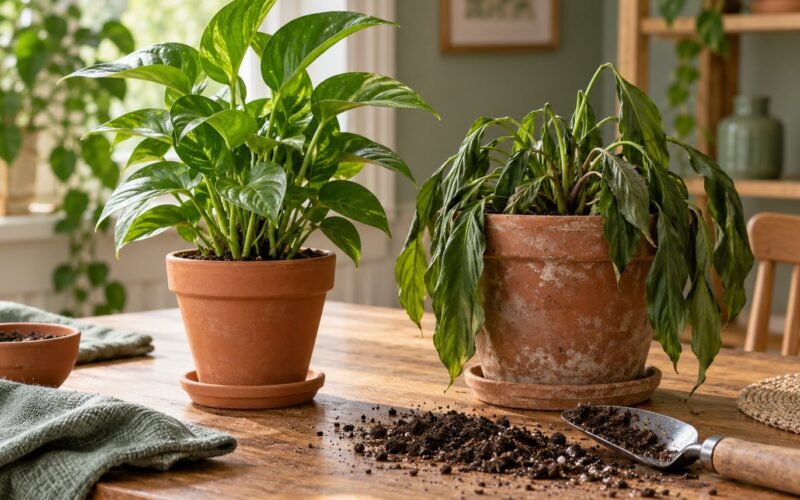
To rotate houseplants for even growth, turn the pot a quarter turn (about 90 degrees) roughly once a week or every 1 to 2 weeks, and each time you water. Plants grow toward light, so one side stays short and sturdy while the shaded side stretches. Turning the pot spreads that light around the whole canopy.
The actual work takes about ten seconds. The habit is the hard part, which is why tying the turn to watering usually sticks better than tying it to a date.
Table of Contents
- What You Need
- How to Rotate Houseplants for Even Growth: Step-by-Step
- Assess the Light Before You Turn
- Turn the Pot a Consistent Amount
- Check the Plant After One or Two Weeks
- Choose a Rotation Schedule That Fits the Plant
- Common Mistakes
- Tips for Healthy, Balanced Growth
- Frequently Asked Questions
- How often should I rotate my houseplant?
- Do all houseplants need to be rotated?
- Can rotating a plant fix a leaning stem?
- Should I rotate a plant when it is in direct sunlight?
- What is the best direction to turn a houseplant?
- How can I tell if a plant is getting enough light?
- Conclusion
What You Need
Most houseplants need nothing beyond the pot they already sit in. Three small things help, though, and none of them are plant-specific.
- A saucer or a lazy Susan. A plastic lazy Susan from a hardware store makes a heavy pot easy to spin without wrestling it. A plant saucer works the same way if you lift the whole thing rather than dragging it.
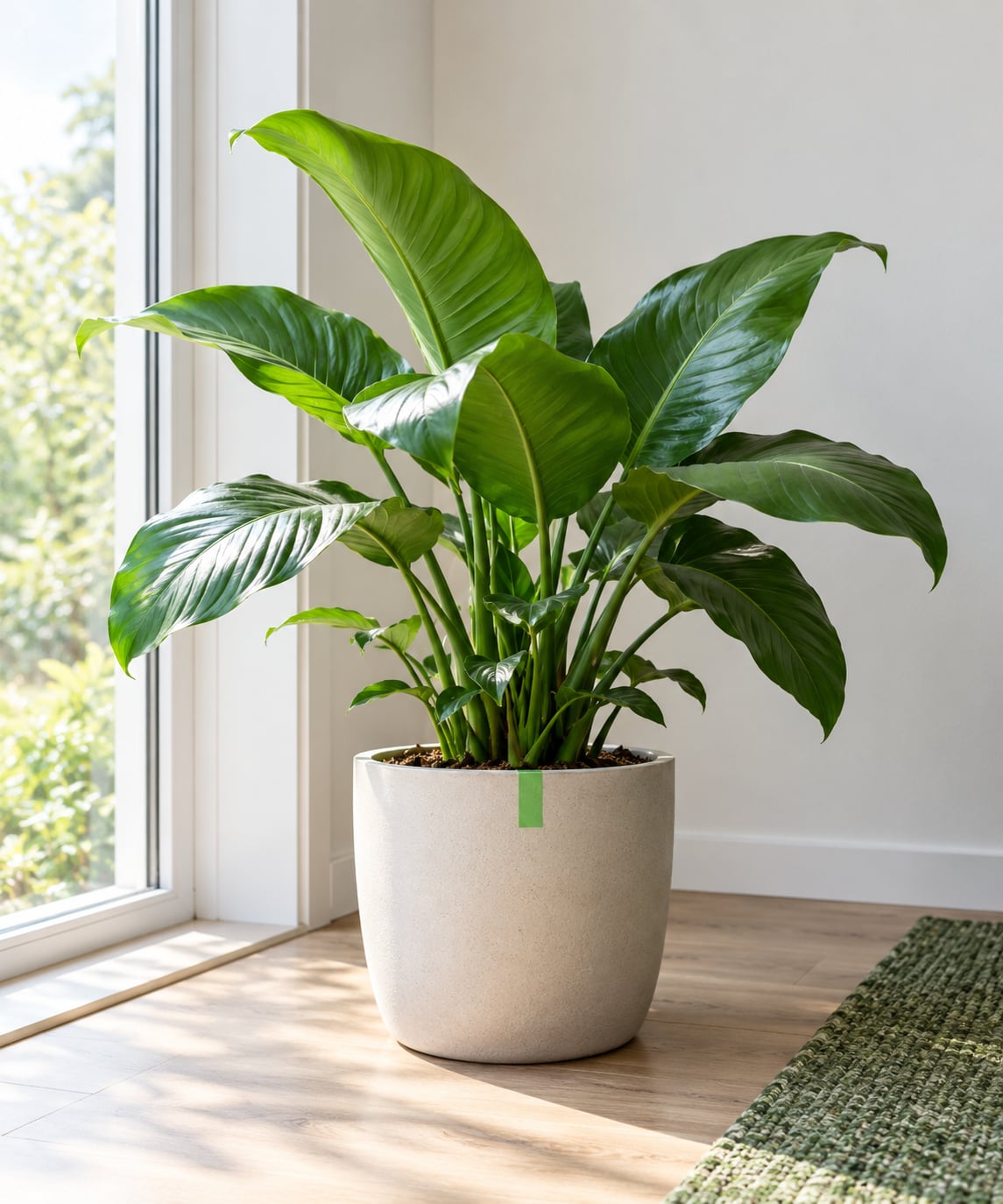
- A strip of tape or a wax pencil. Mark the front of the pot so you know how far you have already turned. Without a mark, most of us guess, and the plant ends up back where it started.
- A bright window or a grow light. Rotation only balances light if there is enough light to balance. A plant in a dim corner will stay lopsided no matter how often you spin it.
How to Rotate Houseplants for Even Growth: Step-by-Step
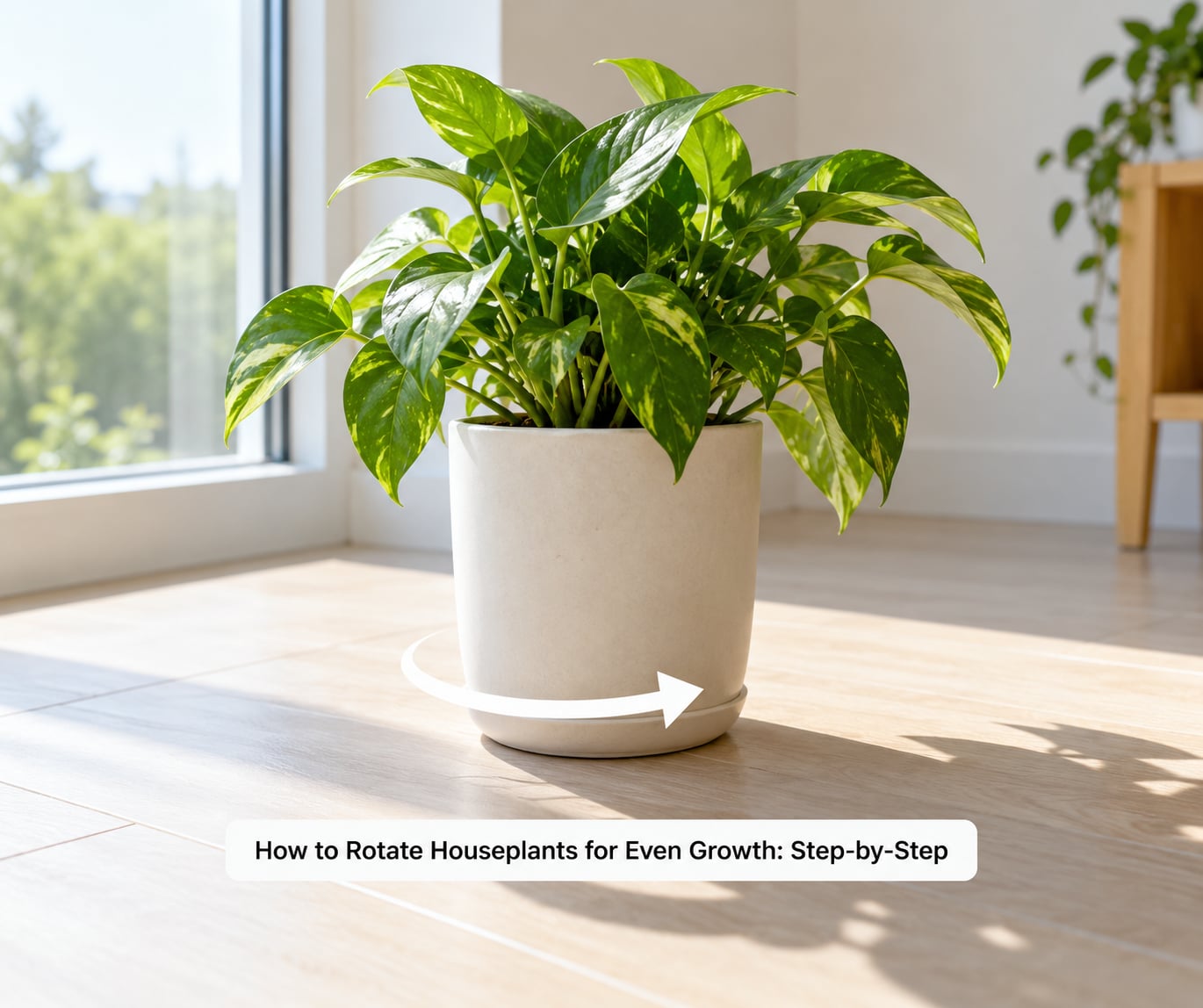
Assess the Light Before You Turn
Stand back a foot and look at the plant from the front of the room. The side facing the window is usually shorter, denser and heavier in foliage. The side facing the wall is paler, and the stems there are longer and thinner.
That pattern is phototropism, and the mechanism is auxin, a growth hormone. Auxin collects on the shaded side of a shoot and makes those cells stretch, so the shaded side grows long while the lit side grows short. Both jobs happen at the same time as long as light keeps arriving from one side.
Look for the same three clues before you move anything: the direction new leaves are pointing, the lean of the main stem, and any bare stretchy section on the wall side. If those three all agree, rotating will help. If they disagree, the plant is probably repositioning for a different reason.
Turn the Pot a Consistent Amount
A quarter turn is the usual move: 90 degrees, one face of the pot to another. A half turn of 180 degrees is fine for big floor plants that are already well established. Anything bigger than that dumps the plant into a spot with very different conditions, which is where problems start.
Grip the pot, never the stems or a leaf. A wet pot is heavier than it looks, so support the base with one hand and turn with the other. Big pots are easiest to move as a unit, saucer and all, rather than lifting the plant out of its saucer.
Move the pot slowly and set it down gently. If the topsoil is saturated, wait until it drains a little; twisting a heavy, wet pot is how stems get snapped and how root balls get torn loose from the soil.
Check the Plant After One or Two Weeks
Nothing visible happens in the first few days. The plant is reorienting its growing tips, and the leaves may droop briefly before they firm up again. That short softening is normal.
Over the next two or three weeks, look for new leaves that are evenly sized and spaced all around the plant rather than crowded on the window side. New growth on the previously bare side is the clearest sign that rotation worked. If the plant leans the same way again within a month, the light is probably too weak overall, and the real fix is a brighter spot.
Choose a Rotation Schedule That Fits the Plant
There is no single interval that suits every houseplant. Fast growers in bright light reorient quickly, so they can handle more frequent turns. Slow plants and low-light rooms need less, because every move costs them a little energy.
| Light level | How often to turn | How far |
|---|---|---|
| Bright direct or bright indirect by a south or west window | Every 7 days, or at every watering | Quarter turn (about 90 degrees) |
| Medium indirect light, a few feet from a window | Every 10 to 14 days | Quarter turn (about 90 degrees) |
| Low light, north-facing or a room with no window nearby | Every 3 to 4 weeks | Quarter turn, and consider a grow light |
| Succulents and cacti in full sun | Every 2 to 3 weeks | Quarter turn, so the sun-facing side keeps up |
| Mature floor plants with a defined front | Every 2 to 3 months, only to correct a lean | Quarter turn at most |
Season changes the numbers. Light levels drop sharply through winter, and a plant that needed a weekly turn in June can sit for a month without trouble in December. Adjust the schedule with what the plant does, not with a calendar reminder.
Common Mistakes
- Rotating every few days. Plants that are turned too often spend energy reorienting instead of growing, and stems can start to twist where new growth meets old.
- Rotating almost never. A yearly turn does nothing. The damage from a month of one-sided light is already made by then.
- Spinning a plant in direct sun. The shaded side suddenly receives hot, intense light, and leaves scorch and bleach. Rotate plants in indirect light, or move them out of the sun first.
- Grabbing stems to turn the plant. Fresh growth snaps easily. If a pot is too heavy to handle, slide it across the surface or use a lazy Susan.
- Moving a plant into a drastically brighter or darker spot. A sudden change shocks the plant far more than a 90-degree turn does. Ease it into new conditions over a couple of weeks.
- Forgetting the seasons. A fixed schedule in a fixed spot means the plant gets turned more or less often than it needs as the window light changes.
Tips for Healthy, Balanced Growth
Tie the turn to watering. If you already check the soil, the turn costs nothing extra and never gets forgotten. Mark the pot with a small piece of tape so each turn is 90 degrees and not a guess.
Wipe the leaves with a damp cloth every few weeks while you are there. Dust blocks a surprising amount of light, and a dusty plant leans harder toward the window for the same reason it would in a dim room.
Rotate with a reason, not out of habit. If the growth is even already, a monthly check is plenty. Constant turning can leave a plant looking busier and less balanced, not more, because new leaves point in slightly different directions each time.
Some plants genuinely prefer to stay put. Pilea, succulents and cacti, fittonia, peperomia and most calatheas respond well to regular turns. Monstera, philodendron, pothos, hoya, fiddle leaf fig and rubber plant have a defined front and will look messier when spun on a schedule, so turn those only to fix an obvious lean. Climbers attached to a moss pole or trellis should be turned rarely, since the stems grow around their support and frequent turning makes the attachment awkward.
If a plant is leaning despite steady rotation, check the light before anything else. A grow light aimed at the dim side, a brighter spot, or a cut back on the stretched growth will do more than another turn. Light is the limit on growth, not rotation.
Frequently Asked Questions
How often should I rotate my houseplant?
Most houseplants do best with a quarter turn every 7 to 14 days, and doing it at each watering is an easy habit to keep. Bright-light plants such as succulents can go weekly, medium-light plants every two weeks, and plants in dim rooms every three to four weeks. Large floor plants with a defined front need far less, usually every two to three months.
Do all houseplants need to be rotated?
No. Plants that grow evenly, like most ferns and many palms, rarely need turning. Slow growers and plants with a distinct front, including monstera, philodendron, pothos, hoya, fiddle leaf fig and rubber plant, look messier when turned often. Turn those only when you want to correct a clear lean.
Can rotating a plant fix a leaning stem?
Rotation prevents a lean from getting worse and keeps new growth even, but it does not straighten a stem that has already stretched. That stem will stay as it is. To fix the look, move the plant to brighter light, cut back the stretched growth, or stake the plant so new growth follows a straight stem.
Should I rotate a plant when it is in direct sunlight?
Skip the turn if the plant is sitting in direct sun. Moving the shaded side straight into that light can scorch and bleach leaves. Turn the plant early in the morning or late in the day, or move it out of the direct light first and turn it where it is.
What is the best direction to turn a houseplant?
Turn the direction that currently faces away from the main light source toward the light, which is a quarter turn, or 90 degrees. Clockwise or counterclockwise makes no difference to the plant. What matters is that the side that was shaded gets its turn in front of the window.
How can I tell if a plant is getting enough light?
Look at the newest leaves, which should be similar in size and color to the older ones and evenly spaced around the canopy. Long gaps between leaves, small pale leaves, or a stretched bare stem all point to light that is too weak. In dim rooms a grow light for a few hours a day usually solves it.
Conclusion
Start with one plant today. Find its strongest light source, note which side is already stretched, and put a small mark on the pot so you know where the front is.
Then give it a quarter turn the next time you water, and repeat every week or two. Over the next few weeks, check the new leaves: growth spaced evenly around the plant means the rotation schedule is right. If the lean comes back, add light rather than adding more turns.