To get rid of fungus gnats in houseplants, you have to hit two targets at once: the small dark adults flying around your pots, and the translucent larvae living in the top inch or two of potting mix. Sticky traps handle the adults. A soil drench, drier soil and a cleaner pot handle the larvae.
Most infestations clear in three to five weeks, not three days. That’s the honest timeline, because the life cycle runs roughly three weeks from egg to adult, and any larvae you miss will keep breeding while you wait.
The good news is that none of this requires a fogger or a shelf full of sprays. Staging, a plastic tray, some 3% hydrogen peroxide or a packet of Bti granules, and a watering habit tweak will do most of the work.
Table of Contents
- What You Need
- Step-by-Step
- 1. Isolate the affected plant
- 2. Identify where fungus gnats are coming from
- 3. Reduce excess moisture without stressing the plant
- 4. Remove the top layer of infested soil
- 5. Use sticky traps to monitor and reduce adults
- 6. Treat larvae with a low-risk soil treatment
- 7. Monitor for two to three weeks and prevent return
- Common Mistakes
- Frequently Asked Questions
- Do fungus gnats bite people?
- How long does it take to get rid of gnats in houseplants?
- Are fungus gnats a sign that my houseplant is dying?
- Are yellow sticky traps enough to control fungus gnats?
- Why do fungus gnats keep coming back after I water my plant?
- Can I use hydrogen peroxide or cinnamon to get rid of fungus gnats?
- Conclusion
What You Need
The supply list is short, and you probably own half of it already. Here’s what each item is for and when you actually need it.
- A separate holding spot. Any room or shelf away from your other plants works. This is the first thing you need, before anything else, because gnats spread through watering and through contact between pots.
- A bright flashlight or phone light. For checking the soil surface, drainage holes and saucers. Adults fly toward light, which makes them much easier to spot at night.
- Yellow or blue sticky traps. Necessary as soon as you confirm gnats. They catch adults and, just as usefully, they give you a count so you know whether the infestation is shrinking.
- 3% hydrogen peroxide or a Bti granule product. One of these two handles the larvae. Hydrogen peroxide is a fast contact kill for existing larvae. Bti (Bacillus thuringiensis israelensis) is a bacteria that kills gnats and mosquitoes as they ingest it, and it stays active in damp soil longer.
- Fresh potting mix and a clean pot. Needed if the larvae population is heavy or you want a full reset. Skip it if the plant is small and healthy and a drench is working.
- A saucer or tray you can tip out. Standing water under a pot is a permanent invitation, and it’s the most overlooked piece of the puzzle.
- Beneficial nematodes, optional. Worth it for a large collection or a bad case. They’re microscopic organisms that hunt the larvae in moist soil and work best in the temperature range most homes sit at indoors.
Step-by-Step
Work through these in order. Skipping ahead to the treatment step is the most common reason a plan stalls at week two.
1. Isolate the affected plant
Move the infested plant away from the rest of your collection first. Set it on a tray in a spare room, a bathroom, or anywhere it won’t touch another pot.
Then check the neighbours. Look under the leaves and at the soil surface of the two or three plants closest to the infected one, since a female lays up to a couple hundred eggs and a few flies can find a whole shelf quickly.
Pick up any leaves that have fallen into the saucer or onto the shelf. Decaying organic matter sitting in wet soil is exactly what attracts both adult gnats and fungus, so clearing it removes the food source as well as some eggs.
2. Identify where fungus gnats are coming from
Fungus gnats are small, dark, mosquito-like flies, usually around an eighth of an inch long, that hover near the soil rather than landing on your windowsill. Their larvae are translucent white with a black head, about a quarter inch long, and they squirm when you disturb the soil.
Check four places. The soil surface for larvae and eggs in a crust of wet organic matter. The drainage holes, where larvae gather at the bottom. The saucer, where water often sits for days. And the soil of any plant that has recently been repotted or brought home from a nursery.
If the flies appear away from plants entirely, near a drain or a fruit bowl, you may be dealing with fruit flies instead, and the treatment is different. Fungus gnats cluster tightly around pots; fruit flies spread through the kitchen.
3. Reduce excess moisture without stressing the plant
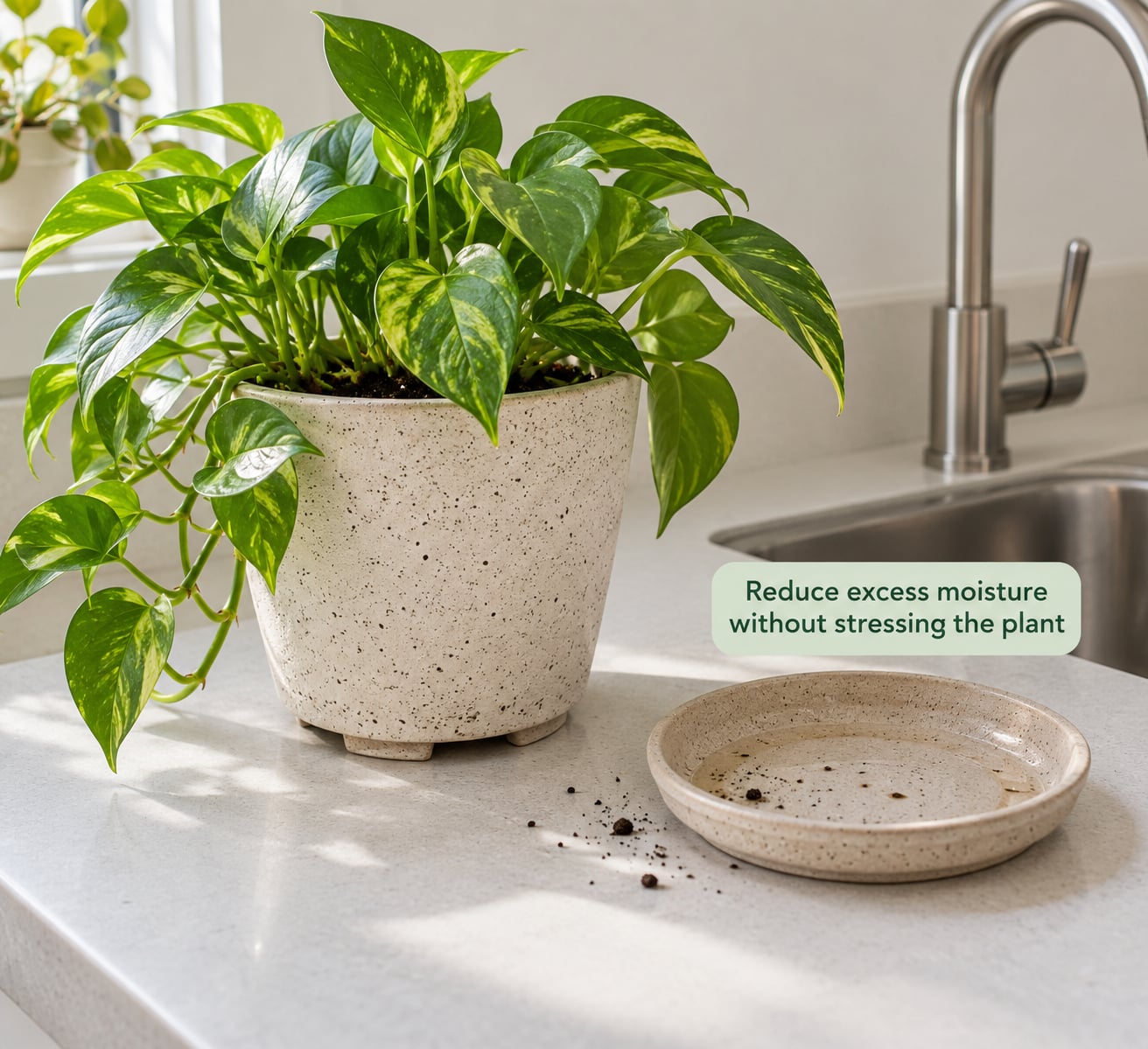
Cut back the water. Fungus gnats lay eggs in consistently damp potting mix, so drying the surface is the single biggest thing you can change today.
Let the top 1 to 2 inches dry between waterings. Test with a finger rather than a schedule, since a fern and a succulent want opposite things. When you do water, water thoroughly and empty the saucer ten minutes later, or switch to bottom watering and let the plant drink from a tray for about 30 minutes, then dump the remainder.
Also check that the pot has a drainage hole and that it isn’t sitting inside a decorative cachepot with no way out. Constantly moist soil is the root cause of both the gnats and the root rot that tends to follow.
4. Remove the top layer of infested soil
Eggs and young larvae sit right at the surface, so scooping off the top half inch to inch of potting mix removes a meaningful share of them before any treatment runs.
Use a spoon or your fingers, work gently, and keep the tool away from roots. Many houseplants have fine feeder roots and stems sitting right where you’re digging, and the plant has enough problems. If you find yourself cutting roots to remove soil, stop and use the drench method instead.
Replace what you scoop with fresh potting mix of the same type. If the mix underneath smells sour or the roots are soft and brown, repot the whole plant into a clean pot instead, which is the fastest reset available.
5. Use sticky traps to monitor and reduce adults
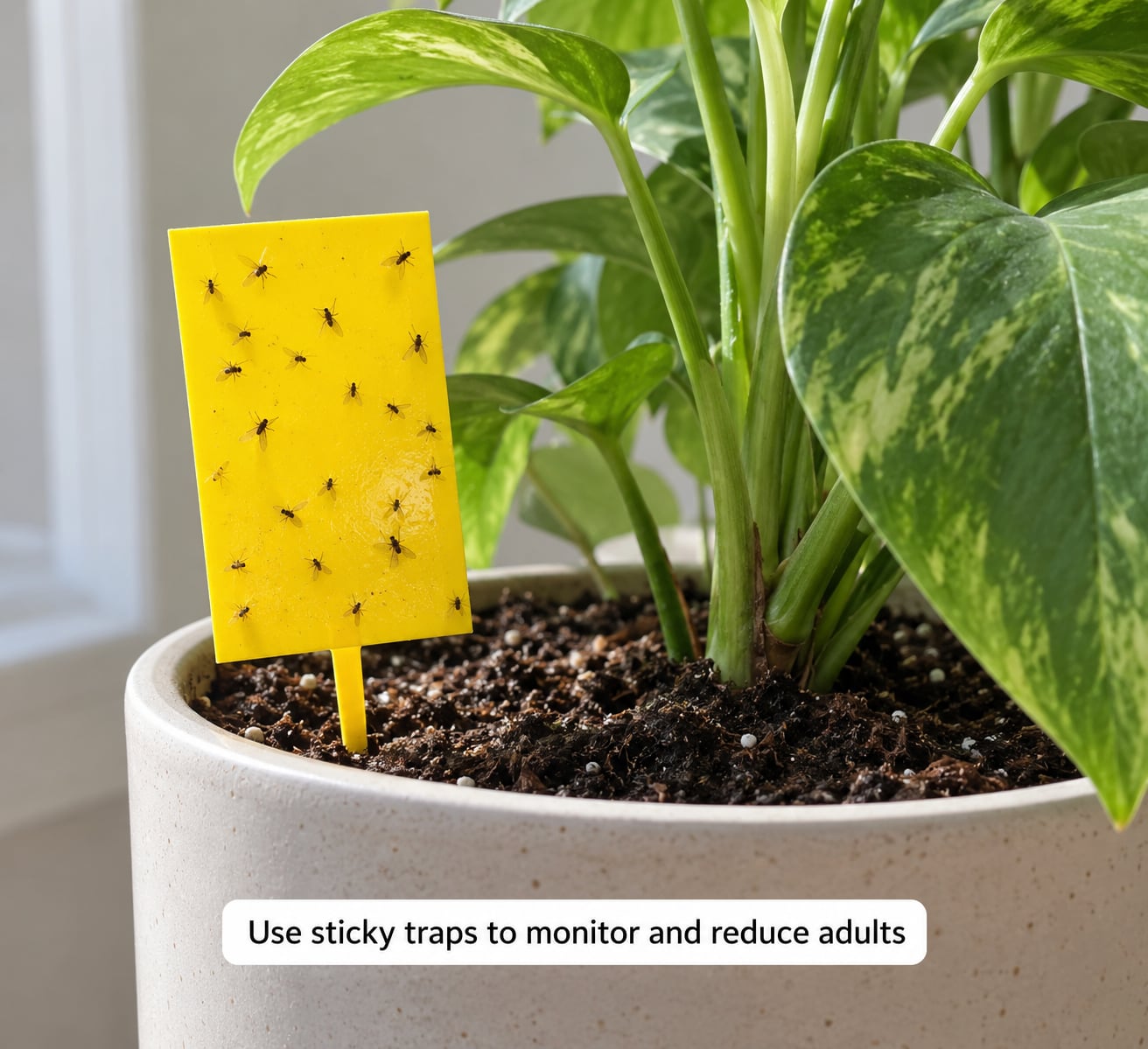
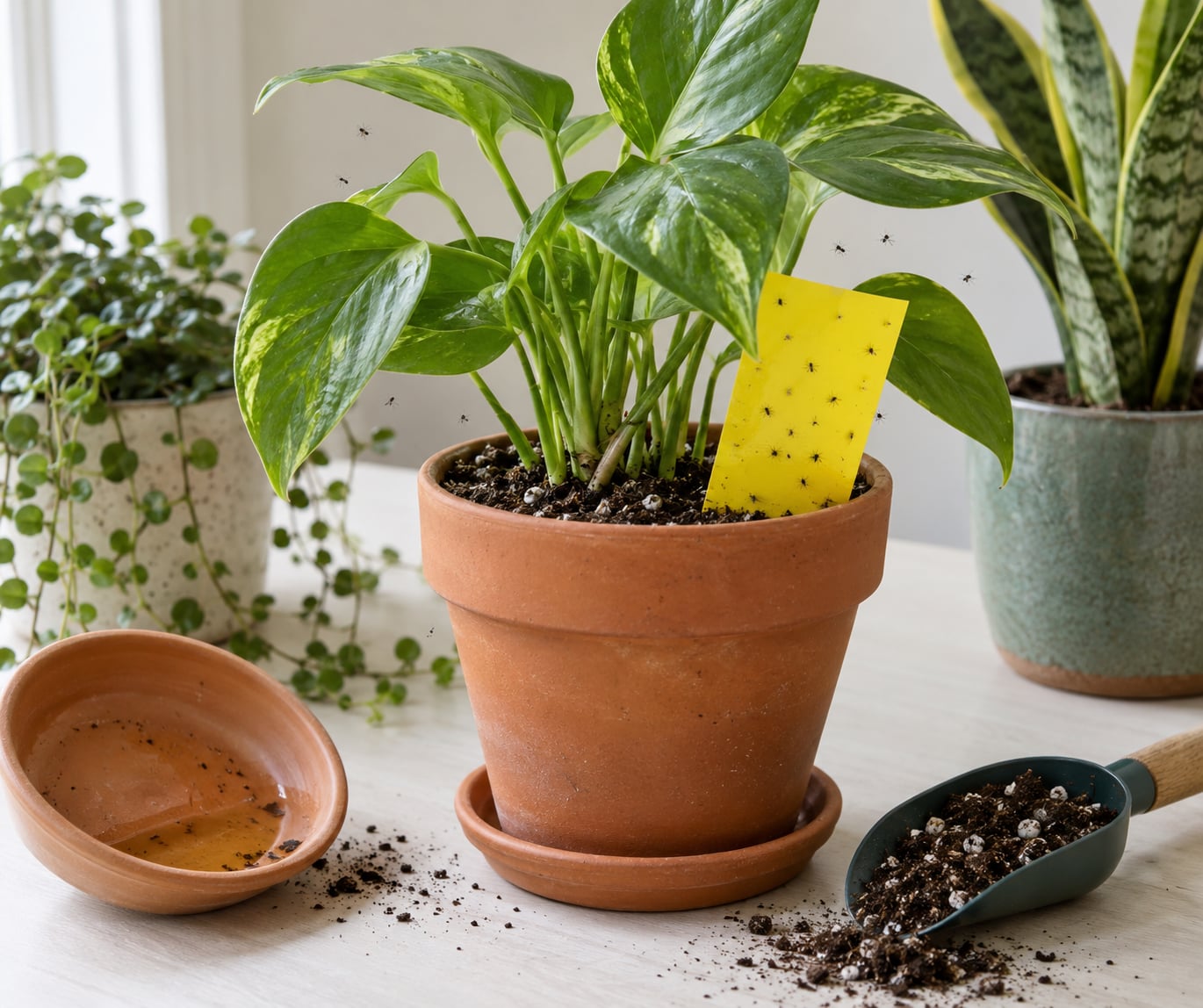
Yellow traps work because fungus gnats are drawn to the colour, and blue works well too. Place them at soil level, resting on the pot rim or stuck into the mix, not up high on a shelf where nothing flies.
Cover the surface of an infested pot with two or three traps if the population is heavy. Replace them as soon as they look more covered than sticky, usually every few days during a bad infestation, because a full trap does not catch anything.
The count matters more than the catch. A trap that had 30 flies on Monday and 8 by the end of the week tells you the soil treatment is working even when the adults still seem present. Most people quit too early here, right before the results show up.
6. Treat larvae with a low-risk soil treatment
Apply a soil treatment so it reaches the larvae, not just the surface. Two DIY-friendly options cover most cases.
Hydrogen peroxide drench. Mix one part 3% hydrogen peroxide with four parts water and pour it through the soil until it drains out the bottom. The contact action kills larvae on contact and it breaks down into water and oxygen, so there’s no residue to worry about. Use it once a week for two or three weeks rather than daily, since repeated drenching can stress roots in a plant that’s already unhappy.
Bti granules as a tea. Steep the granules in warm water for several hours or overnight, then water the soil with the strained liquid, or mix the steeped granules straight into the top inch of mix. Bti works when larvae ingest it, so it beats anything that only dries the surface. Reapply roughly every two weeks, because sunlight and microbial activity break it down.
Beneficial nematodes. If the case has lasted more than a month or you have a lot of plants, nematodes are the option people rate highest. Apply to moist soil in the evening, keep the soil damp for a few days afterward, and follow the label for temperature and application rate.
Whatever you choose, read the label and test a small amount first on a plant you care about. Neem and other leaf sprays target adults and many kinds of soft-bodied pests, but spraying the leaves of a plant with gnats mostly removes the flies you can see while the larvae keep breeding underneath.
7. Monitor for two to three weeks and prevent return
Three weeks is the number to hold in your head, because that’s roughly how long it takes for eggs to become breeding adults. Larvae feed on fungi, decaying organic matter and fine root hairs for about two weeks, then the adults emerge and start laying again.
Check the soil with a flashlight every few days. You want to see fewer adults first, then fewer larvae, then nothing new hatching. If you’re still finding fresh larvae in week four, the soil is staying too wet or the drench is not reaching the root zone, and the answer is a repot rather than another round of the same spray.
Once it clears, keep three habits going. Water based on the plant and the soil, not the calendar. Quarantine any new plant for two to three weeks in a separate spot before it joins the shelf, since nursery soil is a common source. And move plants between rooms or seasonal spots with a quick look at the soil surface first.
Common Mistakes
Most failed treatments aren’t the wrong product. They’re one of these habits, repeated for three weeks straight.
- Watering on a fixed schedule. The calendar doesn’t know the pot, the room, or the season. If the top 2 inches are damp, the larvae have the habitat they want.
- Spraying the leaves only. Leaf sprays kill what’s on the leaf. The infestation lives in the soil, so nothing changes except the number of flies you can see.
- Treating only the top surface. Drenches that stop at the surface miss most of the larvae, which sit just under it and down near the drainage holes. Soak until it runs out the bottom.
- Ignoring saucers and cachepots. Standing water under the pot keeps the lower soil saturated and gives larvae a wet zone no treatment will fix.
- Pouring hydrogen peroxide on undiluted, every day. Concentrated peroxide burns fine roots, and daily dosing turns a fix into new stress. Once a week at 1:4 is plenty.
- Expecting results in three days. Nothing works that fast because the life cycle is three weeks. Quitting at day four is the most common reason gnats seem to come back immediately.
- Skipping quarantine on new plants. A single nursery pot can seed an entire shelf. Two to three weeks apart is cheap insurance.
Frequently Asked Questions
Do fungus gnats bite people?
No. Fungus gnats do not bite people, children, dogs or cats, and they do not spread disease to humans. They are a nuisance rather than a threat. The larvae can feed on fine root hairs, so a heavy infestation can stunt a plant, but your skin and your pets are not at risk from them.
How long does it take to get rid of gnats in houseplants?
Expect three to five weeks for a full clear, not three days. The life cycle runs roughly three weeks from egg to adult, so new adults keep appearing until the larvae in the soil are gone. Adults should thin out within one to two weeks of a successful soil treatment, and trap counts dropping week over week is the best early sign it is working.
Are fungus gnats a sign that my houseplant is dying?
Usually not. Fungus gnats show up because potting mix stays damp, and most plants handle a few of them fine. The real worry is the moisture itself, which can cause root rot. If roots are firm and pale, the plant is usually fine once you dry the soil and treat the mix. Brown, soft, mushy roots are the genuine emergency.
Are yellow sticky traps enough to control fungus gnats?
No. Sticky traps only catch adults that are already flying, and a single female can lay up to a couple hundred eggs in the soil, so trapping alone rarely keeps up with new emergences. Use traps alongside a soil treatment and drier watering, but treat the traps mainly as your gauge, since the weekly count tells you whether the larvae are actually gone.
Why do fungus gnats keep coming back after I water my plant?
Because the watering is recreating the conditions that started it. Consistently damp, organic-rich potting mix is exactly where females lay eggs, so a wet soil following treatment restarts the cycle within days. Fix the habit rather than the symptom: let the top 1 to 2 inches dry, water thoroughly, empty the saucer, or bottom water and dump what is left over.
Can I use hydrogen peroxide or cinnamon to get rid of fungus gnats?
Hydrogen peroxide can, and it is the faster of the two. Dilute 3% peroxide one part to four parts water and pour it through the soil once a week for two or three weeks. Cinnamon is weaker and mostly anecdotal; some people dust the surface as an extra barrier, but on its own it rarely clears an infestation, so do not count on it as the plan.
Conclusion
Three things matter most, in this order: isolate the plant away from the rest of your collection, cut back the watering so the top of the mix actually dries between drinks, and set up sticky traps so you have a weekly number telling you whether the population is dropping.
Then keep the soil treatment going for the full three weeks. Most people see the last of the adults disappear, assume they are done, and go back to their old watering routine, which is exactly how the next batch arrives.