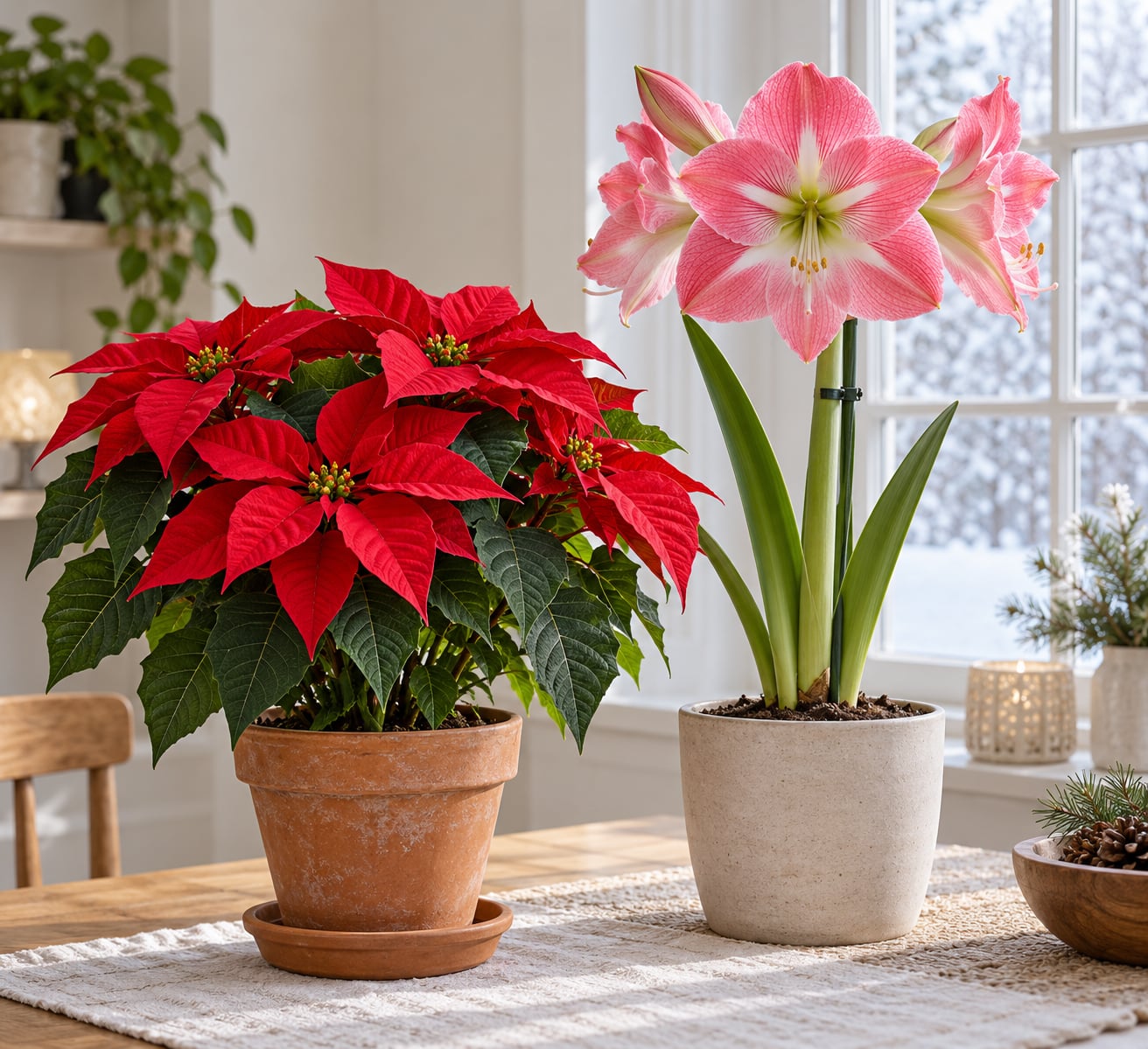
Most holiday plants do not die from neglect in the sense people imagine. They die from three small habits: a pot that cannot drain, a windowsill pressed against cold glass, and water poured on a schedule instead of on the plant’s actual need. Get those three right and both a poinsettia (Euphorbia pulcherrima) and an amaryllis (Hippeastrum) will hold their display well into January.
Holiday plant care for poinsettias and amaryllis is not one routine but two. The poinsettia is a short-day shrub grown for showy bracts, and the amaryllis is a true bulb that sends up trumpet-shaped flowers on a hollow stalk. They share a preference for bright indirect light and dislike wet feet, then they split completely once the flowers fade.
This guide walks through both in one pass: what to check before the guests arrive, how to water and place each plant during the display, and what to do with them in January.
Table of Contents
- What You Need
- Holiday Plant Care for Poinsettias and Amaryllis Step by Step
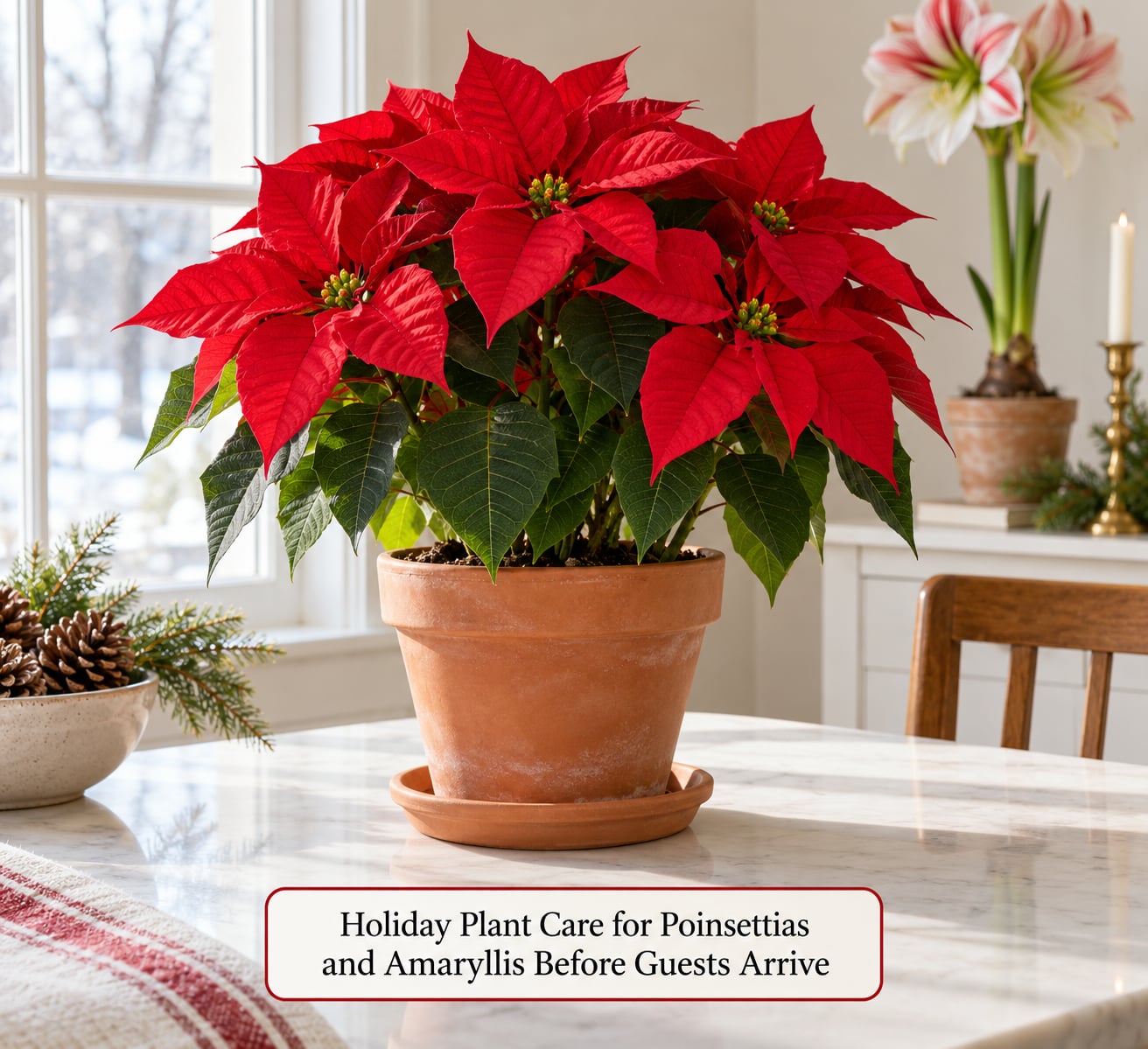
- Holiday Plant Care for Poinsettias and Amaryllis Before Guests Arrive
- Give Poinsettias the Right Light and Water
- Keep Amaryllis Flowering Through the Display
- What to Do with Poinsettias and Amaryllis After the Holidays
- A Month-by-Month Calendar for Both Plants
- Common Mistakes
- Watering Too Much or Too Little
- Using Heat, Cold, or Direct Sun
- Troubleshooting by Symptom
- Keeping the Plants Safe Around Pets and Children
- Frequently Asked Questions
- How often should I water poinsettias and amaryllis during the holidays?
- Why are my poinsettia or amaryllis leaves turning yellow?
- How long do poinsettias and amaryllis usually bloom indoors?
- Can I put poinsettias and amaryllis outside after the holidays?
- Will a poinsettia or amaryllis flower again after the holiday season?
- Conclusion
What You Need
You need very little. Most plants bought or gifted in good condition will thrive with what you already own.
- A container of room-temperature water, plus a watering can with a gentle rose.
- A saucer or cachepot that catches drainage, ideally one with a raised inner pot so water sits away from the base.
- Plant food labeled for indoor flowering plants, used at half the label strength.
- Clean, sharp scissors or snips for deadheading and grooming.
- A soft brush or damp cloth to wipe dust off leaves.
- A chopstick, bamboo stake, or plant label to support tall amaryllis stalks.
Two things matter more than the whole list. The first is drainage: if a foil sleeve has no hole in the bottom, make one before the plant goes on display. The second is room-temperature water, because cold water on warm roots shocks a tropical plant.
Holiday Plant Care for Poinsettias and Amaryllis Step by Step
The sequence has three parts: assess both plants before they go on display, give each one the light and water it wants while they are out, then adjust the routine once the decorations come down. Skipping the assessment is what causes most early losses.
Throughout, water by soil condition rather than by date, keep both plants away from heating vents and cold glass, and empty any standing water from saucers after every watering.
Holiday Plant Care for Poinsettias and Amaryllis Before Guests Arrive
Check each plant the day before display and fix what you find. This takes five minutes per pot and removes most holiday plant casualties before they start.
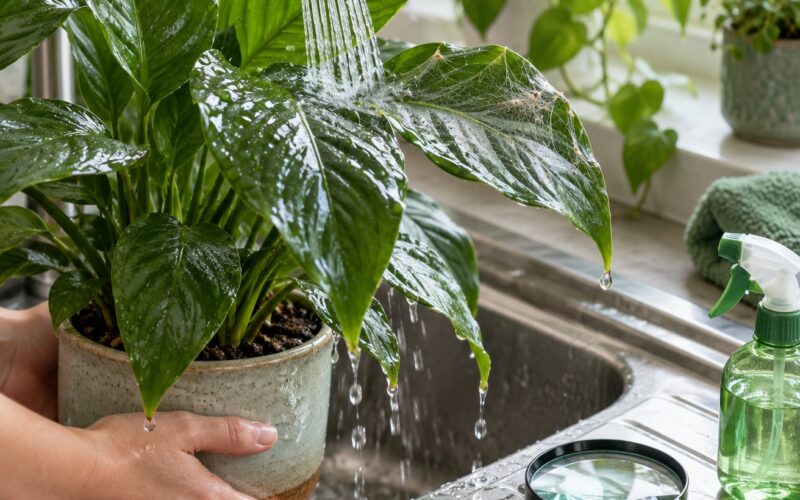
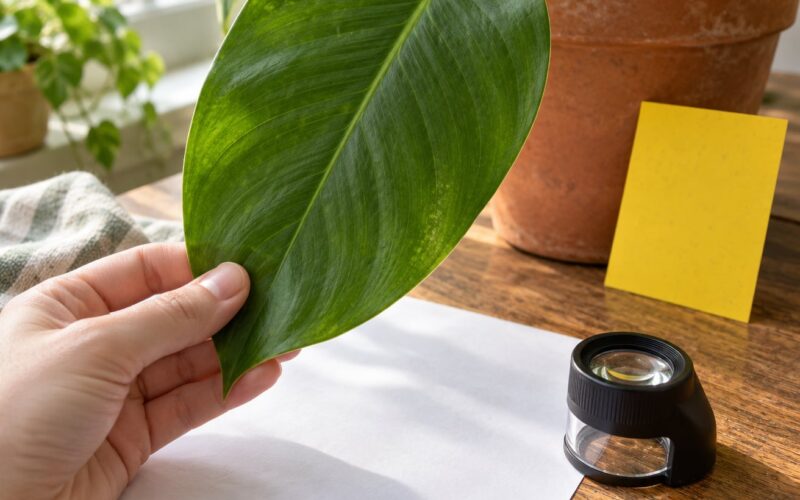
- Look under the leaves for whiteflies, mealybugs, or webbing, especially along the leaf undersides where poinsettias hide them.
- Feel the top inch of soil. Water only if it is dry to the touch and the pot feels light.
- Pull off yellowed leaves, snapped stems, spent flowers, and anything sitting on the soil surface.
- Confirm the pot drains. Poke a hole through the bottom of a foil sleeve and set it in a tray so runoff has somewhere to go.
- Check that the roots are not circling a dry root ball the whole way through.
A plant that is ready for the table has moist but not waterlogged soil, firm stems that do not wobble when you nudge the pot, and clean, evenly colored foliage with no sticky residue on the leaves. Amaryllis should show a firm, upright stalk with swelling buds; a loose, floppy stalk is a sign it needs a stake before it is displayed rather than after.
Set poinsettias back from the window glass by a foot or more, so they get bright light without the chill. Amaryllis handles a slightly brighter spot and a warmer room, so the two do not need the same corner.
Give Poinsettias the Right Light and Water
Poinsettias need bright indirect light, at least six hours a day, and daytime temperatures around 65 to 70F with nights near 60 to 65F. Water when the top inch of soil is dry, then let the pot drain fully before you put it back in its saucer.
Thorough watering and standing the pot in water are opposites. One means water runs all the way through the root ball and out the bottom; the other means the roots sit in it, which is how root rot starts. After watering, tip out anything that collected in the cachepot and check again in a few minutes, because a pot can quietly hold a surprising amount.
Keep them off the sill itself. Cold glass and the dry air that pours down a window are a fast route to leaf drop, and a plant that chills before you water it may drop leaves while the soil is still damp. Leave a gap between the foliage and the glass, turn the pot a quarter turn each week so one side does not lean toward the light, and keep it clear of radiators, fireplaces, and heating vents.
Feed lightly once the holiday bloom is established, at half strength every three to four weeks. Skip feeding a plant that is wilting or sitting in wet soil; feeding a stressed root system adds to the problem.
Keep Amaryllis Flowering Through the Display
Amaryllis bulbs flower four to six weeks after planting and each trumpet-shaped bloom lasts only three to four days, so the display runs on the number of buds rather than on any single flower. Place the pot in the brightest warm spot you have, water thoroughly when the upper soil begins to dry, and expect the plant to want slightly more water than a poinsettia once that stalk is up.
Support the stalk before it bends. Push a chopstick into the compost beside the stem and tie loosely with soft material, leaving room for the stalk to thicken. A stalk that leans is not broken, but a snapped one ends the show early, and tall double-flowered types can weigh enough to tip the whole pot.
Deadhead by cutting each spent flower where it joins the stalk, leaving the stalk itself in place until every bud has opened and the whole thing finishes. Once the display is over, cut the stalk off an inch above where it emerged from the bulb, and keep every green leaf.
Signs that watering is right are steady bud opening, firm leaves that stand up on their own, and soil that dries out between waterings without ever staying saturated. If the leaves droop a little within an hour of watering and stay that way for days, you are watering too much.
What to Do with Poinsettias and Amaryllis After the Holidays
The two plants need completely different follow-up. A poinsettia is worth keeping for years, while an amaryllis bulb rests and starts over on its own schedule.
For poinsettias, move the plant to the brightest indoor spot you have and keep watering moderately, letting the top inch dry between rounds. Trim leggy growth and pinch back to shape. Around mid-May, once all frost has passed, move it outdoors to a spot with morning sun and afternoon shade, where it can grow through summer. In early October, start giving it 14 hours of uninterrupted darkness each night to set buds for the following holiday season.
For amaryllis, cut the spent stalk, keep the leaves, and feed monthly until the foliage begins to yellow on its own. Then stop watering and let the plant rest for six to eight weeks in a cool, dim place. After that, repot into fresh potting mix one size up and restart watering, and you will get another flowering cycle, often within a few months.
A Month-by-Month Calendar for Both Plants
Here is the short version, so you are not doing anything out of order.
- October: start 14 hours of darkness nightly for poinsettias; plant or pot up amaryllis bulbs for indoor flowering.
- November: bring poinsettias into the warm, well-lit room as buds color; move amaryllis to the brightest window once shoots appear.
- December: check soil every few days, stake amaryllis stalks, water poinsettias when the top inch dries.
- January: expect poinsettia bracts to begin fading after six to eight weeks; cut back and keep the plant for next year.
- February to April: bring poinsettias back indoors if they stayed in; repot amaryllis after its dormancy and start feeding again.
Common Mistakes
Almost every problem with a holiday plant traces back to water, temperature, or a pot that holds water. Here is what to look for and what to change.
- Water on a fixed schedule. Check the soil instead. Twice a week is right for some rooms and far too much for others.
- Foil sleeves with no drainage hole. Punch one out and set the pot in a tray.
- Standing in a full saucer. Empty it ten minutes after every watering.
- Placement against cold glass or above a radiator. Both extremes cause leaf drop in poinsettias.
- Cutting healthy amaryllis foliage after flowering. The leaves are refuelling the bulb. Let them yellow naturally.
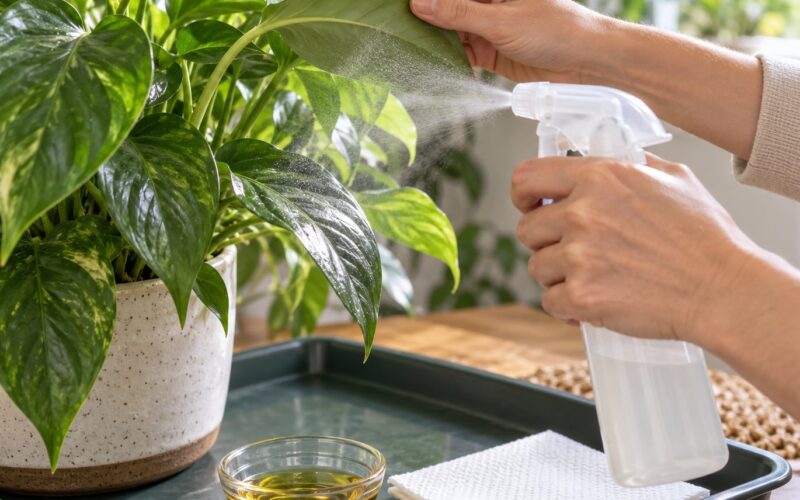
- Misting. Wet leaves held in cool, still indoor air encourage foliar disease. Skip it.
- Glittered, waxed, or spray-painted bulbs. That coating blocks the pores the bulb needs, and the plant rarely survives its second cycle.
Watering Too Much or Too Little
Overwatering looks like yellowing leaves, limp stems, soil that smells sour, and compost that stays wet days after you watered. Skip the next few waterings, empty the saucer, and if the soil is staying soggy slide the plant out of the wet pot and check the roots for softness and a brown, mushy coating.
Underwatering looks like shriveling leaves, a pot that feels unusually light, and soil that goes from damp to bone dry within days. Water thoroughly, run it through twice with a few minutes between pours so the whole root ball wets evenly, and drain fully.
Both cases have the same fix: stop watering by date. Push a finger an inch into the soil, look at the pot, and decide from what you find.
Using Heat, Cold, or Direct Sun
Safe placement is bright indirect light, a few feet back from the window, out of any draft, and well away from heating vents and fireplaces. Intense midday sun through glass can scorch leaves and bleach bracts, and a pot sitting on a sill in winter gets colder than the room it stands in.
Temperature also controls how long the display lasts. A cooler room in the 60 to 65F range stretches flowering; a warm room in the 75 to 80F range shortens it noticeably, and the amaryllis fades first.
If you are bringing a plant in from a cold porch or garage, leave it in its pot for several hours before moving it into a heated room, so the roots warm up gradually instead of hitting warm air while still chilled.
Troubleshooting by Symptom
- Poinsettia leaf drop: cold glass, a heat vent, or a wet root ball. Move the pot back from the window, check drainage, and let the top inch dry before the next drink.
- Poinsettia bracts fading or dropping early: a room that is too warm or too dry. Move the plant away from the vent and away from the glass.
- Yellow leaf edges or brown rims: often hard tap water. Try filtered or left-to-stand water and keep foliage dry.
- Moldy soil surface: poor airflow and constant damp. Remove the top layer, increase air movement, and water less often.
- Amaryllis leaves yellowing after bloom: usually normal. The plant is spending its stored energy. Stop watering when the foliage dies back and begin the rest period.
- Amaryllis with leaves but no flowers: the bulb was cut back too early, spent too long in dormancy, or never got enough light. Leave every leaf in place, give it the brightest spot, and feed monthly through the growth.
- Amaryllis stalk flopping: stake it. Add a bamboo support before the buds open.
- Amaryllis bulb rotting with no roots: it was potted into gravel or wax and never rooted. Plant untreated bulbs in real potting mix next season.
Keeping the Plants Safe Around Pets and Children
Both plants can irritate a mouth or stomach if chewed. Amaryllis bulbs are the more toxic part, and the symptoms people report are usually drooling, vomiting, and mild upset rather than anything severe, but the bulb is large enough to be a choking hazard for a dog. Put the amaryllis pot somewhere out of reach and keep poinsettias off low tables during the busy weeks. If a pet chews on either one, call your vet rather than waiting to see what happens next.
Frequently Asked Questions
How often should I water poinsettias and amaryllis during the holidays?
Forget the calendar and check the soil. Push a finger about an inch down; water when it feels dry and the pot feels light. For holiday plant care for poinsettias and amaryllis, expect a poinsettia to need attention every five to seven days indoors and an amaryllis slightly more often once a flower stalk is up. Water less in a cool room and more in a warm one, and drain fully every time.
Why are my poinsettia or amaryllis leaves turning yellow?
In a poinsettia, yellowing usually means too much water, a cold spot, or dry air from a heating vent. Check for soggy soil and sour smell, and move the pot back from cold glass. In an amaryllis, yellow leaves after flowering are normal: the plant is drawing on the bulb for energy. Stop watering only when the foliage has died back, then begin a dry rest.
How long do poinsettias and amaryllis usually bloom indoors?
Poinsettia bracts last six to eight weeks in good conditions, and they fade faster in a warm, dry room. An amaryllis typically flowers four to six weeks after planting, with three or four blooms opening in sequence on each stalk; each individual bloom only lasts three to four days. That staggered opening is why the pot looks good far longer than a single flower would.
Can I put poinsettias and amaryllis outside after the holidays?
Yes, once all frost has passed and nights are reliably above 50F, which in most of the country means mid-May. Give a poinsettia morning sun and afternoon shade, and water it like any patio container plant through summer. An amaryllis also grows well outside, but bring it back indoors before the first cold nights, since bulbs are damaged by chilling.
Will a poinsettia or amaryllis flower again after the holiday season?
Both can, with different effort. A poinsettia needs a bright indoor spot, moderate water, a summer outdoors, then 14 hours of uninterrupted darkness each night starting in early October to set buds for the following winter. An amaryllis needs six to eight weeks of cool, dry dormancy after its leaves yellow, then a repot into fresh mix and a return to bright light and regular feeding.
Conclusion
Start by checking the soil on both plants before anything goes on the table, then put them in bright indirect light away from cold glass and heating vents. Water according to need, drain the saucers, and let the amaryllis leaves stay on after the flowers fade. When the decorations come down, move the poinsettia toward a summer outdoors and give the amaryllis its six to eight week rest. That is the whole routine, and it is enough.