To raise humidity for houseplants without a humidifier, group your plants close together, stand pots above a pebble tray, build a ventilated humid zone around the fussiest ones, and move plants away from dry heat sources. None of these methods change the whole room, but each one builds a pocket of damp air right around the leaves, which is what most tropical plants actually feel.
The catch is that some popular tricks barely register on a hygrometer. Misting, for example, leaves the air measurably drier within minutes, and a bowl of water sitting on a shelf does almost nothing at all. Here is what works, what does not, and how to tell the difference in your own home.
Table of Contents
- What You Need
- Step-by-Step: How to Raise Humidity for Houseplants Without a Humidifier
- Step 1: Measure the Room Before Changing It
- Step 2: Group Plants Together
- Step 3: Set Up a Pebble Tray
- Step 4: Create a Temporary High-Humidity Zone
- Step 5: Adjust Watering, Room Placement, and Airflow
- Step 6: Monitor for Improvement
- Common Mistakes
- Frequently Asked Questions
- Does misting really raise humidity for houseplants?
- Are pebble trays an effective way to increase room humidity?
- Which houseplants benefit most from higher humidity?
- Can I use a plastic bag to humidify a houseplant?
- How much humidity do tropical houseplants need?
- When should I use a humidifier instead of DIY methods?
- Conclusion
What You Need
Almost every method here runs on household items. Before you gather anything, look at what you are growing, because succulents, cacti and most cacti-adjacent plants want drier air, not more of it.
- A hygrometer or digital humidity meter. A cheap two-pack tells you whether a change actually worked, and placement matters as much as accuracy.
- A shallow tray, cachepot or saucer wider than the pot base.
- Pebbles, gravel or LECA clay pebbles to hold the tray water off the base of the pot.
- A spray bottle with room-temperature water, plus filtered or distilled water if your tap water leaves white mineral spots.
- A clear plastic bag, glass cloche or small cabinet to build a temporary high-humidity zone for one plant or a group of small ones.
That is the whole kit. Most of these items cost a few dollars, and the ones you already have — a jar lid, a clear storage tote, a bag with a few air holes punched in it — do the same job.
Step-by-Step: How to Raise Humidity for Houseplants Without a Humidifier
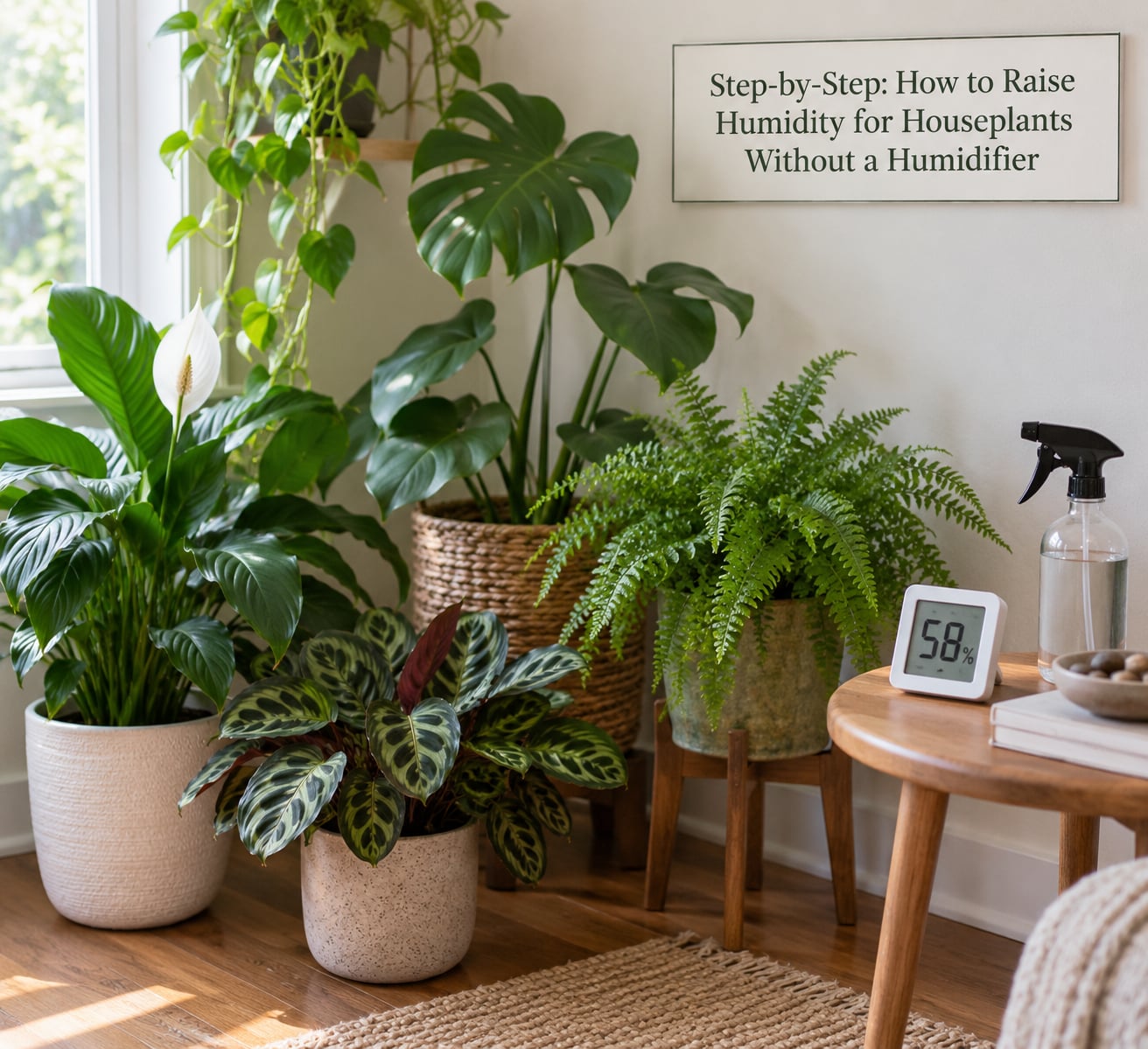
Six steps, in order, so each change is measurable. Do them one at a time and you can see which one your room responds to.
Step 1: Measure the Room Before Changing It
Start with a baseline reading. Set the hygrometer at plant height, roughly where the leaves sit, on a shelf away from walls, radiators, windows and direct sun. A meter parked on a windowsill or right above a heating vent will report conditions no plant in that spot is actually experiencing.
Leave it there for a day or two and read it at the same times each day, morning and evening. Indoor relative humidity often swings by 10 to 15 points between those two readings, so a single snapshot tells you very little.
As a rough guide rather than a rule, tropical foliage plants generally do best somewhere between 50 and 70 percent relative humidity, and most common houseplants manage fine from about 40 to 60 percent. Heated indoor air in winter often sits below 30 percent, which is low enough to show up as brown leaf tips. The ASHRAE home comfort guidance commonly used in the United States runs 30 to 60 percent, which tells you how dry heated rooms tend to be at the top of that range.
Step 2: Group Plants Together
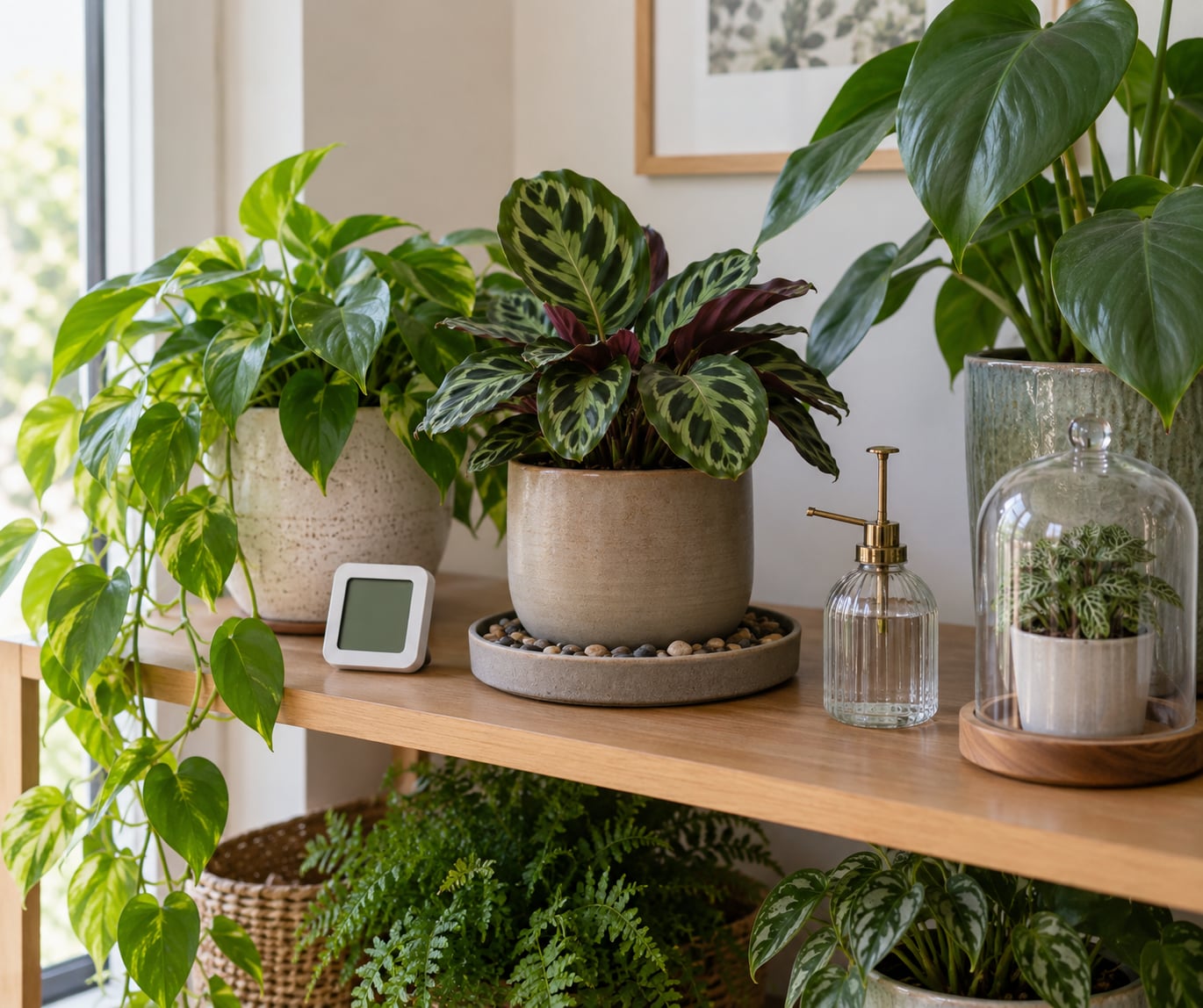
Grouping is the cheapest method and the one most people already do by accident. Leaves release water vapor through tiny pores, a process called transpiration. Group several plants closely and their combined output raises the humidity in the gap between them, forming a small microclimate.
The gain is localized. A tight cluster of leafy plants in a corner can hold noticeably more moisture than the open room around it, but it will not change the reading at the far side of a living room. Experienced plant keepers describe it the same way: free and helpful, just not dramatic.
The risk is mismatched care. Group plants with similar light needs, similar temperature tolerance and the same watering rhythm. A fern sitting under a succulent in the same pot-level zone is a good way to end up with root rot on one side or drought stress on the other.
Step 3: Set Up a Pebble Tray
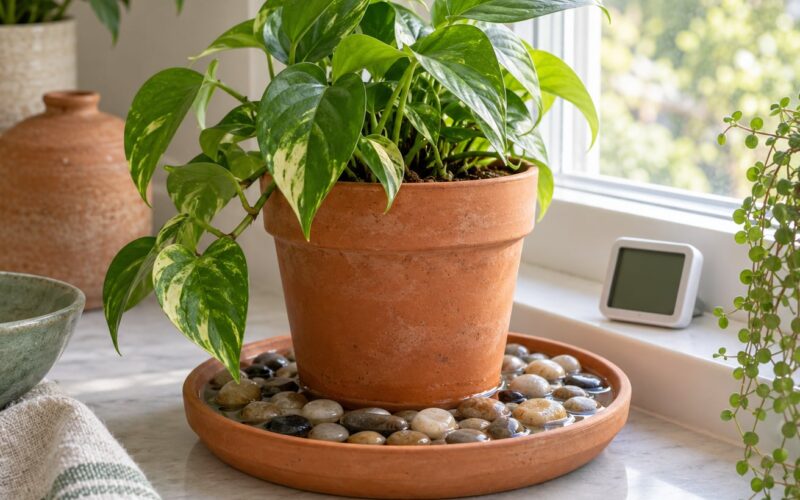
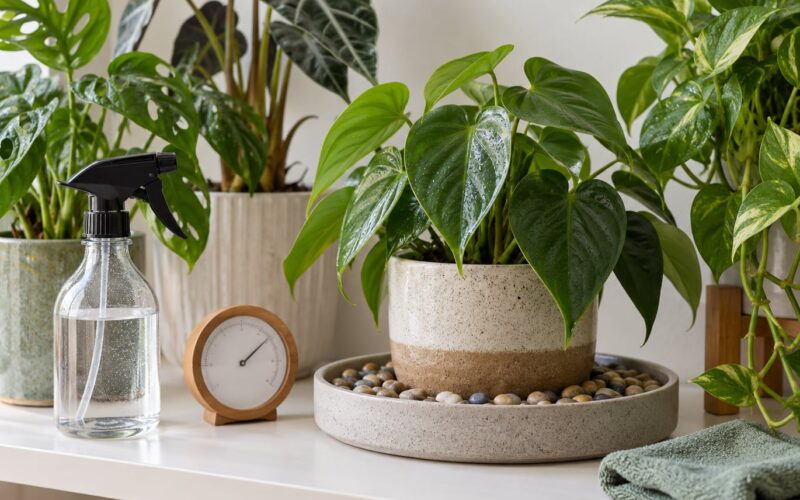
Fill the shallow tray with pebbles and add water until it sits just below the top of the stones. Stand the pot on top so the base stays above the water. The slow evaporation from the pebble surface raises humidity immediately around the lower leaves and the soil surface.
Set expectations honestly here. University extension services and experienced growers describe pebble trays as a very small, very local effect — a slow, weak humidifier under a single pot. They are worth doing because they cost nothing and cannot over-humidify a room. They are not going to rescue a collection of calathea in a dry, heated flat.
Two practical points. Refresh the water every few days so it does not go stagnant or grow algae, and use filtered water if hard tap water leaves white crust on the stones. If the tray stays empty because evaporation outruns your topping-up, drop it — a dry tray of pebbles is just decoration.
Step 4: Create a Temporary High-Humidity Zone
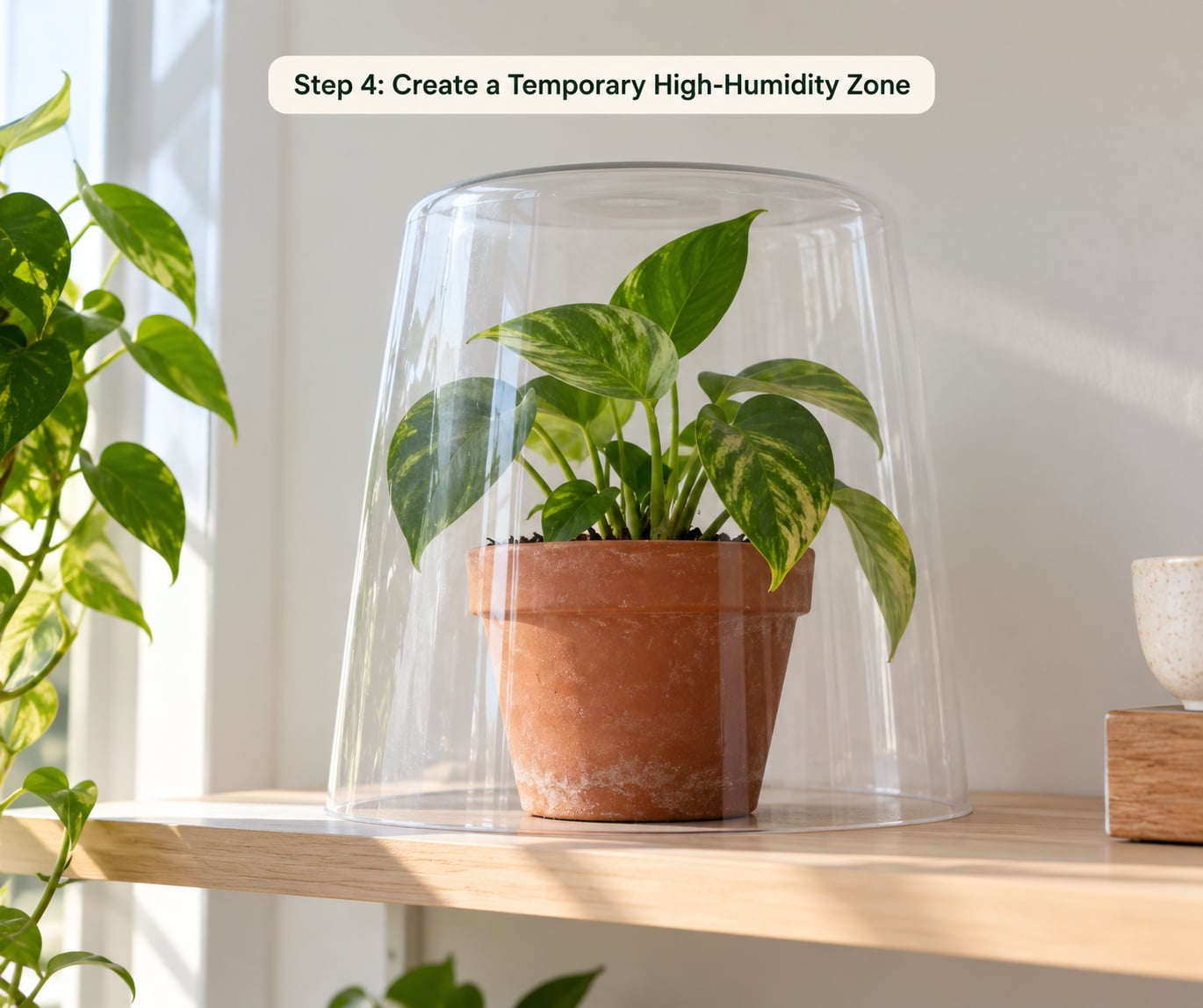
Enclosing a plant traps the moisture it is already producing and raises humidity quickly. It works well for small tropical plants, ferns, orchids, seedlings and cuttings. This is how to raise humidity for houseplants without a humidifier when you only have a handful of humidity-sensitive plants and no interest in equipment.
Three ways to build one:
- A clear plastic bag over the pot, propped so it does not touch the leaves, with a few small holes punched near the top for ventilation.
- A glass cloche or dome for a single small pot. Lift it daily for an hour or two so air moves through.
- A closed cabinet or glass-front storage unit for a whole shelf of small plants. This is the option that scales best, and a cheap glass-front cabinet works better than people expect.
Never seal a plant airtight and forget it. Permanent condensation invites fungal spots, powdery mildew and root rot, and a closed cover in direct sun can heat past what the plant tolerates in minutes. Ventilation is what makes this a controlled zone rather than a greenhouse.
Step 5: Adjust Watering, Room Placement, and Airflow
Watering moistens the root zone and the soil surface, but it does not usefully humidify the air in a room. Watering a plant twice as often to push humidity up mostly produces root rot instead. Keep plants evenly and appropriately hydrated instead, and skip the extra cycles.
Placement does more than any of the tricks above. Keep plants away from heating vents and radiators, air conditioning outlets, fireplaces, single-glazed windows that frost in winter, and doors that let cold draughts in. Air that has just come off a radiator can be dry enough to crisp a leaf in a week.
Airflow still matters. If you have raised humidity around your plants, keep air moving gently across that spot — a small fan on low, or simply avoid a dead-still enclosed shelf. Stagnant damp air is what leads to fungal leaf spots and edema.
Step 6: Monitor for Improvement
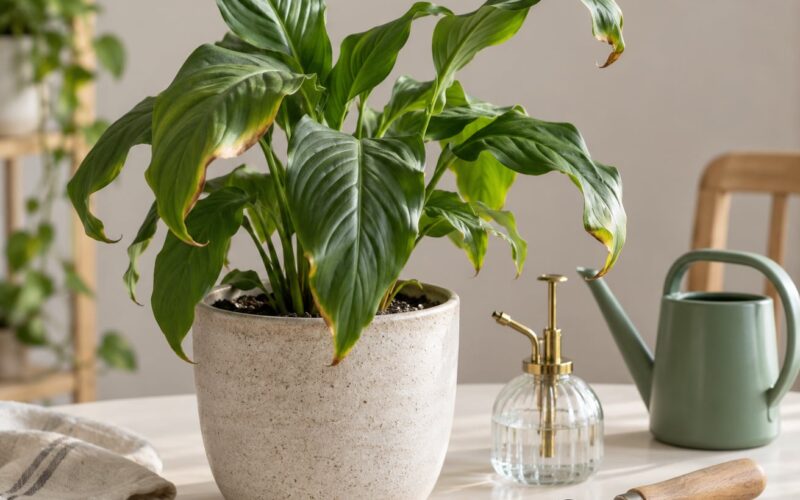
Check the hygrometer again a few days after each change and compare it with your baseline. Look at the plants too: crisping leaf edges, brown tips, curled new leaves and slow leaf unfurling are the early signals that dry air was the problem. New growth is the real confirmation, since it comes back clean only if conditions improved.
Change one thing at a time. Combine three methods at once and you cannot tell which one helped, which makes the whole exercise guesswork. Keep a note of the date and the reading each time you adjust something.
If readings barely move after a week of grouping, a tray and better placement, the room is simply dry. That is the signal to stop chasing it with DIY methods — move the most humidity-sensitive plants into a cabinet or grouped zone instead of trying to change the air in the whole room.
Common Mistakes
Misting leaves constantly. Misting feels productive and does very little. The water is gone from the air in minutes, and wet leaves sitting in still, damp conditions raise the chance of fungal spots. Penn State Extension notes that misting has little measurable effect. If you mist at all, do it early in the day, use room-temperature water, and skip fuzzy or velvety leaves such as African violets and most ferns.
Filling the pebble tray too high. Water touching the pot base wicks straight into the soil and can rot the roots. Pebbles only need to be damp, not swimming.
Grouping plants with incompatible needs. A humid-loving calathea beside a succulent in a shared corner gives you one unhappy plant and one rotting one. Group by care needs, not just by species popularity.
Leaving a cover sealed. A bag or dome with no ventilation turns into a mold incubator. Air gaps and daily lifting keep the zone healthy.
Measuring in the wrong spot. Near a window, a vent or a door, the reading describes that spot rather than your plants. Move the meter back into the growing area before you trust the number.
Misting in direct sun. Droplets act like tiny lenses and scorch leaves. Misting, if you do it, belongs in a shaded morning hour.
For a mixed collection, sort plants into humidity tiers instead of treating the room as one group. Tropical foliage, ferns, calatheas, marantas, alocasias and most orchids go into the humid zone together. Mid-tier plants like pothos, philodendron, hoya and peperomia do fine in the open room. Succulents, cacti and other jungle-cactus types get their own dry shelf, away from the grouping entirely.
Frequently Asked Questions
Does misting really raise humidity for houseplants?
Not for longer than a few minutes. The fine droplets settle onto leaves and soil or evaporate too quickly to move a hygrometer needle much, which leaves you feeling like you did something useful. University extension services and experienced growers both rate misting as one of the least effective options. Grouping plants, a pebble tray or an enclosed cabinet actually holds humidity rather than just wetting surfaces.
Are pebble trays an effective way to increase room humidity?
They raise humidity in a small pocket of air around one pot, not in the room. The water evaporates slowly from the stones and humidifies the leaves and soil surface nearest the tray, which is genuinely useful for a single sensitive plant. But the effect is local and modest, so a tray will not change what a meter reads across the room, and it will not fix a dry winter flat on its own.
Which houseplants benefit most from higher humidity?
Calathea, maranta, most ferns, alocasia, anthurium and the humidity-loving aroids notice dry air first, showing brown tips, crisp edges and slow new growth. Orchids and many epiphytic plants also do better in a humid pocket. Pothos, snake plant, philodendrons, hoya and peperomia tolerate average home humidity. Succulents and cacti want drier air and should be kept out of any humid zone.
Can I use a plastic bag to humidify a houseplant?
Yes, as a temporary cover rather than a permanent seal. Prop the bag so it never touches the leaves, punch a few small holes near the top for airflow, and lift or remove it daily. Bag humidity works well for cuttings, seedlings and one small tropical pot, and it costs nothing. Sealing a plant in an airtight bag invites mold and rot and can overheat in direct sun.
How much humidity do tropical houseplants need?
Most tropical foliage plants do best around 50 to 70 percent relative humidity, and the humidity-loving ones such as calathea and ferns may want more. Very few need more than that. The broader home comfort range most people aim for is 30 to 60 percent, which is why heated indoor rooms cause problems: they often sit at the bottom of it. Measure at leaf height for a week before changing anything.
When should I use a humidifier instead of DIY methods?
Use one when a hygrometer shows the room sitting low for weeks and grouping, trays, placement changes and a cabinet have not moved it. A cool-mist or ultrasonic humidifier is the only real option for raising humidity across a whole room, and it also needs cleaning to prevent mineral buildup. This is how to raise humidity for houseplants without a humidifier, and it works best when you measure first and adjust one thing at a time.
Conclusion
Measure the room first, at leaf height and away from windows and vents. Then group your humidity-sensitive plants together, add a pebble tray beneath them and move the collection away from dry heat. If those plants need more, build a small ventilated humid zone with a bag, cloche or cabinet and check it daily.
Keep watering normal, keep air moving and change one thing at a time so you know what worked. If a week of measuring shows the whole room sitting low no matter what you do locally, that is the honest signal to buy a humidifier rather than keep chasing a tray of pebbles.