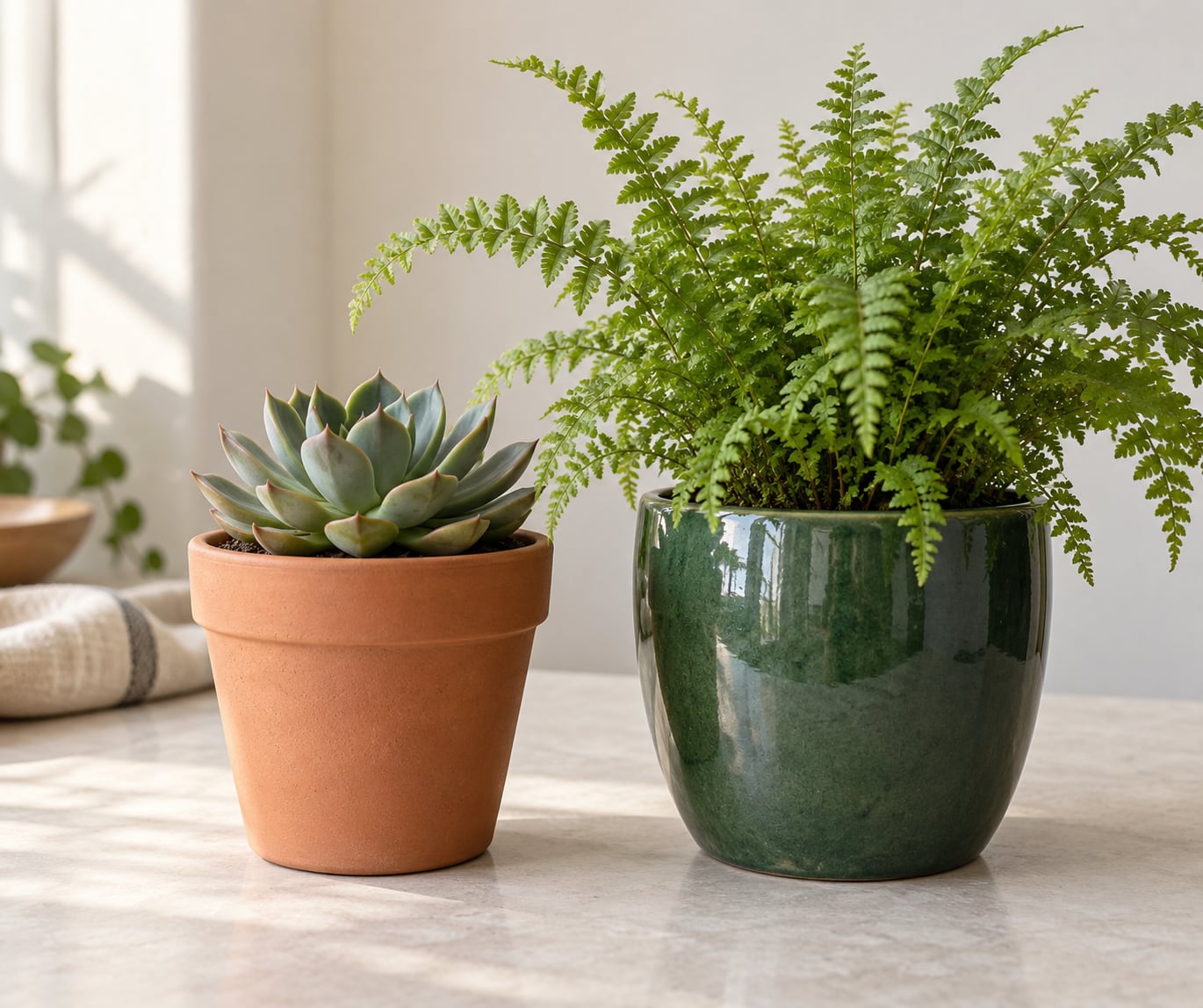
Terracotta is the better pot when you grow succulents, cacti, Mediterranean herbs or anything that wants dry soil and plenty of air around its roots. Glazed ceramic is better for ferns, calathea, peace lilies and tropical houseplants that need steady moisture. So when weighing terracotta vs ceramic pots, match the material to your watering habit and make sure the pot has drainage holes.
There is no universal winner here. Material decides two things: how fast the soil dries out and how much air reaches the roots. Get those two right and almost any decent pot works.
Last updated for October 2026, with the plant lists and cleaning methods below checked against current grower practice.
Table of Contents
- Terracotta vs Ceramic Pots at a Glance
- How Terracotta Pots Affect Plant Growth
- How to prepare a new terracotta pot before planting
- Why terracotta pots go white and how to clean them
- How Ceramic Pots Affect Plant Growth
- How terracotta vs ceramic pots affect drainage and watering
- How to tell if a plant is overwatered or underwatered
- Bottom watering, the fix for fast-drying terracotta
- Which Material Is Better for Different Plants?
- Plants that want terracotta
- Plants that want ceramic
- Weight, Durability, Appearance and Design
- Which Should You Choose?
- Terracotta vs ceramic pots: which is better for plants?
- Frequently Asked Questions
- Are terracotta pots better for plants than ceramic pots?
- Do terracotta and ceramic pots need drainage holes?
- Is terracotta safer for plants in hot weather?
- Can ceramic pots be used outdoors without cracking?
- How often should I water plants in terracotta versus ceramic pots?
- Conclusion
Terracotta vs Ceramic Pots at a Glance
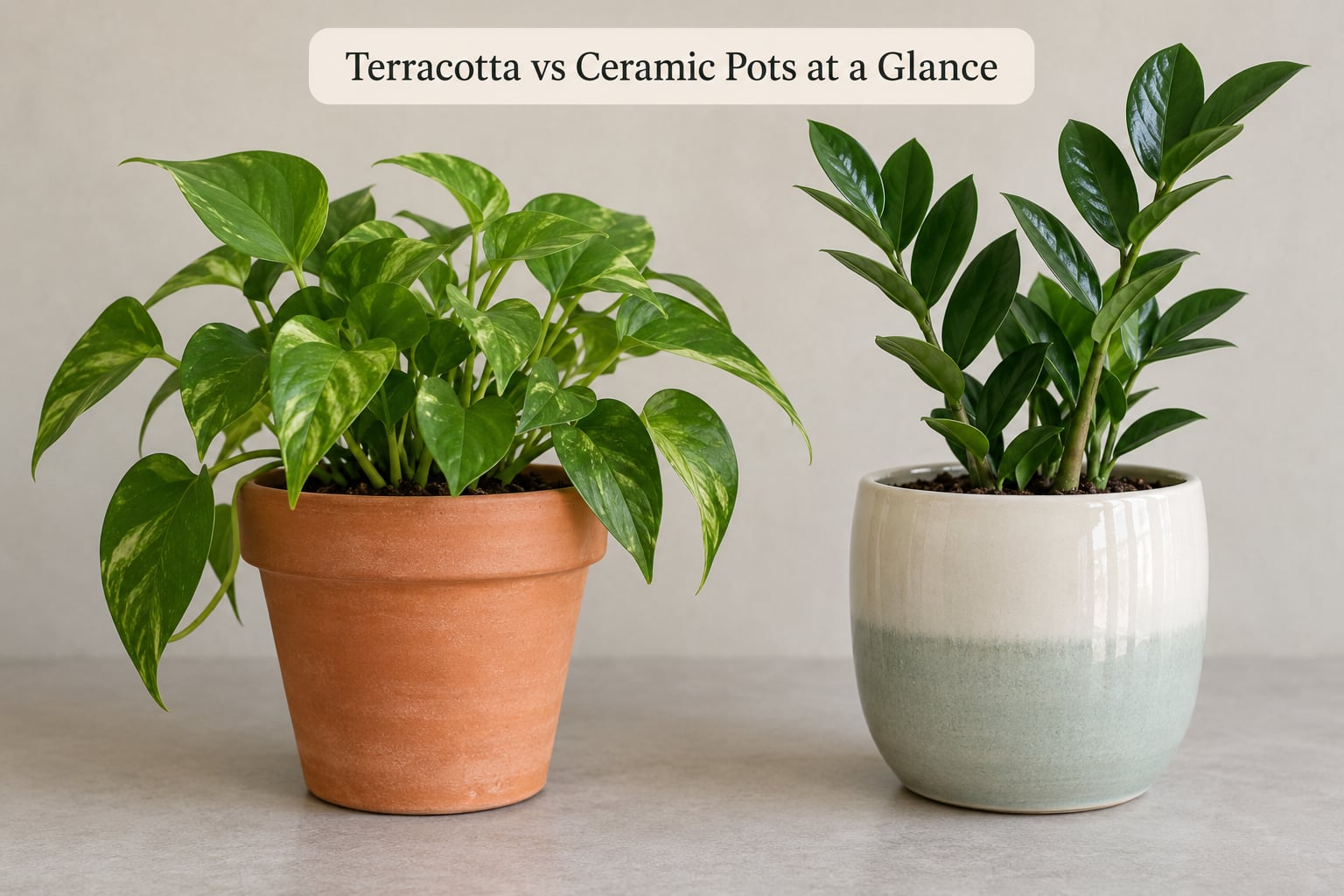
| Factor | Terracotta | Glazed ceramic |
|---|---|---|
| What it is | Unglazed clay fired at high temperature | Clay fired, then glazed or vitrified |
| Porosity | High. Air and water pass through the walls | Very low once glazed. Unglazed ceramic is only a little less porous than terracotta |
| Airflow to roots | High | Low |
| How fast soil dries | Fast. Often every 2 to 4 days indoors in a warm room | Slow. Often 7 to 10 days for the same pot and plant |
| Moisture retention | Low. Water leaves through the sides as well as the top | High. Water mostly leaves through the top |
| Weight | Thick and heavy from the clay alone | Ranges from light and thin-walled to heavier than terracotta |
| Breakage and frost | Chips and cracks if dropped or frozen while saturated | Shatters if dropped. Glazed pots handle frost better than unglazed ones |
| Upkeep | White mineral builds up and needs scrubbing | Wipes clean. Glaze hides staining |
| Best plants | Succulents, cacti, rosemary, thyme, sage, lavender, snake plant | Ferns, calathea, peace lily, tropical foliage, flowering houseplants |
| Look | Earthy orange-brown that deepens into a patina | Any colour, gloss or matte, sculptural or plain |
The single biggest difference in that table is porosity. Terracotta is baked earth with no glassy coating, so the walls stay open. Glazed ceramic is coated in a fired glass layer that closes those pores off, which is why it holds water so much longer.
How Terracotta Pots Affect Plant Growth
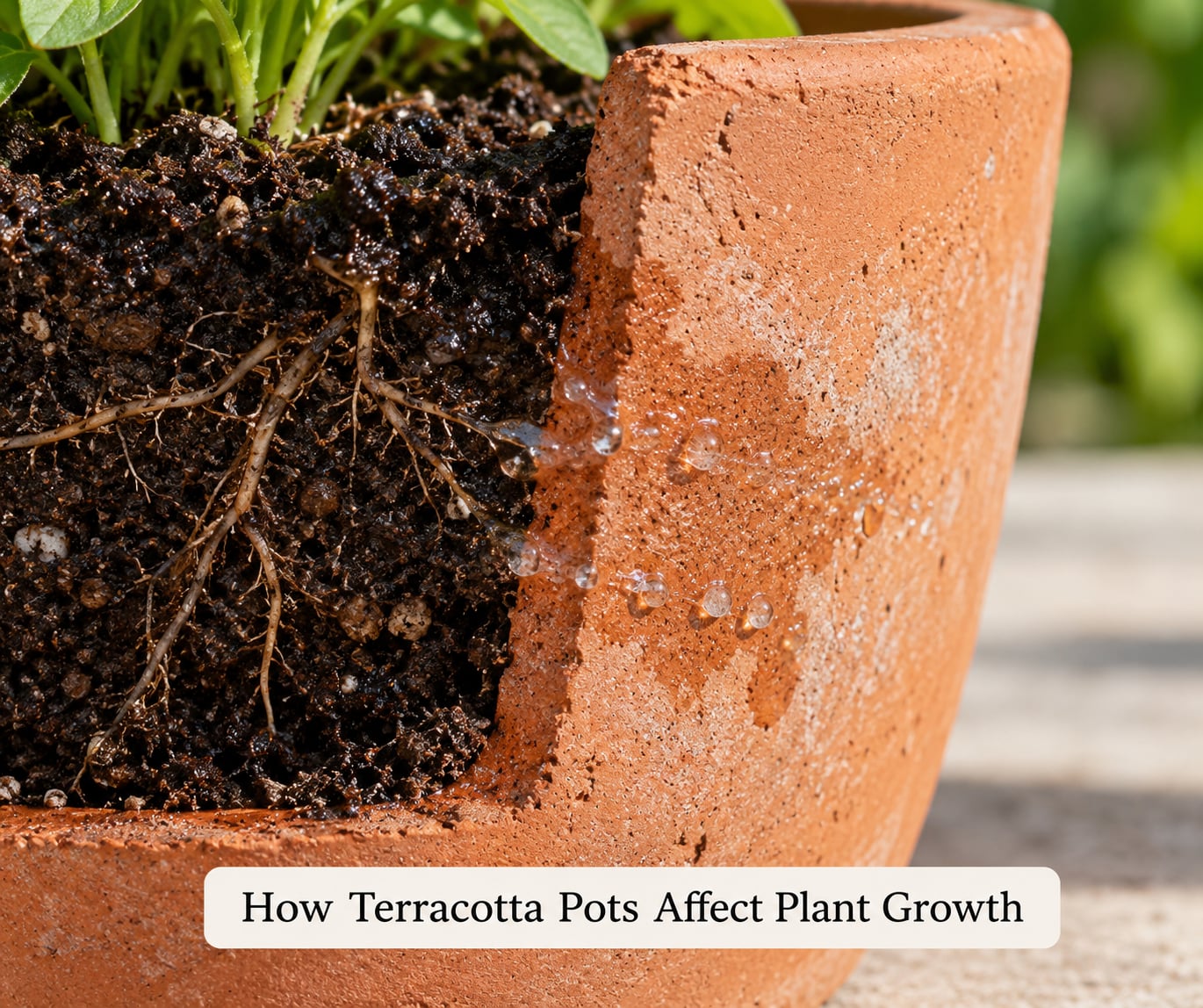
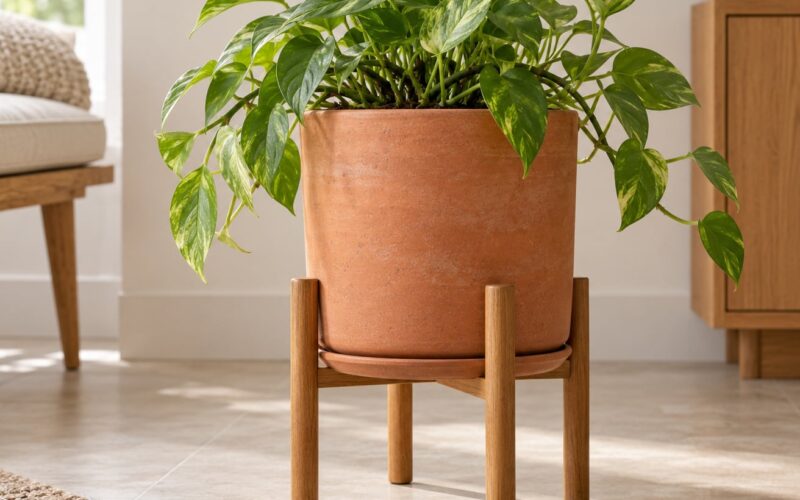
Terracotta is unglazed clay fired at high temperature. The name comes from the Italian terra cotta, meaning baked earth, and the material has not changed much in thousands of years. What matters for a plant is that the wall is full of tiny connected pores.
Water moves through those pores in two directions. It wicks out of the soil and evaporates from the outer surface, and air moves back in through the same channels. That exchange is what people mean when they say terracotta is breathable, and it is genuinely useful: a root ball in a terracotta pot dries more evenly and is less likely to sit in stagnant, airless soil.
The side effect is thirst. Soil in terracotta loses water from the sides as well as the top, so it dries faster than the same mix in a glazed pot. In a warm, dry room that can mean watering every second day in summer and every four or five days in winter.
Weight is the other half of the story. A thick terracotta wall is heavy before you add soil, and a planted 12 inch pot is genuinely awkward to lift. That heaviness is a benefit on a balcony or patio where wind tips lighter pots over, and a nuisance indoors.
Terracotta also moves temperature. Water in the wall evaporates and cools the soil, and the mass of the clay buffers root temperature swings between day and night. In a hot climate this is helpful. In a freezing winter, water sitting in those pores expands and can crack the pot, so move plants out of the frost or shelter them.
How to prepare a new terracotta pot before planting
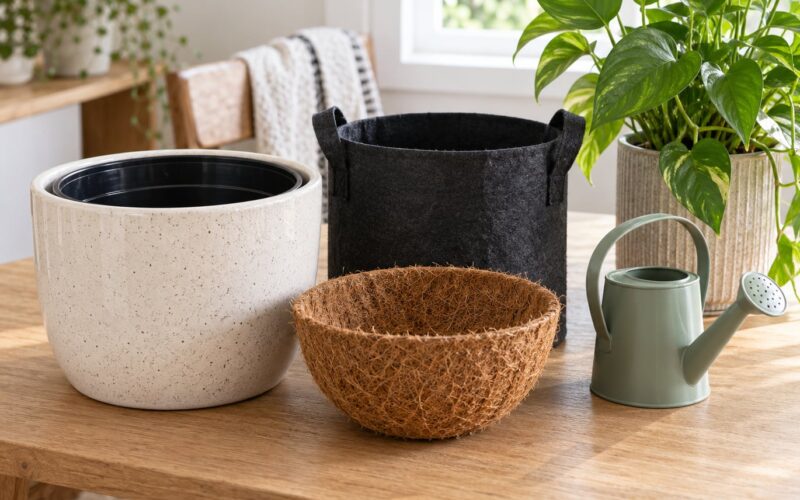
- Soak the pot in water for 30 minutes to an hour, or set it in a tub of water until the top stops bubbling. A dry pot will steal moisture from the fresh potting mix and can scorch roots on contact.
- Give it a rinse with a stiff brush and water if the pot is dusty from storage.
- Fill and plant as normal, then water thoroughly so the soil settles and air pockets collapse.
- If the pot is decorative rather than functional, paint the inside with a bitumen or clay sealer. That cuts evaporation and lengthens the interval between waterings, at the cost of losing some airflow.
Sealing is optional. Most people soak and move on. Gardenstew makes the same point from the other direction: letting the pot absorb water first slows the drying of the soil you actually care about, and overwatering harms far more plants than underwatering does.
Why terracotta pots go white and how to clean them
That crusty white bloom is efflorescence, dissolved minerals carried out of the soil or the water and left behind as the water evaporates. It is harmless, but people assume it is mould.
- Scrub it with a stiff nylon brush and plain water first. Most of it comes off.
- For stubborn patches, dilute white vinegar with water, brush it on, wait ten minutes, then rinse.
- To slow it down, water with filtered or left-to-stand tap water and top-dress with mulch or gravel to keep the surface covered.
How Ceramic Pots Affect Plant Growth
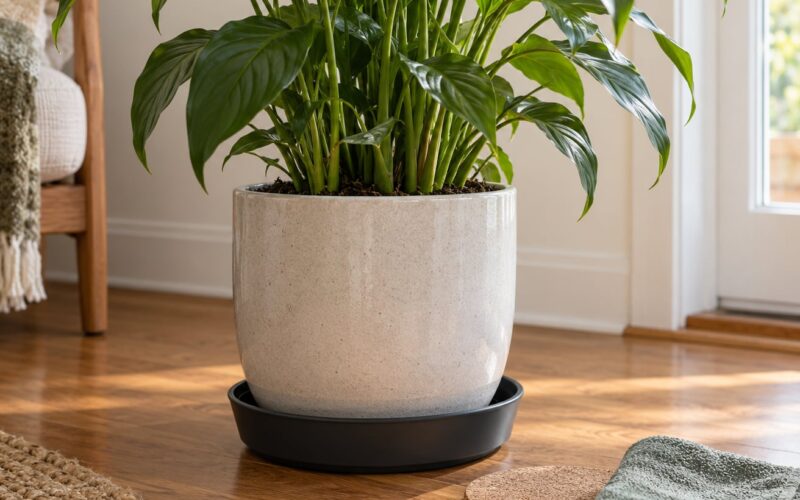
Ceramic pots are also clay, but the clay is fired and then coated in a glaze, a thin layer of glass that is melted onto the surface in a second firing. Some ceramic pots are vitrified, meaning the whole body is fired until it partly fuses. Either way, the result is a wall that does not pass much water or air.
That gives you three practical differences. Soil stays wet longer, so watering frequency drops. The root zone gets less fresh air, so a pot sitting in wet soil for a long stretch is a bigger root rot risk. And the pot itself is less absorbent, which is exactly why ceramic is the traditional choice for growers who travel or forget to water.
Weight depends entirely on the design. A thin-walled glazed pot can be lighter than terracotta of the same size, while a thick-walled artisan planter can be considerably heavier. Ceramic is also the fragile one. A dropped pot does not dent, it shatters, and the pieces are sharp. Terracotta chips more often than it explodes.
The other advantage is finish. Glaze can be any colour, glossy or matte, textured or printed, which is why ceramic dominates indoor styling. Terracotta cannot be printed and does not hold a colour; it does develop a patina that some people prefer, a deeper and less uniform orange-brown over the years.
Worth separating clearly: ceramic is not plastic and not concrete. Glazed plastic looks similar but adds almost no weight and insulates poorly, and concrete or fibreglass holds more moisture than either terracotta or glazed ceramic. If you see advice about ceramic that assumes an unglazed pot, the conclusions change. Unglazed ceramic behaves somewhere between the two: less porous than terracotta, more open than a glazed wall.
How terracotta vs ceramic pots affect drainage and watering
Drainage holes beat material every time. A terracotta pot with no hole is a trap that dries slowly from the sides only, and a ceramic pot with no hole holds water until the roots rot. Material decides the rate. The hole decides whether water can leave at all.
A typical 8 inch pot holding a medium houseplant in a normal indoor room gives you a useful reference point. Terracotta: check every two days, water when the top inch is dry. Glazed ceramic: check weekly, water when the top inch to two inches is dry. Larger pots, bigger plants and humid rooms stretch both intervals. Smaller pots, warm windowsills and dry winter air shorten them.
Watch the saucer. Water sitting in a saucer under a terracotta pot seeps back into the porous wall and re-wets the soil, which quietly cancels the drainage you paid for. Empty it, or use a pot with drainage holes and a raised feet. Glazed ceramic with a solid saucer traps water the same way, just for a different reason.
To test moisture, push a finger about an inch into the soil rather than judging from the surface colour, which can look dry while the root ball is wet. Stick a finger in the pot itself in the morning and again in the evening. Cool and damp in the morning means the wall is wicking; cool and dry in the evening means the moisture left through the clay.
How to tell if a plant is overwatered or underwatered
| Sign | Overwatered | Underwatered |
|---|---|---|
| Leaf tips | Soft, yellowing, often dropping | Crisp, brown, curling inward |
| Soil | Soggy, sour smell, may show algae on the surface | Dry and dusty several centimetres down |
| Roots | Soft, brown or black, unpleasant smell when handled | Firm, pale or white, no odour |
| Pot | Feels heavy for its size, water beads on the surface | Feels light, pot walls bone dry |
| Fix | Stop watering, check the hole is open, repot into fresh mix if the roots are damaged | Soak the whole pot until the top is wet, then drain fully |
Bottom watering, the fix for fast-drying terracotta
Bottom watering is the underrated answer to a pot that dries too fast. Stand the planted pot in a shallow tray of water for 20 to 30 minutes and the soil draws it up through the drainage hole, wetting the full root ball rather than just the surface. That is closer to how plants drink in the ground.
You can also use a wick. A cotton cord running from the drainage hole into a reservoir of water keeps the soil evenly moist, which suits ferns and thirsty foliage plants. Use a clean, purpose-made wick or a strip of capillary matting, and change the water often so it does not turn into a breeding ground.
Grouping plants together raises local humidity and slows drying too, and a terracotta pot nested inside a slightly larger glazed ceramic pot gets the airflow of the clay with less evaporation from the exposed surface.
Which Material Is Better for Different Plants?
Plants that want terracotta
- Succulents and cacti. Echeveria, haworthia, most cacti and jade-like crassulas. They rot in wet soil, and the porous wall helps you keep the root ball on the dry side.
- Mediterranean herbs. Rosemary, thyme, sage, oregano and lavender all prefer to dry between waterings, and rosemary in particular sulks in constantly moist soil. Use a 6 to 8 inch pot so the roots are not sitting in volume they cannot dry through.
- Snake plant and zz plant. These tolerate almost anything, but they do best in a pot that drains hard, since rot is their one real weakness.
- Drought-tolerant outdoor plants. Any plant you only water when the top is properly dry.
Plants that want ceramic
- Ferns. Boston, maidenhair and bird nest ferns dry out fast in any porous pot. r/IndoorGarden regularly recommends ceramic or plastic for these for exactly that reason.
- Calathea and prayer plants. These need evenly moist soil and will crisp at the edges in terracotta within days in a dry room.
- Peace lily and pothos. Comfortable with a longer interval between waterings, and they wilt dramatically rather than permanently when briefly dry.
- Tropical foliage plants. Monstera, philodendron, bird of paradise and rubber plants all come from humid environments. Low-humidity living rooms dry them out faster than the pot material alone can explain.
- Bathroom plants. A glazed ceramic pot suits a room that already holds steady humidity.
There are exceptions in both directions. A moisture-loving plant in terracotta is manageable if you group it with other plants, mulch the surface and water thoroughly rather than little and often. A succulent in ceramic works if you use a gritty, fast-draining mix and a pot on the smaller side. The exceptions exist, but they take more attention than the default choice.
Weight, Durability, Appearance and Design
Weight and stability. Terracotta and thick ceramic are both heavy, which is a feature on a balcony, a patio or anywhere with wind. Plastic and thin-walled ceramic are the ones that blow over. Indoors, weight decides whether you can move a pot at all, and here terracotta has the edge on the widest range of pots, with heavy stoneware ceramic at the other end of the scale.
Breakage. Both break. Terracotta usually chips at a rim and can survive a knock intact. Ceramic tends to shatter, and glazed shards are sharp. Terracotta is also more vulnerable to frost, because water in the pores freezes and expands. Glazed ceramic generally tolerates winter better, and a well-fired thick-walled pot is the safest option for a year-round outdoor position.
Longevity. A good terracotta pot outlasts most owners. Old pots go grey-white, grow a patina and develop small chips that most people like. Quality varies more than people expect: mass-market terracotta is uniform and thin, while wheel-thrown or artisan pieces are thicker and hold moisture noticeably longer. That difference is why the same plant behaves differently in two “identical” terracotta pots.
Design. Ceramic wins on colour range, gloss and pattern, and it is the only realistic option for a display piece on a shelf. Terracotta wins when you want a natural, earthy look that sits well with plants rather than competing with them, and for grouped outdoor displays where a limited palette reads as intentional. For interior styling, choose the finish first and the plant second. For a patio or balcony, choose the weather first.
Placement. Many growers hold to a rule of ceramic pots inside and terracotta outside. It is a reasonable default, but the real reason is aesthetic and thermal, not botanical. The plant does not care which side of a window it is on. What matters is whether the pot dries faster than you water it, and whether the material matches the plant.
Which Should You Choose?
Terracotta vs ceramic pots: which is better for plants?
Choose terracotta if you tend to overwater, if you grow succulents, cacti or Mediterranean herbs, if your plants live outdoors in full sun, or if you want a natural look that ages well. Choose ceramic if you travel regularly, forget to water, grow ferns, calathea or tropical foliage, or if the pot is a decorative piece indoors.
Climate shifts the balance. In a humid, mild region, terracotta dries comfortably and its airflow is an asset. In a dry, hot region or a heated room in winter, terracotta may need watering daily, and glazed ceramic buys you two or three extra days each time. In a climate with hard frosts and pots left outside, glazed ceramic or thick stoneware is the safer choice.
One myth is worth clearing up. Terracotta is not automatically better for plants. The claim that porous clay is always healthier for roots assumes you water to suit the pot. If you keep watering on a fixed schedule and the terracotta has simply hidden the overwatering, you have changed the symptom, not the cause. Plenty of plants, including most ferns and calatheas, do worse in terracotta for exactly that reason.
And a decorative ceramic pot with no hole is not a pot for planting. Use it as a cover pot instead.
- Put the plant in a nursery pot with drainage holes that is 2 to 3 cm smaller all round than your decorative pot.
- Add a layer of gravel or pebbles in the bottom of the decorative pot, then set the nursery pot inside on top.
- Top up with pebbles or mulch to hide the rim, and water the plant in the inner pot only. Empty any water that collects in the outer pot.
My rule of thumb, and the one I give anyone who asks: if you are unsure, start with terracotta and a pot one size smaller than you think. It is far easier to add a drink than to rescue a root ball that has been sitting in water.
Frequently Asked Questions
Are terracotta pots better for plants than ceramic pots?
Neither is better in general. Terracotta gives roots more air and dries faster, which suits succulents, cacti, herbs and anyone who tends to overwater. Glazed ceramic holds moisture much longer, which suits ferns, calathea, peace lilies and tropical houseplants, and anyone who forgets to water. Match the material to the plant and to your habits, not to a general rule.
Do terracotta and ceramic pots need drainage holes?
Yes, both need them. A drainage hole is what lets excess water escape so roots sit in air rather than stagnant water. Terracotta dries from its porous sides, but a hole-less terracotta pot still traps water at the bottom. A hole-less glazed ceramic pot has no escape at all, which is why decorative ones are used as cover pots with a planted nursery pot inside them.
Is terracotta safer for plants in hot weather?
It depends on the plant. The porous wall wicks moisture out, which cools the soil and keeps roots aerated, so succulents and Mediterranean herbs handle terracotta well in heat. Ferns, calathea and tropical foliage can dry out within days in a hot room. In very hot weather, shade the pot, mulch the surface and check the soil daily rather than relying on a schedule.
Can ceramic pots be used outdoors without cracking?
A good quality glazed or vitrified pot handles outdoor conditions well and generally resists frost better than terracotta, whose pores hold water that expands when frozen. Thin-walled, low-fired or unglazed ceramic is the risk, especially in climates with repeated freeze and thaw cycles. Check for hairline cracks before winter, raise the pot on feet so it drains, and move it somewhere sheltered if your winters are hard.
How often should I water plants in terracotta versus ceramic pots?
In an 8 inch pot indoors, check terracotta every two days and water when the top inch is dry. Check glazed ceramic about once a week and water when the top inch or two is dry. Pot size, plant size, light, humidity and season all shift these numbers, so test with a finger instead of trusting a calendar, and empty the saucer rather than letting water sit under the pot.
Conclusion
Start with what your plant wants, not with the material. Dry soil and maximum airflow points to terracotta. Steady moisture and a decorative finish points to glazed ceramic. Whichever you pick, drainage holes come first, the pot should be only slightly larger than the root ball, and the pot size should be one step up rather than three. If you are unsure, choose terracotta, pot one size smaller than feels right, and check the soil with your finger rather than a schedule.