Choose the pot by measuring the roots, not the foliage. When you ask how to choose the right pot size for a houseplant, the answer is arithmetic: go 1 to 2 inches wider in diameter than the plant’s root ball for most houseplants, or 2 to 4 inches wider for large or fast-growing ones like monstera and fiddle leaf fig. Everything else — depth, material, drainage — is a second decision that comes after that number.
That rule surprises people, because instinct says give a big plant a big pot. A pot that is too big holds water for too long, which increases the risk of root rot, and it gives the roots more wet soil than they can use. Sizing up gradually is what keeps a plant growing steadily instead of sulking.
Table of Contents
- What You Need
- Step-by-Step: How to Choose the Right Pot Size for a Houseplant
- 1. Measure the Current Root Ball
- 2. Choose a Pot Slightly Wider Than the Root Ball
- 3. Match Pot Depth to the Plant’s Root Structure
- 4. Check Drainage and Pot Material
- 5. Account for the Plant’s Growth Rate and Environment
- 6. Test the Pot Before Planting
- Common Mistakes
- Sizing by the top of the plant instead of the roots
- Jumping several sizes
- Using a container with no drainage
- Forgetting what a nursery pot number means
- Ignoring indoor versus outdoor conditions
- Forgetting soil volume and depth
- Frequently Asked Questions
- Do plants grow bigger in bigger pots?
- How do you know when to repot a plant into a bigger pot?
- What size pot do I need for a monstera or fiddle leaf fig?
- Do indoor plant pots need drainage holes?
- Should I repot a plant I just bought, or leave it in the nursery pot?
- I already bought a pot that is too big — what do I do?
- Conclusion
What You Need
The measuring takes about two minutes. What matters more is knowing what you are measuring against.
- A tape measure or a rigid ruler. Measure the inside of the pot, not the outside — thick nursery pots can differ by an inch.
- The plant itself, if you can slide it out of its current pot. If you cannot, measure the inside diameter of the current pot and add an inch or two.
- A saucer, tray or shallow bowl if the pot has drainage holes.
- A rough sense of how fast the plant grows and how large it gets in your spot. Bright indirect light slows growth; a warm, bright window speeds it up.
Skip the guesswork about the plant’s name if you have the plant in front of you. The roots tell you more than the label does.
Step-by-Step: How to Choose the Right Pot Size for a Houseplant
1. Measure the Current Root Ball
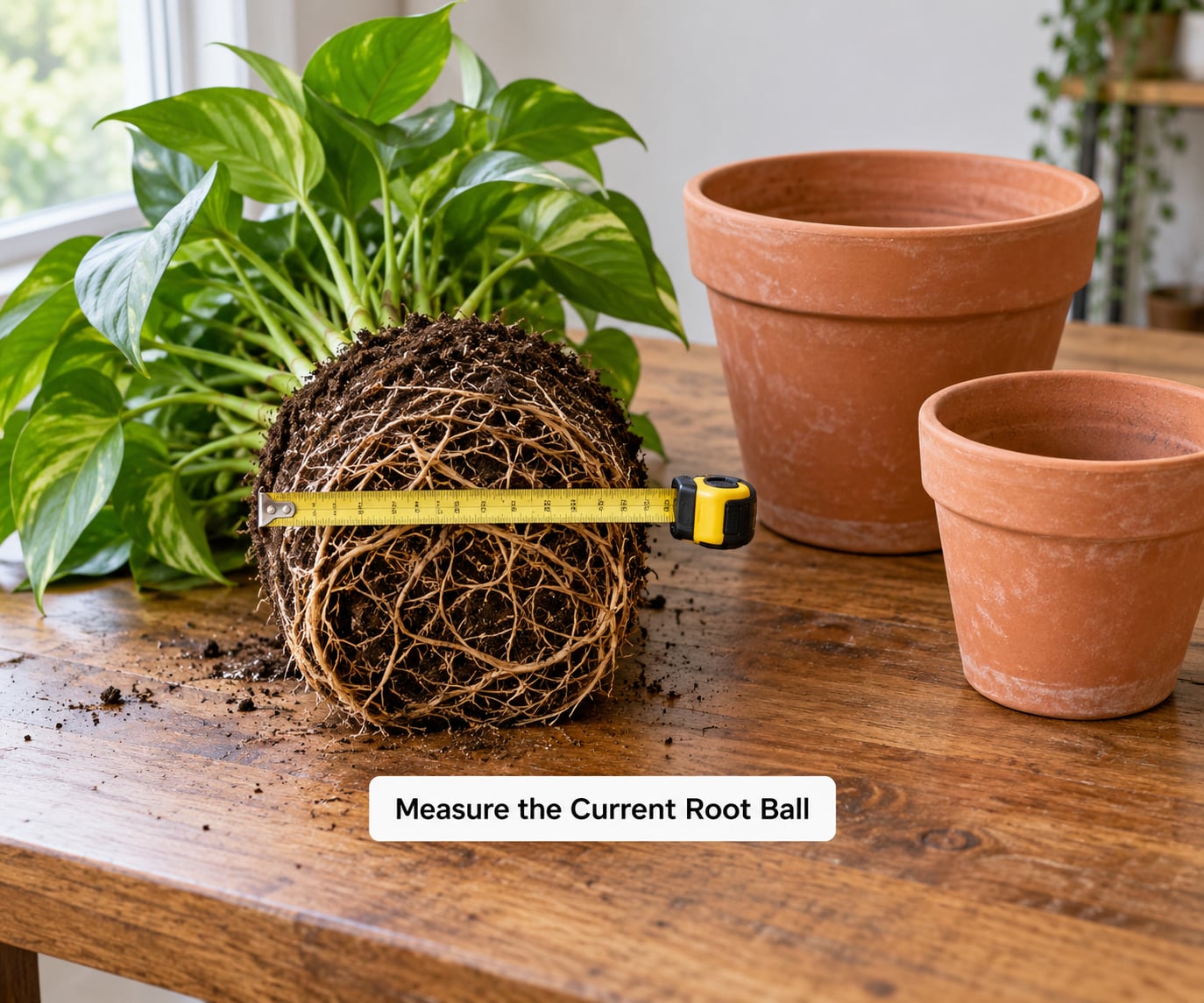
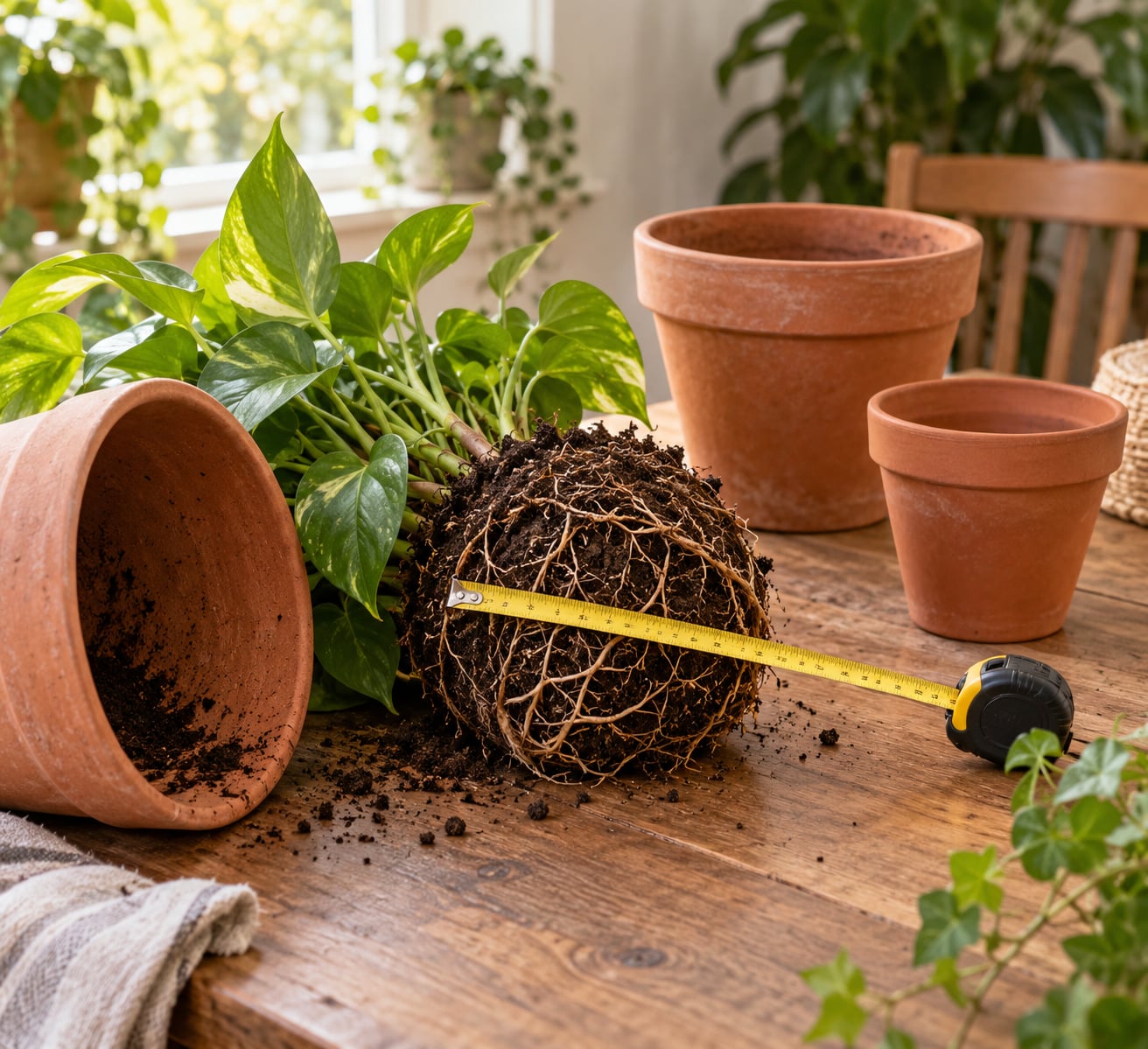
Water the plant a day or two before you plan to slide it out. Wet soil holds together, dry soil crumbles and takes fine roots with it. Then support the stem with one hand, tip the pot, and ease the whole root mass out.
Measure two things across the top of the root ball: the width at its widest point, and the depth from the soil line at the top down to the bottom of the roots. Note the depth separately, because it decides how deep your new pot needs to be.
If roots circle the bottom densely or shoot straight out of the drainage hole, the plant is root bound and the root ball is understating its real size. Tease those circling roots loose gently before you measure.
2. Choose a Pot Slightly Wider Than the Root Ball
Add 1 to 2 inches to the root ball width and pick a pot with that inside diameter. This is the single measurement that decides how to choose the right pot size for a houseplant, and everything after it only refines the answer. Add 2 to 4 inches instead when the plant is already large, pushes a leaf or root through the drainage hole, or is a vigorous grower in spring.
Slow growers need the smaller increment. Succulents, cacti, snake plants and jade prefer a tight pot with almost no extra room, and they will sit happily in the same container for years. Tropical foliage plants are the opposite case — they fill a generous pot quickly.
Size up one step at a time. Skipping from a 4 inch pot to a 12 inch one puts a small root system in a large reservoir of soil that stays damp long after the plant has used the water.
3. Match Pot Depth to the Plant’s Root Structure
Depth should follow the root mass, not the height of the plant above the soil. A plant that is 3 feet tall with a shallow root ball does not need a 2 foot planter.
Standard nursery pots work for most indoor plants. Shallow, wide containers suit plants with spreading fibrous roots, while deep containers suit tap-rooted plants like ficus, woody floor plants that have been potted on for years, and most vegetables and patio plants. Drainage holes belong in both — depth changes how much water the mix holds, not whether it can get out.
As a starting guess, aim for a pot roughly one third as tall as the plant is tall and about one third wider than its foliage spread. Treat that as a rough number, then let the root ball overrule it.
4. Check Drainage and Pot Material
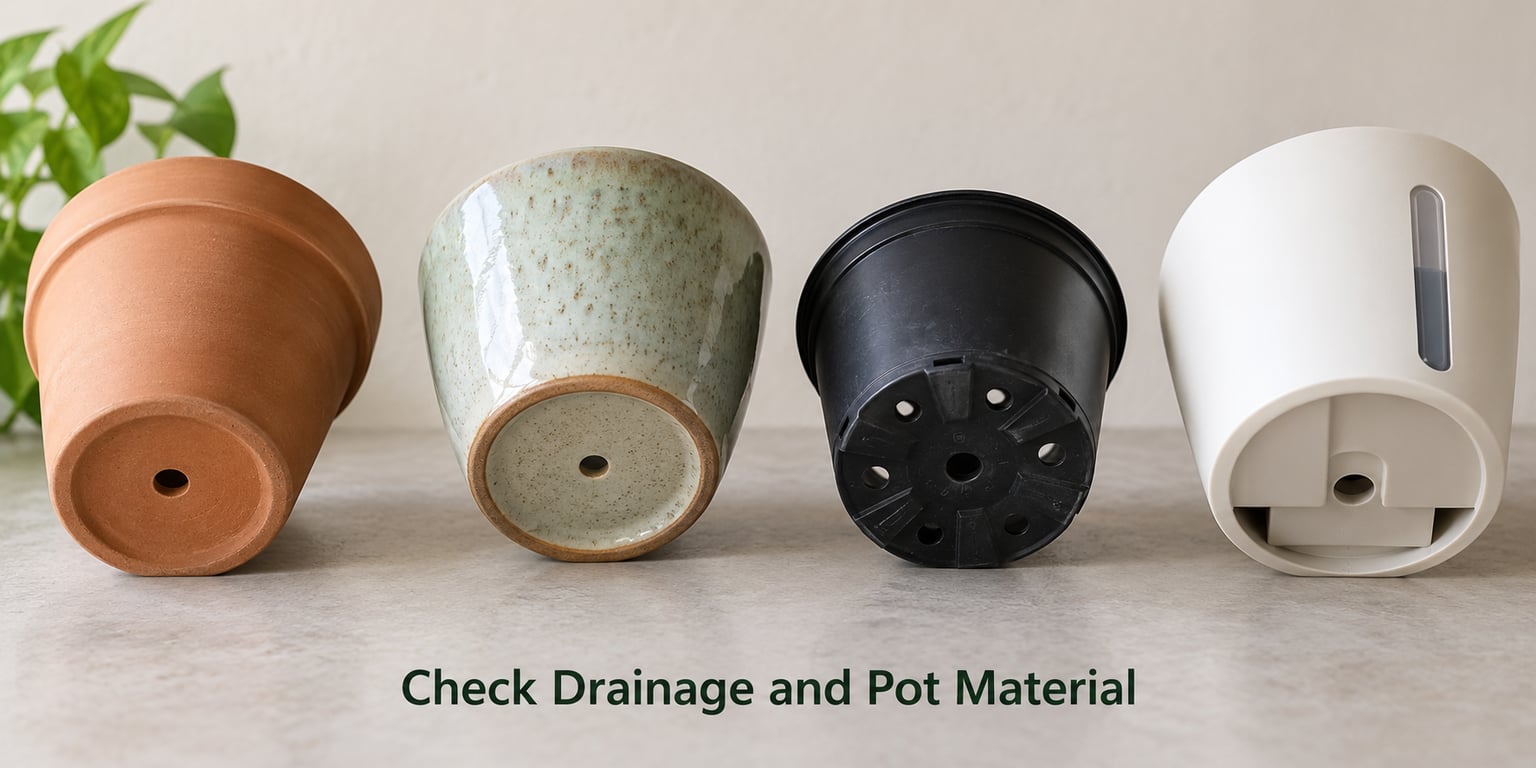
Every pot you use with soil needs drainage holes. Hold the empty pot up to a window or shine a phone light through the bottom — if you see no holes, put the plant in a nursery pot with holes and set that pot inside the decorative one.
Material changes how fast the soil dries, and that shifts how often you water.
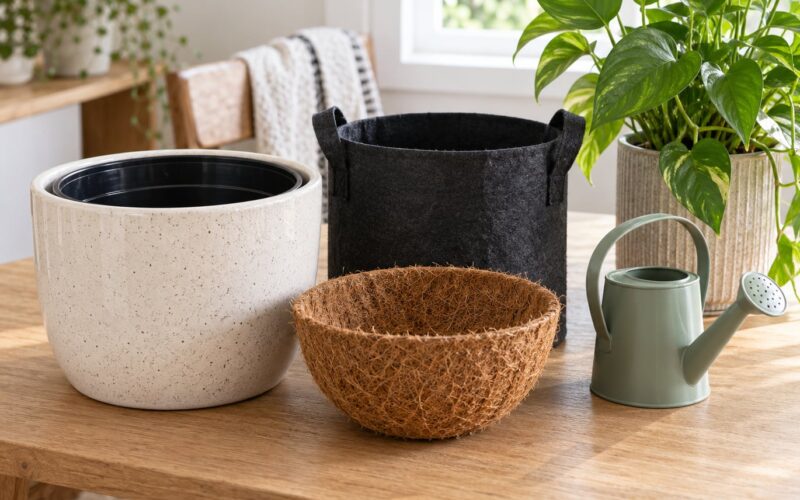
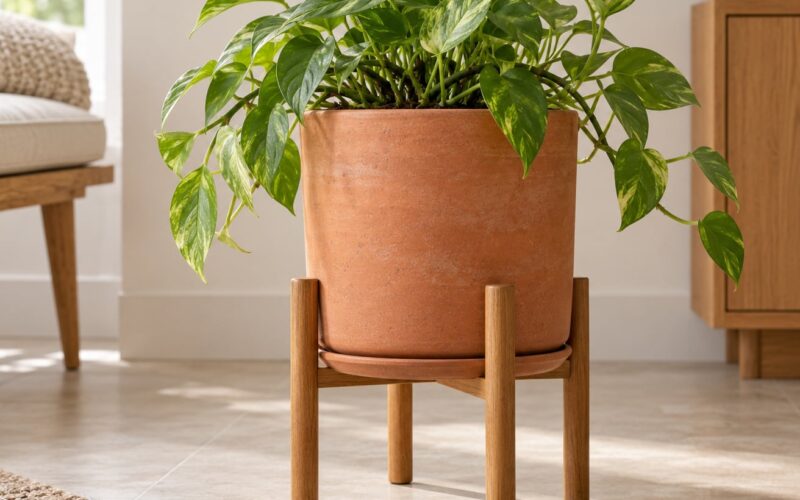
- Terracotta (unglazed clay): porous, wicks moisture through the walls, dries fast. Good for herbs, succulents and plants in cool, dry rooms. It can crack outdoors in frost, and it adds weight.
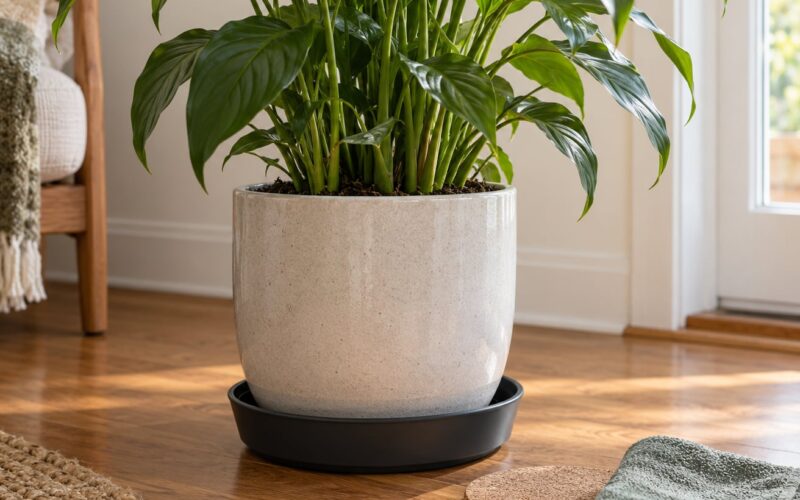
- Glazed ceramic: holds moisture longest. Suits tropical plants and anyone who forgets to water, but it dries slowly enough that a wet mix can turn sour.
- Plastic: light, cheap, retains water, and stays flexible in cold weather. Fine indoors; avoid opaque white plastic if you tend to miss standing water in the saucer.
- Fiber clay: frost resistant and light, with a middle-range drying speed. Useful on balconies and patios.
- Self-watering planters: a water reservoir at the base wicks up into the mix. Good for vacation gaps, but only if you refill it correctly — too much water sitting in the reservoir causes the same damage as an oversized pot.
Match the material to your routine rather than to the plant’s looks. A heavy glazed pot full of soil is close to unmoveable, which matters for a floor plant you will need to drag to a brighter window.
5. Account for the Plant’s Growth Rate and Environment
Decide whether this pot is for a permanent place or a stepping stone. Repotting containers are usually the nursery pot just one or two inches up, filled with fresh mix. Pots a plant will stay in for years are worth spending more on, with thicker walls and heavier material.
Environment changes how much room the roots need. A monstera in a dim corner grows far more slowly than the same plant a metre from a bright window, so it needs a smaller pot for longer. Light, not pot volume, is usually what limits growth indoors.
If the plant is thriving in its current pot, watering normally and the soil is not drying out faster than it used to, stay where you are. Repotting a healthy plant because you have a spare pot is a common and avoidable risk.
6. Test the Pot Before Planting
Before you mix any soil, drop the empty pot where the plant will stand and check four things. The base should sit flat and not tip when you press the rim from one side. The plant’s crown should sit level with the rim once backfilled, not buried below it. Water should find a path out — pour a little water in and confirm it exits the drainage holes rather than pooling. And lift it: if you cannot carry it comfortably with soil in it, choose something lighter.
Last, compare the pot to the pot it replaces. A thicker wall means a smaller inside diameter than the outside number suggests, so measure inside before you commit.
Common Mistakes
Sizing by the top of the plant instead of the roots
A plant with a wide canopy can have a modest root ball, and one with sparse foliage can be packed root to rim. Decide from the roots. If you cannot slide the plant out, use the inside diameter of the current pot plus an inch or two rather than eyeballing the leaves.
Jumping several sizes
Going from a 4 inch pot to a 12 inch pot doubles or triples the soil volume at once. The extra water sits unused and the mix goes sour at the bottom. Step up one increment, and repot again in a year.
Using a container with no drainage
A hole-less decorative pot filled directly with soil traps water and starves roots of air. Plant in a nursery pot with holes and nest it inside the decorative pot, leaving room to check and drain.
Forgetting what a nursery pot number means
Nursery pots are labelled by both inches and gallons, and the two do not always agree. A 6 inch pot holds roughly 4 liters of soil, a 10 inch pot about 15 liters, and a 12 inch pot about 26 liters. The inch number moulded into the rim is the more reliable of the two for sizing, and it is also what growers mean when they say a plant is in a “6 inch pot”.
Ignoring indoor versus outdoor conditions
The same plant needs different water discipline on a balcony in summer than on a shelf indoors. Patio containers dry out fast and heat the root mass, so they run smaller on soil volume and larger on drainage than you would indoors. Terracotta outdoors in winter can crack if it freezes while wet.
Forgetting soil volume and depth
Diameter alone does not tell you how much soil you need. Here is roughly what a standard tapered nursery pot holds.
| Inside diameter | Typical depth | Approx. soil volume | Mix to buy | Good for |
|---|---|---|---|---|
| 4 inch (10 cm) | 5 to 6 inch | 1.2 liters (1.3 quarts) | 2 liters | Small succulents, seedlings, African violets |
| 5 inch (13 cm) | 6 to 7 inch | 2.2 liters (2.4 quarts) | 3 liters | Herbs, small pothos, jade |
| 6 inch (15 cm) | 7 to 8 inch | 3.7 liters (3.9 quarts) | 5 liters | Rubber plant, calathea, most houseplants |
| 7 inch (18 cm) | 8 to 9 inch | 5.7 liters (6 quarts) | 7 liters | Peace lily, ZZ plant, medium aroids |
| 8 inch (20 cm) | 9 to 10 inch | 8.2 liters (8.7 quarts) | 10 liters | Fiddle leaf fig, mature snake plant |
| 10 inch (25 cm) | 11 to 12 inch | 15 liters (16 quarts) | 20 liters | Large monstera, small trees |
| 12 inch (30 cm) | 13 to 14 inch | 26 liters (27 quarts) | 32 liters | Mature floor plants, patio containers |
Depth matters as much as width in this table, and volume only shifts if you change depth. A 6 inch pot that is 7 inches deep holds more than a 6 inch pot that is 5 inches deep.
Frequently Asked Questions
Do plants grow bigger in bigger pots?
Not directly. A plant will not grow larger just because it sits in more soil — it grows when light, water and nutrients allow it. A much larger pot mainly adds soil that stays damp, so a small root system sits in wet conditions and is more likely to rot. Light, not pot volume, is usually the real limit on indoor growth. Size up in small steps instead and let the plant fill the pot with roots first.
How do you know when to repot a plant into a bigger pot?
Check four signs: water runs straight through and the soil dries within two or three days, roots circle the base or push out of the drainage hole, the soil level has shrunk far below the rim, or leaves shrink despite regular feeding. If you see none of these, stay in the current pot. When you do repot, go one size up — 1 to 2 inches wider for most plants, 2 to 4 inches for large or fast-growing tropicals.
What size pot do I need for a monstera or fiddle leaf fig?
Measure the root ball and add 1 to 2 inches of width, which for a fast-growing tropical usually lands in the 2 to 4 inch range. A young monstera in a 6 inch pot moves to an 8 inch, and a mature one in a 10 inch pot moves to a 12 inch. Fiddle leaf figs prefer a slightly snug fit and can sit a size smaller than the rule suggests, so move them up only when roots reach the drainage holes.
Do indoor plant pots need drainage holes?
Yes, every pot that holds soil and a plant needs them. Without holes, water collects at the base, the lower soil stays saturated, and roots suffocate and rot. If your pot is decorative and hole-less, keep the plant in its nursery pot with holes and set that inside the decorative pot, leaving a gap so water can drain and you can check the soil. Empty the outer pot if it collects water.
Should I repot a plant I just bought, or leave it in the nursery pot?
Usually leave it. Fresh nursery plants are potted into containers sized for their current root mass, and they are already stressed from shipping and from settling into your light. Repotting immediately adds another shock on top. Wait about two to four weeks, or until roots reach the drainage holes or water runs through the pot almost immediately, then size up by one increment.
I already bought a pot that is too big — what do I do?
Use it as a cachepot. Keep the plant in its current pot, set that pot inside the bigger container, and leave a little extra mix in the bottom if needed for height. If you have already planted it, lift the root mass out with as little root damage as possible, return it to a pot one size up, and trim any black or mushy roots. Then water sparingly for a few weeks until new growth shows.
Conclusion
Start by sliding the plant out and measuring the width of its root ball. That one measurement decides how to choose the right pot size for a houseplant, and everything after it — depth, material, drainage — follows from the plant you actually have in front of you rather than the one in the picture on the label.