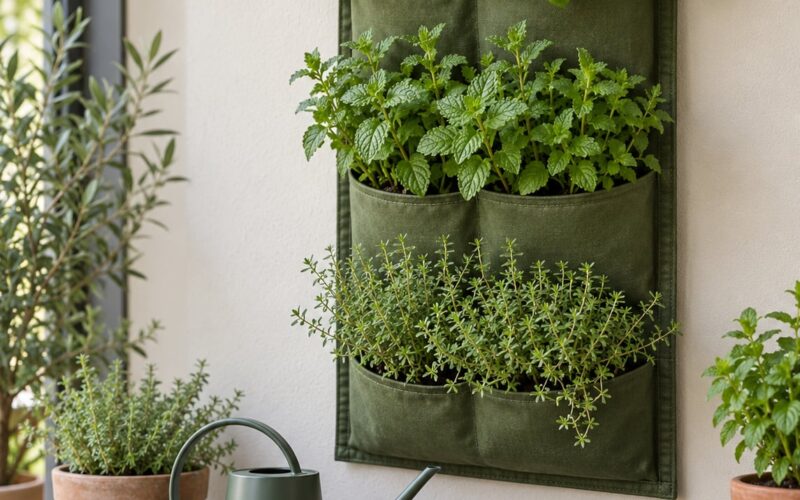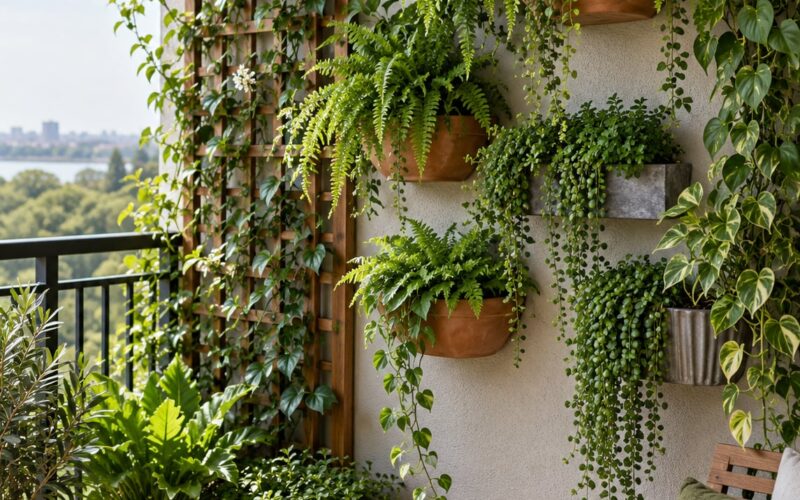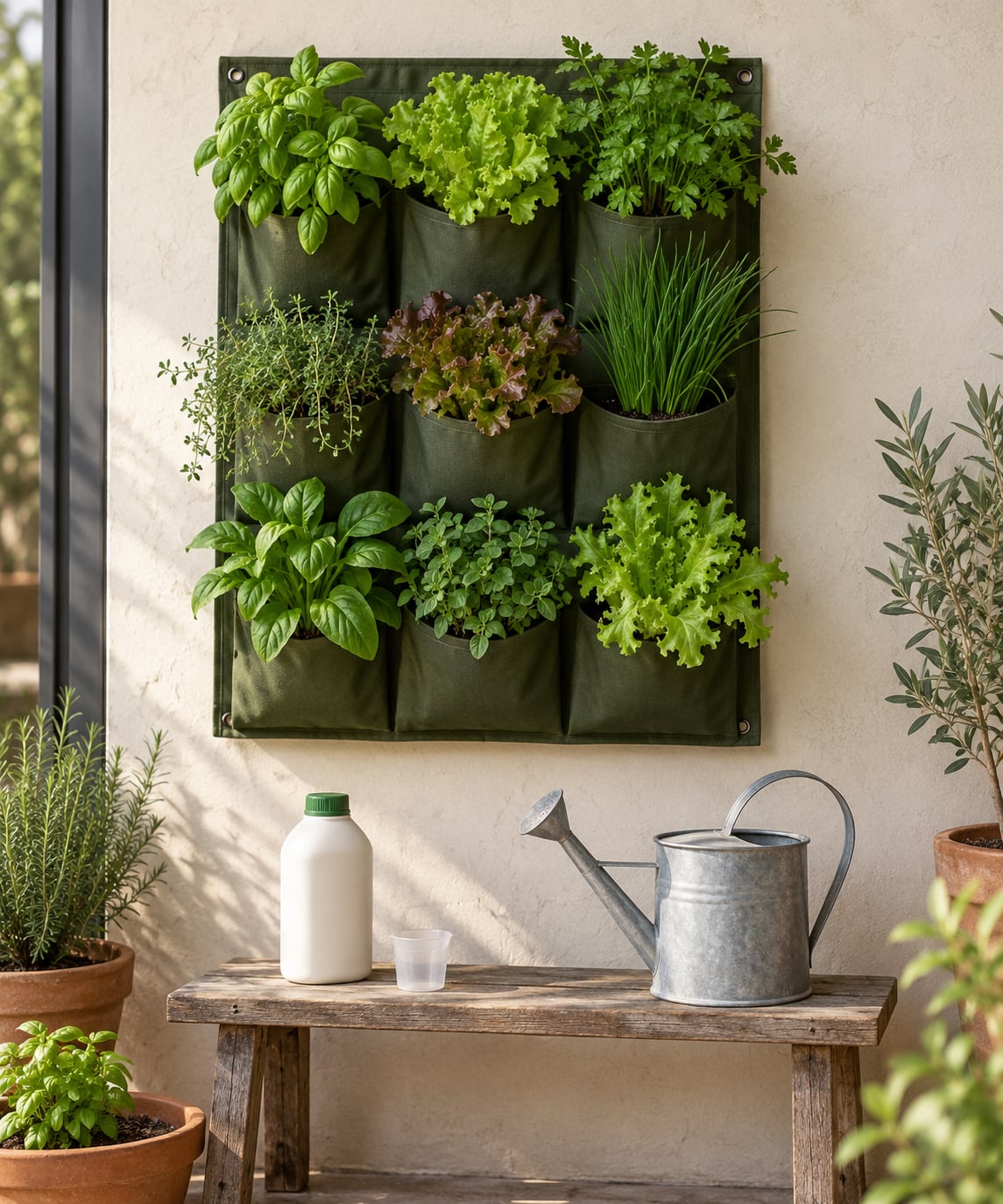
Fertilize a vertical garden by treating each pocket like a small container: choose a complete, water-soluble fertilizer matched to your plants, dilute it for the amount of mix in that pocket, pour it onto the root zone instead of the leaves, water it in so nothing sits on the foliage, and repeat every two to four weeks through the growing season. Vertical planters hold far less soil and drain faster than a raised bed, so they run out of nutrients sooner than you would expect.
That last part is the whole story. A pocket holding two or three quarts of potting mix has maybe a tenth of the nutrient reservoir of an in-ground bed, and every watering pushes some of what is left out through the drainage hole. Nutrient leaching is simply the loss of dissolved nutrients as water moves through soil. In a bed, rainwater refills some of what drains away. In a tower, nothing does.
So the short version: feed lightly, feed often, and keep every pocket on the same schedule even when the plants in them are different sizes. The rest of this guide walks through the whole process, from identifying what your plants actually need to dosing by the gallon rather than by the bag.
Table of Contents
- What You Need
- How to Fertilize a Vertical Garden Step by Step
- 1. Identify Your Plants and Their Needs
- 2. Check the Growing Medium and Drainage
- 3. Choose a Balanced Fertilizer
- 4. Mix and Apply the Fertilizer Carefully
- 5. Water Without Washing Nutrients Away
- 6. Monitor Results and Set a Feeding Schedule
- Common Mistakes When Fertilizing a Vertical Garden
- Frequently Asked Questions
- How often should I fertilize a vertical garden?
- Can I use liquid fertilizer on a vertical garden?
- What are the signs that a vertical garden has too much fertilizer?
- Should I fertilize a newly planted vertical garden immediately?
- How do I fertilize edible plants in a vertical garden?
- Does a slow-release fertilizer work better than liquid fertilizer for a vertical garden?
- Conclusion
What You Need
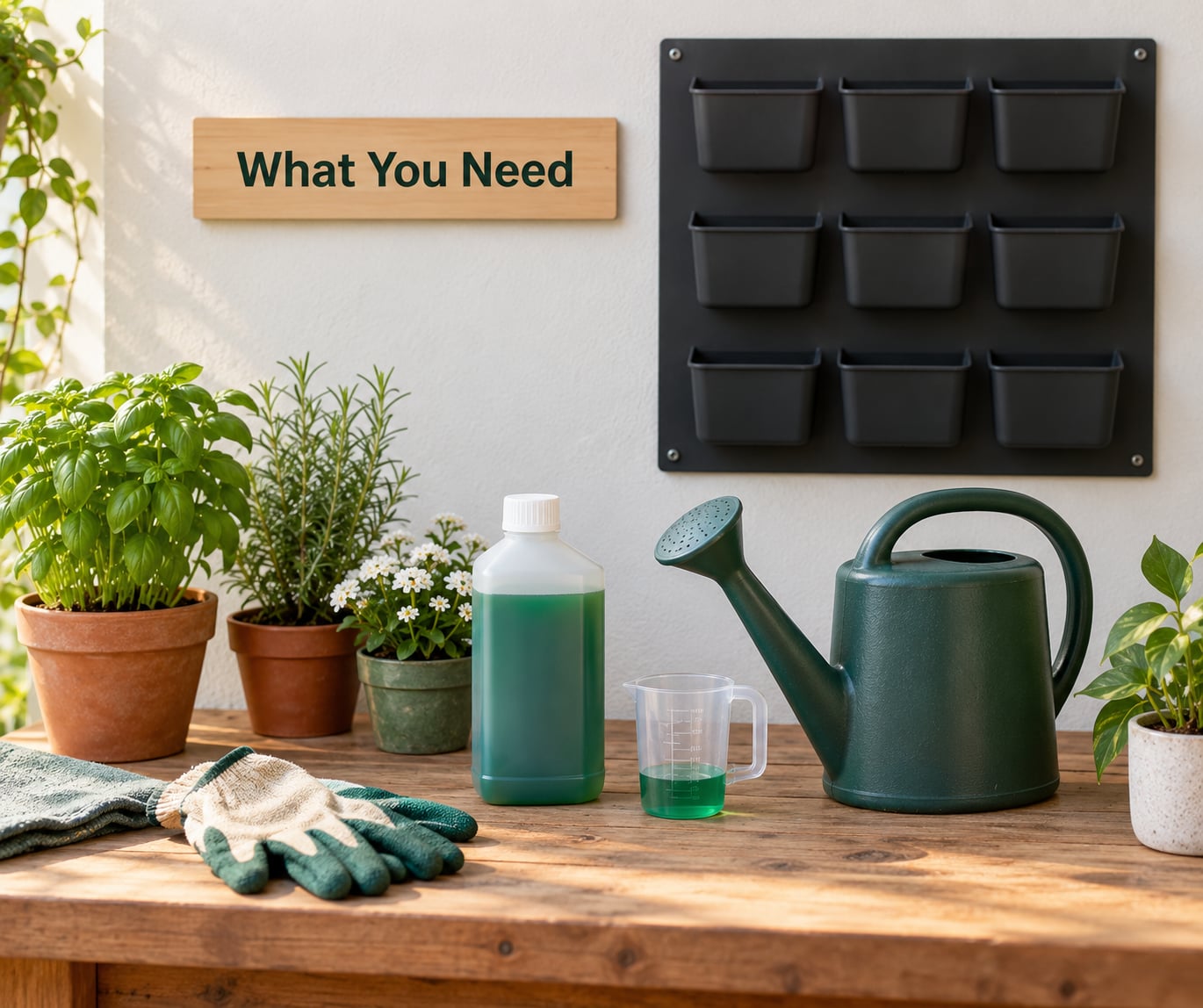
You do not need much. Gather these before you start, and the whole job takes about fifteen minutes:
- A complete fertilizer. A water-soluble liquid or a water-soluble granular that lists all three numbers on the bag, N-P-K. Most growers keep one bottle on hand all season.
- A watering can with a gentle rose, or a hose-end sprayer set to the lowest jet. You want a steady flow, not a blast.
- A measuring tool. A teaspoon, a small graduated cup, or a clean bottle you mark with permanent marker so the dilution stays identical each time.
- Gloves and a damp cloth. Gloves protect your hands from concentrated fertilizer, and the cloth wipes residue off pockets before it hardens into a white crust.
- Your planter system’s care instructions. Every tower, felt wall, and hanging gutter comes with a recommended feeding rate for its own soil volume. When the manufacturer gives a rate, use it.
- Optional but useful: slow-release granules for a longer feeding window, worm castings for an organic side-dress, a moisture meter for checking whether a pocket is dry before you feed it, and a pH meter if your tap water is very hard.
The one item people skip is the measuring tool. It is also the one that prevents most fertilizer burn. A concentrated liquid that gets tipped an extra half spoonful into a two-gallon can can scorch an entire column of plants, and you will not see the damage until the leaves curl a week later.
How to Fertilize a Vertical Garden Step by Step
Work through these six steps in order the first time, then repeat steps four through six on a calendar for the rest of the season.
1. Identify Your Plants and Their Needs
Start by grouping what is actually growing in the structure, because plants in the same tower can have very different appetites. A pocket of lettuce and a pocket of peppers sitting on the same frame cannot be fed as one plant.
- Leafy greens and herbs (lettuce, basil, parsley, cilantro, kale) grow soft, fast foliage and want more nitrogen. Look for a higher first number on the label.
- Fruiting crops (tomatoes, peppers, strawberries, squash) want more phosphorus and potassium once flowers set. A balanced or fruit-and-flower formula suits them.
- Succulents and other low feeders need little at all. Over-feeding is the fastest way to kill them.
- Mixed ornamentals usually do fine on a balanced complete fertilizer applied lightly.
Check the plant tags that came with anything you bought, or ask the nursery where you bought it what it feeds. If a designer or contractor installed the system, they should have specified the fertilizer type for what you planted. That one question saves a season of guessing.
2. Check the Growing Medium and Drainage
Before fertilizer goes anywhere near the wall, put a finger in two or three pockets and look at what comes out. Old potting mix in a vertical system is usually pale, compacted, and drained of the organic matter that once held nutrients.
Look at three things:
- Is the mix still porous? Compacted, matted mix holds water so long that roots suffocate. Break it up with your hands and top-dress with a quarter-inch of worm castings or compost to restore some organic matter.
- Does water drain from the pocket, or does it sit? Saturated pockets cannot take up dissolved nutrients. Fertilizer applied to waterlogged mix just adds salt to mud.
- Where does the excess go? In a tower, the top pockets receive the most runoff from the ones above them and the bottom pocket catches the concentrate. That pooling is the single biggest reason burn happens in vertical systems.
Run one plain watering without fertilizer first. If water backs up in a pocket, or if a white crust is already forming on the drainage hole, fix drainage before you feed.
3. Choose a Balanced Fertilizer
N-P-K is simply the ratio of nitrogen, phosphorus, and potassium on the label, written as three numbers, such as 10-10-10 or 20-20-20. Nitrogen drives leaf growth, phosphorus supports roots and flowers, potassium handles sugars, disease resistance, and fruit quality. A balanced formula has roughly equal numbers, and it is the right default for a mixed vertical garden.
Controlled-release fertilizer, often called slow-release, is a granule coated so nutrients break down over two to three months rather than dissolving in the first watering. It gives steadier nutrition between waterings, which helps in a system that dries unevenly.
| Fertilizer type | Best for | How to apply it | Watch out for |
|---|---|---|---|
| Water-soluble liquid | Mixed towers, quick correction of deficiencies | Dilute in a watering can, pour into the root zone | Easiest to overdose; measure every time |
| Water-soluble granular | Pocket walls and planters you water by hand | Dissolve in water, then apply | Can leave grit and crust in fabric pockets |
| Slow-release granular | Busy plantings, balcony systems, low maintenance | Mix into the top inch of mix, water in | Too high a rate burns roots; it feeds unevenly in thin pockets |
| Worm castings or compost | Living walls and indoor systems where smell matters | Top-dress a quarter inch, remix the surface | Low nutrient numbers; a supplement, not a replacement |
| Compost tea or fish emulsion | Organic-leaning growers, fruiting crops | Dilute heavily and apply as a drench | Variable strength; never apply undiluted |
Two home remedies come up constantly. Epsom salt is magnesium sulfate, a source of magnesium and sulfur; it is useful only when magnesium is actually deficient, and adding it blindly does nothing. The “poor man’s fertilizer” is a thin infusion of compost or manure in water, which works but is inconsistent and smells, so it suits a patio tower, not a living wall inside your living room.
Growers on tower forums consistently rate worm castings highest for wall-mounted systems because they are essentially odorless while still feeding soil life, and manures are generally impractical in pockets where you cannot mix deeply.
4. Mix and Apply the Fertilizer Carefully
Follow the label, then halve the rate for vertical planters. Small soil volumes concentrate everything you pour in, and half strength applied on a schedule does more than full strength applied once.
For a typical tower pocket holding one to two quarts of potting mix, a useful working rule:
- Liquid concentrate: 1 teaspoon in a 2-gallon watering can, applied to one or two pockets. That is roughly half the label rate for a full can.
- Water-soluble granular: about half a teaspoon per gallon, stirred until dissolved.
- Slow-release granules: roughly a quarter teaspoon per quart of mix, worked into the top inch, not piled against the stem.
Pour slowly at the base of the plant, above the pocket, so the solution runs through the mix where the roots are. Keep foliage out of the stream if you can. Foliar feeding means spraying nutrients onto leaves, which works as a supplement but burns tender growth at full strength and stains herbs you plan to eat. Apply in the early morning or late evening, never at midday, when water evaporates before it soaks in and leaves salt behind.
Wipe the rim and front face of each pocket with a damp cloth as you go. Dried fertilizer on fabric leaves a permanent white ring.
5. Water Without Washing Nutrients Away
Sequencing does more good than the product you pick. If the mix is bone dry, it cannot absorb what you pour on it, and the nutrients just run out the bottom. So water plain first if the pocket is dry, wait a few minutes, then apply the fertilizer solution.
After applying, flush lightly. A short water-in moves salts away from the roots and into the drainage hole, which is exactly where you want them to go. Give the wall a moment to drain before you look at it again, because liquid carrying nutrients running down a fabric face is what streaks stucco and siding.
If you run drip irrigation, feed at the start of an irrigation cycle rather than the end, so the tubing and emitters get flushed and nutrients reach the whole root zone. Check the top and bottom pockets after the first fed cycle. If the top pocket is soaked and the bottom one is dry, your emitter layout is the problem, not your fertilizer.
6. Monitor Results and Set a Feeding Schedule
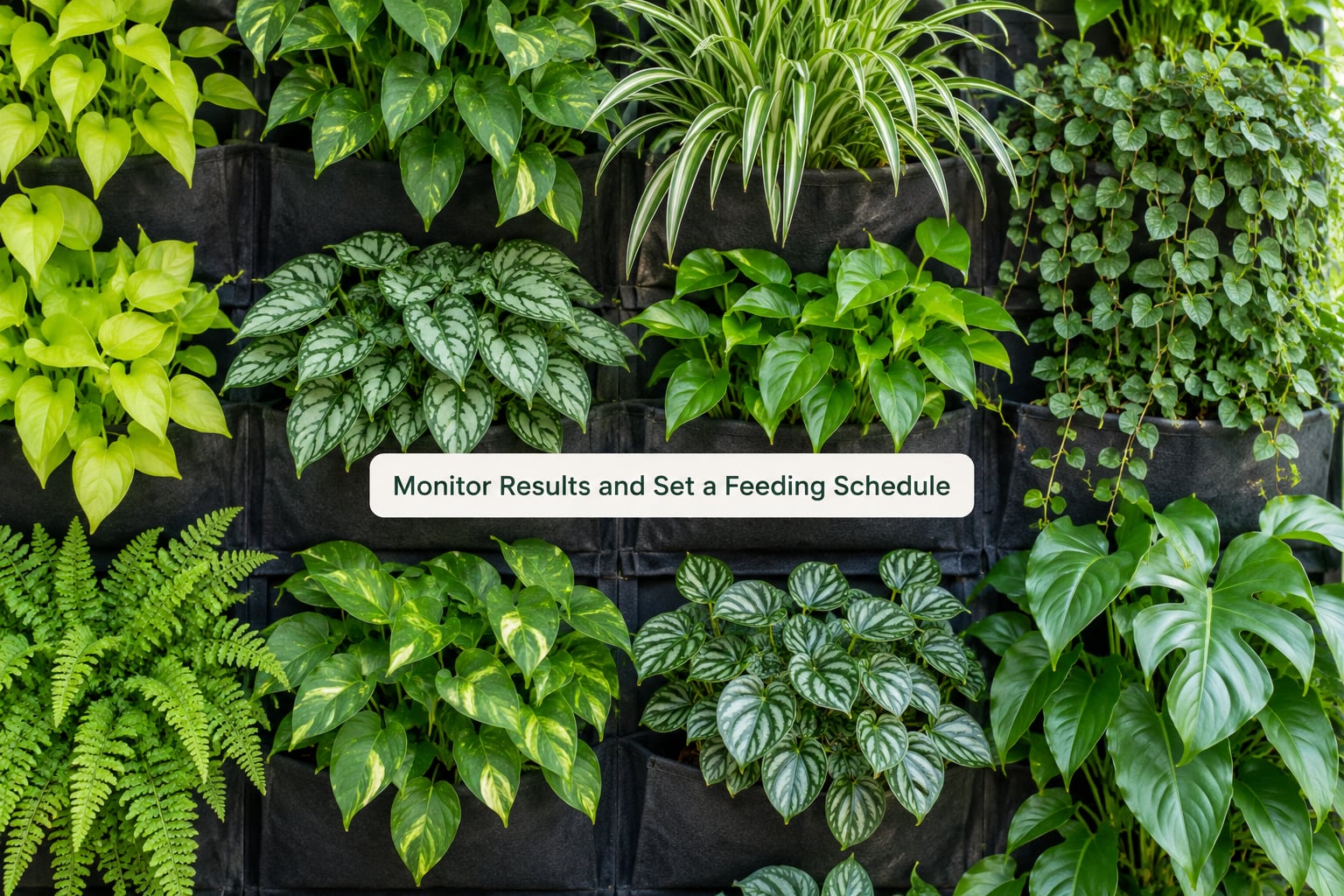
Give it two weeks before judging. Healthy progress after a feed looks like new leaf growth at the top, deeper color on the newest leaves, steady flowering, and no crust on the soil surface.
Schedule it, then. A workable year looks like this:
| Period | What is happening | What to do |
|---|---|---|
| First 3 to 4 weeks after planting | Roots establishing | Skip fertilizer, or use half strength once. Fresh mix and starter nutrients are usually enough. |
| Spring into early summer | Vegetative growth | Balanced complete fertilizer every 2 to 3 weeks |
| Fruiting and flowering peak | Heaviest nutrient demand | Every 2 weeks, or a quarter-strength feed at each watering |
| Late summer | Growth slowing, heat stress possible | Every 3 to 4 weeks. Skip during a heat wave or drought. |
| Fall or winter | Dormancy or low growth | Stop feeding foliage plants. Water less. Resume when growth restarts. |
Watch for the two classic symptoms. Old leaves yellowing from the bottom up usually means nitrogen shortage. Crispy brown leaf edges with white crust on the soil or drainage holes means fertilizer burn, meaning too much salt, not too little. To recover, flush the pocket with two or three times its volume of plain water and skip the next scheduled feed.
Common Mistakes When Fertilizing a Vertical Garden
Almost every problem when people work out how to fertilize a vertical garden traces back to one of these. Each has a straightforward fix.
- Fertilizing dry plants. Dry mix cannot absorb dissolved nutrients; the solution drains straight through. Water plain first, then feed.
- Using the concentrate undiluted. This is fertilizer burn, and in a tower it hits the lower pockets hardest because runoff collects there. Halve the label rate for pockets and flush with plain water.
- Treating every pocket the same. A succulent sharing a frame with a tomato will not tolerate the same feeding. Group plants by need and feed the heavy feeders on their own schedule.
- Overwatering after feeding. A long flood right after application pushes nutrients out of the root zone and down the wall. Flush lightly and briefly, then stop.
- Ignoring drainage. If water sits in a pocket, nutrients cannot be taken up and salts only accumulate. Fix the drainage before you feed.
- Fertilizing in full sun or heat. Midday application in hot weather evaporates the carrier water and leaves salt on the leaves. Feed early morning or evening.
- Leaving residue on foliage and pockets. White streaks down a fabric wall or siding are how a feeding session announces itself to the neighbours. Wipe surfaces while you work.
- Packing raw compost or manure into pockets. Thick compost layers are hard to incorporate into shallow mix and can smell. Use castings instead and keep the layer thin.
One seasonal habit worth building: refresh the top inch of mix between plantings. Push in a layer of castings, remix, and let the pocket rest for a week before replanting. That restores the organic matter that holds nutrients, which does more for next season than any fertilizer you can buy.
Frequently Asked Questions
How often should I fertilize a vertical garden?
Most vertical gardens need feeding every two to four weeks from spring through the growing season. Use every two weeks while plants are flowering or fruiting, and stretch to four weeks in late summer. Stop entirely during dormancy or very low light. A quarter-strength liquid feed at every watering is a workable alternative to heavier periodic doses.
Can I use liquid fertilizer on a vertical garden?
Yes, and liquid is usually the best fit. It disperses evenly through small pockets, reaches roots fast, and lets you control the dose precisely, which matters when a pocket holds only a quart or two of mix. Dilute to about half the label rate, pour onto the root zone rather than the leaves, and flush lightly afterward.
What are the signs that a vertical garden has too much fertilizer?
Look for crispy brown leaf edges, yellowing that starts at the tips rather than the bottom of the plant, and a white crust on the soil surface or around drainage holes. Runoff can also carry a visible salt film down a fabric wall. Flush the affected pockets with two or three times their volume of plain water and wait several weeks before feeding again.
Should I fertilize a newly planted vertical garden immediately?
Usually not. Fresh potting mix carries some starter nutrients, and young roots are the most sensitive part of the plant. Wait three to four weeks while the roots establish, then feed at half strength. If you mixed your own blend without any fertilizer, a single half-strength feed after the first two weeks is reasonable.
How do I fertilize edible plants in a vertical garden?
Feed vegetables and herbs at the same times as ornamentals but keep a close eye on leaf tissue, since you will be eating it. Use a complete vegetable fertilizer, apply only to the root zone, and never spray foliage where produce will be harvested. Wash herbs and leafy greens under running water before use, especially after any feeding.
Does a slow-release fertilizer work better than liquid fertilizer for a vertical garden?
Neither is always better. Slow-release granules give steadier nutrition over two to three months and suit balconies and busy plantings, but dosing is hard to judge in shallow pockets. Liquid gives you immediate control and is easier to correct a deficiency with. Many growers alternate: slow-release at planting, liquid every two or three weeks through the season.
Conclusion
Start with the pocket in front of you. Identify what is growing there, check whether the mix drains freely, then apply a complete fertilizer at about half the label rate, poured at the root zone and watered in lightly.
What matters after that is consistency rather than generosity. A light feed every two to four weeks, matched to what each group of plants is doing, will outperform a heavy dose every few months every time. If you fertilize a vertical garden that way, 2026 included, the plants tell you it worked with new growth and no crust on the pockets.