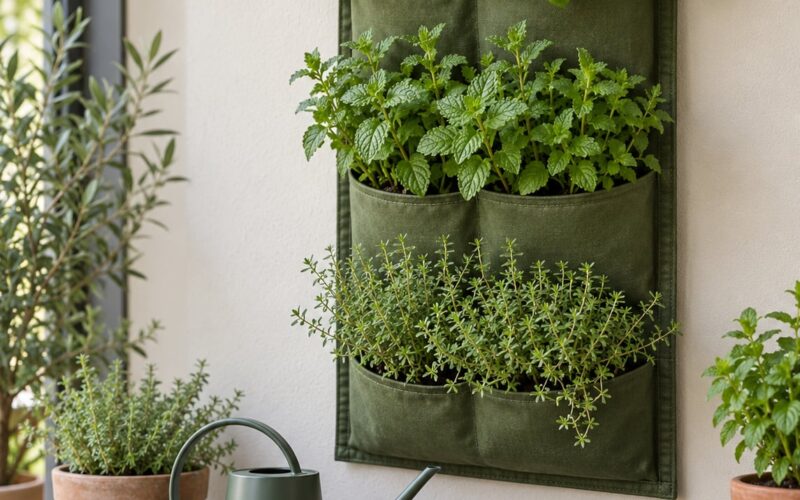
Yes, most potted plants can stay outside through winter, as long as the container drains freely, the roots are not sitting in water, and the species is genuinely hardy in your zone. What kills them is usually frozen growing media or waterlogged pockets, not the cold on its own.
Outdoor vertical garden winter care gets harder as the structure gets taller. A tower planter packs a lot of soil into a small footprint, so it chills faster than an in-ground bed and dries out faster in wind. That is why a short set of specific tasks beats guesswork.
Last reviewed October 2026.
Table of Contents
- What You Need
- Step-by-Step Outdoor Vertical Garden Winter Care
- 1. Inspect the System Before Winter
- 2. Choose Plants for Local Winter Conditions
- 3. Prepare Planters and Substrate
- 4. Manage Water Before and Through Winter
- 5. Protect Roots, Plants, and the Wall
- 6. Prune, Feed, and Monitor
- 7. Make a Cold-Weather Contingency Plan
- Common Mistakes
- Frequently Asked Questions
- Should an outdoor vertical garden be covered during winter?
- How often should I water a vertical garden in winter?
- Can I grow evergreen plants in an outdoor vertical garden?
- Should I bring my vertical garden indoors for winter?
- How do I stop an outdoor vertical garden from freezing?
- What plants are best for a winter-facing vertical garden?
- Conclusion
What You Need
You need a small kit and about ten focused hours before the ground freezes. Most of the work is inspection rather than construction.
- Gloves — insulated ones, because drainage holes and frozen media are miserable to handle bare-handed.
- Access to the drainage path — the bottom outlet, a removable planter panel, or whatever access point your system provides.
- A moisture meter or a wooden stake — for checking substrate moisture by depth instead of guessing from the surface.
- Weather-resistant clips, straps, or zip ties — for securing fleece, screens, and irrigation lines without damaging the frame.
- Frost cloth or horticultural fleece — breathable, not plastic sheeting.
- Plant labels — so you know in February what each pocket held in October.
Before you touch anything, find the system’s care instructions and mounting specifications. Every serious system publishes a load rating per pocket, per shelf, and per fixing point, and the winter load of wet media plus snow is exactly the case those numbers were not written for. If your system is wall-mounted and reaching the anchors needs a ladder or scaffold work, bring in a qualified professional.
Step-by-Step Outdoor Vertical Garden Winter Care
There are three broad strategies: leave the system planted and dormant outdoors, move the whole assembly into shelter, or insulate it in place. Which one you choose depends on your hardiness zone, the wall’s orientation and exposure, what the system is made of, and whether it is permanently planted or meant to be installed seasonally.
1. Inspect the System Before Winter
Start with the structure, not the plants. A wall that loses a fixing point in February takes the planting with it.
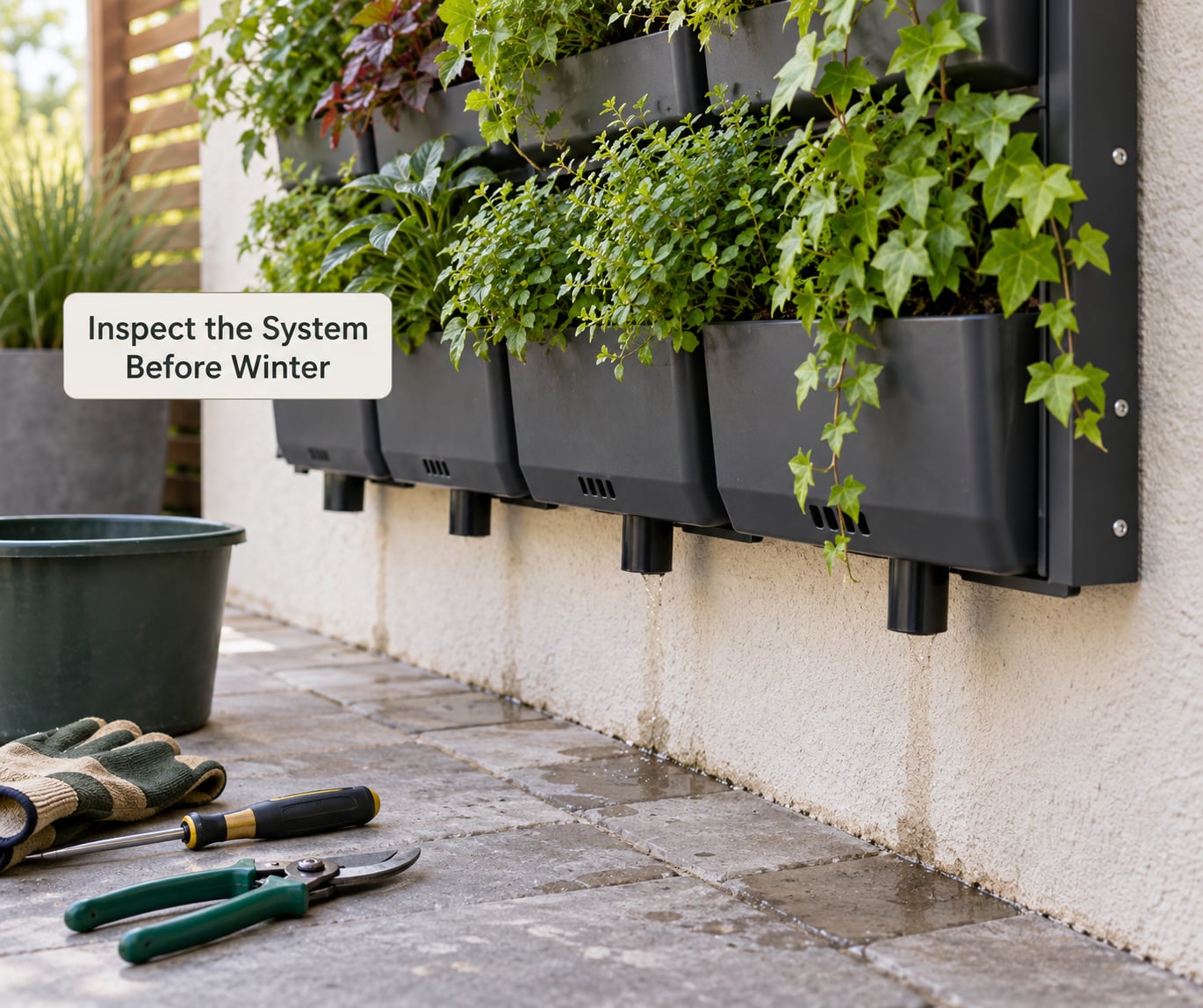
- Walk the anchor points and fasteners. Look for movement, rust staining, or sealant that has pulled away from the substrate.
- Confirm every drainage opening is clear. Push a finger or a soft wire through the outlet and check it exits rather than pooling in the base.
- Run the irrigation by hand. Note every emitter location so you can find a split line later.
- Check substrate moisture at two depths — a finger’s depth near the surface and deeper in the pocket — and note which pockets hold water and which dry out fast.
- Replace or repair torn pockets, missing grommets, and broken clips while you still have decent weather.
- Look under foliage for slugs, aphids, scale, and spider mite webbing. A pest population under cover, where you cannot see it, can finish a plant in a month.
If the system is holding a lot of wet media, reduce that weight before winter rather than after. Media that never drains holds far more water than the same soil in a bed, and saturated weight is what tests anchors hardest when snow arrives.
2. Choose Plants for Local Winter Conditions
Plant choice does more for survival than any cover you can buy. Match the species to your hardiness zone and to the specific wall, not to the general climate.
Four things decide whether a plant makes it: your USDA hardiness zone, how much wind the wall takes, which direction it faces, and how the system holds moisture and heat around the root zone. A south-facing wall in Zone 7 behaves like Zone 6 in an exposed north wall two blocks from open ground.
Reliable choices include evergreen herbs such as thyme and rosemary where they are hardy, sedges, small ornamental grasses, and compact shrubs that handle repeated pruning. In mild-winter zones you can carry cool-season greens, brassicas, and root crops through the season.
Be careful with the word evergreen. A plant that keeps foliage through a wet Zone 6 winter may drop it in Zone 8 after a warm dry spell, and the reverse happens too. Describe plants by their zone tolerance and their response to your conditions, not by a label that promises year-round foliage.
3. Prepare Planters and Substrate
Substrate work in autumn is about structure and drainage, not about feeding.
Pull out dead or diseased material completely, roots included, so it cannot harbour rot through a wet month. Check that growing media is still secure but not compacted; a pocket that has shrunk has lost root contact, and a compacted one will not drain. Press down each pocket and confirm water moves through rather than sitting on a shelf of substrate.
Resist the urge to repot in late autumn. Disturbing roots weeks before severe weather is a bad trade, because a damaged root system cannot take up the water the plant needs when the wind is drying it. Repot in spring instead.
On container size, watch the extremes. An oversized pot in a pocket system stays wet far longer than a smaller one, and in freezing weather that wet core is what turns into the damage. Fewer, better-drained pockets beat more volume.
4. Manage Water Before and Through Winter
Winter watering is less frequent, not absent. The common failure is a grower who stops in November and finds bone-dry media in a frozen week with wind.
Check moisture by depth and by recent weather rather than by a weekly schedule. Warm windy spells dry a tall planter out faster than a ground bed because the wind strips moisture from the exposed faces. When the media is dry below the surface, water thoroughly until it runs from the outlet, then stop.
Standing water is the thing to prevent. Any water that cannot drain before a freeze expands, and it splits pipes, lifts media out of pockets, and cracks containers. Empty saucers and trays, and check low points in the frame.
Where freezing temperatures are expected, isolate or drain the irrigation. Turn off the supply, blow out or drain the lines, disconnect timers and controllers from outdoor power, and keep any drain lines running clear to a drain rather than to a wall where water refreezes. Split irrigation lines are one of the most expensive winter surprises, and they are entirely preventable.
5. Protect Roots, Plants, and the Wall
Outdoor vertical garden winter care has two separate jobs, and people mix them up: wind protection and frost protection are different problems with different solutions.
A wind break does nothing for temperature, and a frost cover does almost nothing for wind. On exposed walls, a breathable temporary screen set a short distance in front of the planting will stop foliage being shredded and desiccated long before any frost arrives. Leave gaps so air still moves through.
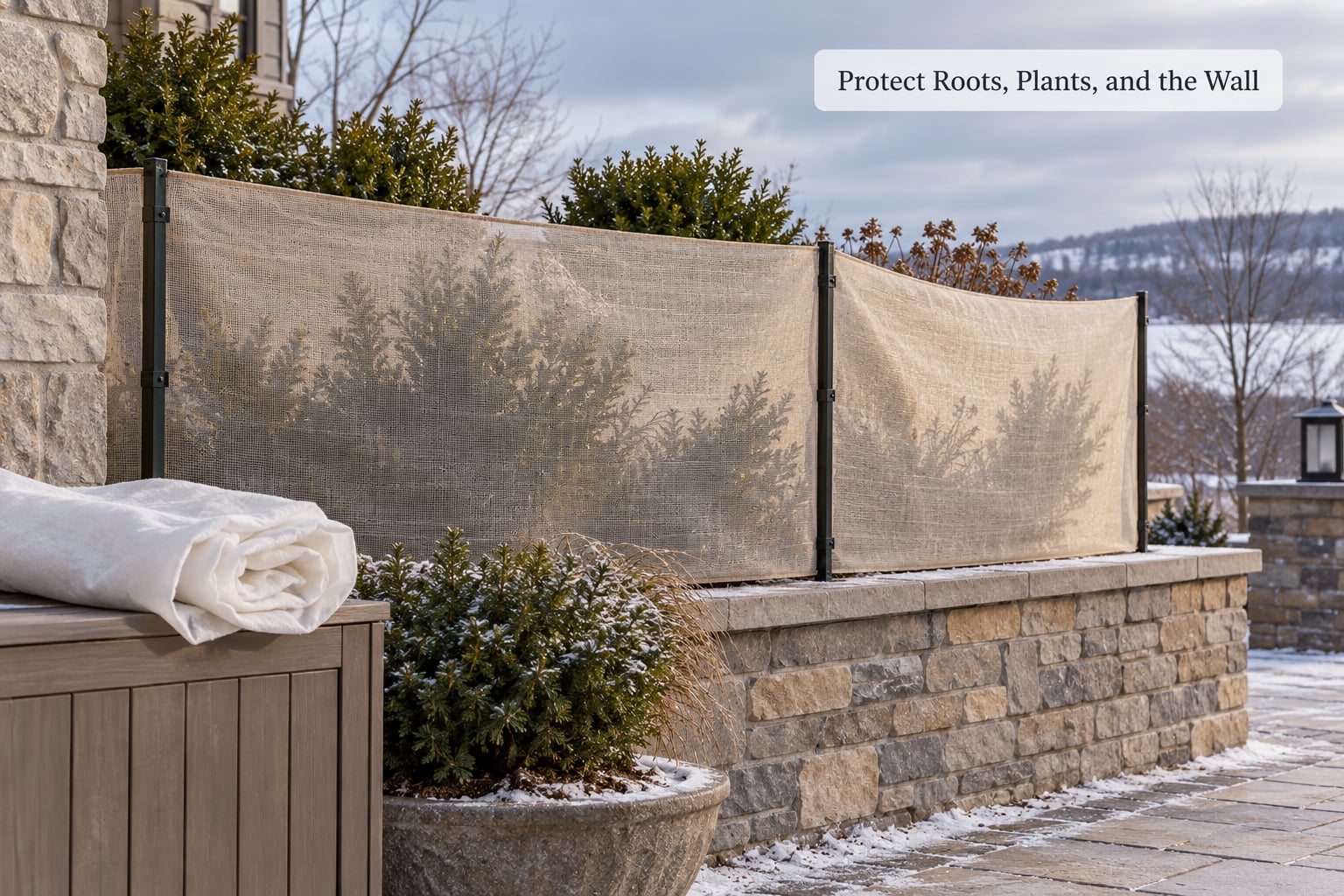
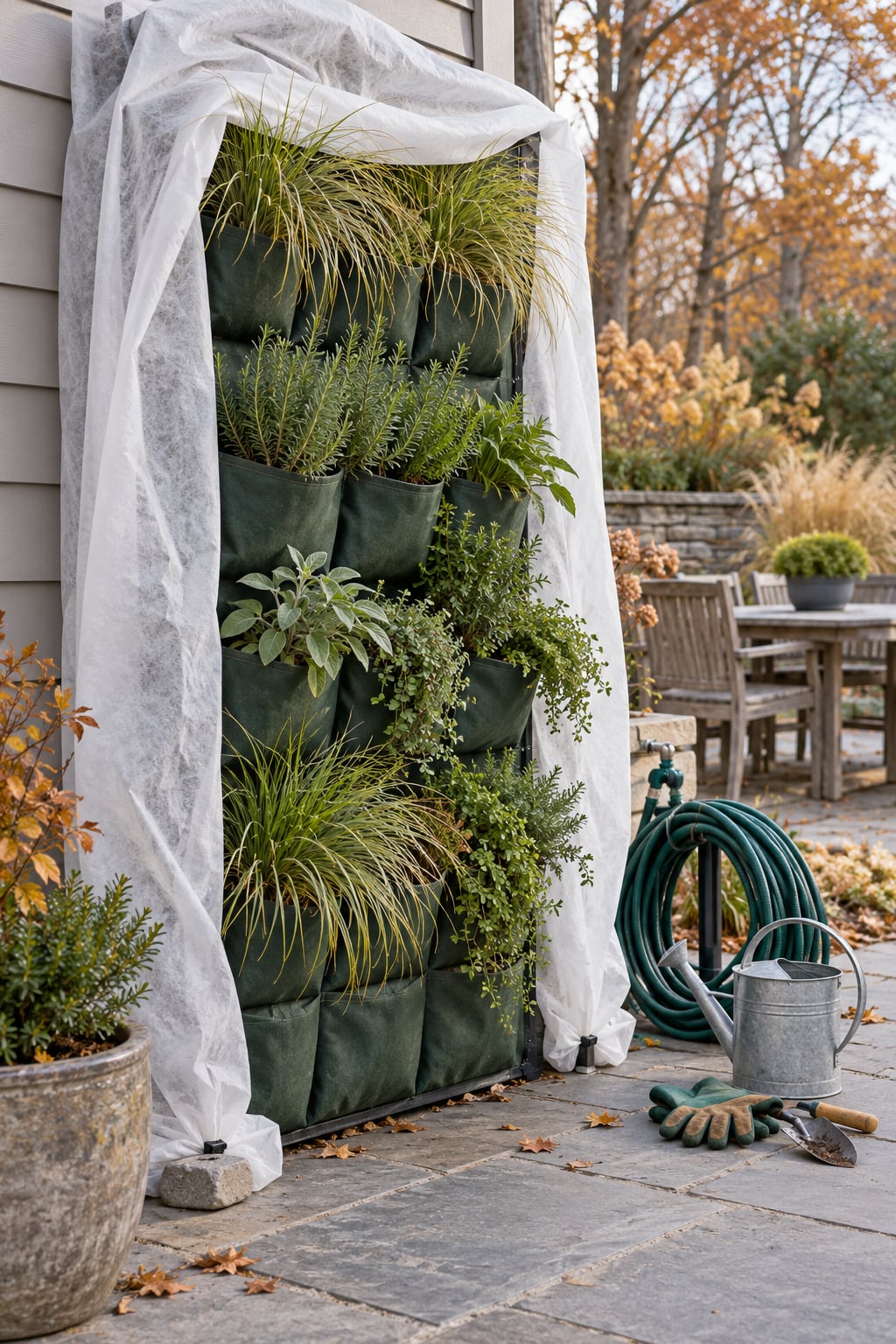
For frost, use horticultural fleece or frost cloth draped loosely and anchored at the base. Fleece typically buys a few degrees of protection, which is enough to save a tender planting through a single cold night but not a hard freeze. Gardeners on forums describe it as delaying damage rather than preventing it, and that is the right frame.
Mulching the top of each pocket with shredded leaves, bark, or coir insulates the root zone. Straw is a poor choice on a vertical structure: it blows out of pockets and holds damp against the frame. Keep mulch below the crown of the plant, not piled over it.
Two warnings. Never trap moisture against foliage, because a damp leaf under a cover turns to rot within days. And never leave a cover on during a sunny, mild day, because fleece and clear plastic both raise the temperature inside far above the outside air.
6. Prune, Feed, and Monitor
Do a light cleanup, not a hard cut. Remove dead and diseased growth, tie back loose stems, and prune selectively.
With evergreen plants, be conservative. A plant carrying foliage through winter relies on that foliage to photosynthesize on mild days, so stripping a third of it in autumn costs you more than the tidiness gains. Take only what is damaged or crossing.
Withhold or reduce feeding. Growth slows in cold weather and soft new shoots are more frost-tender than mature ones, so a late nitrogen feed can set a plant up to be damaged by the first cold night. Save the feeding for spring.
Good outdoor vertical garden winter care is mostly observation. Walk the system every week or two and check for wilt that does not recover in the morning, frost-blackened foliage, pests under the canopy, pockets that have loosened from their fixings, blocked drainage, and anchor movement after wind. A ten-minute walk catches a failed emitter in October and a shifted pocket in February.
7. Make a Cold-Weather Contingency Plan
Prepare the contingency in advance, because hard-freeze warnings usually arrive with less than a day of notice.
What to prepare: keep fleece cut to size and stacked somewhere dry, know where your cover anchors go, keep a bucket and a few stakes by the door, and check the forecast the night before any freeze warning. Decide in advance which pockets are worth saving if you only have time for half the wall, because those will be the tender herbs and any newly planted material.
What should wait: repotting, major pruning, installing new irrigation, and any structural work. None of it helps in the two weeks before severe weather, and all of it leaves a plant in a vulnerable state.
On frozen irrigation, access problems, or an unusually mild week, the plan changes. If lines are already frozen, do nothing to them. If access is impossible because of ice, prioritise the plant, not the frame. If the weather stays mild, keep the covers off and enjoy it.
For some systems the safest move is removal rather than wrapping. If your wall cannot be reached safely in winter conditions, or the structure is not rated for snow load, taking the planting out and overwintering it in a sheltered spot beats wrapping a tall frame in place all winter.
Common Mistakes
Watering by calendar is the most common failure. Fix it by checking moisture at depth and watering fully only when it is dry.
Ignoring drainage is the second. Clear every outlet and confirm water actually exits the frame before the first freeze.
Piling mulch over the crown suffocates the plant. Mulch the surface of the media and keep it below the crown.
Pruning evergreen plants too hard removes the only leaves that will work in winter. Cut back only dead, damaged, or crossing growth.
Fertilising late pushes soft growth into the cold. Feed in spring instead.
Covering wet plants trades frost damage for rot. Dry the foliage first, and remove covers on any mild sunny day.
Allowing ice or wind to load the system is how frames fail. Clear snow from covers gently, anchor them at the base, and set wind screens before the first storm.
Ignoring the manufacturer’s mounting limits voids the numbers that keep the wall up. Check the load rating, and stay within it.
If you take one tip from all of this: watch your own wall and trust what you see. The plant that wilts on the windward side on Tuesday tells you more than any schedule printed in spring.
Frequently Asked Questions
Should an outdoor vertical garden be covered during winter?
Cover it when temperatures near freezing, not all winter. A breathable frost cloth or horticultural fleece protects tender plants and buys several degrees through a cold night, and a wind screen protects exposed walls from desiccation. Leave covers off during mild, sunny weather, since trapped heat and moisture will damage foliage faster than cold would. Anchor covers at the base so wind cannot pull them off.
How often should I water a vertical garden in winter?
Check before you water, not on a schedule. Dormant plants still lose moisture through wind, so test the media a finger’s depth down and water thoroughly when it is dry. Tall planters dry faster than ground beds because the wind hits every exposed face. Water deeply rather than often, always let excess drain out of the outlets, and empty any tray before a freeze.
Can I grow evergreen plants in an outdoor vertical garden?
Often yes, in zones where the species is reliably hardy and the wall gives it shelter. Evergreen herbs, sedges, small grasses, and compact shrubs are the usual choices. Two warnings: foliage relies on mild winter days to photosynthesize, so do not prune it back hard in autumn, and check that water still reaches the root zone when the ground is frozen, since evergreens transpire through winter.
Should I bring my vertical garden indoors for winter?
Bring it in if you have a bright, cool space and can manage the weight. Moving a planted tower is genuinely hard, and many gardeners stop watering for about a week beforehand to lighten it, then resume lightly indoors. Indoors it needs far more light than a windowsill gives. If you have no bright space, leave the system outdoors and protect it rather than moving it into a dim room.
How do I stop an outdoor vertical garden from freezing?
Insulate the root zone and shelter the foliage rather than trying to warm the whole system. Mulch the surface of the media with shredded leaves, bark, or coir, keeping it below the plant crown. Drape horticultural fleece loosely over tender plantings and anchor it at the base. Drain or isolate irrigation lines before a freeze, and keep standing water out of every pocket, since expanding water is what splits pipes and containers.
What plants are best for a winter-facing vertical garden?
A winter-facing wall gets the least sun and the coldest air, so choose hardy perennials rather than edibles or tender herbs. Compact shrubs, sedges, ornamental grasses, and hardy evergreens do best there. Where winters are mild, cool-season greens, brassicas, and root crops keep producing through the season in the inner pockets. Whatever you plant, check the drainage in that specific pocket, since shaded lower pockets stay wettest.
Conclusion
Do one thing first: before the weather turns, inspect the drainage, the anchors, the irrigation and the plant health. Nearly every winter failure traces back to water that could not leave, a line that froze, or a pocket that lost its fixing, and all three are visible in an autumn walk-around.
After that, build a maintenance routine around what you observe rather than a fixed watering schedule. Watch your wall each week, adjust as the season changes, and your outdoor vertical garden winter care will be routine rather than a rescue.